Callejón-Leblic Belén, Selma-Royo Marta, Collado María Carmen, Gómez-Ariza José Luis, Abril Nieves, García-Barrera Tamara
Research Center of Natural Resources, Health and the Environment (RENSMA), Department of Chemistry, Faculty of Experimental Sciences, Campus El Carmen, University of Huelva, Fuerzas Armadas Avenue, 21007 Huelva, Spain.
Institute of Agrochemistry and Food Technology-National Research Council (IATA-CSIC), Department of Biotechnology, Agustín Escardino 7, 46980 Paterna, Valencia, Spain.
J Proteome Res. 2022 Mar 4;21(3):758-767. doi: 10.1021/acs.jproteome.1c00411. Epub 2021 Nov 4.
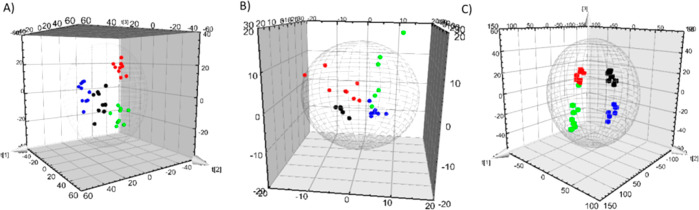
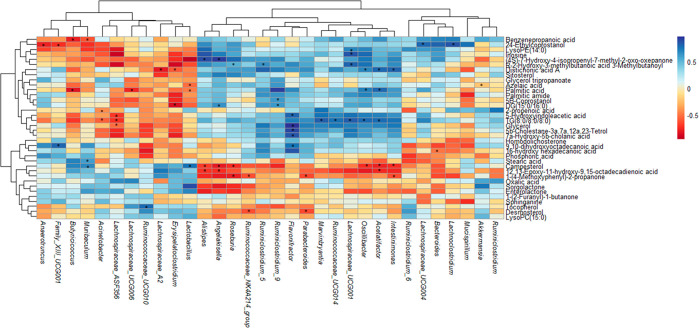
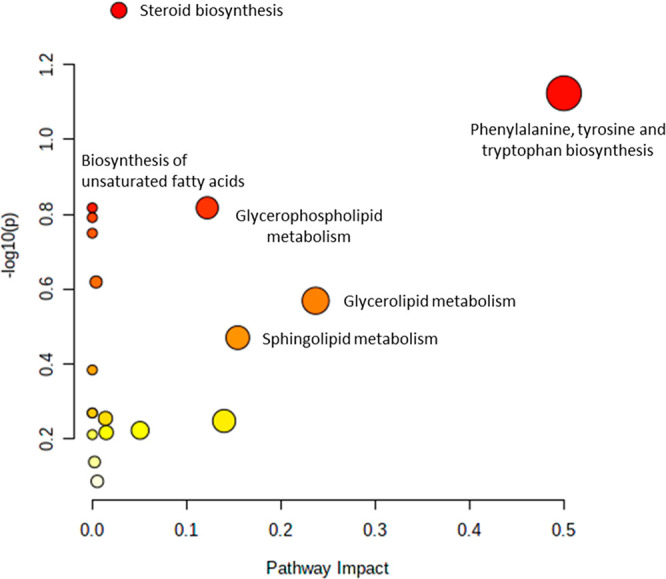
Selenium (Se) is an essential trace element with important health roles due to the antioxidant properties of selenoproteins. To analyze the interplay between Se and gut microbiota, gut metabolomic profiles were determined in conventional (C) and microbiota depleted mice (Abx) after Se-supplementation (Abx-Se) by untargeted metabolomics, using an analytical multiplatform based on GC-MS and UHPLC-QTOF-MS (MassIVE ID MSV000087829). Gut microbiota profiling was performed by 16S rRNA gene amplicon sequencing. Significant differences in the levels of about 70% of the gut metabolites determined, including fatty acyls, glycerolipids, glycerophospholipids, and steroids, were found in Abx-Se compared to Abx, and only 30% were different between Abx-Se and C, suggesting an important effect of Se-supplementation on Abx mice metabolism. At genus level, the correlation analysis showed strong associations between metabolites and gut bacterial profiles. Likewise, higher abundance of , a potentially beneficial genus enriched after Se-supplementation, was associated with higher levels of prenol lipids, phosphatidylglycerols (C-Se), steroids and diterpenoids (Abx-Se), and also with lower levels of fatty acids (Abx-Se). Thus, we observed a crucial interaction between Se intake-microbiota-metabolites, although further studies to clarify the specific mechanisms are needed. This is the first study about untargeted gut metabolomics after microbiota depletion and Se-supplementation.
硒(Se)是一种必需的微量元素,由于硒蛋白的抗氧化特性,它在健康方面发挥着重要作用。为了分析硒与肠道微生物群之间的相互作用,通过基于气相色谱 - 质谱联用(GC - MS)和超高效液相色谱 - 四极杆飞行时间质谱联用(UHPLC - QTOF - MS)的多分析平台(MassIVE ID MSV000087829),采用非靶向代谢组学方法,测定了补充硒(Abx - Se)后的常规(C)小鼠和微生物群缺失小鼠(Abx)的肠道代谢组谱。通过16S rRNA基因扩增子测序进行肠道微生物群分析。与Abx相比,在Abx - Se中发现约70%的所测定肠道代谢物水平存在显著差异,包括脂肪酰基、甘油脂质、甘油磷脂和类固醇,而Abx - Se与C之间只有30%的代谢物不同,这表明补充硒对Abx小鼠的代谢有重要影响。在属水平上,相关性分析表明代谢物与肠道细菌谱之间存在强关联。同样,补充硒后富集的潜在有益属的丰度较高,与prenol脂质、磷脂酰甘油(C - Se)、类固醇和二萜类化合物(Abx - Se)水平较高相关,也与脂肪酸水平较低(Abx - Se)相关。因此,我们观察到硒摄入 - 微生物群 - 代谢物之间存在关键相互作用,尽管需要进一步研究来阐明具体机制。这是关于微生物群缺失和补充硒后的非靶向肠道代谢组学的首次研究。