Department of Medical Psychology and Ethics, School of Basic Medicine Sciences, Cheeloo College of Medicine, Shandong University, Jinan, Shandong, People's Republic of China.
Cheeloo Hospital, Shandong University, Jinan, People's Republic of China.
J Neuroinflammation. 2021 Nov 4;18(1):254. doi: 10.1186/s12974-021-02303-y.
Chronic unpredictable mild stress (CUMS) can not only lead to depression-like behavior but also change the composition of the gut microbiome. Regulating the gut microbiome can have an antidepressant effect, but the mechanism by which it improves depressive symptoms is not clear. Short-chain fatty acids (SCFAs) are small molecular compounds produced by the fermentation of non-digestible carbohydrates. SFCAs are ubiquitous in intestinal endocrine and immune cells, making them important mediators of gut microbiome-regulated body functions. The balance between the pro- and anti-inflammatory microglia plays an important role in the occurrence and treatment of depression caused by chronic stress. Non-absorbable antibiotic rifaximin can regulate the structure of the gut microbiome. We hypothesized that rifaximin protects against stress-induced inflammation and depression-like behaviors by regulating the abundance of fecal microbial metabolites and the microglial functions.
We administered 150 mg/kg rifaximin intragastrically to rats exposed to CUMS for 4 weeks and investigated the composition of the fecal microbiome, the content of short-chain fatty acids in the serum and brain, the functional profiles of microglia and hippocampal neurogenesis.
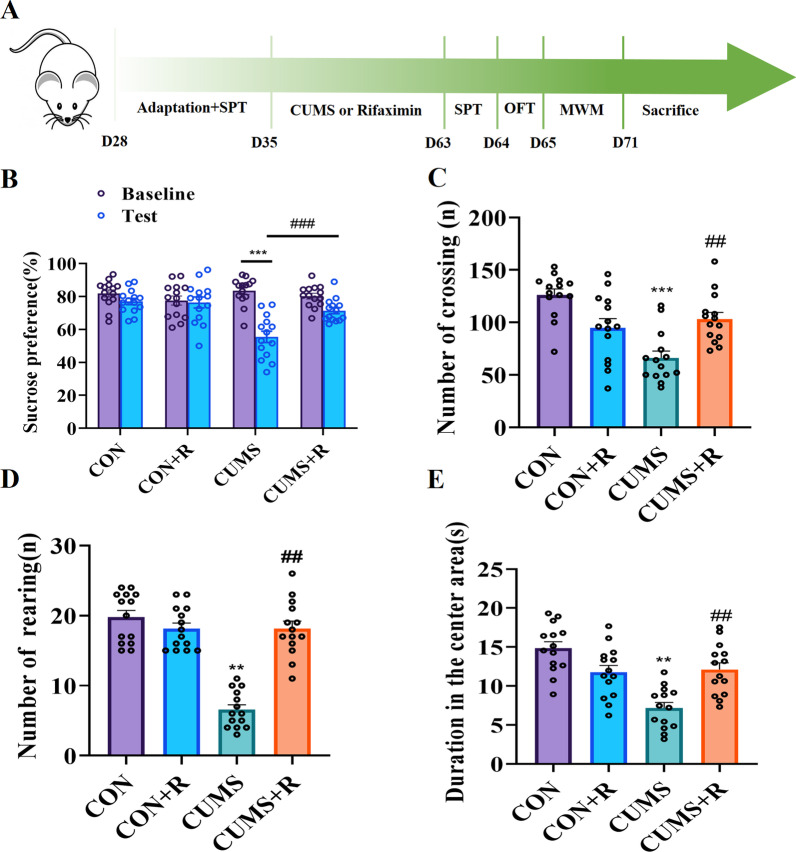
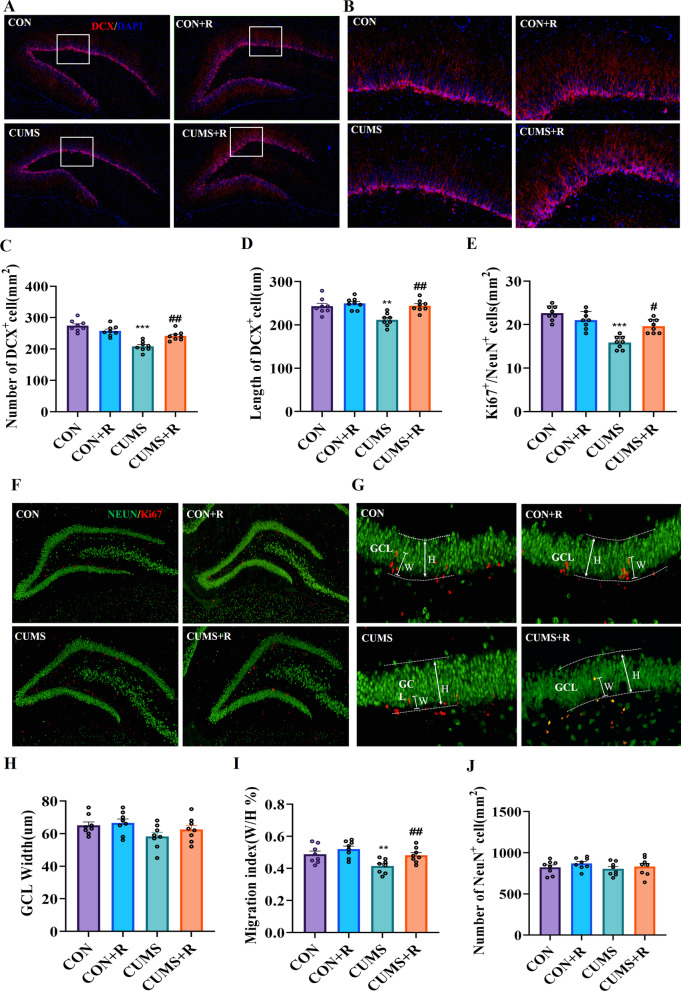
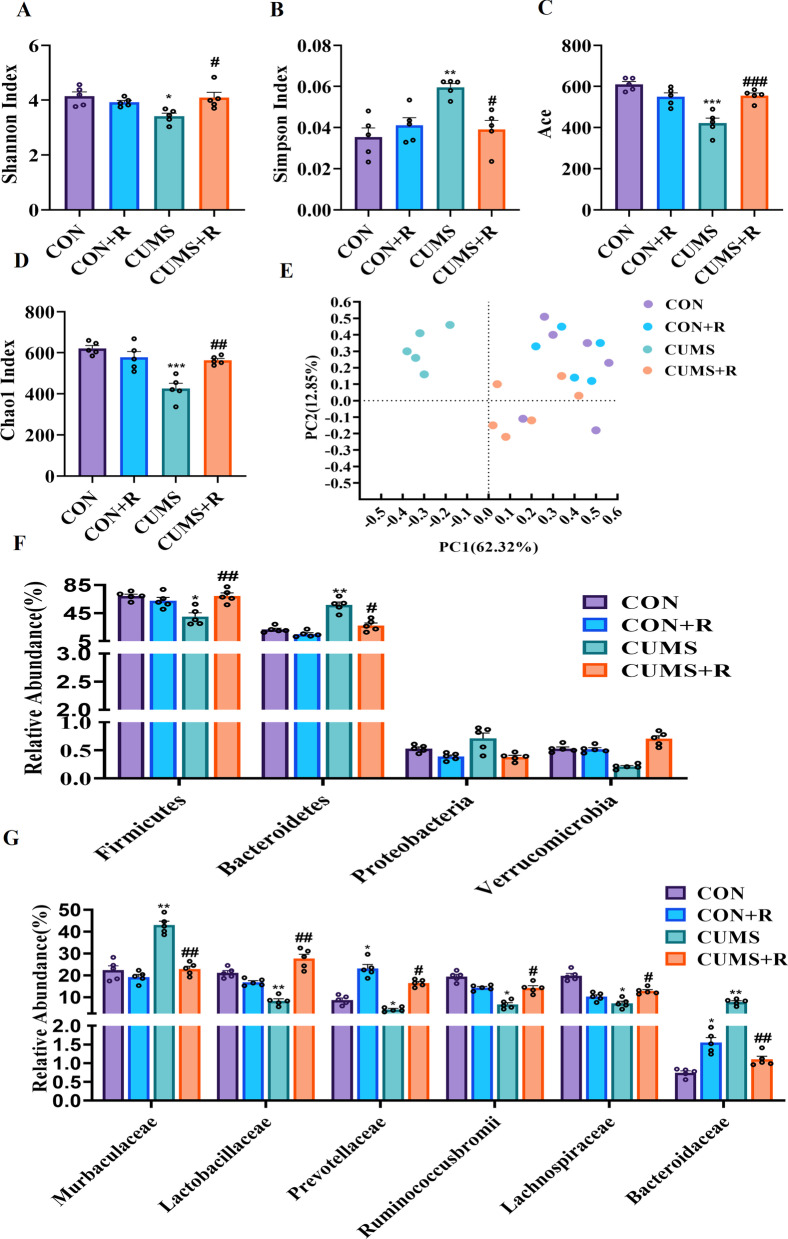
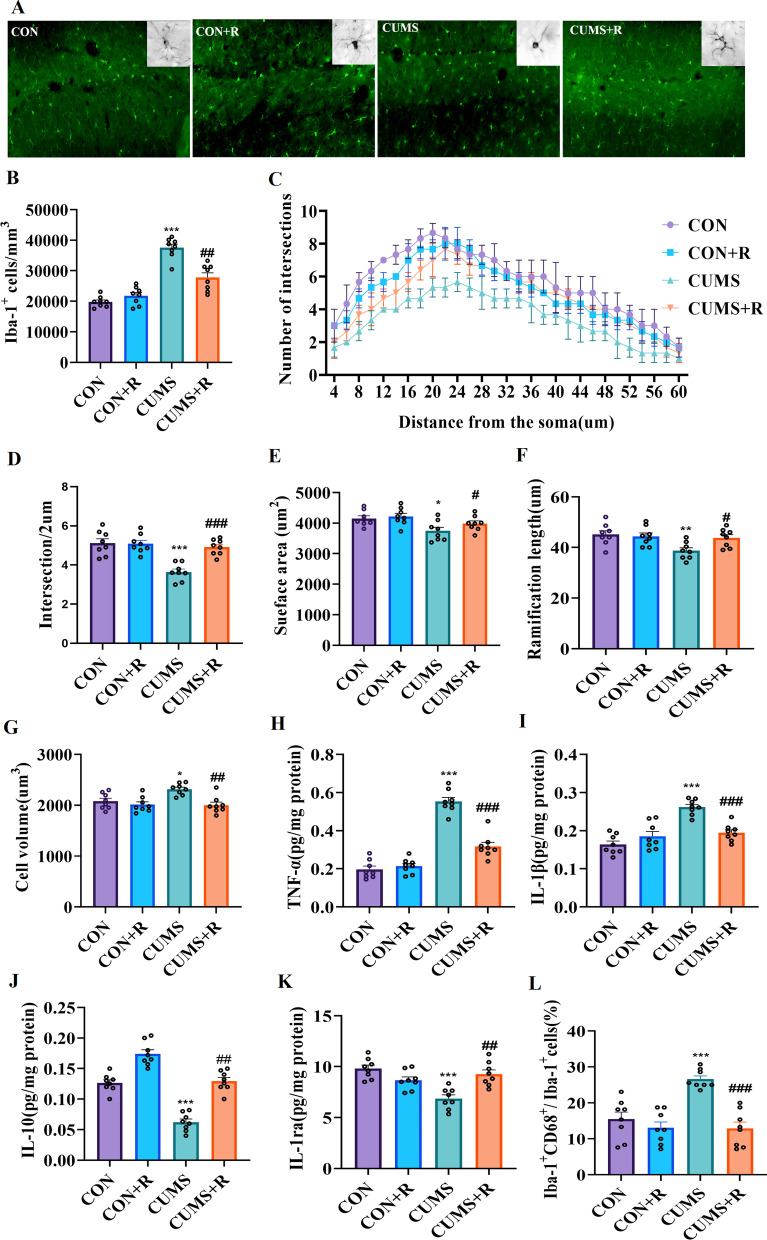
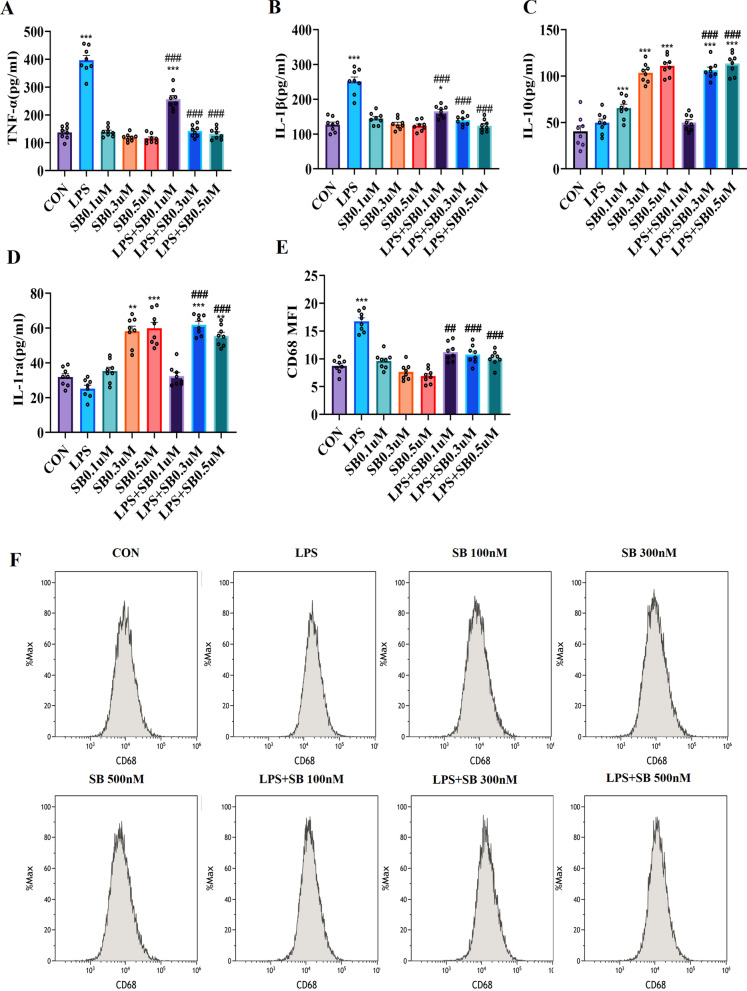
Our results show that rifaximin ameliorated depressive-like behavior induced by CUMS, as reflected by sucrose preference, the open field test and the Morris water maze. Rifaximin increased the relative abundance of Ruminococcaceae and Lachnospiraceae, which were significantly positively correlated with the high level of butyrate in the brain. Rifaximin increased the content of anti-inflammatory factors released by microglia, and prevented the neurogenic abnormalities caused by CUMS.
These results suggest that rifaximin can regulate the inflammatory function of microglia and play a protective role in pubertal neurodevelopment during CUMS by regulating the gut microbiome and short-chain fatty acids.
慢性不可预测轻度应激(CUMS)不仅会导致类似抑郁的行为,还会改变肠道微生物组的组成。调节肠道微生物组具有抗抑郁作用,但改善抑郁症状的机制尚不清楚。短链脂肪酸(SCFAs)是未消化碳水化合物发酵产生的小分子化合物。SCFAs 普遍存在于肠道内分泌和免疫细胞中,是肠道微生物组调节身体功能的重要介质。促炎和抗炎小胶质细胞之间的平衡在慢性应激引起的抑郁的发生和治疗中起着重要作用。不可吸收的抗生素利福昔明可以调节肠道微生物组的结构。我们假设利福昔明通过调节粪便微生物代谢物的丰度和小胶质细胞的功能来预防应激引起的炎症和类似抑郁的行为。
我们给暴露于 CUMS 4 周的大鼠灌胃 150mg/kg 利福昔明,并研究粪便微生物组的组成、血清和大脑中的短链脂肪酸含量、小胶质细胞的功能特征和海马神经发生。
我们的结果表明,利福昔明改善了 CUMS 诱导的类似抑郁行为,如蔗糖偏好、旷场试验和 Morris 水迷宫测试。利福昔明增加了 Ruminococcaceae 和 Lachnospiraceae 的相对丰度,这与大脑中丁酸水平的升高显著正相关。利福昔明增加了小胶质细胞释放的抗炎因子的含量,并防止了 CUMS 引起的神经发生异常。
这些结果表明,利福昔明通过调节肠道微生物组和短链脂肪酸,可以调节小胶质细胞的炎症功能,在 CUMS 期间发挥保护青春期神经发育的作用。