Department of Head and Neck Surgery, Fudan University Shanghai Cancer Center, Shanghai, China.
Department of Oncology, Shanghai Medical College, Fudan University, Shanghai, China.
Front Immunol. 2021 Oct 19;12:692079. doi: 10.3389/fimmu.2021.692079. eCollection 2021.
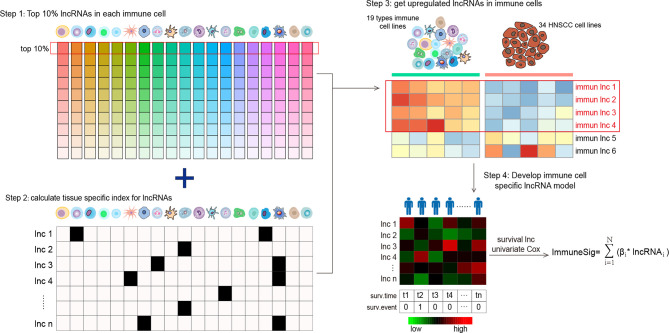
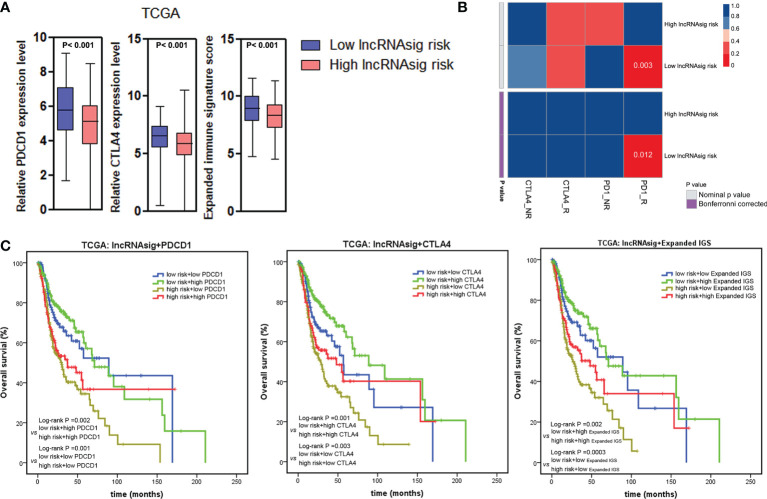
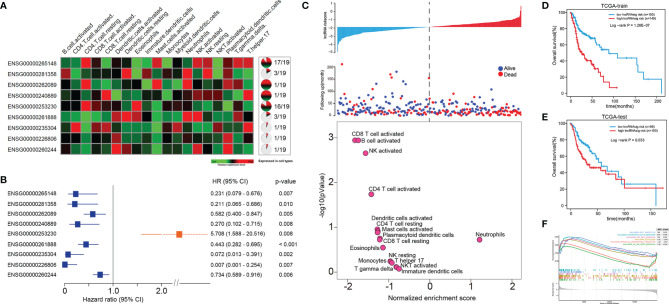
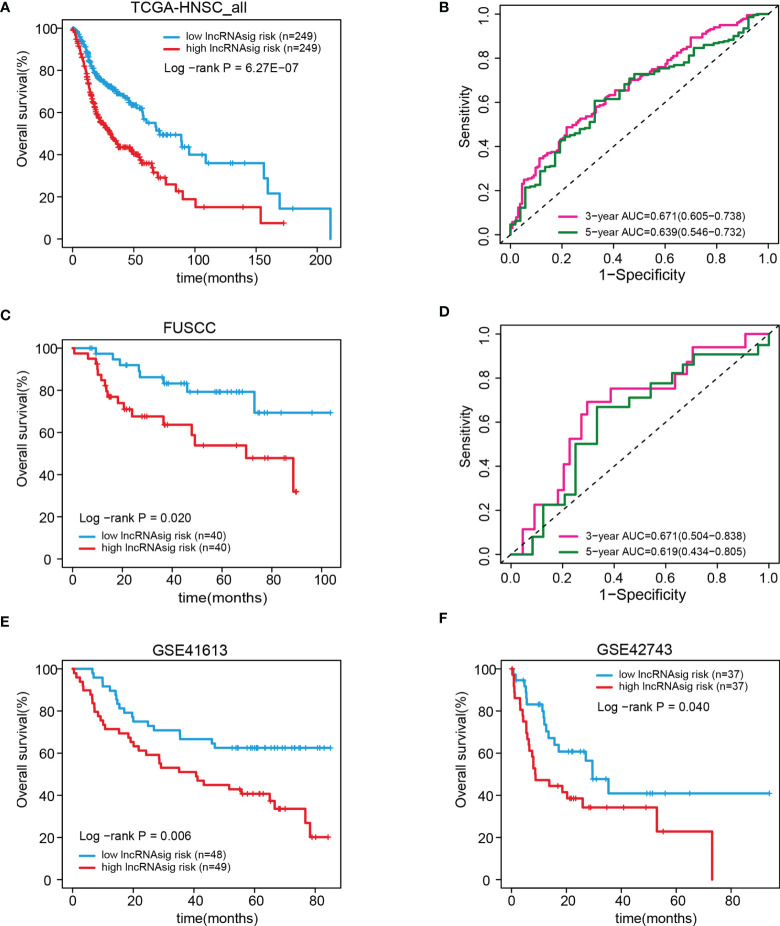
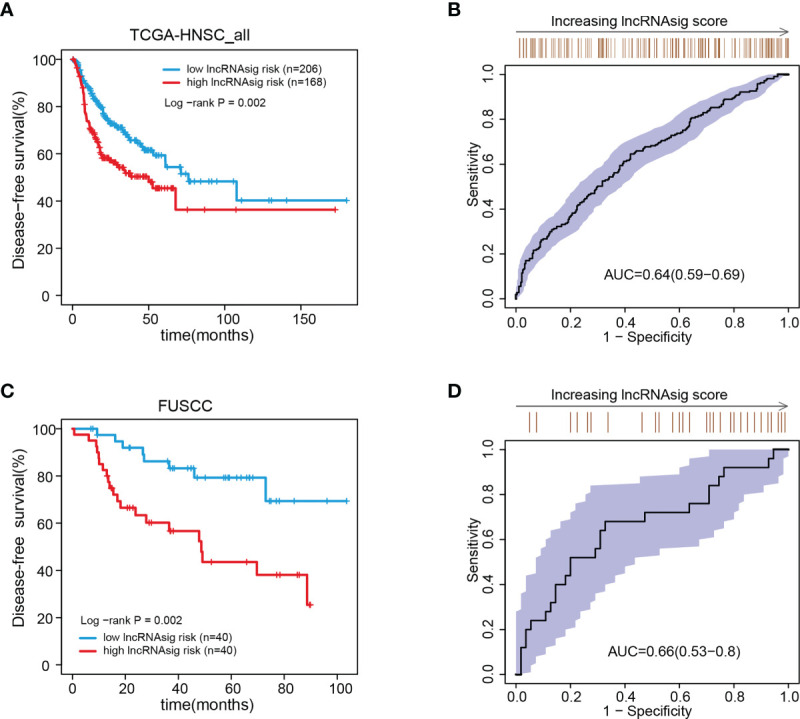
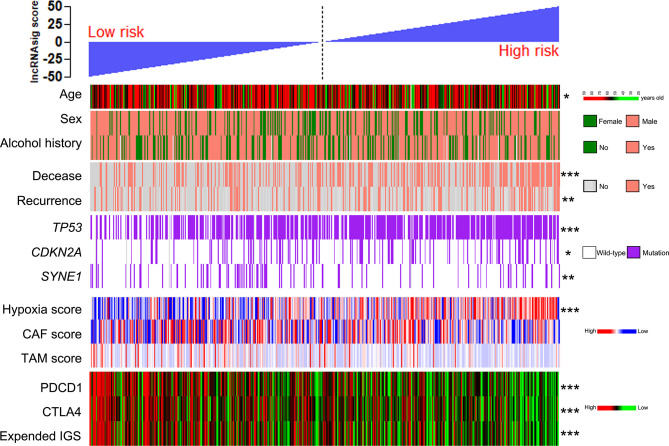
Long non-coding RNAs (lncRNAs) in immune cells play critical roles in tumor cell-immune cell interactions. This study aimed to characterize the landscape of tumor-infiltrating immune-related lncRNAs (Ti-lncRNAs) and reveal their correlations with prognoses and immunotherapy response in head and neck squamous cell carcinoma (HNSCC). We developed a computational model to identify Ti-lncRNAs in HNSCC and analyzed their associations with clinicopathological features, molecular alterations, and immunotherapy response. A signature of nine Ti-lncRNAs demonstrated an independent prognostic factor for both overall survival and disease-free survival among the cohorts from Fudan University Shanghai Cancer Center, The Cancer Genome Atlas, GSE41613, and GSE42743. The Ti-lncRNA signature scores in immune cells showed significant associations with mutation, mutation, and hypoxia. Inferior signature scores were enriched in patients with high levels of PDCD1 and CTLA4 and high expanded immune gene signature (IGS) scores, who displayed good response to PD-1 blockade in HNSCC. Consistently, superior clinical response emerged in melanoma patients with low signature scores undergoing anti-PD-1 therapy. Moreover, the Ti-lncRNA signature was a prognostic factor independent of PDCD1, CTLA4, and the expanded IGS score. In conclusion, tumor-infiltrating immune profiling identified a prognostic Ti-lncRNA signature indicative of clinical response to PD-1 blockade in HNSCC.
长链非编码 RNA(lncRNA)在免疫细胞中发挥着关键作用,在肿瘤细胞与免疫细胞相互作用中起着关键作用。本研究旨在描述肿瘤浸润免疫相关 lncRNA(Ti-lncRNA)的图谱,并揭示其与头颈部鳞状细胞癌(HNSCC)预后和免疫治疗反应的相关性。我们开发了一种计算模型来识别 HNSCC 中的 Ti-lncRNA,并分析它们与临床病理特征、分子改变和免疫治疗反应的关联。在来自复旦大学上海癌症中心、癌症基因组图谱(TCGA)、GSE41613 和 GSE42743 的队列中,九个 Ti-lncRNA 的特征显示出独立的总生存期和无病生存期的预后因素。免疫细胞中的 Ti-lncRNA 特征评分与 突变、 突变和缺氧显著相关。低评分特征在 PDCD1 和 CTLA4 水平高、扩展免疫基因特征(IGS)评分高的患者中富集,这些患者在 HNSCC 中对 PD-1 阻断反应良好。同样,在接受抗 PD-1 治疗的低特征评分的黑色素瘤患者中,出现了更好的临床反应。此外,Ti-lncRNA 特征是 PDCD1、CTLA4 和扩展的 IGS 评分之外的独立预后因素。总之,肿瘤浸润免疫分析确定了一个预后 Ti-lncRNA 特征,提示 HNSCC 对 PD-1 阻断的临床反应。