Department of Mechanical and Aerospace Engineering, Rutgers, The State University of New Jersey, Piscataway, NJ 08854, USA.
Department of Biomedical Engineering, Rutgers, The State University of New Jersey, Piscataway, NJ 08854, USA.
Sci Adv. 2021 Nov 5;7(45):eabj0611. doi: 10.1126/sciadv.abj0611.
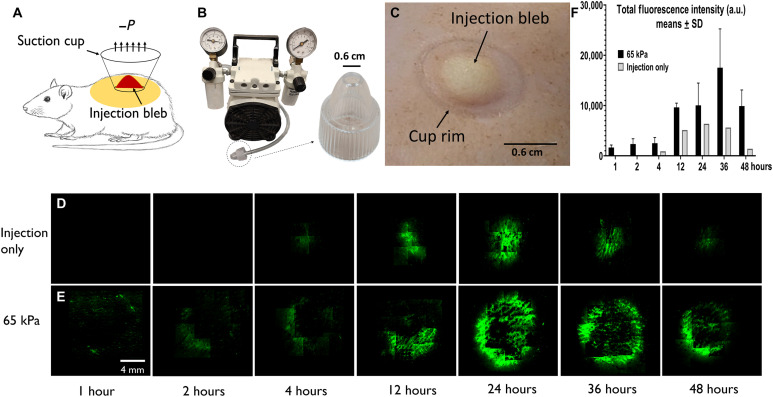
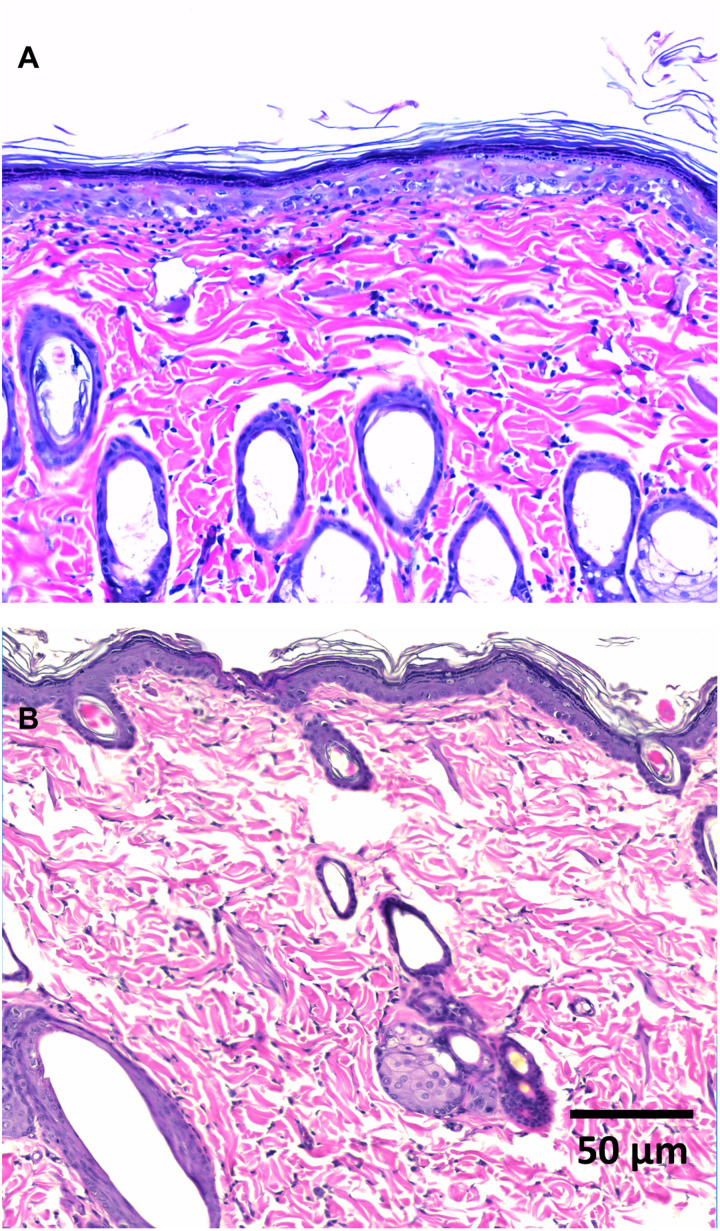
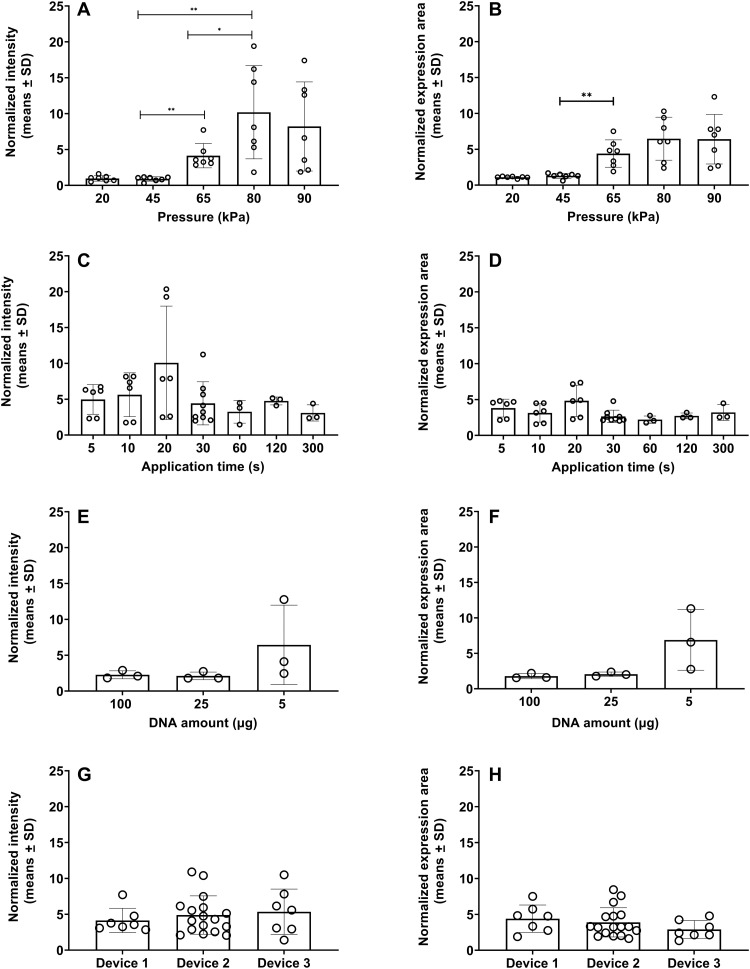
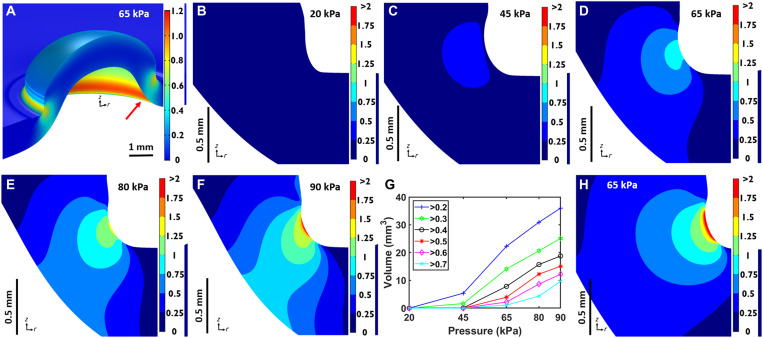
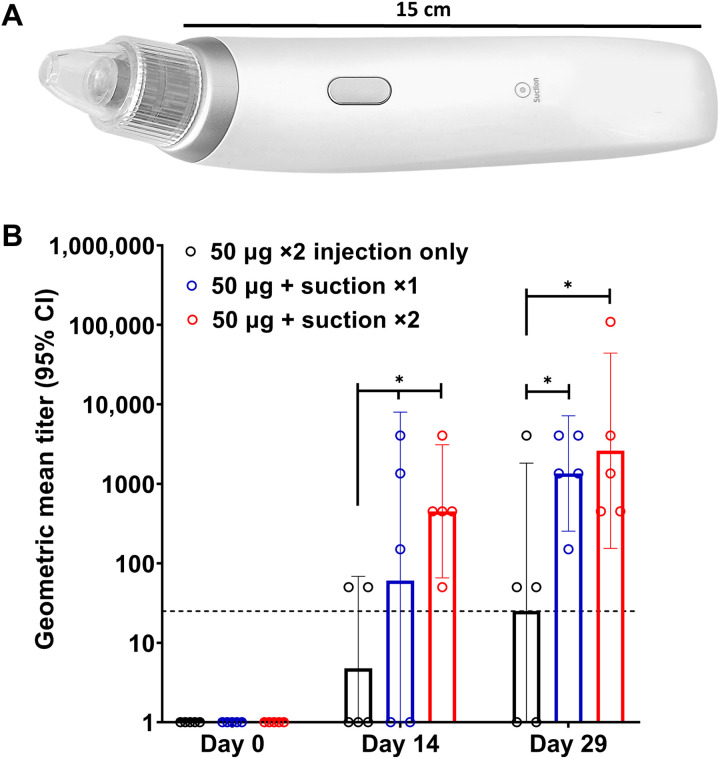
This work reports a suction-based cutaneous delivery method for in vivo DNA transfection. Following intradermal Mantoux injection of plasmid DNA in a rat model, a moderate negative pressure is applied to the injection site, a technique similar to Chinese báguàn and Middle Eastern hijama cupping therapies. Strong GFP expression was demonstrated with pEGFP-N1 plasmids where fluorescence was observed as early as 1 hour after dosing. Modeling indicates a strong correlation between focal strain/stress and expression patterns. The absence of visible and/or histological tissue injury contrasts with current in vivo transfection systems such as electroporation. Specific utility was demonstrated with a synthetic SARS-CoV-2 DNA vaccine, which generated host humoral immune response in rats with notable antibody production. This method enables an easy-to-use, cost-effective, and highly scalable platform for both laboratorial transfection needs and clinical applications for nucleic acid–based therapeutics and vaccines.
这项工作报道了一种基于吸力的皮肤传递方法,用于体内 DNA 转染。在大鼠模型中通过皮内曼图克斯注射质粒 DNA 后,在注射部位施加适度的负压,这种技术类似于中国拔火罐和中东 hijama 拔罐疗法。使用 pEGFP-N1 质粒进行实验,在给药后 1 小时即可观察到强烈的 GFP 表达,荧光成像。模型表明,局灶应变/应力与表达模式之间存在很强的相关性。与电穿孔等当前的体内转染系统相比,这种方法没有明显的可见和/或组织损伤。该方法还通过一种合成的 SARS-CoV-2 DNA 疫苗得到了具体应用,该疫苗在大鼠中产生了体液免疫反应,并产生了显著的抗体。这种方法为实验室转染需求以及核酸治疗和疫苗的临床应用提供了一种易于使用、具有成本效益且高度可扩展的平台。