Falzarano Maria Sofia, Rossi Rachele, Grilli Andrea, Fang Mingyan, Osman Hana, Sabatelli Patrizia, Antoniel Manuela, Lu Zhiyuan, Li Wenyan, Selvatici Rita, Al-Khalili Cristina, Gualandi Francesca, Bicciato Silvio, Torelli Silvia, Ferlini Alessandra
UOL (Unità Operativa Logistica) of Medical Genetics, University of Ferrara, Ferrara, Italy.
The Dubowitz Neuromuscular Centre, UCL Great Ormond Street Institute of Child Health, London, United Kingdom.
Front Physiol. 2021 Oct 20;12:716471. doi: 10.3389/fphys.2021.716471. eCollection 2021.
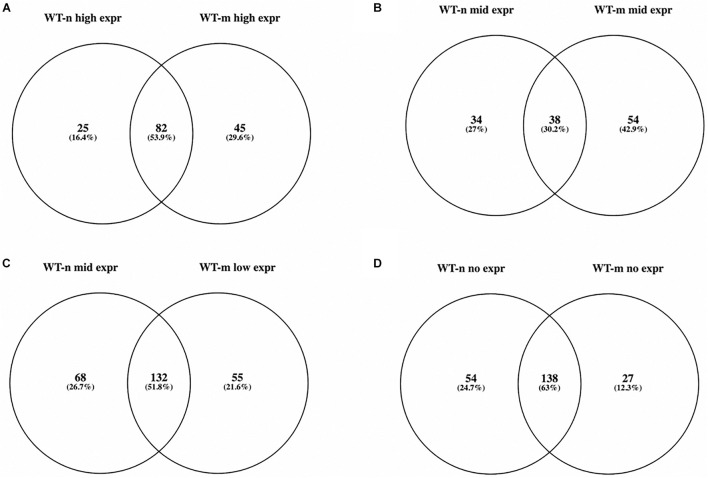
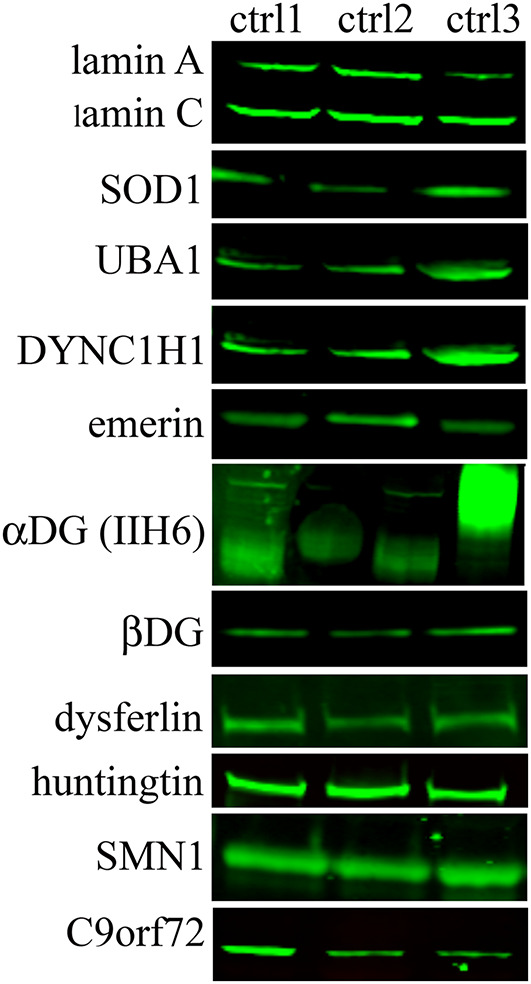
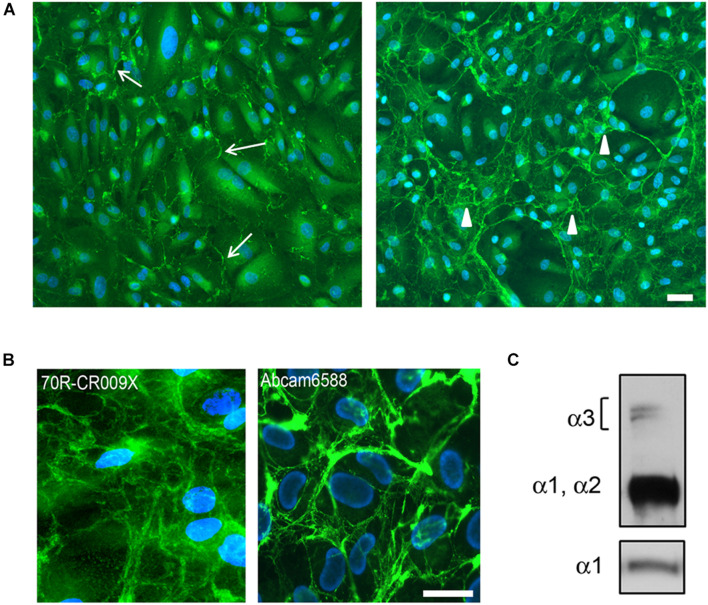
Neuromuscular disorders (NMDs) are a heterogeneous group of genetic diseases, caused by mutations in genes involved in spinal cord, peripheral nerve, neuromuscular junction, and muscle functions. To advance the knowledge of the pathological mechanisms underlying NMDs and to eventually identify new potential drugs paving the way for personalized medicine, limitations regarding the availability of neuromuscular disease-related biological samples, rarely accessible from patients, are a major challenge. We characterized urinary stem cells (USCs) by in-depth transcriptome and protein profiling to evaluate whether this easily accessible source of patient-derived cells is suitable to study neuromuscular genetic diseases, focusing especially on those currently involved in clinical trials. The global transcriptomics of either native or MyoD transformed USCs obtained from control individuals was performed by RNA-seq. The expression of 610 genes belonging to 16 groups of disorders (http://www.musclegenetable.fr/) whose mutations cause neuromuscular diseases, was investigated on the RNA-seq output. In addition, protein expression of 11 genes related to NMDs including , , , , , , , , , , and was analyzed in native USCs by immunofluorescence and/or Western blot (WB). RNA-seq profile of control USCs shows that 571 out of 610 genes known to be involved in NMDs, are expressed in USCs. Interestingly, the expression levels of the majority of NMD genes remain unmodified following USCs MyoD transformation. Most genes involved in the pathogenesis of all 16 groups of NMDs are well represented except for channelopathies and malignant hyperthermia related genes. All tested proteins showed high expression values, suggesting consistency between transcription and protein representation in USCs. Our data suggest that USCs are human cells, obtainable by non-invasive means, which might be used as a patient-specific cell model to study neuromuscular disease-causing genes and that they can be likely adopted for a variety of functional studies such as mutation characterization, pathway identification, and drug screening.
神经肌肉疾病(NMDs)是一组异质性的遗传疾病,由参与脊髓、周围神经、神经肌肉接头和肌肉功能的基因突变引起。为了增进对NMDs潜在病理机制的了解,并最终确定为个性化医疗铺平道路的新潜在药物,与神经肌肉疾病相关的生物样本难以从患者处获取,这一限制是一个重大挑战。我们通过深入的转录组和蛋白质分析对尿源干细胞(USCs)进行了表征,以评估这种易于获取的患者来源细胞是否适合用于研究神经肌肉遗传疾病,尤其关注那些目前正在进行临床试验的疾病。通过RNA测序对从对照个体获得的天然或经MyoD转化的USCs进行全局转录组学分析。在RNA测序输出结果中,研究了属于16组疾病(http://www.musclegenetable.fr/)的610个基因的表达,这些疾病的突变会导致神经肌肉疾病。此外,通过免疫荧光和/或蛋白质印迹(WB)分析了天然USCs中与NMDs相关的11个基因的蛋白质表达,包括[此处原文未列出具体基因名称]。对照USCs的RNA测序图谱显示,已知参与NMDs的610个基因中有571个在USCs中表达。有趣的是,大多数NMD基因的表达水平在USCs经MyoD转化后保持不变。除通道病和恶性高热相关基因外,所有16组NMDs发病机制中涉及的大多数基因都有很好的代表性。所有测试蛋白质均显示出高表达值,表明USCs中转录和蛋白质表达之间具有一致性。我们的数据表明,USCs是可通过非侵入性手段获得的人类细胞,可作为患者特异性细胞模型用于研究神经肌肉致病基因,并且它们可能适用于各种功能研究,如突变表征、通路鉴定和药物筛选。