Department of Microbial Biotechnology, Centro Nacional de Biotecnología, Consejo Superior de Investigaciones Científicas (CNB-CSIC), Darwin 3, Campus UAM Cantoblanco, Madrid, 28049, Spain.
Microb Biotechnol. 2022 May;15(5):1374-1391. doi: 10.1111/1751-7915.13967. Epub 2021 Nov 9.
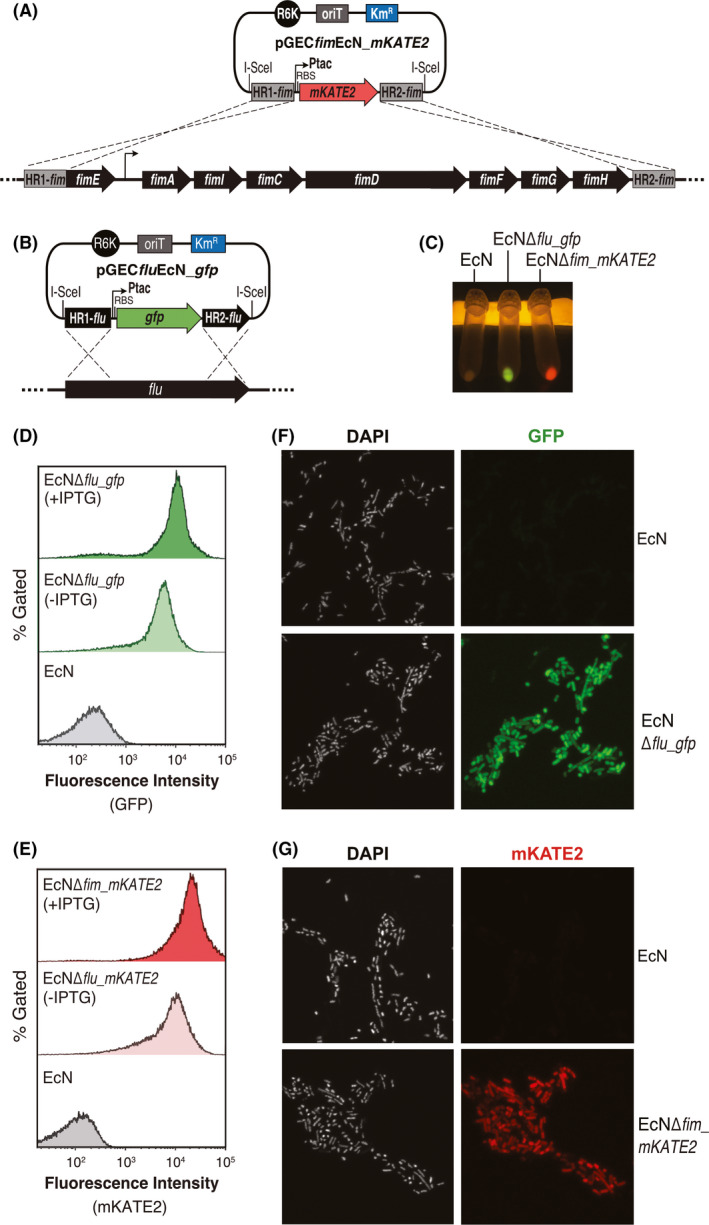
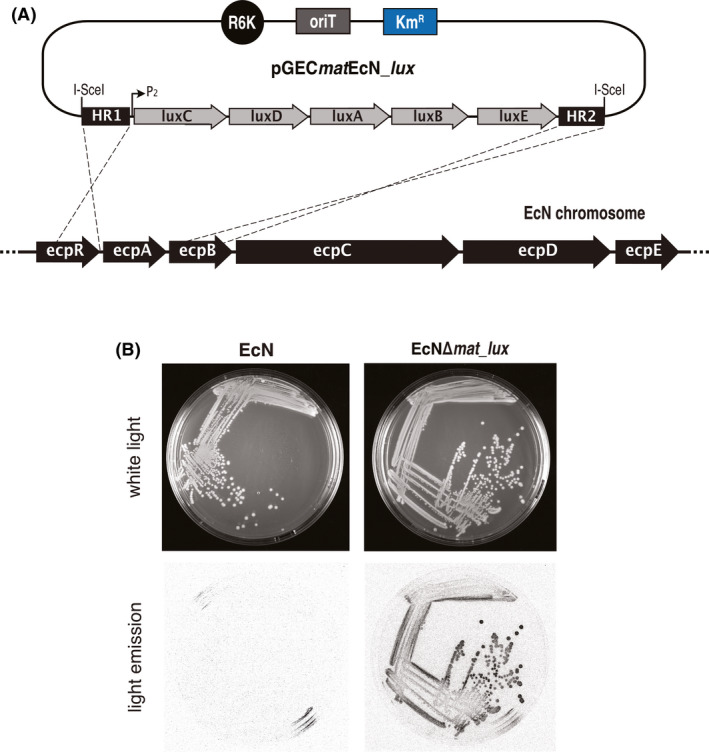
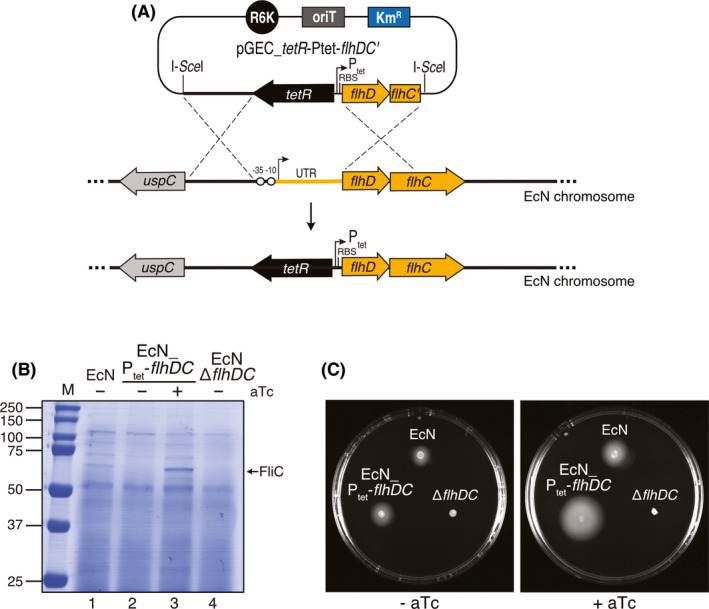
The probiotic strain Escherichia coli Nissle 1917 (EcN) is a common bacterial chassis in synthetic biology developments for therapeutic applications given its long track record of safe administration in humans. Chromosomal integration of the genes of interest (GOIs) in the engineered bacterium offers significant advantages in genetic stability and to control gene dose, but common methodologies relying on the transformation of EcN are inefficient. In this work, we implement in EcN the use of bacterial conjugation in combination with markerless genome engineering to efficiently insert multiple GOIs at different loci of EcN chromosome, leaving no antibiotic resistance genes, vector sequences or scars in the modified bacterium. The resolution of cointegrants that leads to markerless insertion of the GOIs requires expression of I-SceI endonuclease and its efficiency is enhanced by λ Red proteins. We show the potential of this strategy by integrating different genes encoding fluorescent and bioluminescent reporters (i.e. GFP, mKate2, luxCDABE) both individually and sequentially. We also demonstrate its application for gene deletions in EcN (ΔflhDC) and to replace the endogenous regulation of chromosomal locus (i.e. flhDC) by heterologous regulatory elements (e.g. tetR-Ptet) in order to have an ectopic control of gene expression in EcN with an external inducer to alter bacterial behaviour (e.g. flagellar motility). Whole-genome sequencing confirmed the introduction of the designed modifications without off-target alterations in the genome. This straightforward approach accelerates the generation of multiple modifications in EcN chromosome for the generation of living bacterial therapeutics.
益生菌菌株大肠杆菌 Nissle 1917(EcN)是合成生物学治疗应用中常用的细菌底盘,因为它在人类中安全管理的悠久历史。在工程细菌中整合感兴趣的基因(GOI)具有遗传稳定性和控制基因剂量的显著优势,但依赖 EcN 转化的常见方法效率不高。在这项工作中,我们在 EcN 中实施了细菌接合与无标记基因组工程的结合,以有效地在 EcN 染色体的不同基因座插入多个 GOI,在修饰的细菌中不留下抗生素抗性基因、载体序列或痕迹。导致无标记插入 GOI 的共整合子的分辨率需要表达 I-SceI 内切酶,其效率通过 λ Red 蛋白增强。我们通过单独和顺序整合不同编码荧光和生物发光报告基因(即 GFP、mKate2、luxCDABE)来展示该策略的潜力。我们还证明了它在 EcN 中基因缺失(ΔflhDC)中的应用,以及通过异源调控元件(例如 tetR-Ptet)替代染色体基因座(例如 flhDC)的内源性调控,以便通过外部诱导物在 EcN 中异位控制基因表达,从而改变细菌行为(例如鞭毛运动)。全基因组测序证实了设计修饰的引入,而基因组没有非靶位改变。这种简单的方法加速了在 EcN 染色体中生成多个修饰,以生成活细菌治疗剂。