Department of Psychological and Brain Sciences, University of California, Santa Barbara, California, USA.
Institute for Collaborative Biotechnologies, University of California, Santa Barbara, California, USA.
Physiol Rep. 2021 Nov;9(21):e15106. doi: 10.14814/phy2.15106.
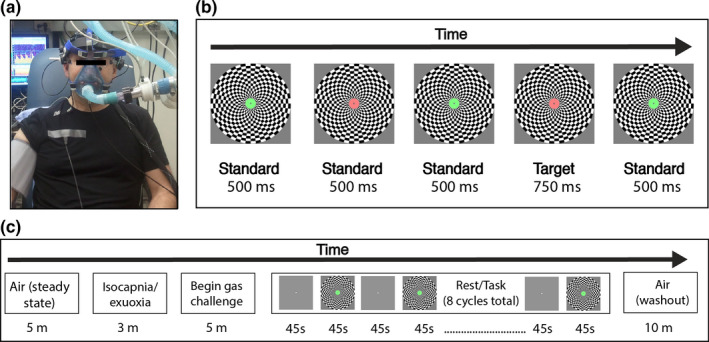
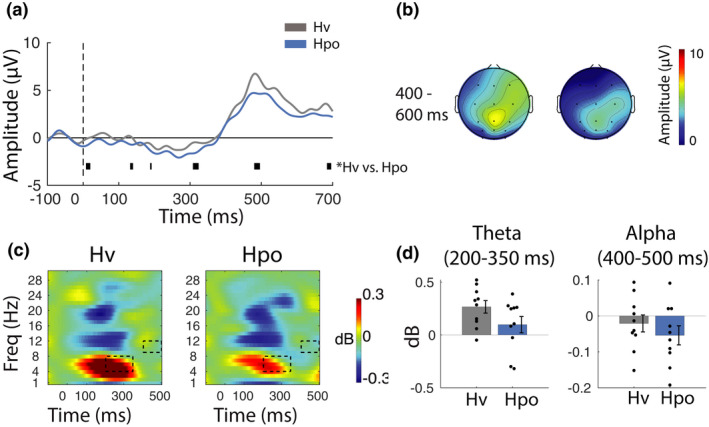
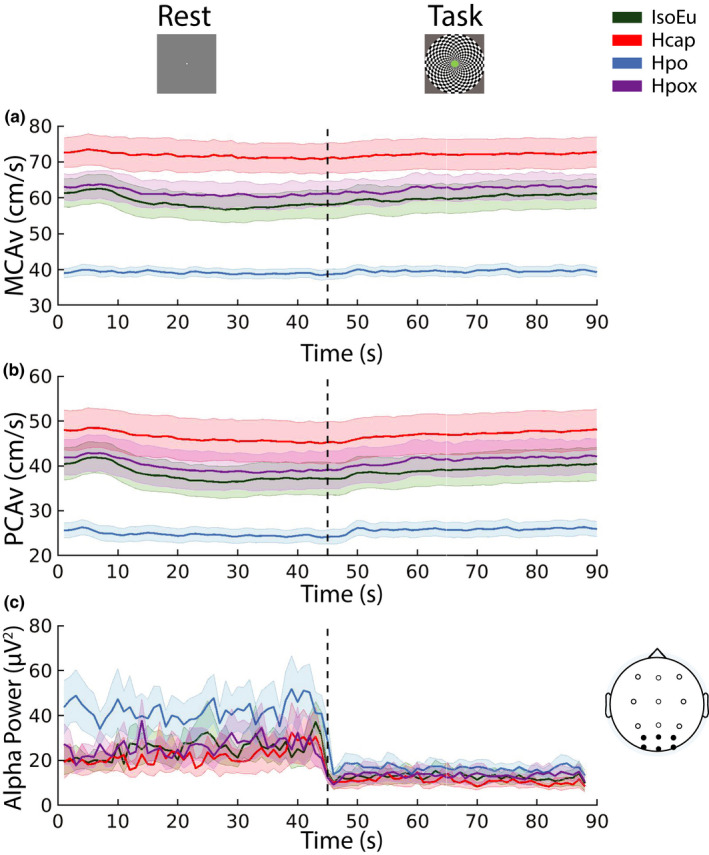
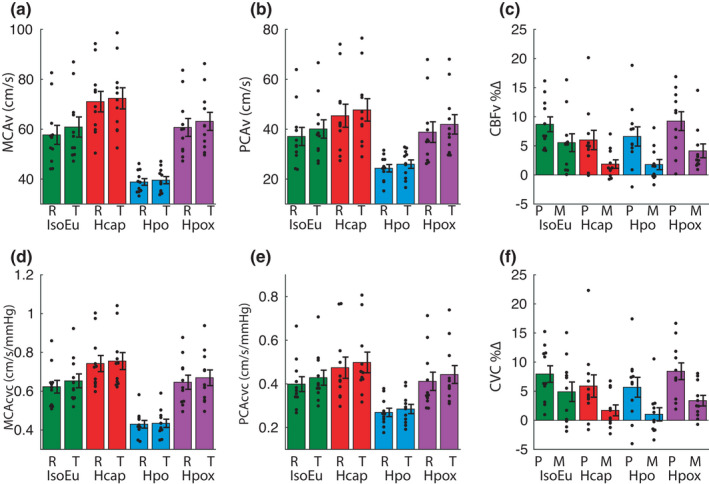
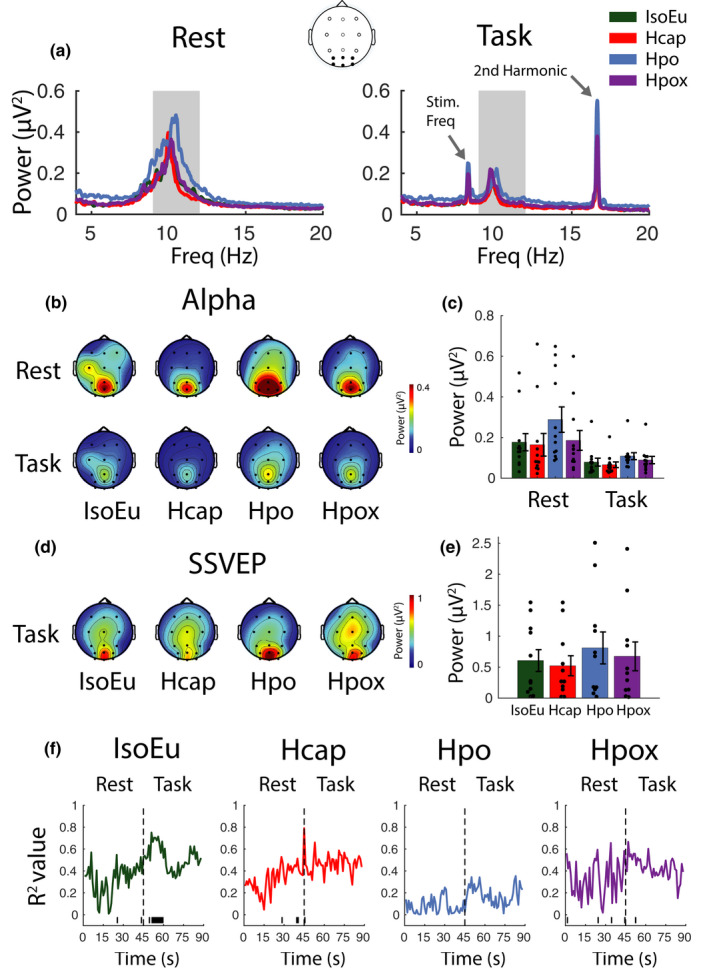
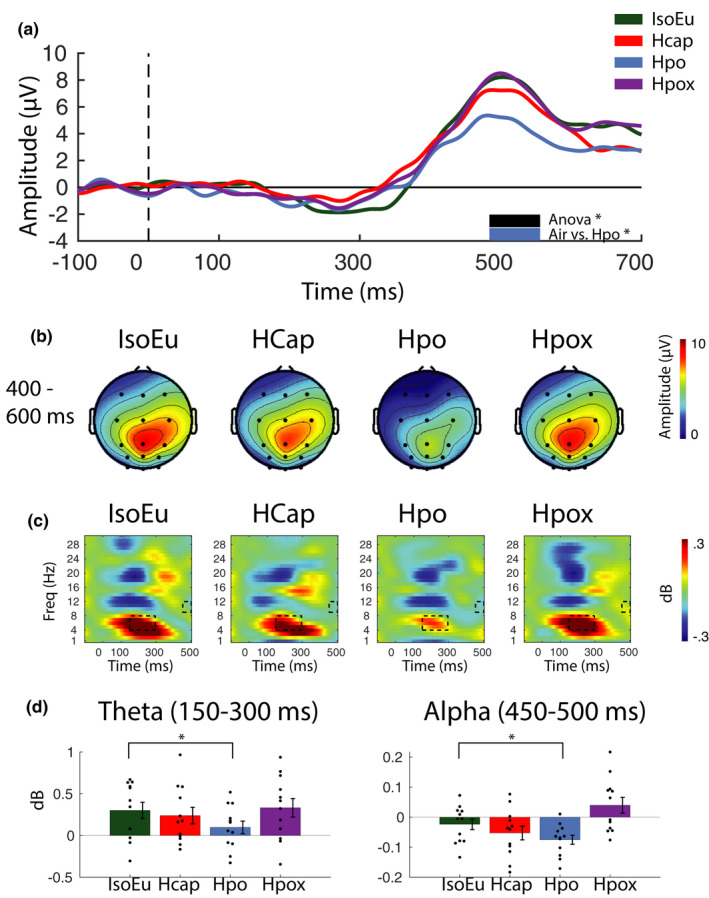
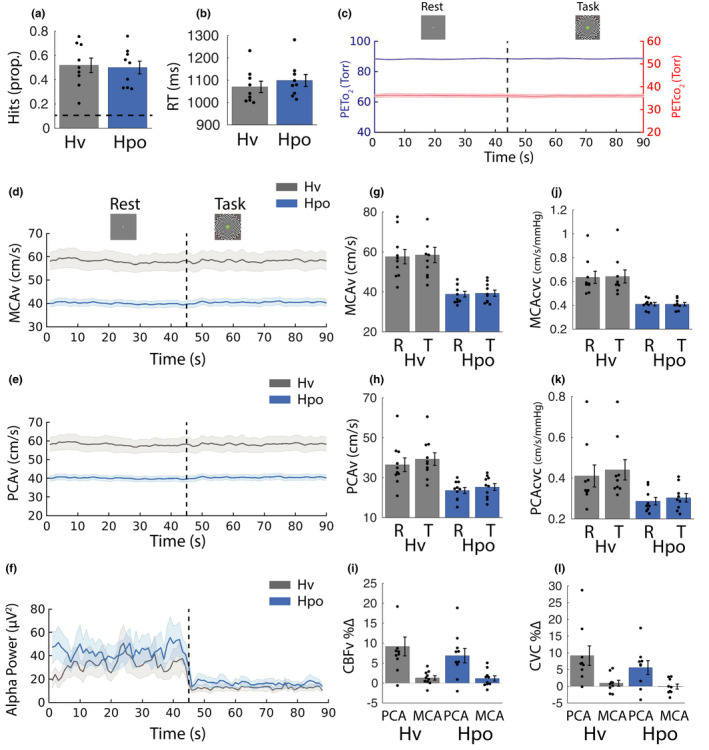
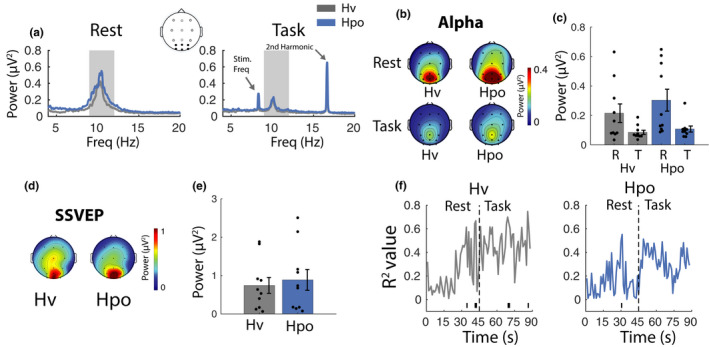
Impairments of cognitive function during alterations in arterial blood gases (e.g., high-altitude hypoxia) may result from the disruption of neurovascular coupling; however, the link between changes in arterial blood gases, cognition, and cerebral blood flow (CBF) is poorly understood. To interrogate this link, we developed a multimodal empirical strategy capable of monitoring neural correlates of cognition and CBF simultaneously. Human participants performed a sustained attention task during hypoxia, hypercapnia, hypocapnia, and normoxia while electroencephalographic (EEG) activity and CBF (middle and posterior cerebral arteries; transcranial Doppler ultrasound) were simultaneously measured. The protocol alternated between rest and engaging in a visual target detection task that required participants to monitor a sequence of brief-duration colored circles and detect infrequent, longer duration circles (targets). The target detection task was overlaid on a large, circular checkerboard that provided robust visual stimulation. Spectral decomposition and event-related potential (ERP) analyses were applied to the EEG data to investigate spontaneous and task-specific fluctuations in neural activity. There were three main sets of findings: (1) spontaneous alpha oscillatory activity was modulated as a function of arterial CO (hypocapnia and hypercapnia), (2) task-related neurovascular coupling was disrupted by all arterial blood gas manipulations, and (3) changes in task-related alpha and theta band activity and attenuation of the P3 ERP component amplitude were observed during hypocapnia. Since alpha and theta are linked with suppression of visual processing and executive control and P3 amplitude with task difficulty, these data suggest that transient arterial blood gas changes can modulate multiple stages of cognitive information processing.
动脉血气变化(例如,高原缺氧)期间认知功能的障碍可能是由于神经血管耦联的破坏所致;然而,动脉血气变化、认知和脑血流(CBF)之间的联系尚不清楚。为了探究这一联系,我们开发了一种多模态经验策略,能够同时监测认知和 CBF 的神经相关。人类参与者在缺氧、高碳酸血症、低碳酸血症和正常氧合期间执行持续注意力任务,同时测量脑电图(EEG)活动和 CBF(大脑中动脉和大脑后动脉;经颅多普勒超声)。该方案在休息和进行视觉目标检测任务之间交替进行,要求参与者监测一系列短暂持续时间的彩色圆圈,并检测罕见的、持续时间较长的圆圈(目标)。目标检测任务叠加在一个大的圆形棋盘上,提供了强大的视觉刺激。对 EEG 数据进行频谱分解和事件相关电位(ERP)分析,以研究神经活动的自发和任务特异性波动。有三组主要发现:(1)自发的 alpha 振荡活动随着动脉 CO 的变化而调节(低碳酸血症和高碳酸血症),(2)所有动脉血气操作都会破坏与任务相关的神经血管耦合,以及(3)在低碳酸血症期间观察到与视觉处理和执行控制抑制相关的任务相关的 alpha 和 theta 波段活动的变化和 P3 ERP 成分振幅的衰减。由于 alpha 和 theta 与视觉处理和执行控制的抑制以及 P3 幅度与任务难度有关,这些数据表明,短暂的动脉血气变化可以调节认知信息处理的多个阶段。