Clinical Pharmacy Department, Faculty of Pharmacy, Beni-Suef University, Beni-suef, Egypt.
Clinical Pharmacy Department, Faculty of Pharmacy, Beni-Suef University, Beni-suef, Egypt.
J Infect Public Health. 2022 Jan;15(1):116-122. doi: 10.1016/j.jiph.2021.10.024. Epub 2021 Nov 2.
The effectiveness of the best combination between different antiviral and anti-inflammatory drugs stills an interest in the treatment of COVID19 infection.
A prospective randomized cohort study comprised 108 adult patients with confirmed PCR COVID 19 infection with systemic hyper inflammation state, divided into two groups according to the treatment regimen, 56 in the tocilizumab- hydroxychloroquine (TCZ-HCQ) treatment, and 52 in the tocilizumab-remdesivir (TCZ-RMV) treatment. The first group received a combination of I.V. TCZ (400-800 mg every 24 h for only two doses) and HCQ (400 mg twice in the first day then 200 mg twice for 5 days) while the second group of patients received I.V. RMV of 200 mg on day 1 followed by 100 mg once daily infused over 60 min for 5 days with the same TCZ regimen used in the first group. All clinical parameters and laboratory investigations were assessed before and after treatment.
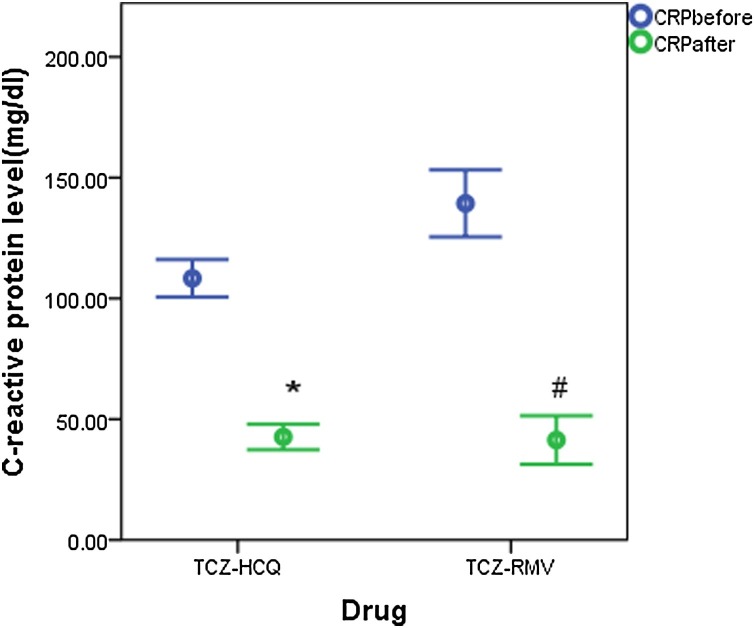
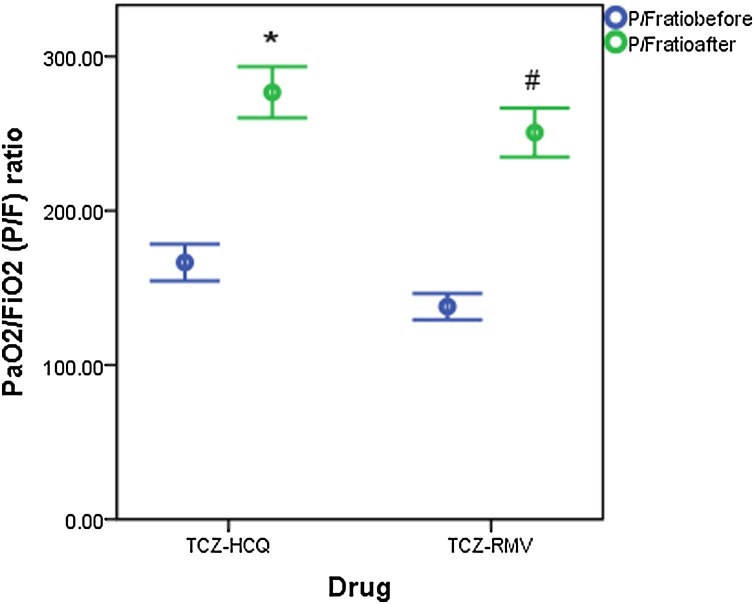
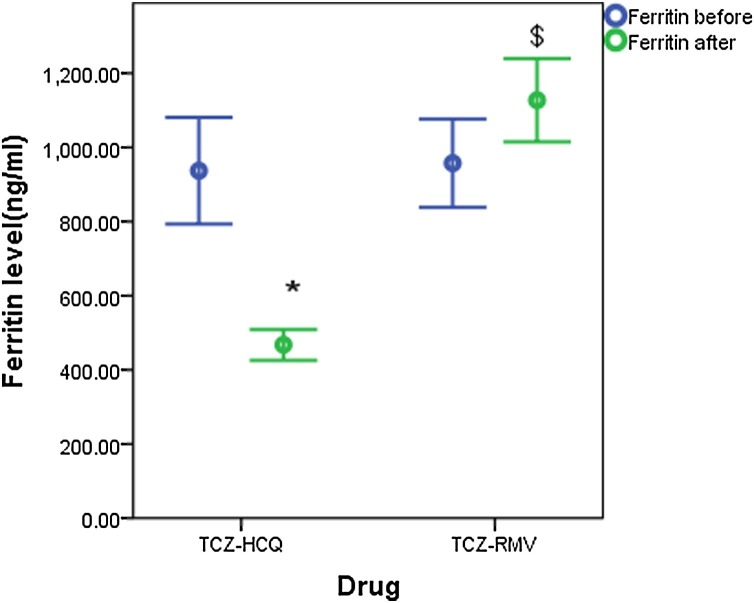
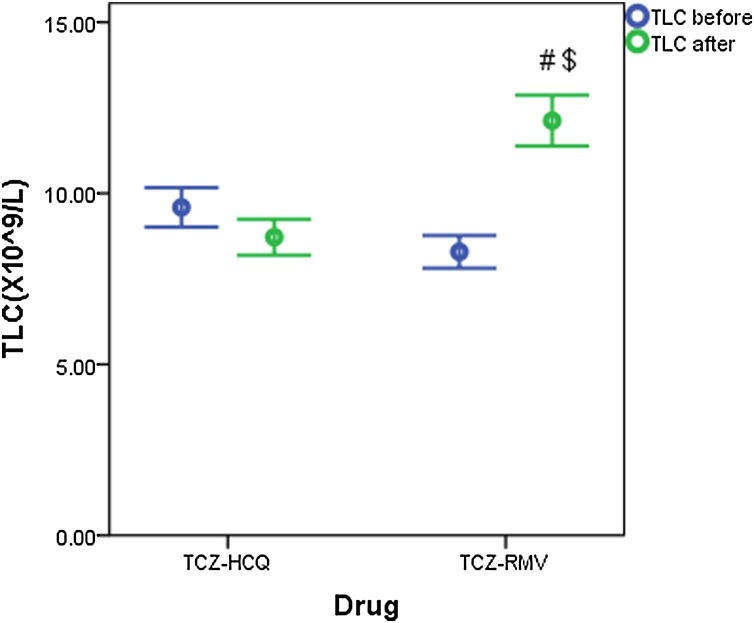
The CRP was significantly decreased while PaO/FiO (P/F) ratio post-treatment was significantly improved in both treatment groups. TCZ-HCQ group showed a significant decrease in the ferritin, LDH, and D. Dimer levels. The median days of hospitalization with interquartile range (IQR) were 10 (6-16) and 8 (5-12) for TCZ-HCQ and TCZ-RMV groups, respectively. The numbers of mechanically ventilated patients were 25 and 43 for TCZ-HCQ and TCZ-RMV groups, respectively. Therapeutic failure was about 26.8% in the TCZ-HCQ group and 30.8% in the TCZ-RMV group but there was no significant difference between both groups. Some complications were recognized only in TCZ-RMV following treatment including secondary bacterial infections (42.3%), myocarditis (15.4%), and finally pulmonary embolism (7.7%).
Efficacy of both TCZ-RMV and TCZ-HCQ combinations are observed in the treatment of severe COVID-19 patients; however the increased need for ICU or mechanical ventilation in the TCZ-RMV arm contributed to the appearance of cardiac and thrombotic events. The study was registered at the Clinical Trials registry (ClinicalTrials.gov; NCT04779047).
不同抗病毒和抗炎药物联合治疗 COVID-19 的最佳组合效果仍为治疗 COVID-19 感染的热点。
本前瞻性随机队列研究纳入了 108 例成人确诊 PCR 新冠病毒感染患者,这些患者存在全身炎症状态,根据治疗方案分为两组,56 例患者接受托珠单抗-羟氯喹(TCZ-HCQ)治疗,52 例患者接受托珠单抗-瑞德西韦(TCZ-RMV)治疗。第 1 组患者接受静脉注射 TCZ(400-800mg,每 24 小时 1 次,共 2 剂)和 HCQ(第 1 天 400mg,2 次,然后第 5 天 200mg,2 次)治疗,第 2 组患者接受静脉注射 RMV 200mg,第 1 天,然后每天 100mg,输注 60min,共 5 天,同时给予第 1 组相同的 TCZ 方案。所有临床参数和实验室检查均在治疗前后进行评估。
两组治疗后 CRP 均显著下降,PaO/FiO(P/F)比值显著改善。TCZ-HCQ 组铁蛋白、LDH 和 D-二聚体水平显著下降。TCZ-HCQ 和 TCZ-RMV 组的中位住院时间(IQR)分别为 10(6-16)和 8(5-12)天。需要机械通气的患者分别为 25 例和 43 例。TCZ-HCQ 组治疗失败率约为 26.8%,TCZ-RMV 组为 30.8%,但两组间无显著差异。TCZ-RMV 组治疗后仅发现一些并发症,包括继发细菌性感染(42.3%)、心肌炎(15.4%)和肺栓塞(7.7%)。
TCZ-RMV 和 TCZ-HCQ 联合治疗严重 COVID-19 患者均有效,但 TCZ-RMV 组 ICU 或机械通气需求增加导致出现心脏和血栓事件。该研究在临床试验注册处(ClinicalTrials.gov;NCT04779047)注册。