Faculty of Biology, University of Freiburg, 79104 Freiburg, Germany
Bernstein Center Freiburg, University of Freiburg, 79104 Freiburg, Germany.
eNeuro. 2021 Nov 29;8(6). doi: 10.1523/ENEURO.0274-21.2021. Print 2021 Nov-Dec.
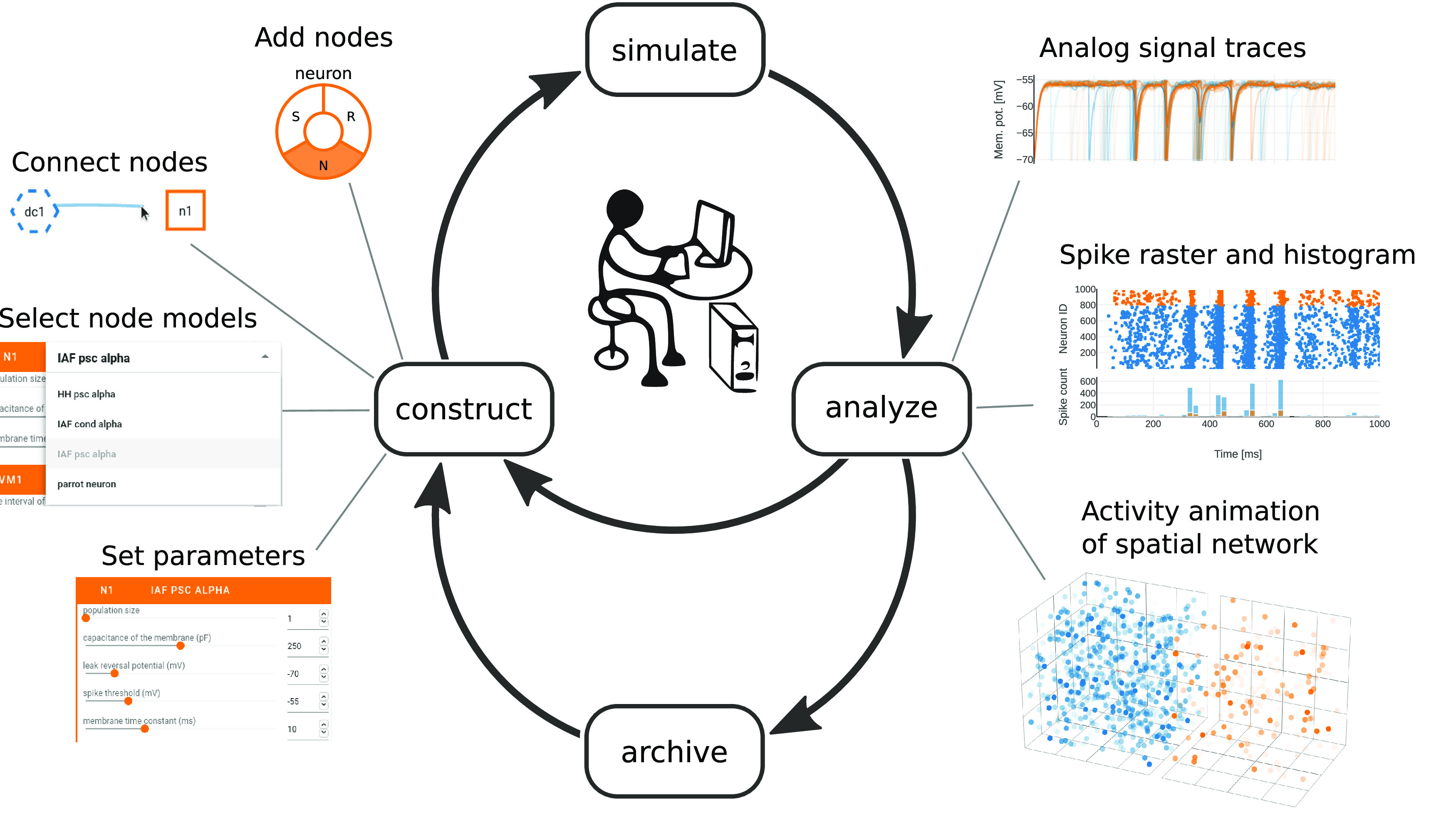
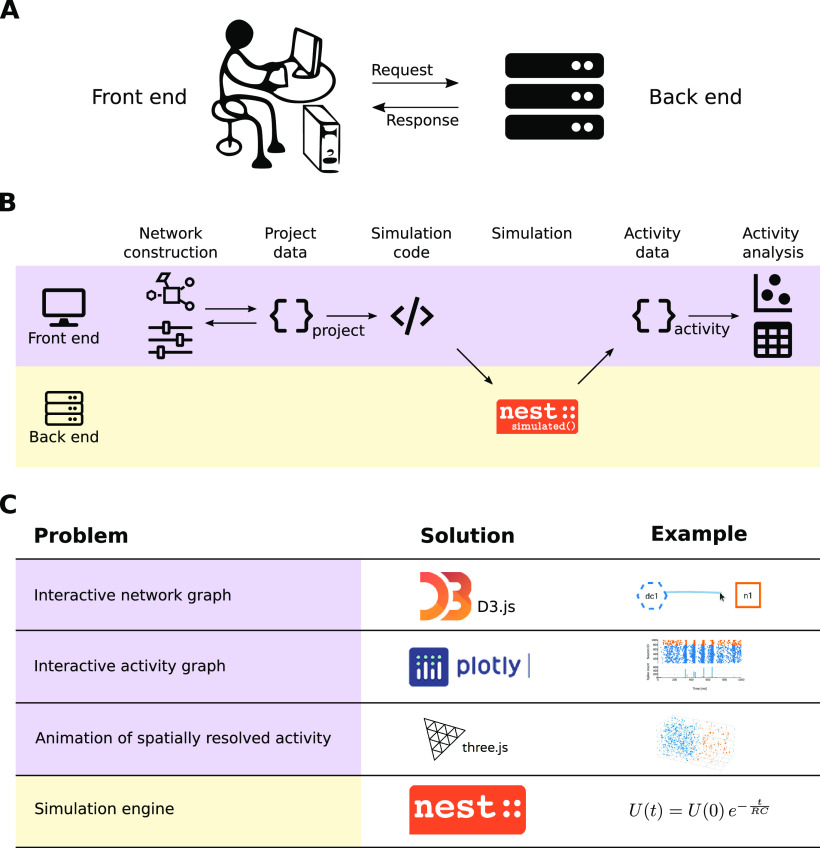
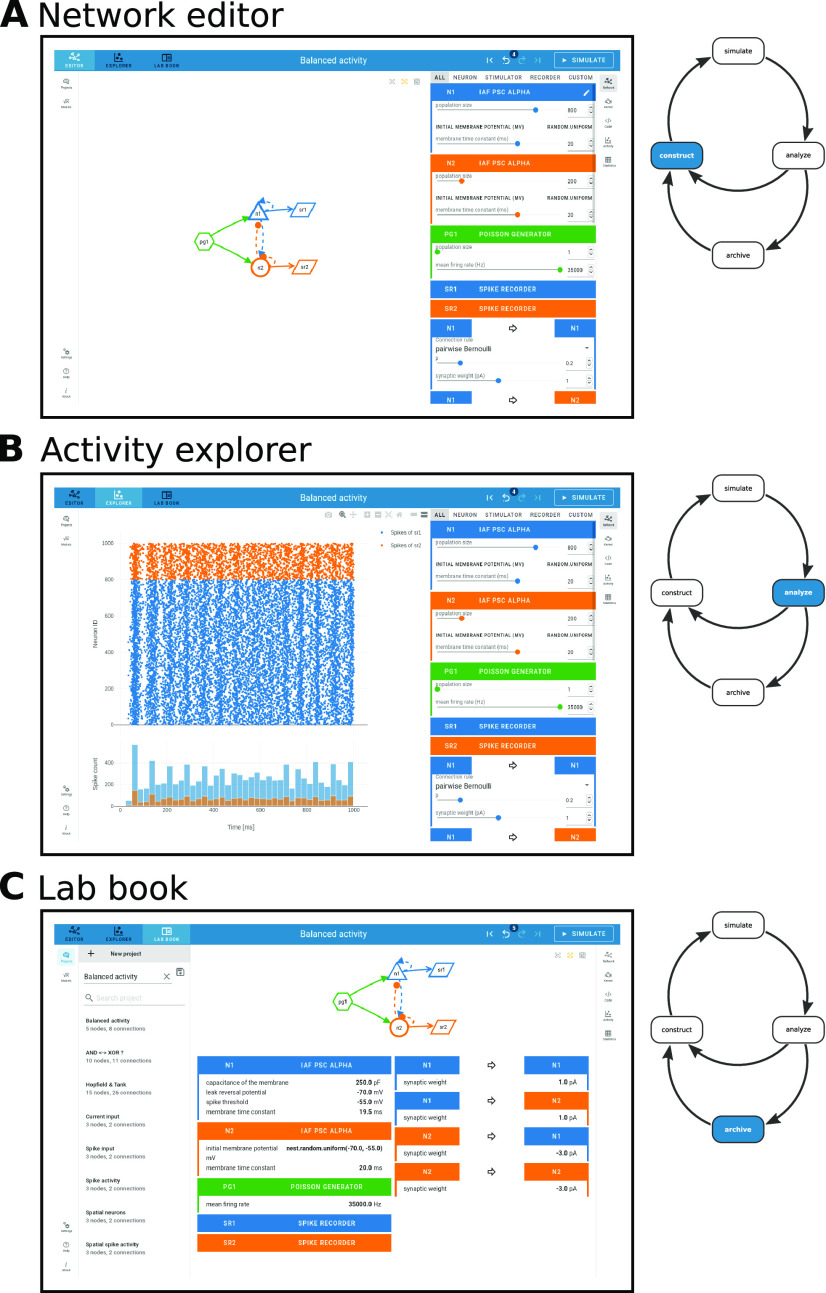
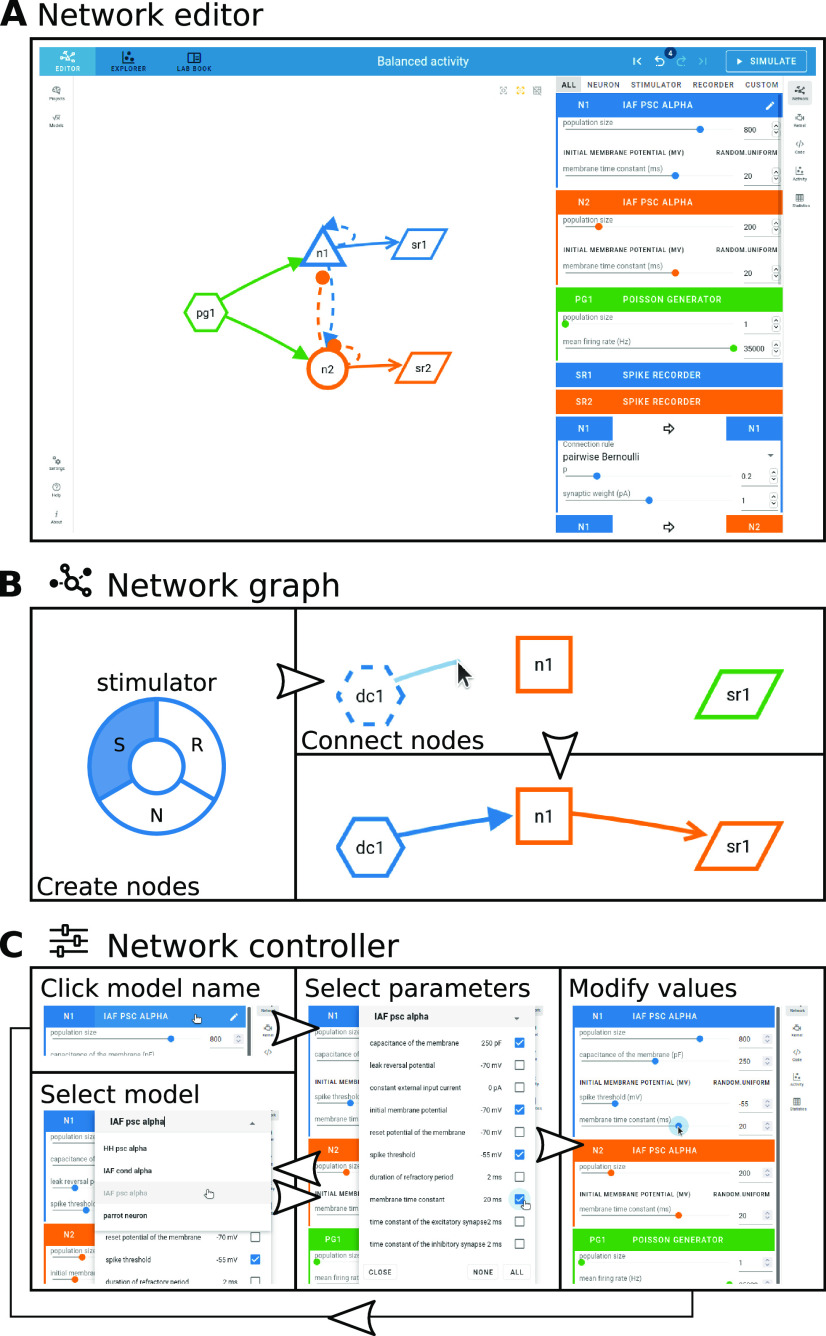
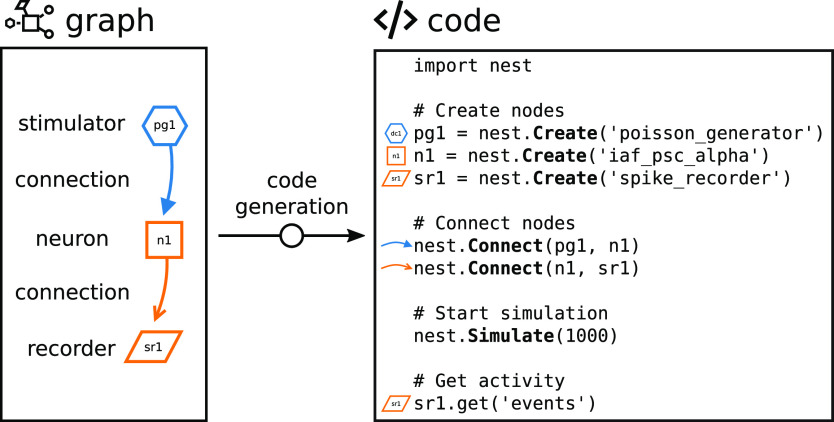
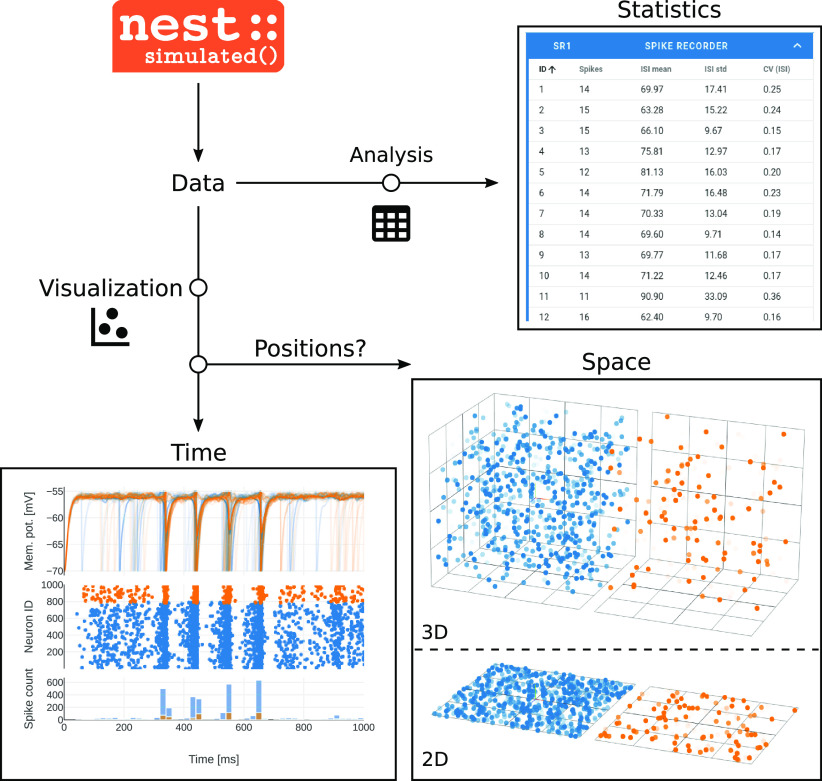
Simulation software for spiking neuronal network models matured in the past decades regarding performance and flexibility. But the entry barrier remains high for students and early career scientists in computational neuroscience since these simulators typically require programming skills and a complex installation. Here, we describe an installation-free Graphical User Interface (GUI) running in the web browser, which is distinct from the simulation engine running anywhere, on the student's laptop or on a supercomputer. This architecture provides robustness against technological changes in the software stack and simplifies deployment for self-education and for teachers. Our new open-source tool, NEST Desktop, comprises graphical elements for creating and configuring network models, running simulations, and visualizing and analyzing the results. NEST Desktop allows students to explore important concepts in computational neuroscience without the need to learn a simulator control language before. Our experiences so far highlight that NEST Desktop helps advancing both quality and intensity of teaching in computational neuroscience in regular university courses. We view the availability of the tool on public resources like the European ICT infrastructure for neuroscience EBRAINS as a contribution to equal opportunities.
在过去的几十年中,用于尖峰神经元网络模型的仿真软件在性能和灵活性方面已经成熟。但是,对于计算神经科学领域的学生和早期职业科学家来说,进入门槛仍然很高,因为这些模拟器通常需要编程技能和复杂的安装。在这里,我们描述了一种无需安装即可在网络浏览器中运行的图形用户界面 (GUI),它与在任何地方运行的仿真引擎不同,可以在学生的笔记本电脑或超级计算机上运行。这种架构提供了对软件堆栈中技术变化的鲁棒性,并简化了自我教育和教师的部署。我们的新开源工具 NEST Desktop 包括用于创建和配置网络模型、运行仿真以及可视化和分析结果的图形元素。NEST Desktop 允许学生在无需先学习仿真器控制语言的情况下探索计算神经科学中的重要概念。到目前为止,我们的经验表明,NEST Desktop 有助于提高计算神经科学在常规大学课程中的教学质量和强度。我们认为,该工具在像欧洲神经科学基础设施 EBRAINS 这样的公共资源上的可用性是对平等机会的贡献。