University of Oxford, 32 Wellington Square, Oxford, OX1 2ER, UK.
International Monetary Fund, University of Palermo, RCEA, 1900 Pennsylvania Avenue NW, Washington, DC, 20431, USA.
Sci Rep. 2021 Nov 11;11(1):22027. doi: 10.1038/s41598-021-01189-3.
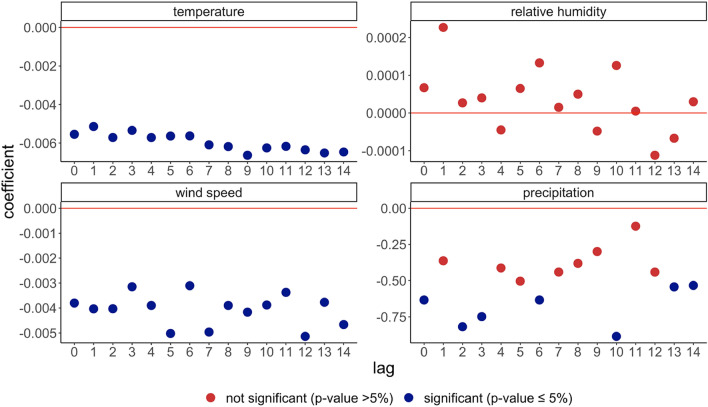
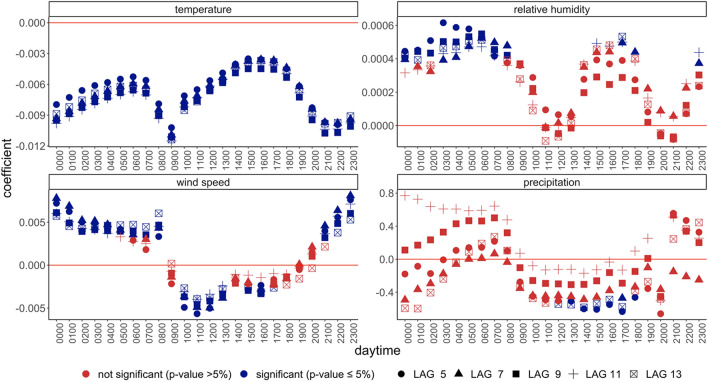
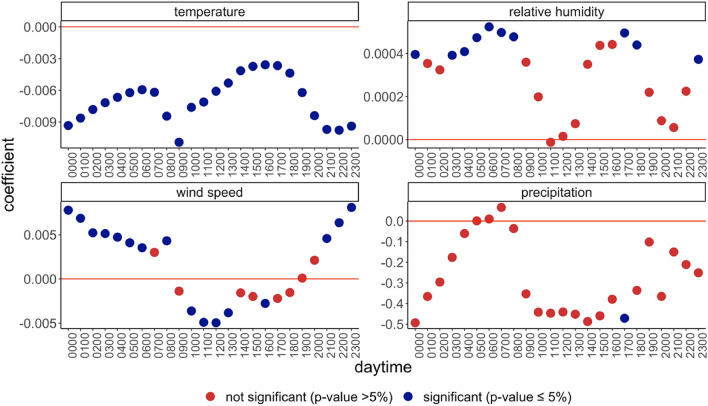
Rising temperature levels during spring and summer are often argued to enable lifting of strict containment measures even in the absence of herd immunity. Despite broad scholarly interest in the relationship between weather and coronavirus spread, previous studies come to very mixed results. To contribute to this puzzle, the paper examines the impact of weather on the COVID-19 pandemic using a unique granular dataset of over 1.2 million daily observations covering over 3700 counties in nine countries for all seasons of 2020. Our results show that temperature and wind speed have a robust negative effect on virus spread after controlling for a range of potential confounding factors. These effects, however, are substantially larger during mealtimes, as well as in periods of high mobility and low containment, suggesting an important role for social behaviour.
春季和夏季气温上升,往往被认为即使在没有群体免疫的情况下,也可以放宽严格的防控措施。尽管学者们广泛关注天气与冠状病毒传播之间的关系,但以前的研究结果却大相径庭。为了解决这个难题,本文利用 2020 年九个国家超过 3700 个县的超过 120 万条每日观测的独特粒度数据集,研究了天气对 COVID-19 大流行的影响。研究结果表明,在控制了一系列潜在的混杂因素后,温度和风速对病毒传播有显著的负向影响。然而,这些影响在就餐时间以及高流动性和低防控期间会显著增大,表明社会行为的重要作用。