Yu Yingli, Wang Min, Chen Rongchang, Sun Xiao, Sun Guibo, Sun Xiaobo
Beijing Key Laboratory of Innovative Drug Discovery of Traditional Chinese Medicine (Natural Medicine) and Translational Medicine, Institute of Medicinal Plant Development, Peking Union Medical College and Chinese Academy of Medical Sciences, Beijing, China.
Key Laboratory of Bioactive Substances and Resource Utilization of Chinese Herbal Medicine, Ministry of Education, Beijing, China.
J Ginseng Res. 2021 Nov;45(6):642-653. doi: 10.1016/j.jgr.2019.09.003. Epub 2019 Nov 14.
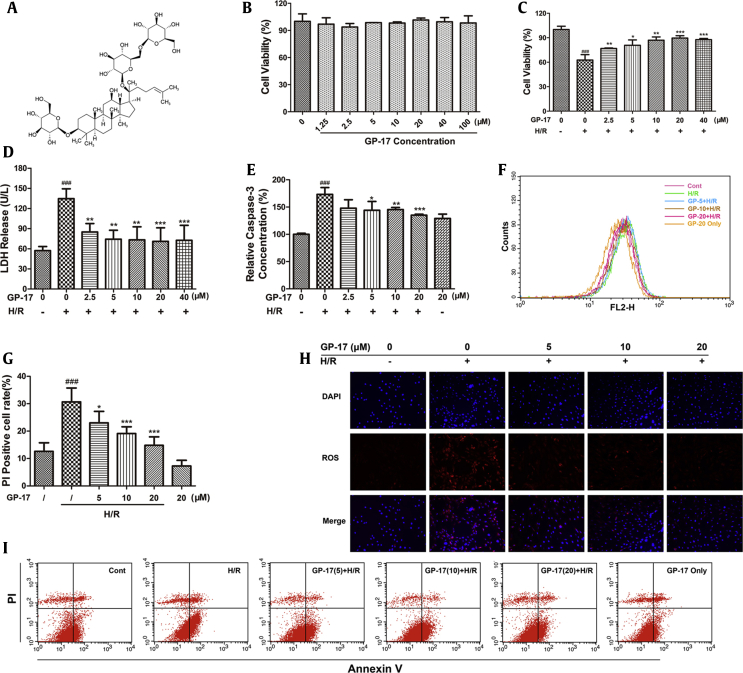
Effective strategies are dramatically needed to prevent and improve the recovery from myocardial ischemia and reperfusion (I/R) injury. Direct interactions between the mitochondria and endoplasmic reticulum (ER) during heart diseases have been recently investigated. This study was designed to explore the cardioprotective effects of gypenoside XVII (GP-17) against I/R injury. The roles of ER stress, mitochondrial injury, and their crosstalk within I/R injury and in GP-17-induced cardioprotection are also explored.
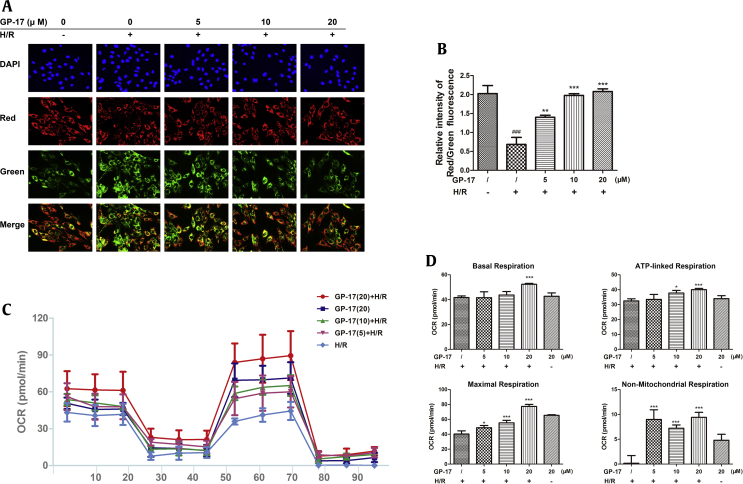
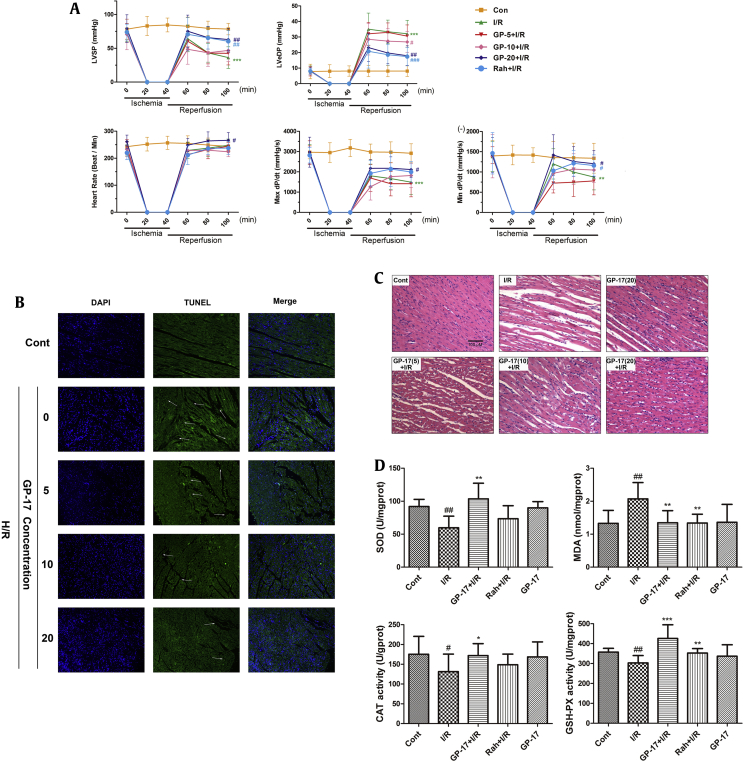
Cardiac contractility function was recorded in Langendorff-perfused rat hearts. The effects of GP-17 on mitochondrial function including mitochondrial permeability transition pore opening, reactive oxygen species production, and respiratory function were determined using fluorescence detection kits on mitochondria isolated from the rat hearts. H9c2 cardiomyocytes were used to explore the effects of GP-17 on hypoxia/reoxygenation.
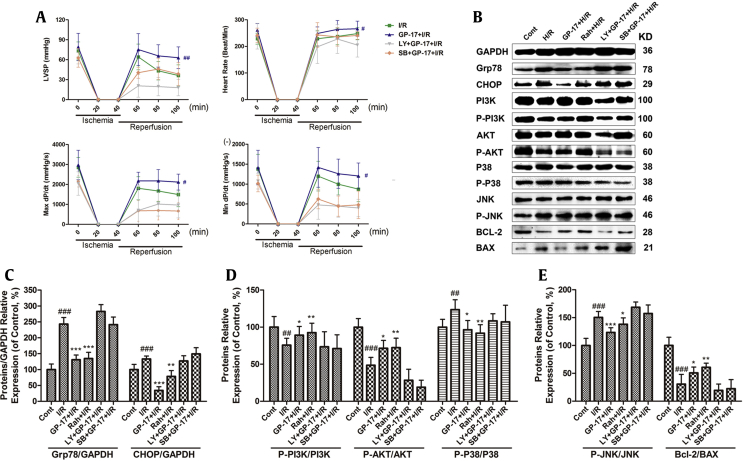
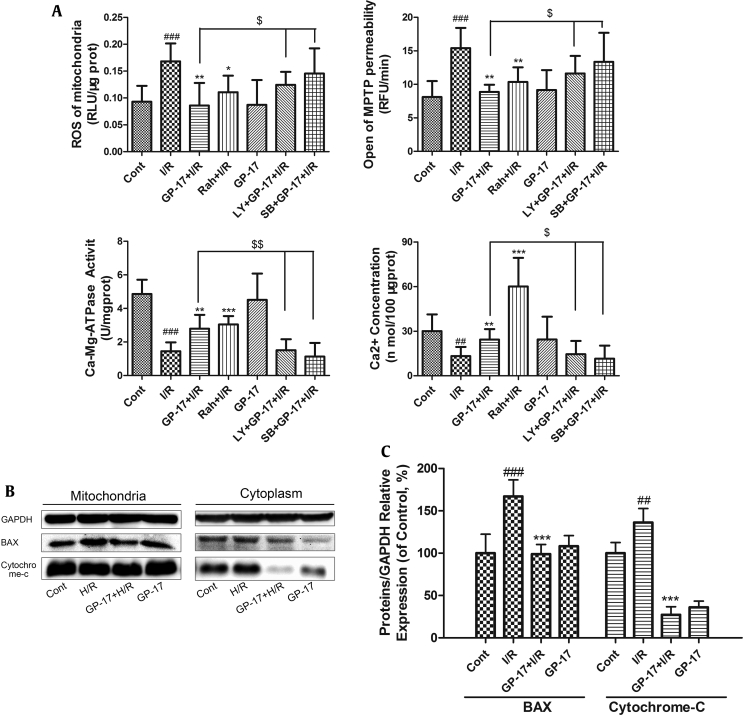
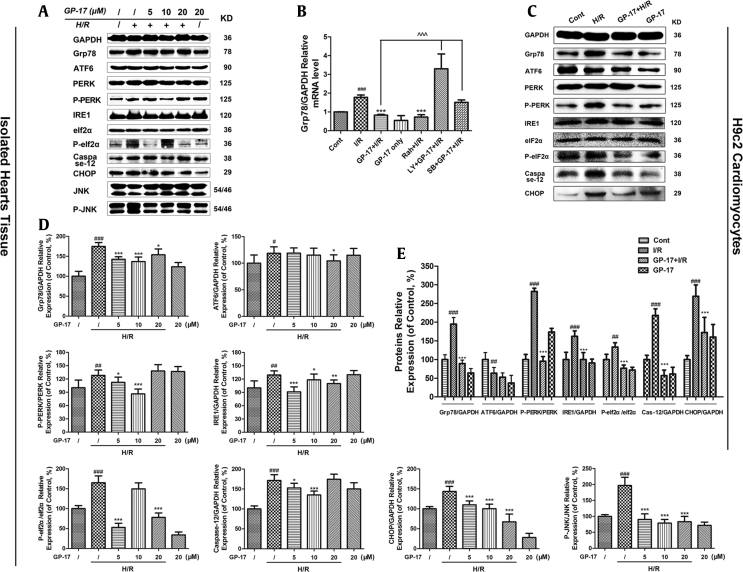
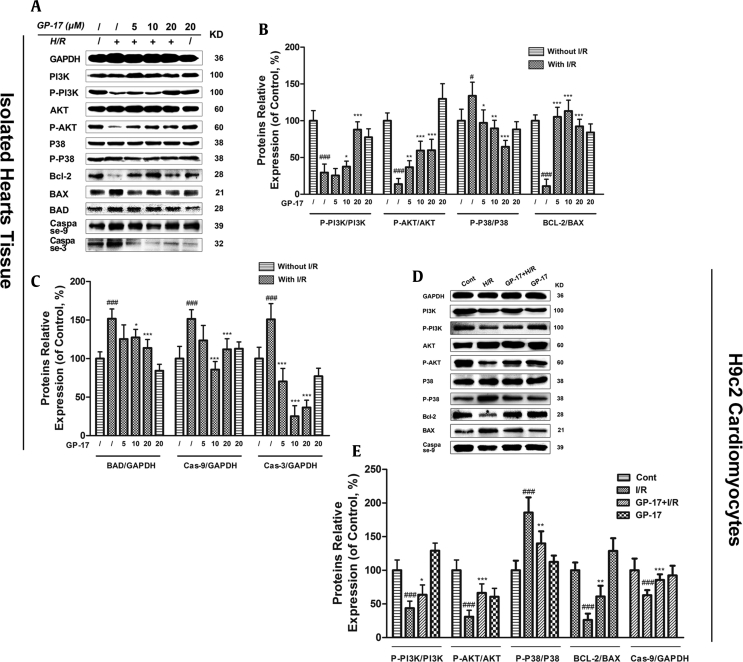
We found that GP-17 inhibits myocardial apoptosis, reduces cardiac dysfunction, and improves contractile recovery in rat hearts. Our results also demonstrate that apoptosis induced by I/R is predominantly mediated by ER stress and associated with mitochondrial injury. Moreover, the cardioprotective effects of GP-17 are controlled by the PI3K/AKT and P38 signaling pathways.
GP-17 inhibits I/R-induced mitochondrial injury by delaying the onset of ER stress through the PI3K/AKT and P38 signaling pathways.
迫切需要有效的策略来预防和改善心肌缺血再灌注(I/R)损伤后的恢复。近年来,人们对心脏病期间线粒体与内质网(ER)之间的直接相互作用进行了研究。本研究旨在探讨绞股蓝皂苷XVII(GP-17)对I/R损伤的心脏保护作用。还探讨了内质网应激、线粒体损伤及其在I/R损伤和GP-17诱导的心脏保护中的相互作用。
在Langendorff灌注的大鼠心脏中记录心脏收缩功能。使用荧光检测试剂盒对从大鼠心脏分离的线粒体,测定GP-17对线粒体功能的影响,包括线粒体通透性转换孔开放、活性氧生成和呼吸功能。使用H9c2心肌细胞探讨GP-17对缺氧/复氧的影响。
我们发现GP-17可抑制大鼠心脏的心肌细胞凋亡,减轻心脏功能障碍,并改善收缩恢复。我们的结果还表明,I/R诱导的凋亡主要由内质网应激介导,并与线粒体损伤有关。此外,GP-17的心脏保护作用受PI3K/AKT和P38信号通路调控。
GP-17通过PI3K/AKT和P38信号通路延迟内质网应激的发生,从而抑制I/R诱导的线粒体损伤。