Research Center for Pharmacology and Toxicology, Institute of Medicinal Plant Development, Peking Union Medical College, Chinese Academy of Medical Sciences, Beijing, 100193, China.
Key Laboratory of Material Basis and Resource Utilization of Chinese Herbal Medicine, Beijing, 100193, China.
J Transl Med. 2022 Dec 27;20(1):622. doi: 10.1186/s12967-022-03830-9.
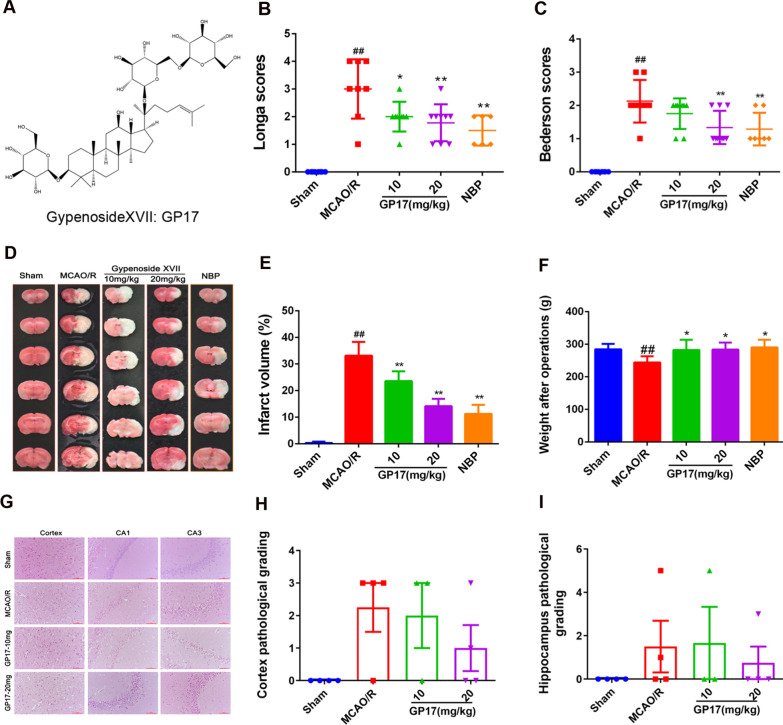
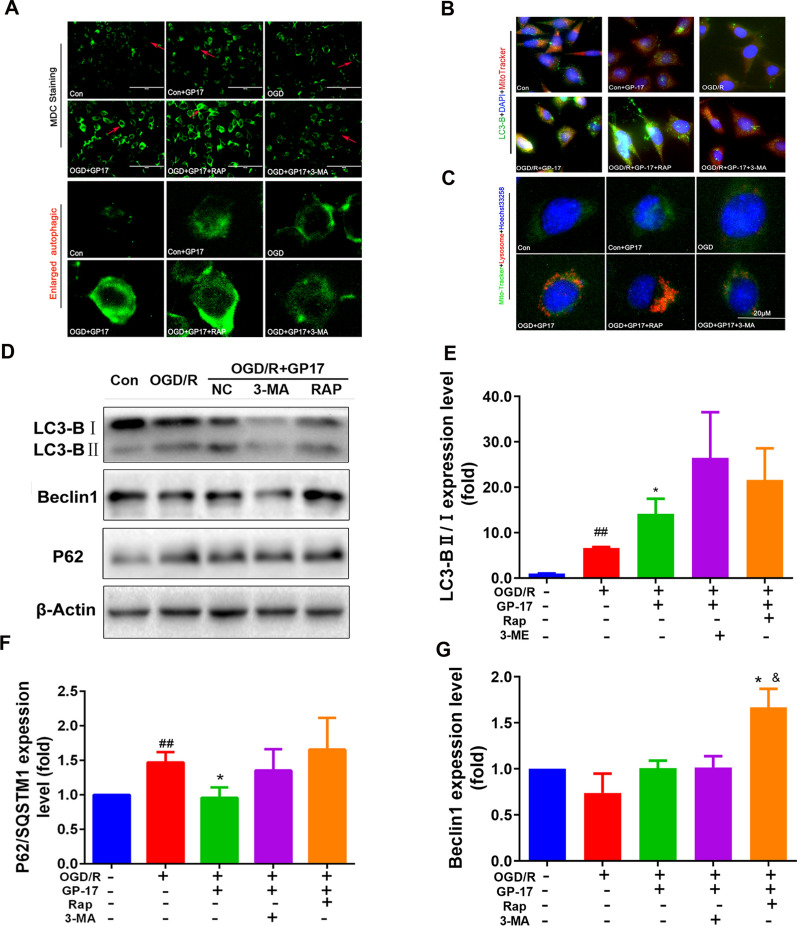
Mitochondrial autophagy maintains mitochondrial function and cellular homeostasis and plays a critical role in the pathological process of cerebral ischemia/reperfusion injury (CIRI). Whether Gypenoside XVII (GP17) has regulatory effects on mitochondrial autophagy against CIRI remains unclear. The purpose of this study was to investigate the pharmacodynamic effects and mechanisms of GP17 on mitochondrial autophagy after CIRI.
A rat middle cerebral artery occlusion/reperfusion (MCAO/R) model was used to assess the effects of GP17 against CIRI and to explore the underlying mechanisms. An oxygen-glucose deprivation/reoxygenation (OGD/R) cell model was used to verify the ameliorative effects on mitochondrial damage and to probe the autophagy pathways involved in combating neural injuries.
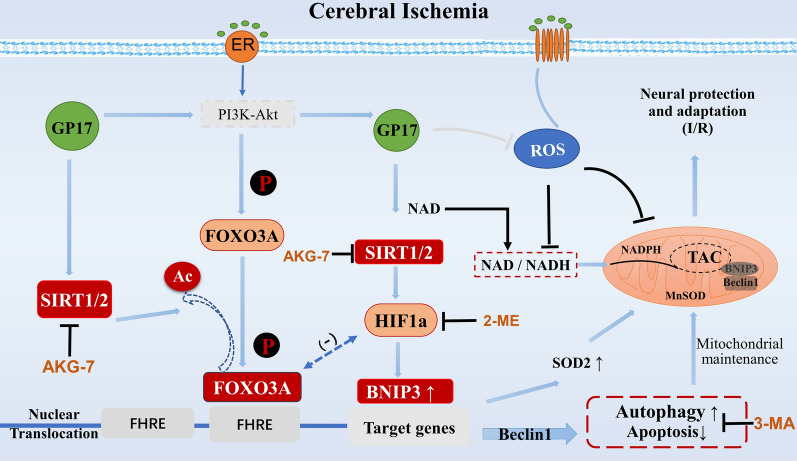
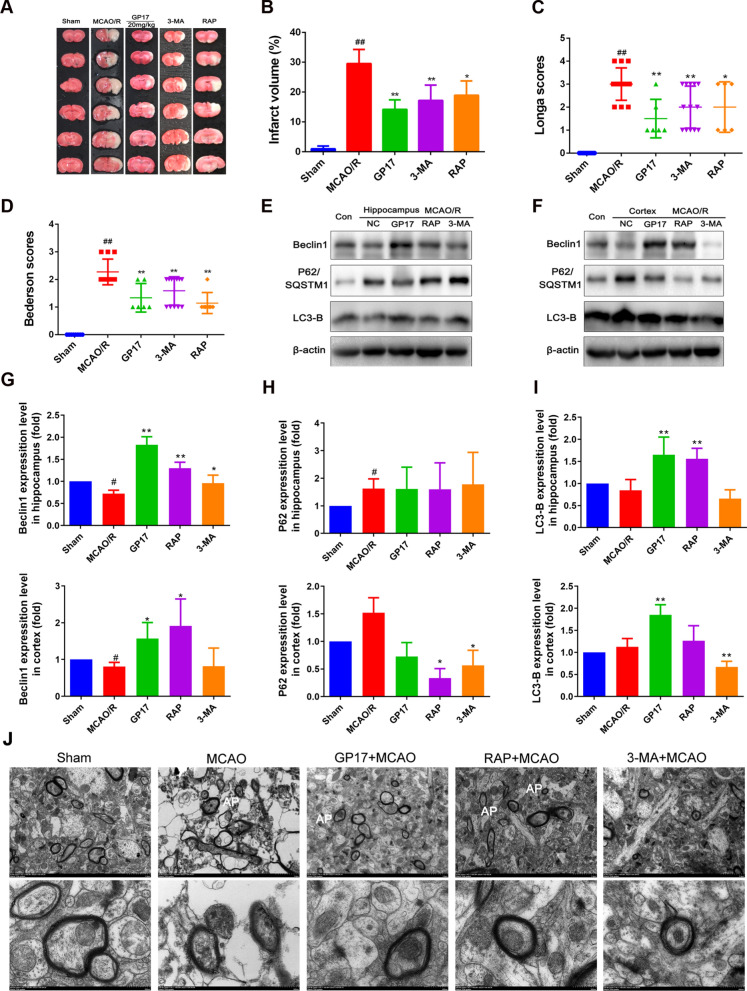
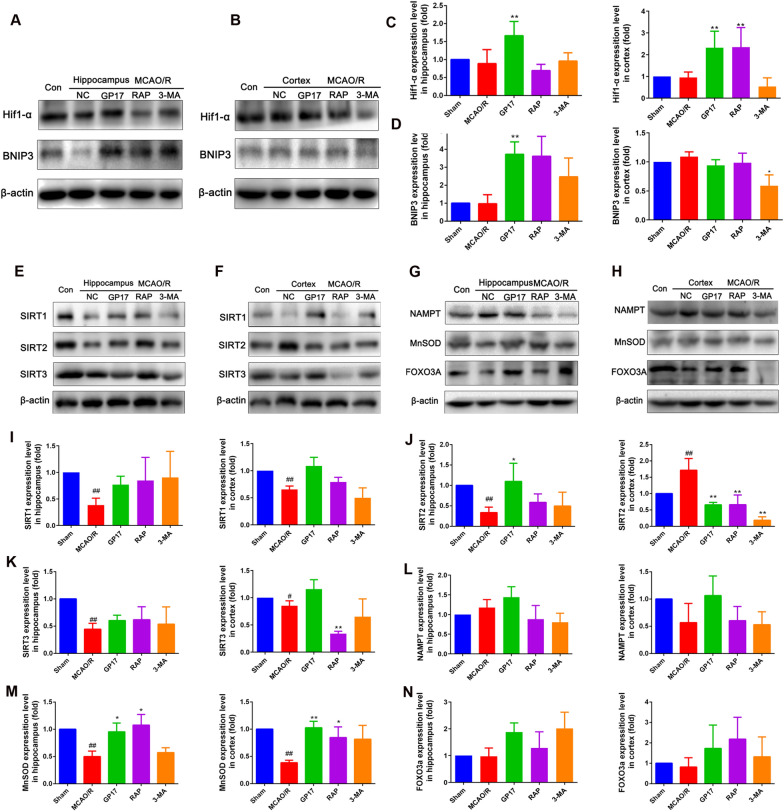
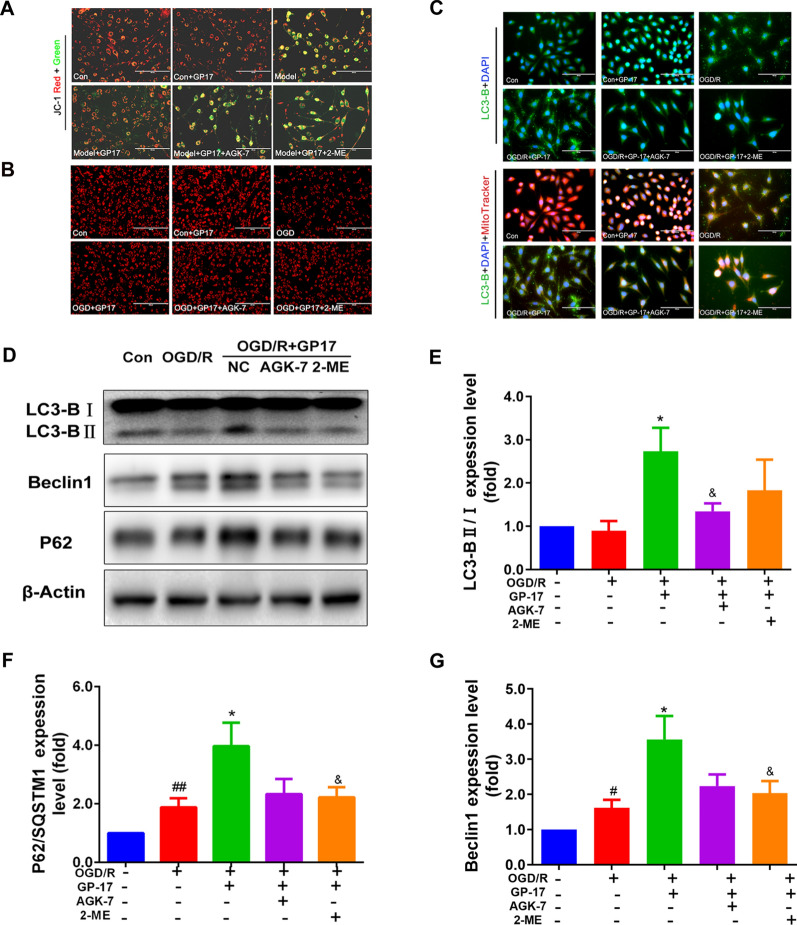
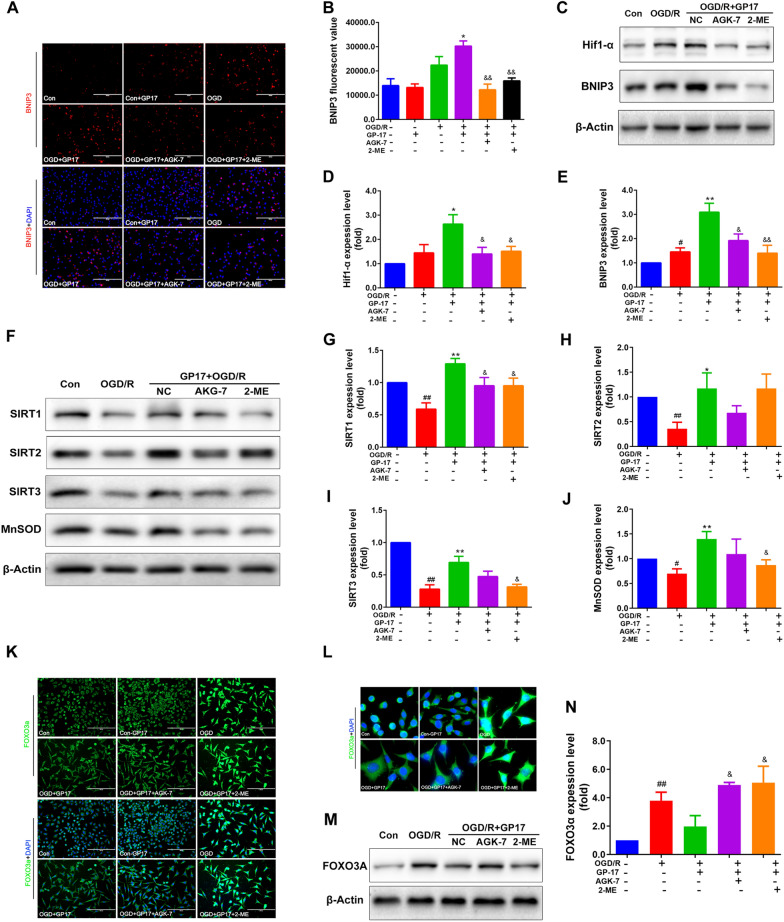
The in vivo results showed that GP17 significantly improved mitochondrial metabolic functions and suppressed cerebral ischemic injury, possibly via the autophagy pathway. Further research revealed that GP17 maintains moderate activation of autophagy under ischemic and OGD conditions, producing neuroprotective effects against CIRI, and that the regulation of mitochondrial autophagy is associated with crosstalk between the SIRT1-FOXO3A and Hif1a-BNIP3 signalling pathway that is partially eliminated by the specific inhibitors AGK-7 and 2-ME.
Overall, this work offers new insights into the mechanisms by which GP17 protects against CIRI and highlights the potential of therapy with Notoginseng leaf triterpene compounds as a novel clinical strategy in humans.
线粒体自噬维持线粒体功能和细胞内稳态,在脑缺血再灌注损伤(CIRI)的病理过程中发挥关键作用。是否绞股蓝苷 XVII(GP17)对 CIRI 有调节线粒体自噬的作用尚不清楚。本研究旨在探讨 GP17 对 CIRI 后线粒体自噬的药效作用和机制。
采用大鼠大脑中动脉闭塞/再灌注(MCAO/R)模型评估 GP17 对 CIRI 的作用,并探讨其潜在机制。采用氧葡萄糖剥夺/再氧合(OGD/R)细胞模型验证对线粒体损伤的改善作用,并探讨对抗神经损伤涉及的自噬途径。
体内研究结果表明,GP17 可显著改善线粒体代谢功能,抑制脑缺血损伤,可能通过自噬途径。进一步的研究表明,GP17 在缺血和 OGD 条件下维持适度的自噬激活,对 CIRI 产生神经保护作用,并且线粒体自噬的调节与 SIRT1-FOXO3A 和 Hif1a-BNIP3 信号通路的串扰有关,该串扰部分被特异性抑制剂 AGK-7 和 2-ME 消除。
总之,这项工作为 GP17 防治 CIRI 的机制提供了新的见解,并强调了以三七叶三萜化合物为治疗靶点的治疗方法作为一种新的临床策略在人类中的潜力。