Wang Yikun, Qiu Shiyu, Wang Hong, Cui Jiangtao, Tian Xiaoting, Miao Yayou, Zhang Congcong, Cao Leiqun, Ma Lifang, Xu Xin, Qiao Yongxia, Zhang Xiao
Shanghai Institute of Thoracic Oncology, Shanghai Chest Hospital, Shanghai Jiao Tong University, Shanghai, China.
School of Public Health, Shanghai Jiao Tong University School of Medicine, Shanghai, China.
Front Cell Dev Biol. 2021 Oct 26;9:719187. doi: 10.3389/fcell.2021.719187. eCollection 2021.
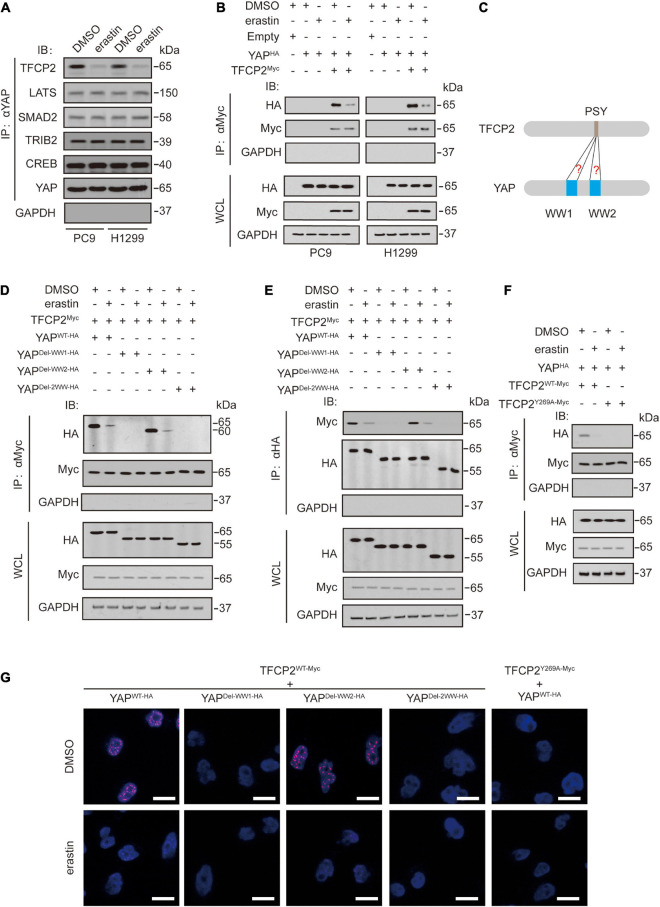
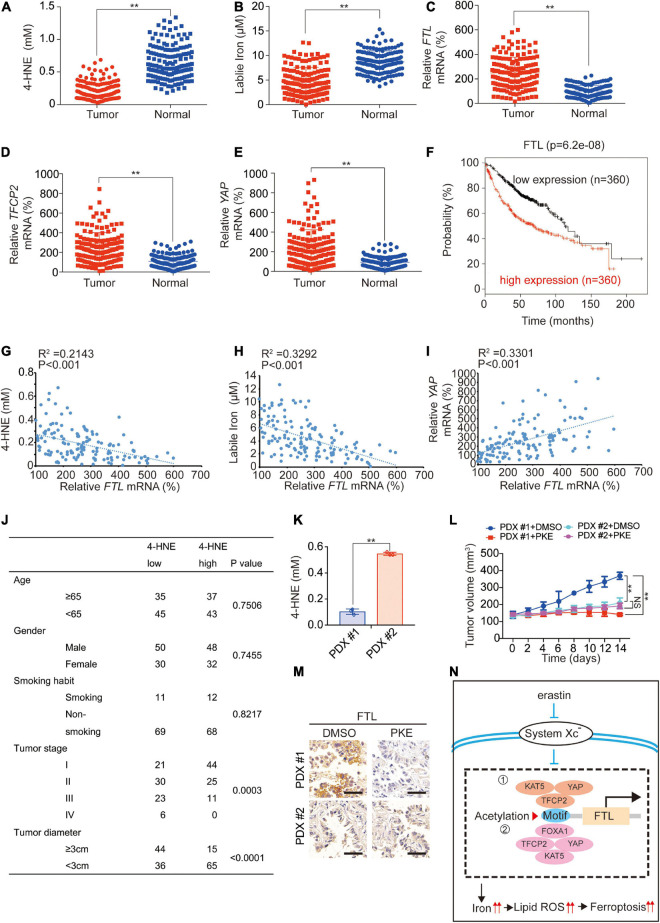
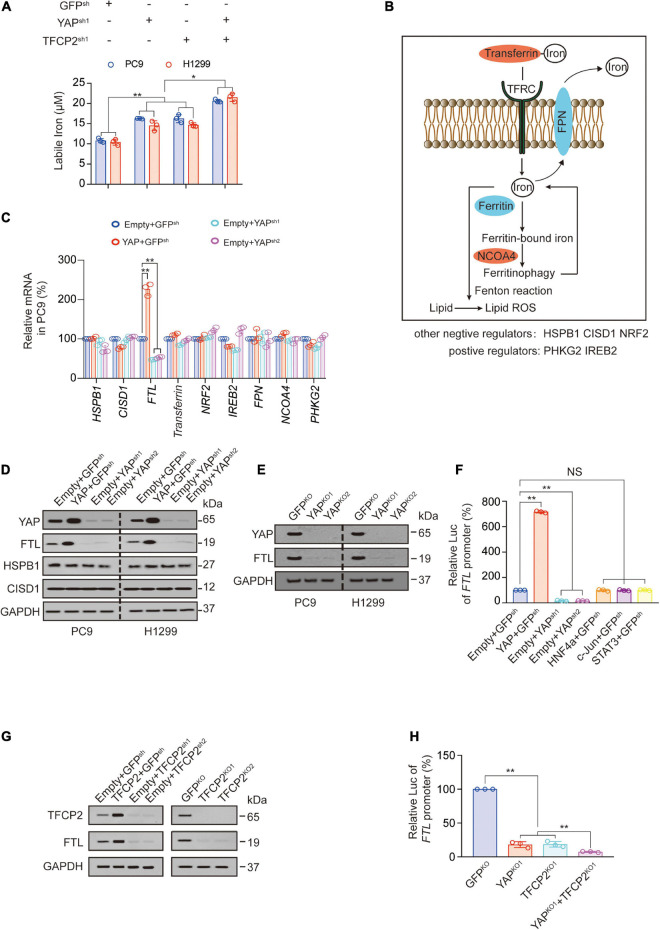
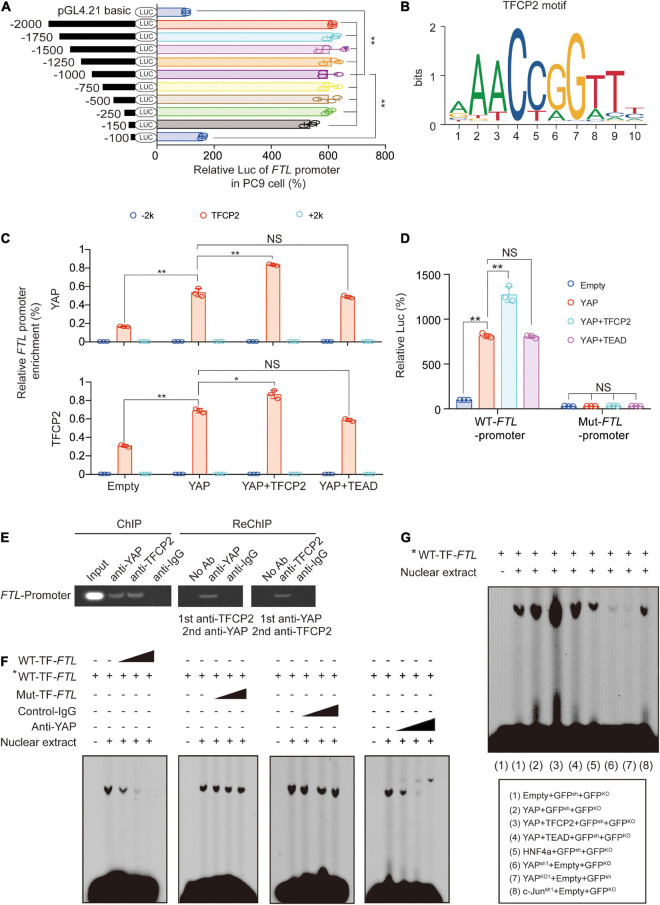
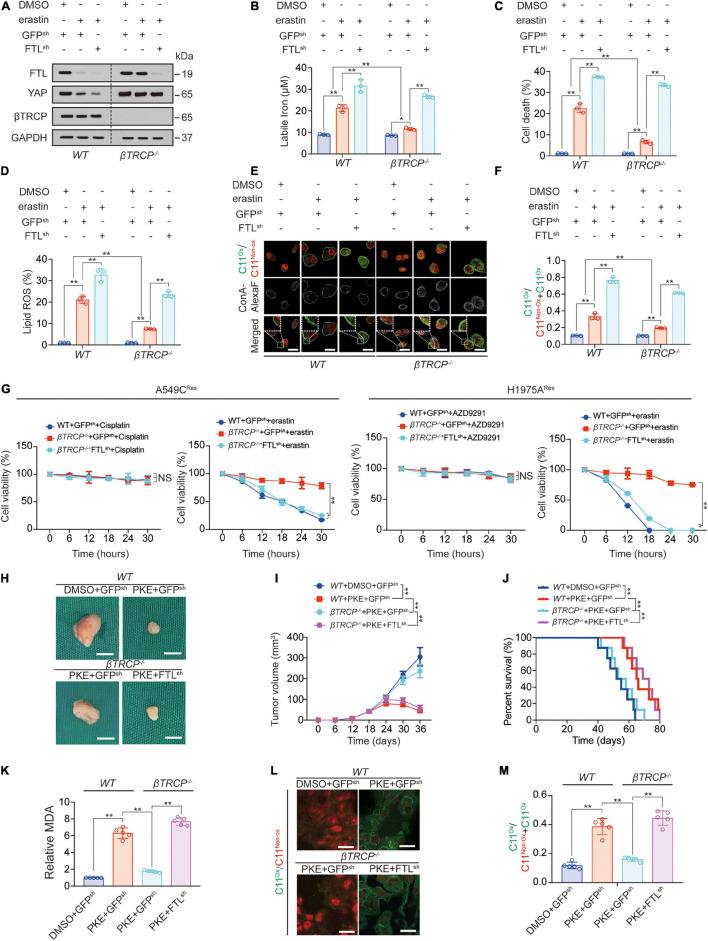
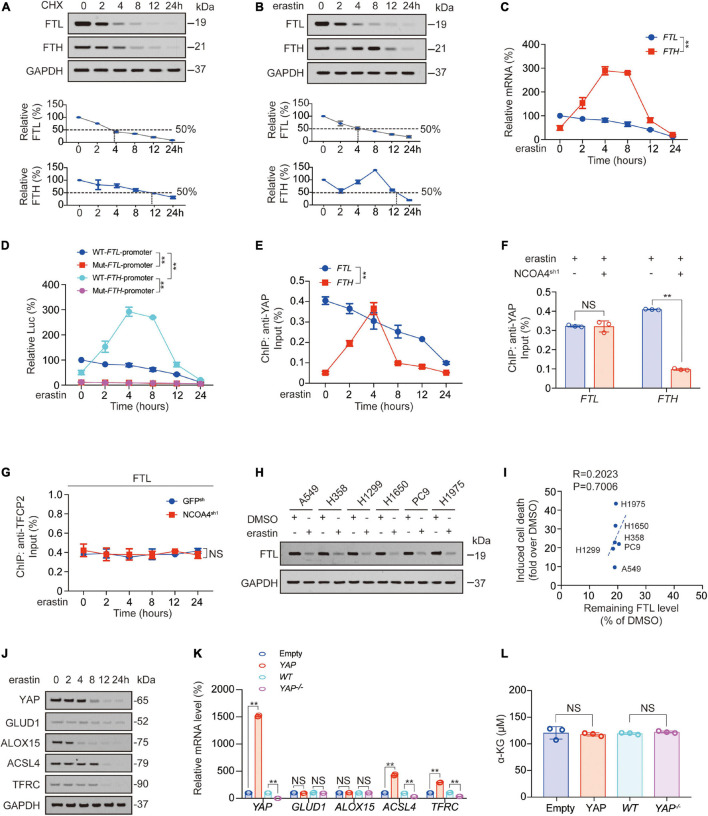
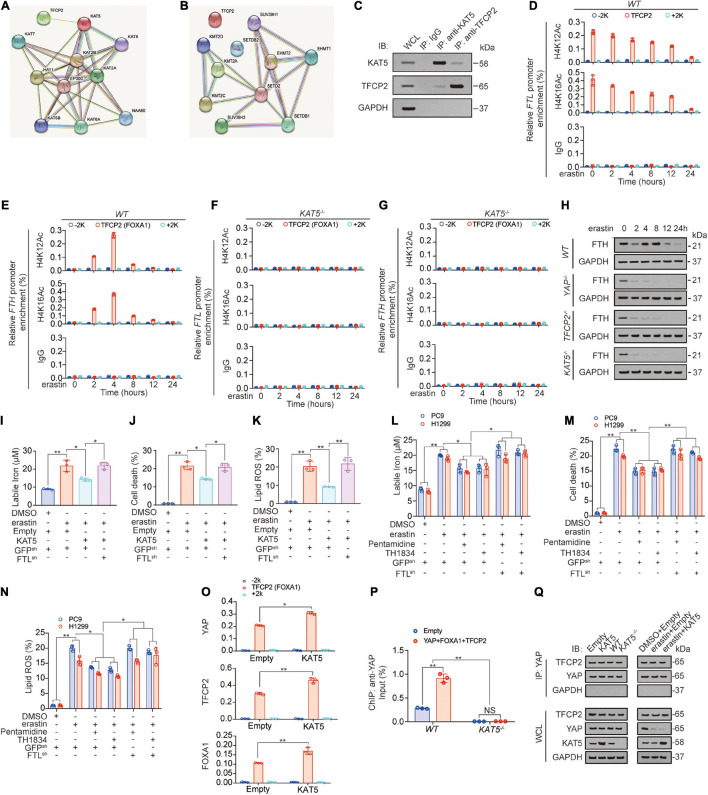
Ferroptosis is an iron- and lipid peroxidation-dependent form of regulated cell death. The release of labile iron is one of the important factors affecting sensitivity to ferroptosis. Yes-associated protein (YAP) controls intracellular iron levels by affecting the transcription of and . However, whether YAP regulates iron metabolism through other target genes remains unknown. Here, we observed that the system Xc inhibitor erastin inhibited the binding of the WW domain and PSY motif between YAP and transcription factor CP2 (TFCP2), and then suppressed the transcription of simultaneously mediated by YAP, TFCP2 and forkhead box A1 (FOXA1). Furthermore, inhibition of FTL expression abrogated ferroptosis-resistance in cells with sustained YAP expression. Unlike , which exhibited first an increase and then a decrease in transcription, transcription continued to decline after the addition of erastin, and a decrease in lysine acetyltransferase 5 (KAT5)-dependent acetylation of was also observed. In lung adenocarcinoma (LUAD) tissues, lipid peroxidation and labile iron decreased, while YAP, TFCP2 and FTL increased compared to their adjacent normal tissues, and the lipid peroxidation marker 4-hydroxynonenal (4-HNE) was negatively correlated with the level of FTL or the degree of LUAD malignancy, but LUAD tissues with lower levels of 4-HNE showed a higher sensitivity to ferroptosis. In conclusion, the findings from this study indicated that the suppression of transcription through the inhibition of the YAP-TFCP2-KAT5 complex could be another mechanism for elevating ferroptosis sensitivity and inducing cell death, and ferroptotic therapy is more likely to achieve better results in LUAD patients with a lower degree of lipid peroxidation.
铁死亡是一种依赖铁和脂质过氧化的程序性细胞死亡形式。不稳定铁的释放是影响铁死亡敏感性的重要因素之一。Yes相关蛋白(YAP)通过影响 和 的转录来控制细胞内铁水平。然而,YAP是否通过其他靶基因调节铁代谢仍不清楚。在这里,我们观察到系统Xc抑制剂埃拉斯汀抑制了YAP与转录因子CP2(TFCP2)之间WW结构域和PSY基序的结合,进而抑制了由YAP、TFCP2和叉头框A1(FOXA1)共同介导的 的转录。此外,抑制FTL表达可消除持续表达YAP的细胞中的铁死亡抗性。与 不同,其转录先增加后减少,添加埃拉斯汀后 转录持续下降,同时还观察到赖氨酸乙酰转移酶5(KAT5)依赖性的 乙酰化减少。在肺腺癌(LUAD)组织中,与相邻正常组织相比,脂质过氧化和不稳定铁减少,而YAP、TFCP2和FTL增加,脂质过氧化标志物4-羟基壬烯醛(4-HNE)与FTL水平或LUAD恶性程度呈负相关,但4-HNE水平较低的LUAD组织对铁死亡更敏感。总之,本研究结果表明,通过抑制YAP-TFCP2-KAT5复合物来抑制 转录可能是提高铁死亡敏感性和诱导细胞死亡的另一种机制,铁死亡疗法更有可能在脂质过氧化程度较低的LUAD患者中取得更好的效果。