ZIK Plasmatis, Leibniz Institute for Plasma Science and Technology (INP), Felix-Hausdorff-Str. 2, 17489 Greifswald, Germany.
Department of Oral and Maxillofacial Surgery, Plastic Surgery, Greifswald University Medical Center, Ferdinand-Sauerbruch-Str., 17475 Greifswald, Germany.
Int J Mol Sci. 2021 Oct 23;22(21):11446. doi: 10.3390/ijms222111446.
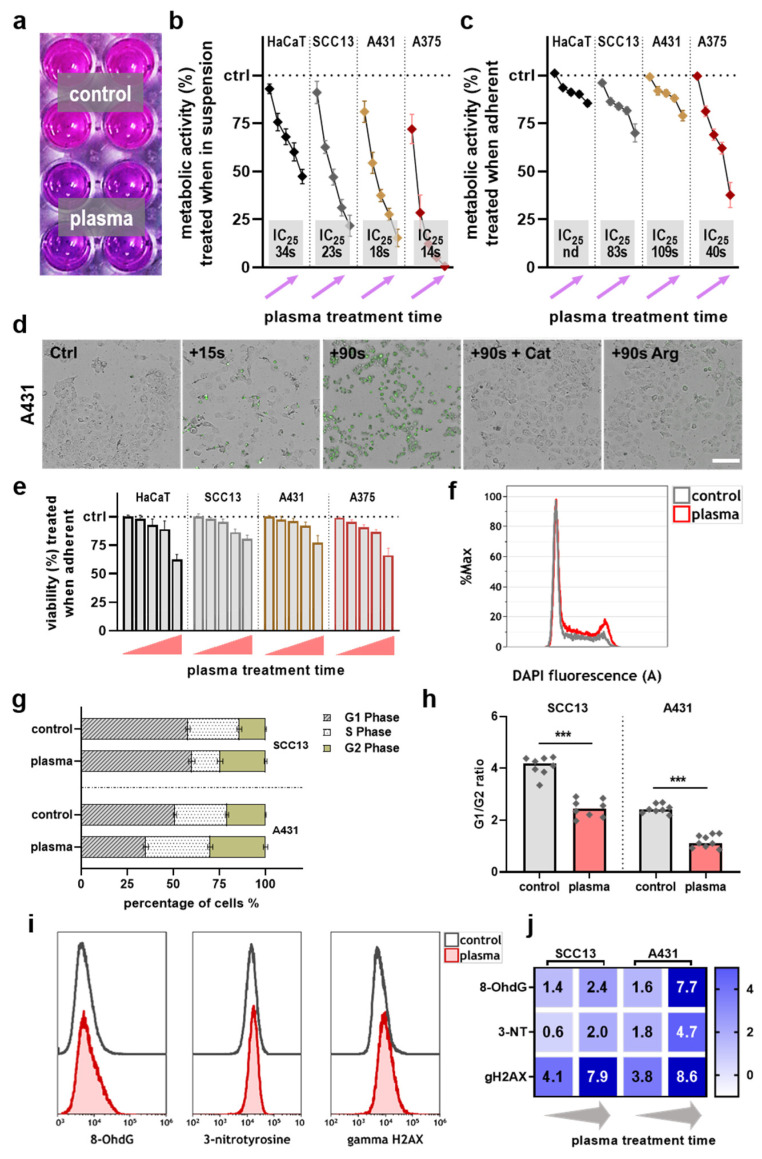
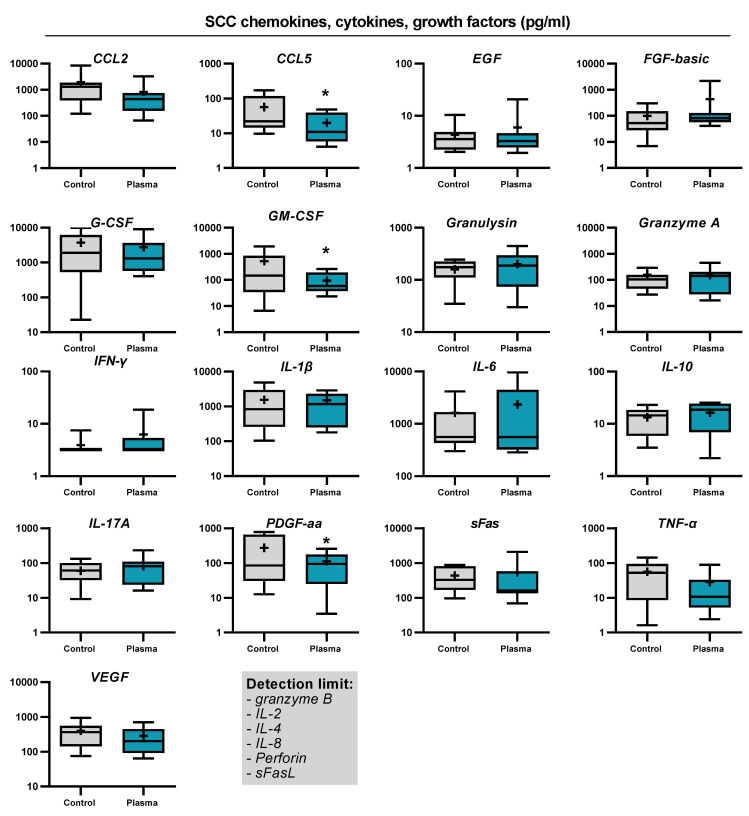
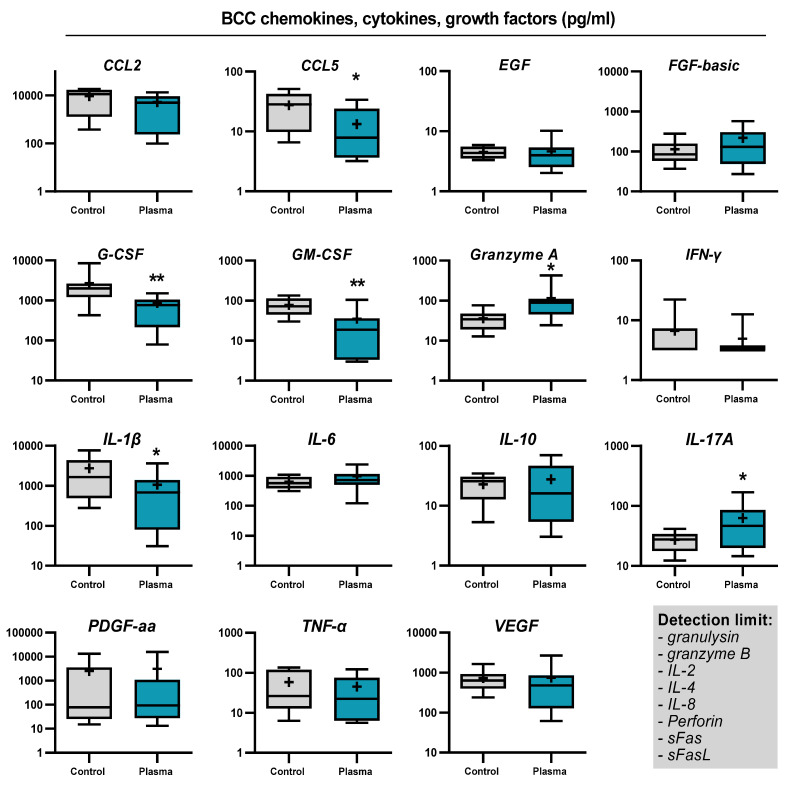
Reactive oxygen species (ROS) have been subject of increasing interest in the pathophysiology and therapy of cancers in recent years. In skin cancer, ROS are involved in UV-induced tumorigenesis and its targeted treatment via, e.g., photodynamic therapy. Another recent technology for topical ROS generation is cold physical plasma, a partially ionized gas expelling dozens of reactive species onto its treatment target. Gas plasma technology is accredited for its wound-healing abilities in Europe, and current clinical evidence suggests that it may have beneficial effects against actinic keratosis. Since the concept of hormesis dictates that low ROS levels perform signaling functions, while high ROS levels cause damage, we investigated herein the antitumor activity of gas plasma in non-melanoma skin cancer. In vitro, gas plasma exposure diminished the metabolic activity, preferentially in squamous cell carcinoma cell (SCC) lines compared to non-malignant HaCaT cells. In patient-derived basal cell carcinoma (BCC) and SCC samples treated with gas plasma ex vivo, increased apoptosis was found in both cancer types. Moreover, the immunomodulatory actions of gas plasma treatment were found affecting, e.g., the expression of CD86 and the number of regulatory T-cells. The supernatants of these ex vivo cultured tumors were quantitatively screened for cytokines, chemokines, and growth factors, identifying CCL5 and GM-CSF, molecules associated with skin cancer metastasis, to be markedly decreased. These findings suggest gas plasma treatment to be an interesting future technology for non-melanoma skin cancer topical therapy.
近年来,活性氧(ROS)在癌症的病理生理学和治疗中受到越来越多的关注。在皮肤癌中,ROS 参与了 UV 诱导的肿瘤发生及其靶向治疗,例如光动力疗法。另一种用于产生局部 ROS 的新技术是冷等离子体,它将数十种活性物质喷射到治疗靶点上。气体等离子体技术因其在欧洲的伤口愈合能力而受到认可,目前的临床证据表明,它可能对光化性角化病有有益的影响。由于适应原性的概念表明低 ROS 水平具有信号功能,而高 ROS 水平则会造成损害,因此我们在此研究了气体等离子体在非黑色素瘤皮肤癌中的抗肿瘤活性。在体外,气体等离子体暴露会降低代谢活性,与非恶性 HaCaT 细胞相比,更优先降低鳞状细胞癌(SCC)细胞系的代谢活性。在体外处理的患者来源的基底细胞癌(BCC)和 SCC 样本中,两种癌症类型均发现细胞凋亡增加。此外,气体等离子体处理的免疫调节作用被发现会影响,例如 CD86 的表达和调节性 T 细胞的数量。对这些体外培养的肿瘤的上清液进行细胞因子、趋化因子和生长因子的定量筛选,发现与皮肤癌转移相关的 CCL5 和 GM-CSF 分子显著减少。这些发现表明气体等离子体治疗是一种治疗非黑色素瘤皮肤癌的有趣的未来技术。