Fernández-Lizárraga Mariana, García-López Julieta, Rodil Sandra E, Ribas-Aparicio Rosa María, Silva-Bermudez Phaedra
Posgrado de Doctorado en Ciencias en Biomedicina y Biotecnología Molecular, Escuela Nacional de Ciencias Biológicas, Instituto Politécnico Nacional, Mexico City 11340, Mexico.
Unidad de Ingeniería de Tejidos, Terapia Celular y Medicina Regenerativa, Instituto Nacional de Rehabilitación Luis Guillermo Ibarra Ibarra, Mexico City 14389, Mexico.
Materials (Basel). 2022 Jul 29;15(15):5240. doi: 10.3390/ma15155240.
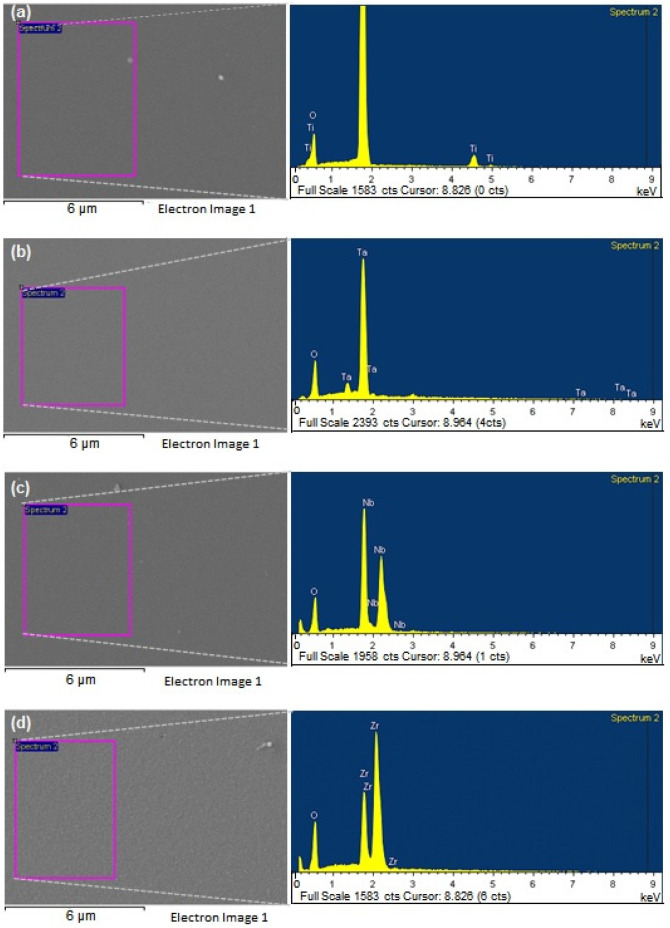
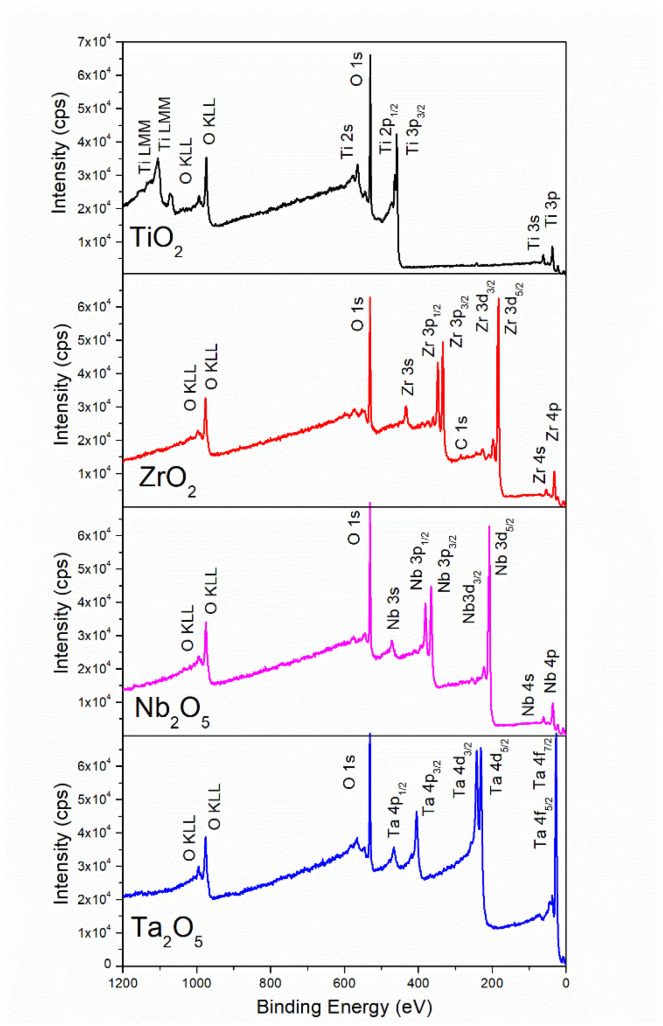
Biomaterials with adequate properties to direct a biological response are essential for orthopedic and dental implants. The surface properties are responsible for the biological response; thus, coatings with biologically relevant properties such as osteoinduction are exciting options to tailor the surface of different bulk materials. Metal oxide coatings such as TiO, ZrO, NbO and TaO have been suggested as promising for orthopedic and dental implants. However, a comparative study among them is still missing to select the most promising for bone-growth-related applications. In this work, using magnetron sputtering, TiO, ZrO, TaO, and NbO thin films were deposited on Si (100) substrates. The coatings were characterized by Optical Profilometry, Scanning Electron Microscopy, Energy-Dispersive X-ray Spectroscopy, X-ray Photoelectron Spectroscopy, X-ray Diffraction, Water Contact Angle measurements, and Surface Free Energy calculations. The cell adhesion, viability, proliferation, and differentiation toward the osteoblastic phenotype of mesenchymal stem cells plated on the coatings were measured to define the biological response. Results confirmed that all coatings were biocompatible. However, a more significant number of cells and proliferative cells were observed on NbO and TaO compared to TiO and ZrO Nevertheless, NbO and TaO seemed to induce cell differentiation toward the osteoblastic phenotype in a longer cell culture time than TiO and ZrO.
具有引导生物反应的适当特性的生物材料对于骨科和牙科植入物至关重要。表面特性决定了生物反应;因此,具有诸如骨诱导等生物学相关特性的涂层是定制不同块状材料表面的令人兴奋的选择。诸如TiO、ZrO、NbO和TaO等金属氧化物涂层已被认为有望用于骨科和牙科植入物。然而,目前仍缺乏对它们进行比较研究以选择最有前途的用于与骨生长相关应用的涂层。在这项工作中,使用磁控溅射在Si(100)衬底上沉积了TiO、ZrO、TaO和NbO薄膜。通过光学轮廓测量法、扫描电子显微镜、能量色散X射线光谱、X射线光电子能谱、X射线衍射、水接触角测量和表面自由能计算对涂层进行了表征。测量了接种在涂层上的间充质干细胞向成骨细胞表型的细胞粘附、活力、增殖和分化,以确定生物反应。结果证实所有涂层均具有生物相容性。然而,与TiO和ZrO相比,在NbO和TaO上观察到更多的细胞和增殖细胞。尽管如此,与TiO和ZrO相比,NbO和TaO似乎在更长时间的细胞培养中诱导细胞向成骨细胞表型分化。