School of Management, Shandong University, Jinan 250100, China.
Int J Environ Res Public Health. 2021 Oct 22;18(21):11116. doi: 10.3390/ijerph182111116.
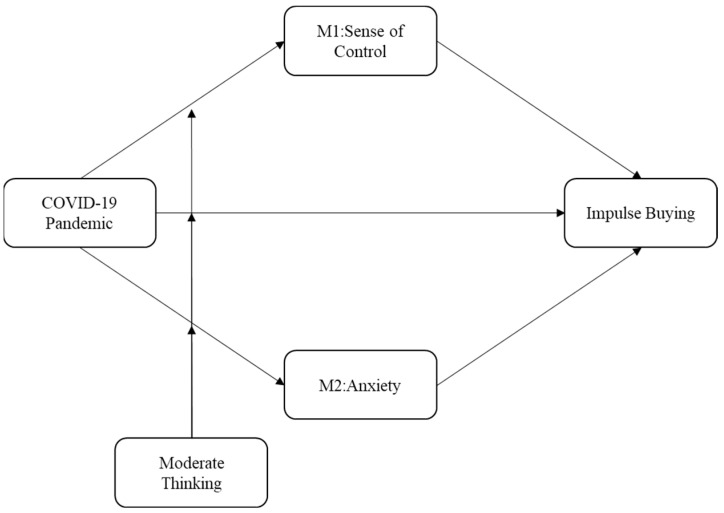
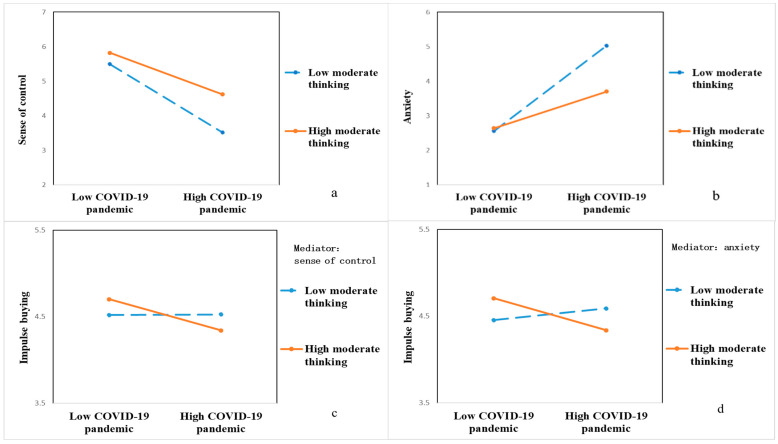
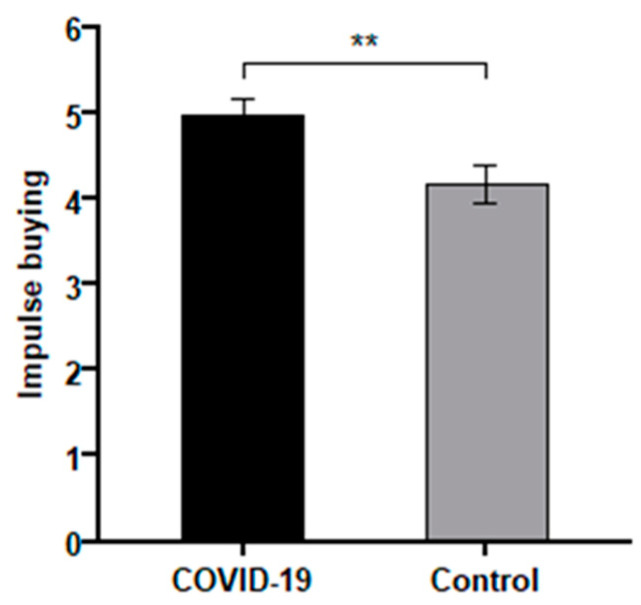
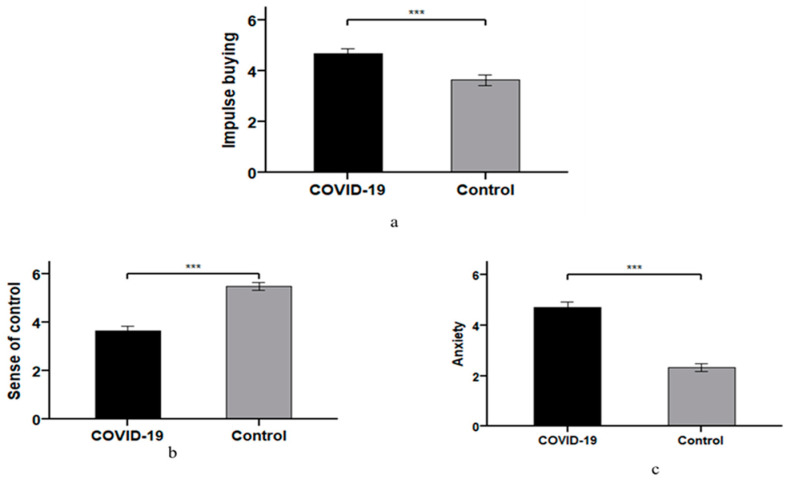
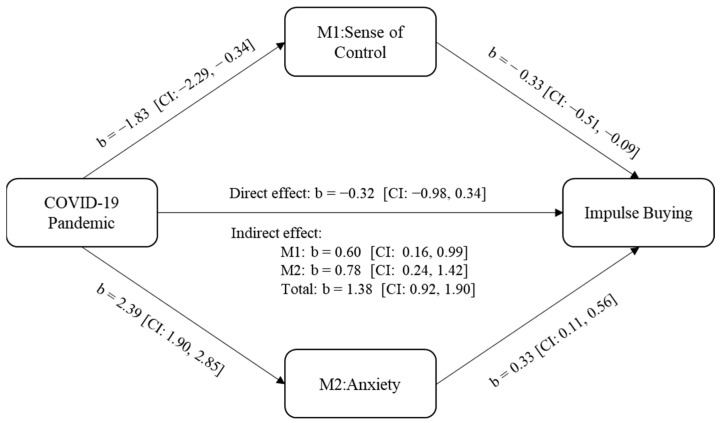
Based on event systems theory, this study examined the impact of the COVID-19 pandemic on consumers' impulse buying, as well as the underlying mechanisms and boundary conditions from the perspective of individual consumers. Results of three experiments (N = 437) show that, first, the COVID-19 pandemic enhanced consumers' impulse buying behavior. Second, two key elements, loss of control and anxiety, mediated the relationship between the COVID-19 pandemic and impulse buying; and third, moderate thinking (also known as Zhong-Yong thinking) moderated the relationship between the COVID-19 pandemic and impulse buying. The findings indicate that in consumers with low moderate thinking, the COVID-19 pandemic has had a stronger effect on impulse buying and has mediated more between the loss of control and anxiety. Conversely, in consumers with high moderate thinking, COVID-19 has had a weaker effect on impulse buying and has mediated less between loss of control and anxiety. This study extends the application of event systems theory and enriches the literature on how the COVID-19 pandemic affects consumer behavior. Furthermore, it provides strategic recommendations for government and consumer responses to COVID-19 pandemic shocks.
基于事件系统理论,本研究从个体消费者的角度出发,考察了 COVID-19 大流行对消费者冲动购买的影响,以及潜在的机制和边界条件。三项实验的结果(N=437)表明:第一,COVID-19 大流行增强了消费者的冲动购买行为;第二,两个关键因素,即失控感和焦虑感,在 COVID-19 大流行和冲动购买之间起中介作用;第三,适度思维(也称为中庸思维)调节了 COVID-19 大流行和冲动购买之间的关系。研究结果表明,在中度思维较低的消费者中,COVID-19 大流行对冲动购买的影响更强,且在失控感和焦虑感之间的中介作用更强;相反,在中度思维较高的消费者中,COVID-19 大流行对冲动购买的影响较弱,且在失控感和焦虑感之间的中介作用较弱。本研究扩展了事件系统理论的应用,丰富了关于 COVID-19 大流行如何影响消费者行为的文献。此外,本研究为政府和消费者应对 COVID-19 大流行冲击提供了战略建议。