Siegert Anna, Diedrich Lukas, Antal Andrea
Department of Neurology, University Medical Center Göttingen, Göttingen, Germany.
Front Hum Neurosci. 2021 Oct 27;15:730134. doi: 10.3389/fnhum.2021.730134. eCollection 2021.
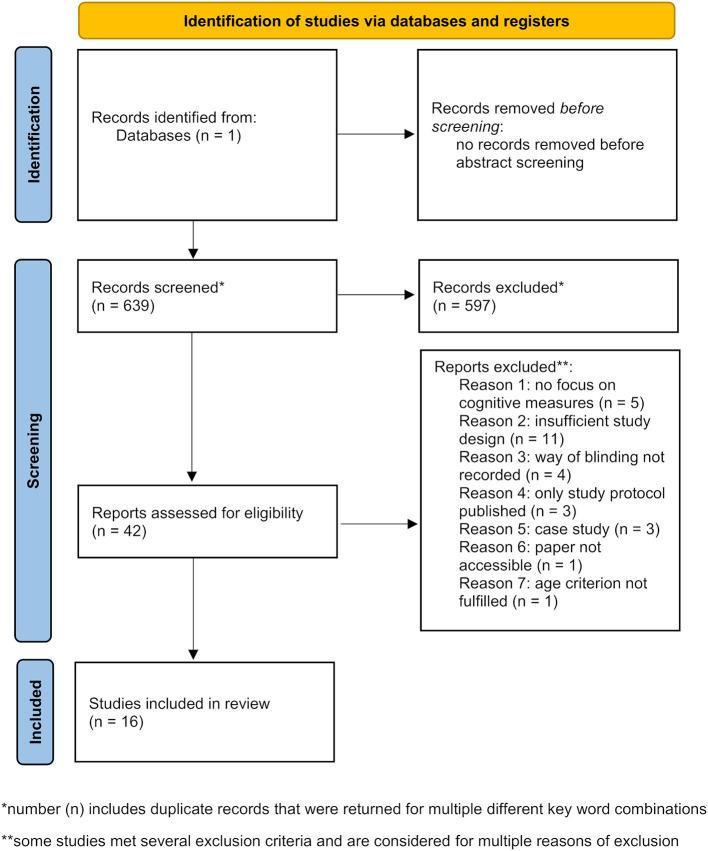
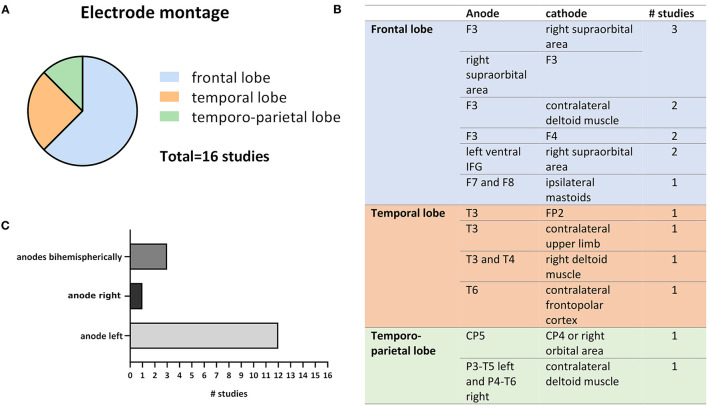
The world's population is aging. With this comes an increase in the prevalence of age-associated diseases, which amplifies the need for novel treatments to counteract cognitive decline in the elderly. One of the recently discussed non-pharmacological approaches is transcranial direct current stimulation (tDCS). TDCS delivers weak electric currents to the brain, thereby modulating cortical excitability and activity. Recent evidence suggests that tDCS, mainly with anodal currents, can be a powerful means to non-invasively enhance cognitive functions in elderly people with age-related cognitive decline. Here, we screened a recently developed tDCS database (http://tdcsdatabase.com) that is an open access source of published tDCS papers and reviewed 16 studies that applied tDCS to healthy older subjects or patients suffering from Alzheimer's Disease or pre-stages. Evaluating potential changes in cognitive abilities we focus on declarative and working memory. Aiming for more standardized protocols, repeated tDCS applications (2 mA, 30 min) over the left dorso-lateral prefrontal cortex (LDLPFC) of elderly people seem to be one of the most efficient non-invasive brain stimulation (NIBS) approaches to slow progressive cognitive deterioration. However, inter-subject variability and brain state differences in health and disease restrict the possibility to generalize stimulation methodology and increase the necessity of personalized protocol adjustment by means of improved neuroimaging techniques and electrical field modeling.
世界人口正在老龄化。随之而来的是与年龄相关疾病的患病率上升,这加大了对新型治疗方法的需求,以对抗老年人的认知衰退。最近讨论的非药物治疗方法之一是经颅直流电刺激(tDCS)。tDCS将弱电流传递至大脑,从而调节皮层兴奋性和活动。最近的证据表明,tDCS,主要是阳极电流,可能是一种强有力的手段,可用于非侵入性地增强患有年龄相关性认知衰退的老年人的认知功能。在此,我们筛选了一个最近开发的tDCS数据库(http://tdcsdatabase.com),该数据库是已发表tDCS论文的开放获取资源,并回顾了16项将tDCS应用于健康老年受试者或患有阿尔茨海默病或其前期的患者的研究。在评估认知能力的潜在变化时,我们重点关注陈述性记忆和工作记忆。为了实现更标准化的方案,对老年人左侧背外侧前额叶皮层(LDLPFC)重复进行tDCS刺激(2毫安,30分钟)似乎是减缓进行性认知衰退的最有效的非侵入性脑刺激(NIBS)方法之一。然而,个体间的变异性以及健康和疾病状态下的脑状态差异限制了刺激方法推广的可能性,并增加了通过改进神经成像技术和电场建模进行个性化方案调整的必要性。