Almazov National Medical Research Centre, Saint Petersburg, Russia.
St. Petersburg State University Hospital, Saint Petersburg, Russia.
J Diabetes Res. 2021 Nov 5;2021:9589185. doi: 10.1155/2021/9589185. eCollection 2021.
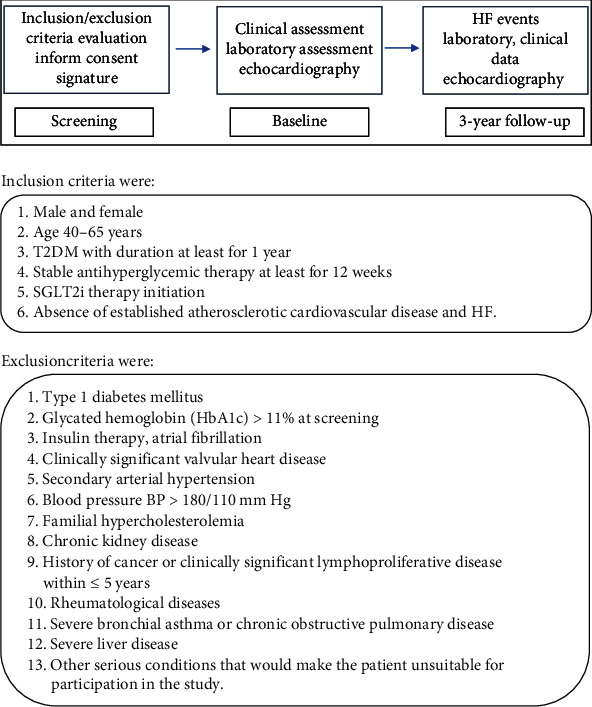
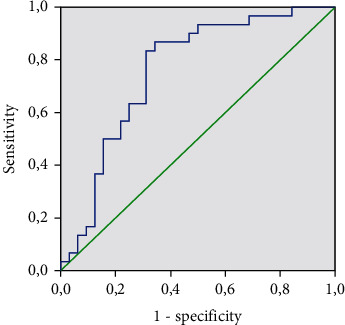
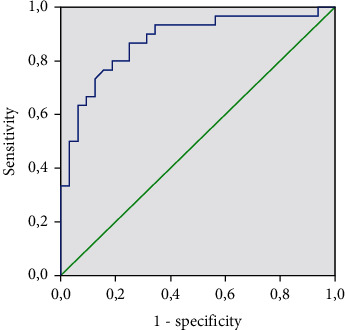
Type 2 diabetes mellitus (T2DM) and chronic heart failure (HF) have close association, and several biomarkers have been studied to better understand this association and improve prediction of HF in T2DM. Furthermore, in recent clinical trials, sodium glucose cotransporter 2 inhibitors (SGLT2i), glucose-lowering drugs, improved HF outcomes. The objective of the present study was to evaluate association between circulating biomarkers of fibrosis and incidence of HF with preserved ejection fraction (HFpEF) in patients with T2DM receiving sodium glucose cotransporter 2 inhibitors (SGLT2i). . At baseline, transthoracic echocardiography and laboratory assessment of N-terminal fragment of the brain natriuretic peptide (Nt-proBNP), soluble suppression of tumorigenesis-2 (sST2), galectin-3 (Gal-3), C-terminal propeptide of procollagen type I (PICP), N-terminal propeptide of procollagen type III (PIIINP), matrix metalloproteinase-9 (MMP-9), and tissue inhibitor of matrix proteinase-1 (TIMP-1) were done. After 3 years of follow-up, information about HF events (hospitalization for HF, established HF in outpatient department by a cardiologist) was obtained. . Seventy-two patients were included in the study. The mean age was 57 (49.7; 63.2) years; 44% were female. Most patients had T2DM for more than 4 years. All patients were overweight or had obesity, and 93% patients had arterial hypertension (AH). After 3 years of follow-up, HFpEF was established in 21% patients. Patients were divided into two groups according to the presence of HFpEF, and baseline characteristics were compared. Patients with HF were older and had longer diabetes and AH duration and higher Nt-proBNP, Gal-3, PIIINP, and PICP levels at baseline than patients without HF (all < 0.05). Gal - 3 > 10 ng/ml (OR = 2.25; 95% CI, 1.88-5.66; = 0.01) and NT - pro - BNP > 80 pg/ml (OR = 2.64; 95% CI, 1.56-4.44; = 0.001) were associated with increased risk of HF incidence. Age > 60 years, diabetes duration > 10 years, and presence of abdominal obesity were independent predictors of HFpEF as well. . T2DM patients treated with SLGT2i, who developed HFpEF after 3 years of follow-up, had higher PICP, PIIINP, Gal-3, and NT-proBNP serum concentrations at baseline, and Gal-3 level was an independent predictor of HFpEF.
2 型糖尿病(T2DM)和慢性心力衰竭(HF)密切相关,已有多种生物标志物被研究用于更好地了解这种关联,并改善 T2DM 患者 HF 的预测。此外,在最近的临床试验中,钠葡萄糖共转运蛋白 2 抑制剂(SGLT2i)等降糖药物改善了 HF 结局。本研究的目的是评估 T2DM 患者接受钠葡萄糖共转运蛋白 2 抑制剂(SGLT2i)治疗后,循环纤维化生物标志物与射血分数保留的心力衰竭(HFpEF)发生率之间的关系。在基线时,进行了经胸超声心动图检查和 N 末端脑利钠肽前体(Nt-proBNP)、可溶性肿瘤抑制物 2(sST2)、半乳糖凝集素-3(Gal-3)、I 型前胶原 C 端肽(PICP)、III 型前胶原 N 端肽(PIIINP)、基质金属蛋白酶-9(MMP-9)和基质金属蛋白酶组织抑制剂-1(TIMP-1)的实验室评估。在 3 年的随访后,获得了 HF 事件(HF 住院,由心脏病专家在门诊确定的 HF)的信息。本研究共纳入 72 例患者,平均年龄为 57(49.7;63.2)岁,44%为女性,大多数患者 T2DM 病程超过 4 年,所有患者超重或肥胖,93%的患者患有高血压(AH)。在 3 年的随访后,21%的患者发生了 HFpEF。根据是否存在 HFpEF 将患者分为两组,并比较了基线特征,结果显示,HF 组患者年龄较大,糖尿病和 AH 病程较长,基线时 Nt-proBNP、Gal-3、PIIINP 和 PICP 水平较高(均<0.05)。Gal-3>10ng/ml(OR=2.25;95%CI,1.88-5.66;=0.01)和 NT-pro-BNP>80pg/ml(OR=2.64;95%CI,1.56-4.44;=0.001)与 HF 发生率增加相关。年龄>60 岁、糖尿病病程>10 年和存在腹型肥胖也是 HFpEF 的独立预测因素。在接受 SGLT2i 治疗的 T2DM 患者中,3 年后发生 HFpEF 的患者,其基线时血清 PICP、PIIINP、Gal-3 和 Nt-proBNP 浓度更高,Gal-3 水平是 HFpEF 的独立预测因子。