Fan Mengnan, Luo Yuhang, Zhang Beibei, Wang Jiaxi, Chen Tianxiang, Liu Baoyuan, Sun Yani, Nan Yuchen, Hiscox Julian A, Zhao Qin, Zhou En-Min
Department of Preventive Veterinary Medicine, College of Veterinary Medicine, Northwest A&F University, Xianyang, China.
Institute of Infection, Veterinary and Ecological Sciences, University of Liverpool, Liverpool, United Kingdom.
Front Microbiol. 2021 Nov 1;12:775083. doi: 10.3389/fmicb.2021.775083. eCollection 2021.
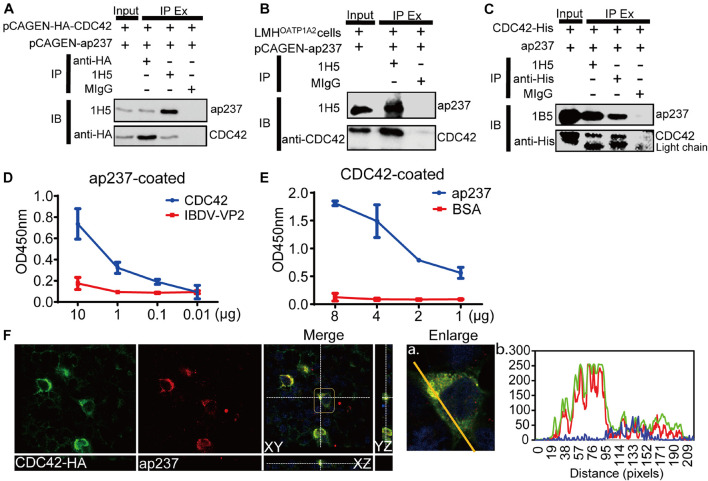
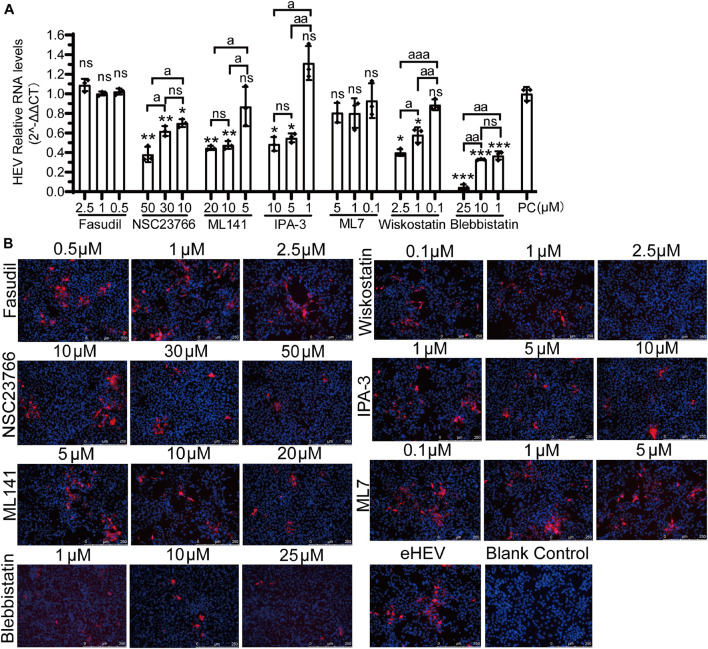
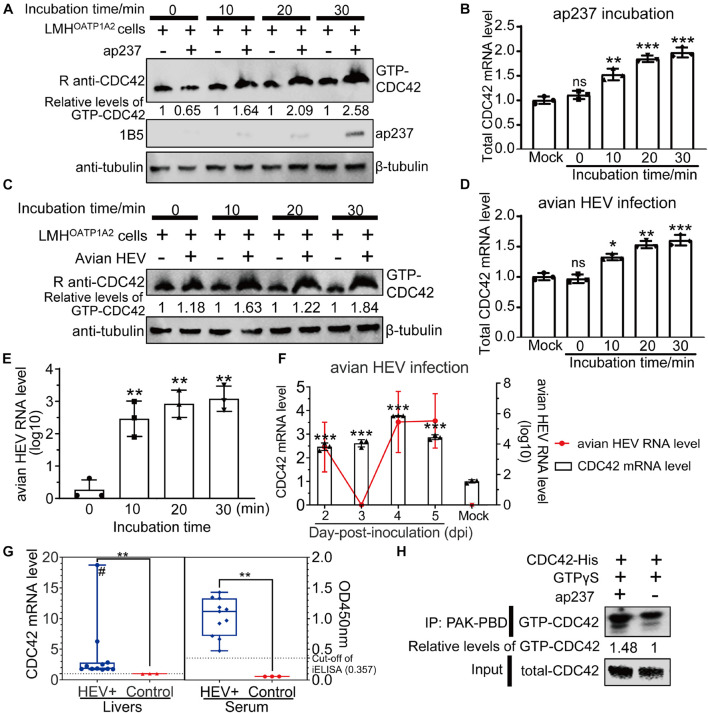
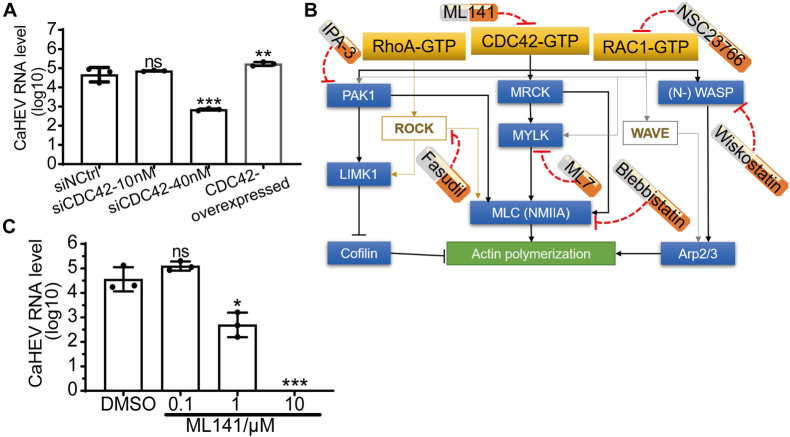
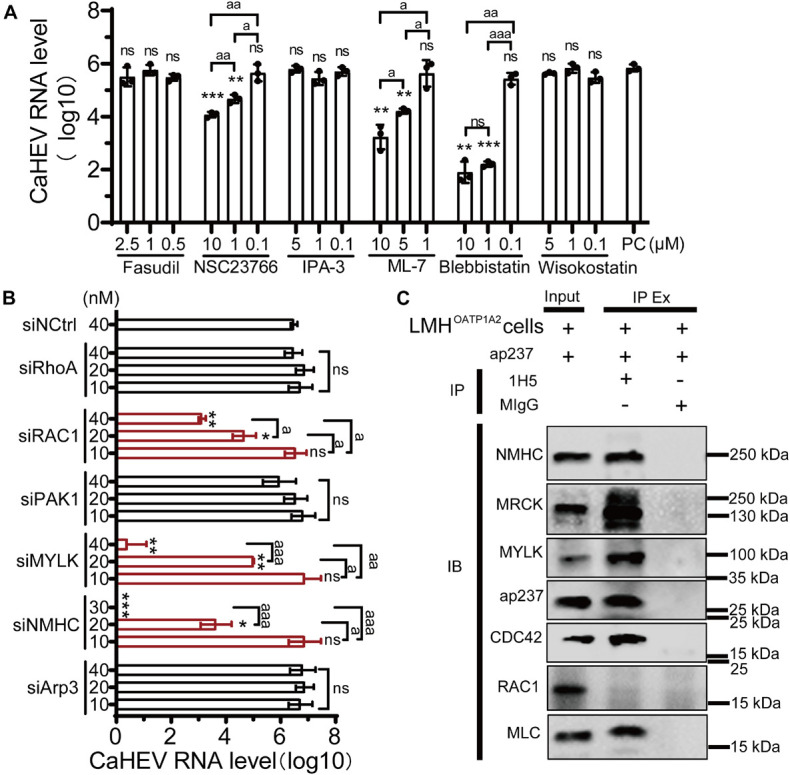
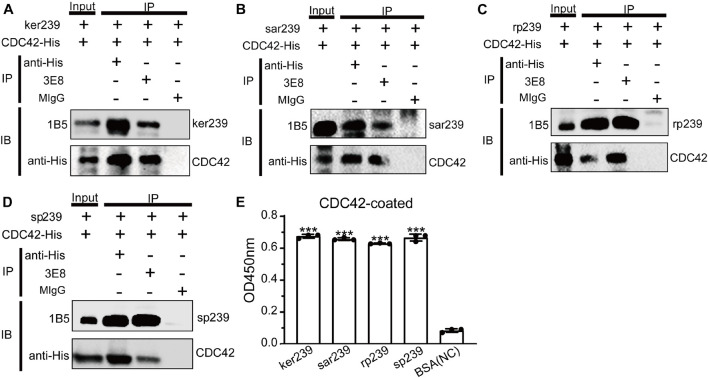
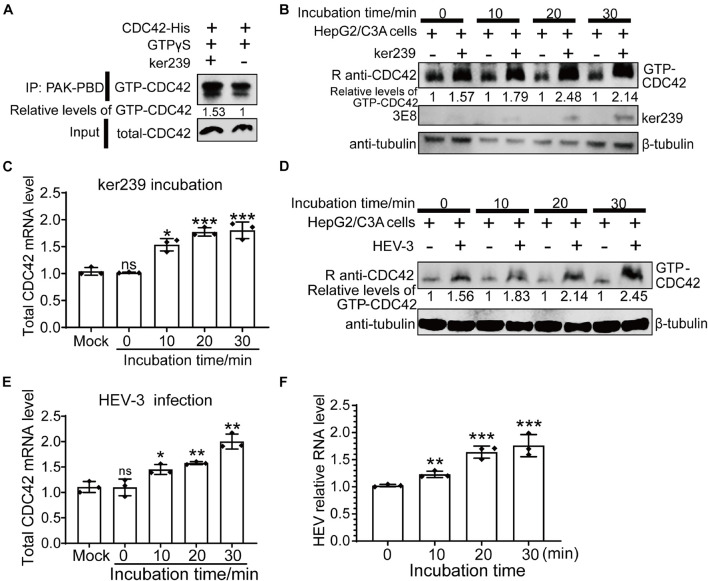
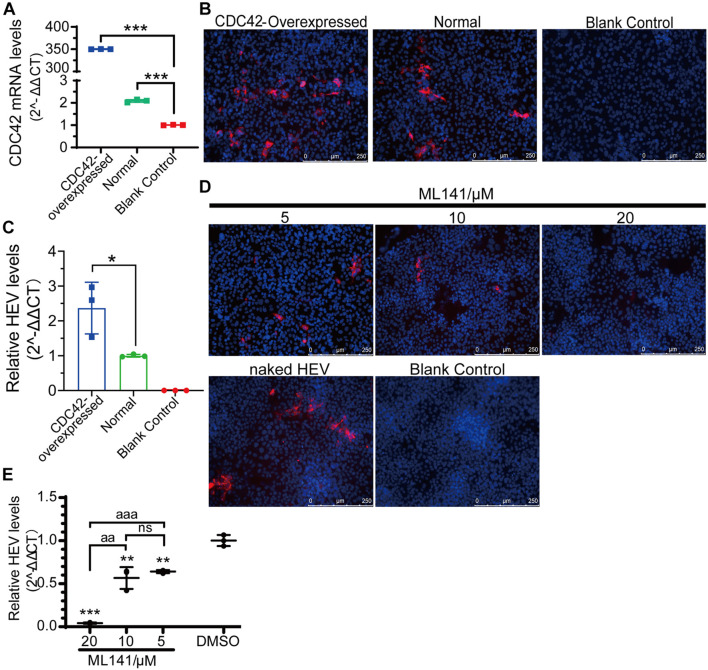
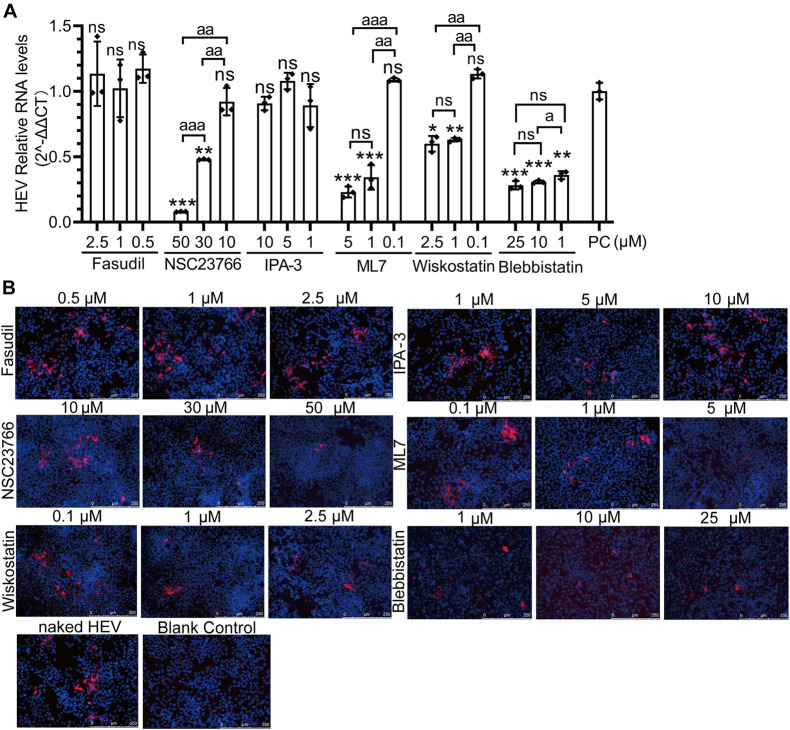
Hepatitis E Virus (HEV) causes viral hepatitis in humans worldwide, while a subset of HEV species, avian HEV, causes hepatitis-splenomegaly syndrome in chickens. To date, there are few reports on the host proteins interacting with HEV and being involved in viral infection. Previous pull-down assay combining mass spectrometry indicated that cell division control protein 42 (CDC42), a member belonging to the Rho GTPase family, was pulled down by avian HEV capsid protein. We confirmed the direct interaction between CDC42 and avian and mammalian HEV capsid proteins. The interaction can increase the amount of active guanosine triphosphate binding CDC42 state (GTP-CDC42). Subsequently, we determined that the expression and activity of CDC42 were positively correlated with HEV infection in the host cells. Using the different inhibitors of CDC42 downstream signaling pathways, we found that CDC42-MRCK (a CDC42-binding kinase)-non-myosin IIA (NMIIA) pathway is involved in naked avian and mammalian HEV infection, CDC42-associated p21-activated kinase 1 (PAK1)-NMIIA/Cofilin pathway is involved in quasi-enveloped mammalian HEV infection and CDC42-neural Wiskott-Aldrich syndrome protein-actin-polymerizing protein Arp2/3 pathway (CDC42-(N-)WASP-Arp2/3) pathway participates in naked and quasi-enveloped mammalian HEV infection. Collectively, these results demonstrated for the first time that HEV capsid protein can directly bind to CDC42, and non- and quasi-enveloped HEV use different CDC42 downstream signaling pathways to participate in viral infection. The study provided some new insights to understand the life cycle of HEV in host cells and a new target of drug design for combating HEV infection.
戊型肝炎病毒(HEV)在全球范围内导致人类病毒性肝炎,而戊型肝炎病毒的一个亚群,即禽戊型肝炎病毒,会导致鸡出现肝炎 - 脾肿大综合征。迄今为止,关于与HEV相互作用并参与病毒感染的宿主蛋白的报道很少。先前结合质谱的下拉分析表明,属于Rho GTPase家族成员的细胞分裂控制蛋白42(CDC42)被禽戊型肝炎病毒衣壳蛋白下拉。我们证实了CDC42与禽和哺乳动物戊型肝炎病毒衣壳蛋白之间的直接相互作用。这种相互作用可以增加活性鸟苷三磷酸结合CDC42状态(GTP - CDC42)的量。随后,我们确定CDC42的表达和活性与宿主细胞中戊型肝炎病毒感染呈正相关。使用CDC42下游信号通路的不同抑制剂,我们发现CDC42 - MRCK(一种CDC42结合激酶) - 非肌球蛋白IIA(NMIIA)途径参与裸禽和哺乳动物戊型肝炎病毒感染,CDC42相关的p21激活激酶1(PAK1) - NMIIA/丝切蛋白途径参与准包膜哺乳动物戊型肝炎病毒感染,而CDC42 - 神经威斯科特 - 奥尔德里奇综合征蛋白 - 肌动蛋白聚合蛋白Arp2/3途径(CDC42 - (N - )WASP - Arp2/3)途径参与裸和准包膜哺乳动物戊型肝炎病毒感染。总的来说,这些结果首次证明了戊型肝炎病毒衣壳蛋白可以直接与CDC42结合,并且非包膜和准包膜戊型肝炎病毒使用不同的CDC42下游信号通路参与病毒感染。该研究为理解戊型肝炎病毒在宿主细胞中的生命周期提供了一些新见解,并为对抗戊型肝炎病毒感染提供了药物设计的新靶点。