Manupati Vijaya Kumar, Schoenherr Tobias, Subramanian Nachiappan, Ramkumar M, Soni Bhanushree, Panigrahi Suraj
Department of Mechanical Engineering, National Institute of Technology Warangal, Warangal, Telangana 506004, India.
Department of Supply Chain Management, Broad College of Business, Michigan State University, 632 Bogue St., East Lansing, MI, USA.
Transp Res E Logist Transp Rev. 2021 Dec;156:102542. doi: 10.1016/j.tre.2021.102542. Epub 2021 Nov 19.
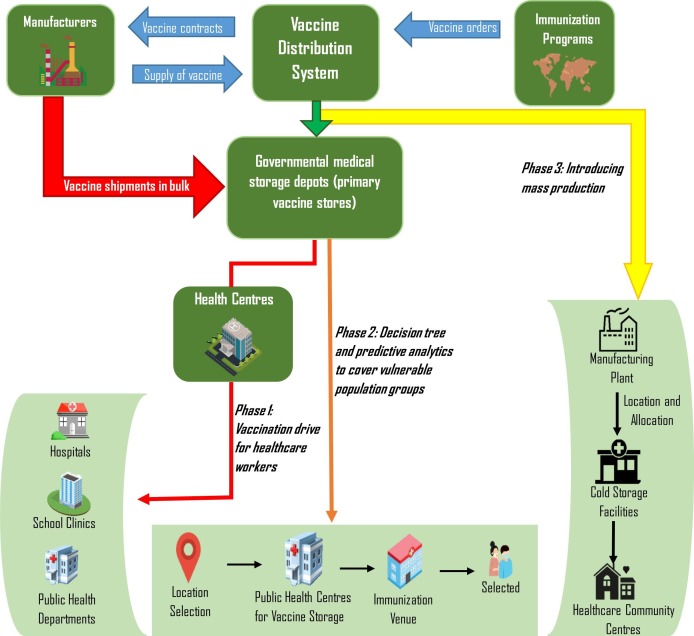
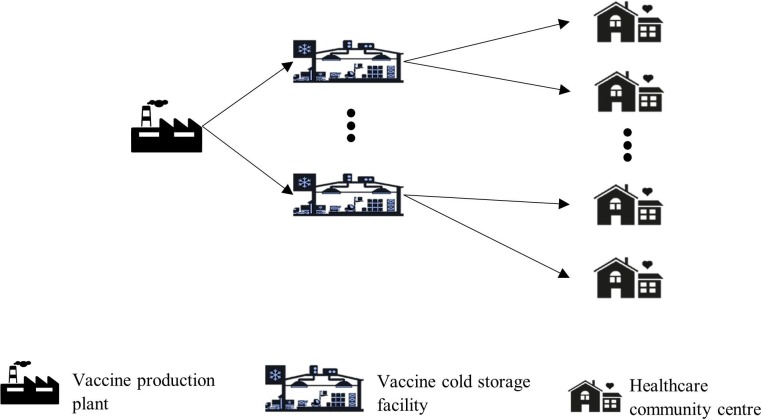
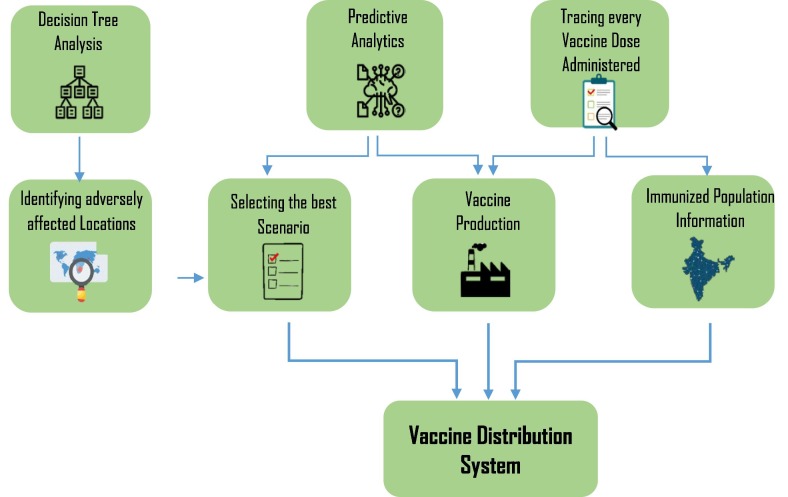
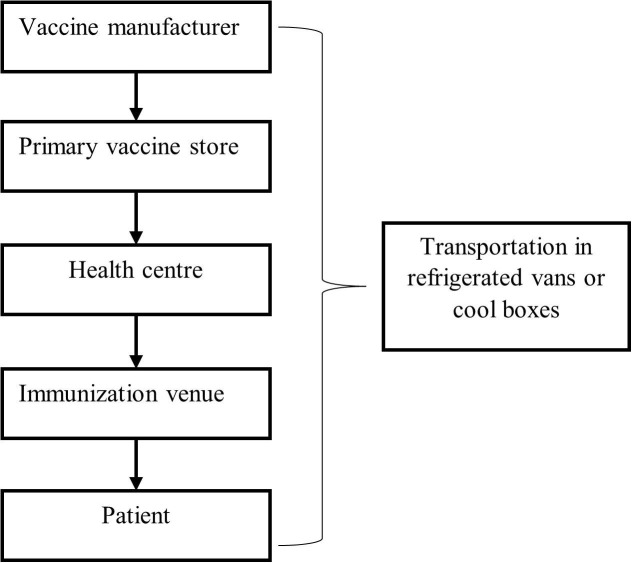
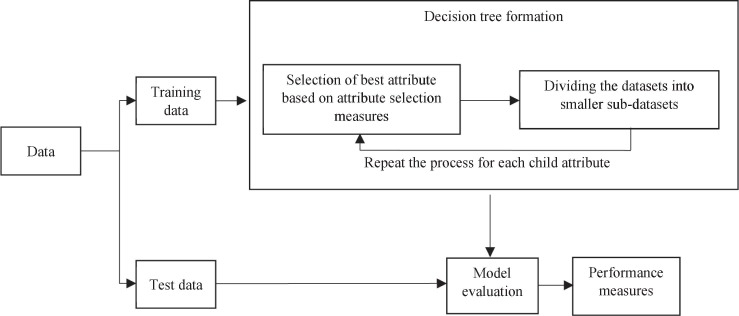
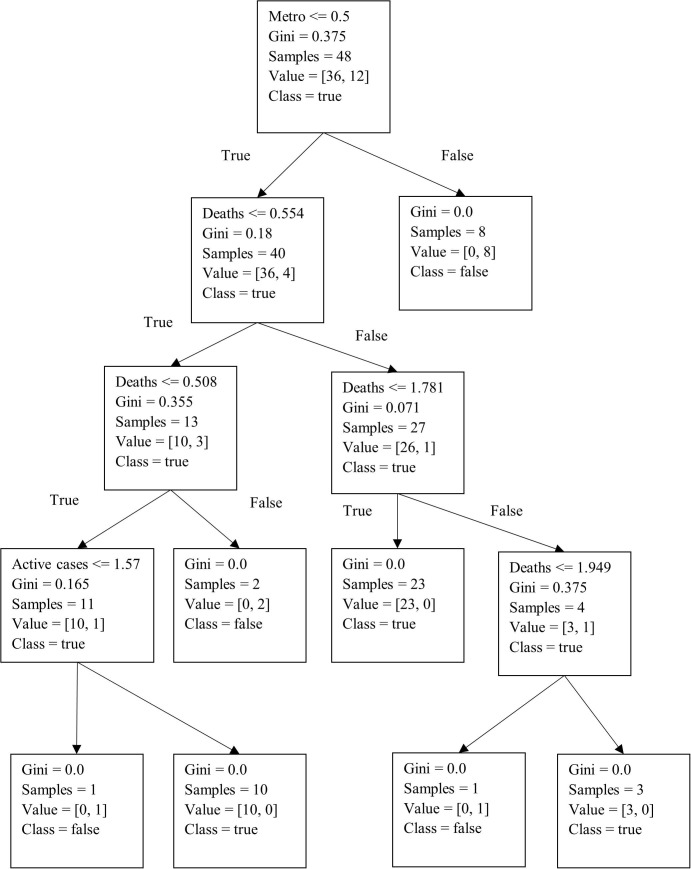
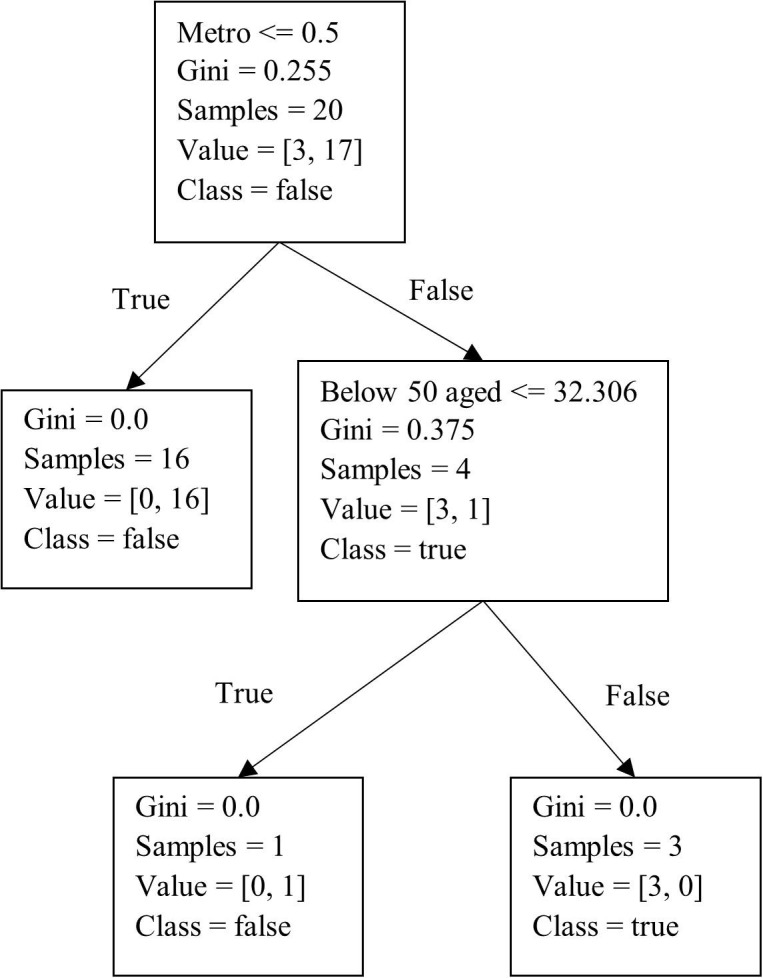
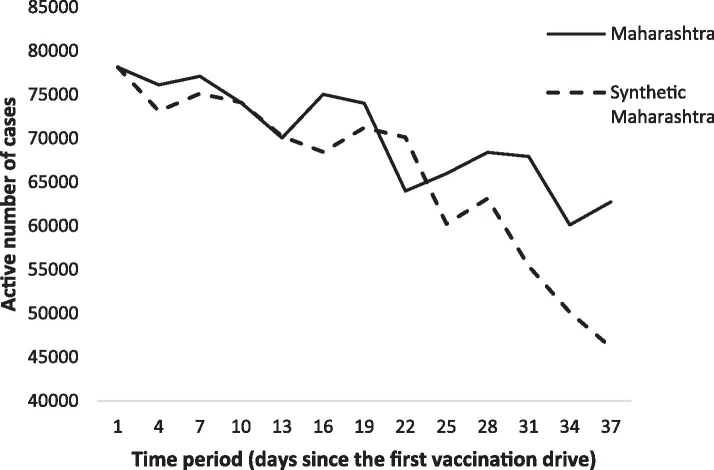
While cold chain management has been part of healthcare systems, enabling the efficient administration of vaccines in both urban and rural areas, the COVID-19 virus has created entirely new challenges for vaccine distributions. With virtually every individual worldwide being impacted, strategies are needed to devise best vaccine distribution scenarios, ensuring proper storage, transportation and cost considerations. Current models do not consider the magnitude of distribution efforts needed in our current pandemic, in particular the objective that entire populations need to be vaccinated. We expand on existing models and devise an approach that considers the needed extensive distribution capabilities and special storage requirements of vaccines, while at the same time being cognizant of costs. As such, we provide decision support on how to distribute the vaccine to an entire population based on priority. We do so by conducting predictive analysis for three different scenarios and dividing the distribution chain into three phases. As the available vaccine doses are limited in quantity at first, we apply decision tree analysis to find the best vaccination scenario, followed by a synthetic control analysis to predict the impact of the vaccination programme to forecast future vaccine production. We then formulate a mixed-integer linear programming (MILP) model for locating and allocating cold storage facilities for bulk vaccine production, followed by the proposition of a heuristic algorithm to solve the associated objective functions. The application of the proposed model is evaluated by implementing it in a real-world case study. The optimized numerical results provide valuable decision support for healthcare authorities.
虽然冷链管理一直是医疗系统的一部分,有助于在城市和农村地区高效接种疫苗,但新冠病毒给疫苗分发带来了全新的挑战。几乎全球每个人都受到了影响,因此需要制定策略来设计最佳疫苗分发方案,确保妥善储存、运输并考虑成本因素。当前的模型没有考虑到我们当前疫情所需的分发工作量,特别是全体人口都需要接种疫苗这一目标。我们扩展了现有模型,并设计了一种方法,该方法考虑了疫苗所需的广泛分发能力和特殊储存要求,同时兼顾成本。因此,我们提供了关于如何根据优先级将疫苗分发给全体人口的决策支持。我们通过对三种不同情况进行预测分析,并将分发链分为三个阶段来做到这一点。由于最初可用的疫苗剂量数量有限,我们应用决策树分析来找到最佳接种方案,随后进行综合控制分析以预测接种计划的影响,从而预测未来的疫苗产量。然后,我们制定了一个混合整数线性规划(MILP)模型,用于为大规模疫苗生产定位和分配冷藏设施,接着提出了一种启发式算法来求解相关目标函数。通过在实际案例研究中实施该模型,对所提出模型的应用进行了评估。优化后的数值结果为卫生当局提供了有价值的决策支持。