Zhou Yang, Deng Yekun, Liu Zhongmin, Yin Mengyuan, Hou Mengying, Zhao Ziyin, Zhou Xiaozhong, Yin Lichen
Institute of Functional Nano and Soft Materials (FUNSOM), Jiangsu Key Laboratory for Carbon-Based Functional Materials and Devices, Soochow University, Suzhou 215123, China.
Department of Orthopedics, The Second Affiliated Hospital of Soochow University, Suzhou 215004, China.
Sci Adv. 2021 Nov 26;7(48):eabl6432. doi: 10.1126/sciadv.abl6432. Epub 2021 Nov 24.
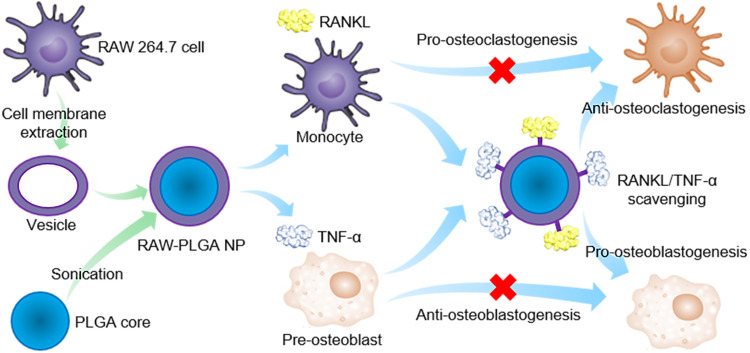
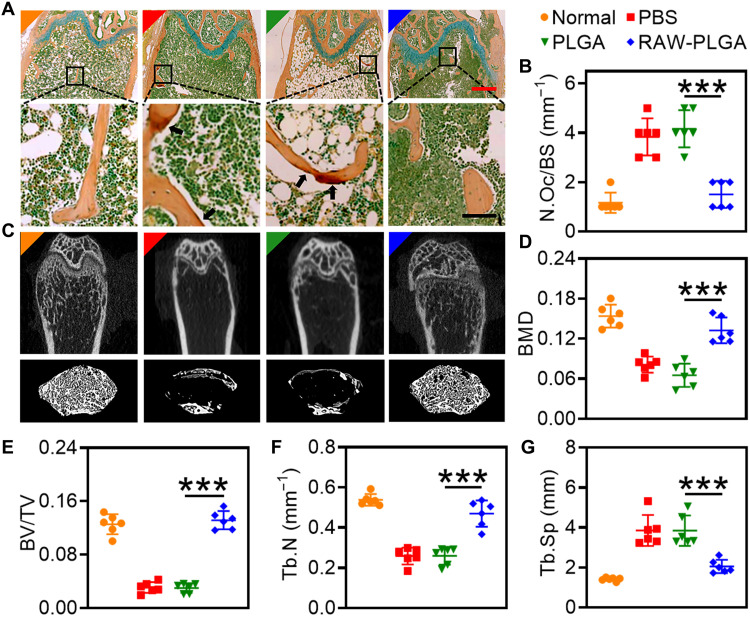
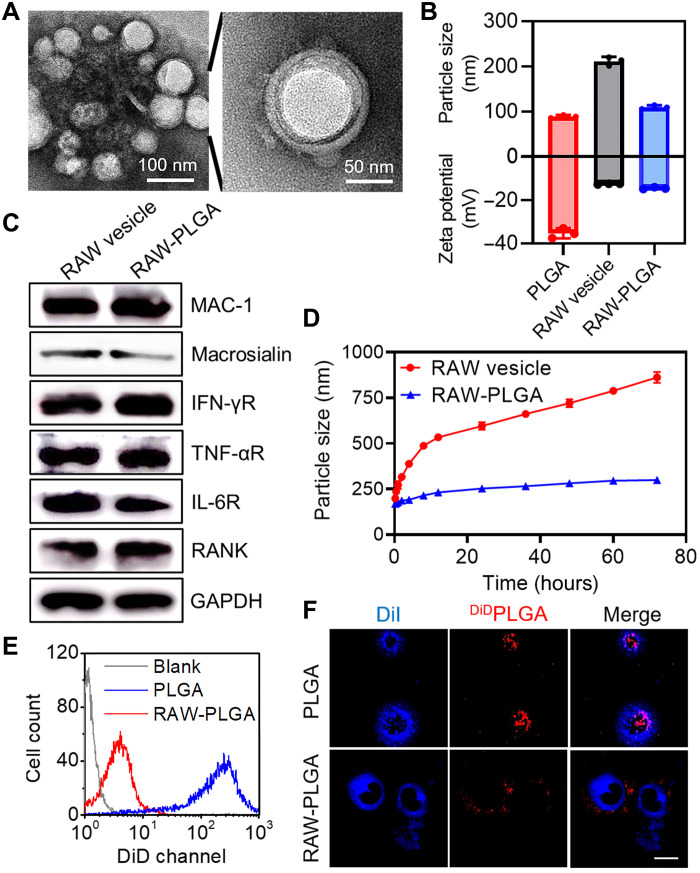
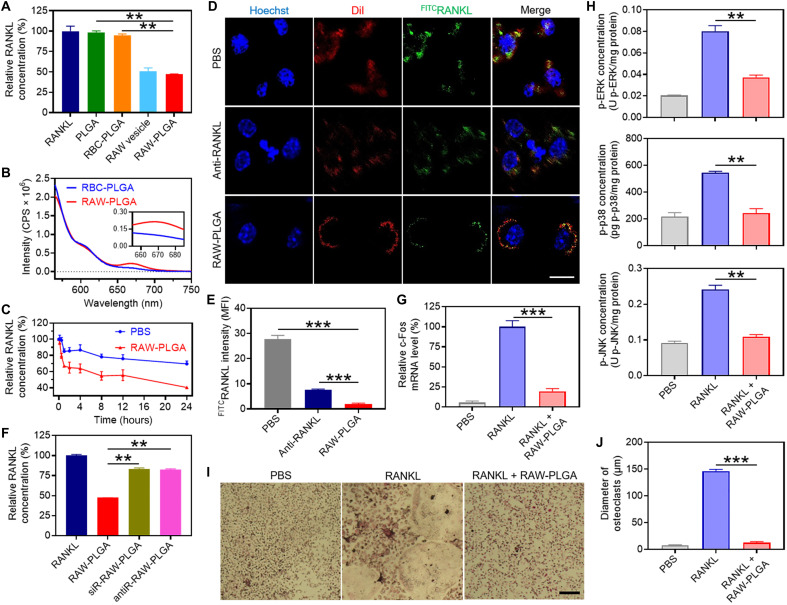
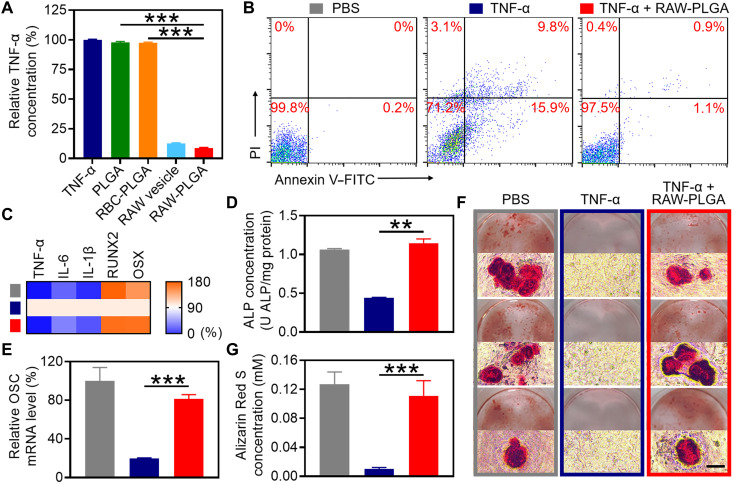
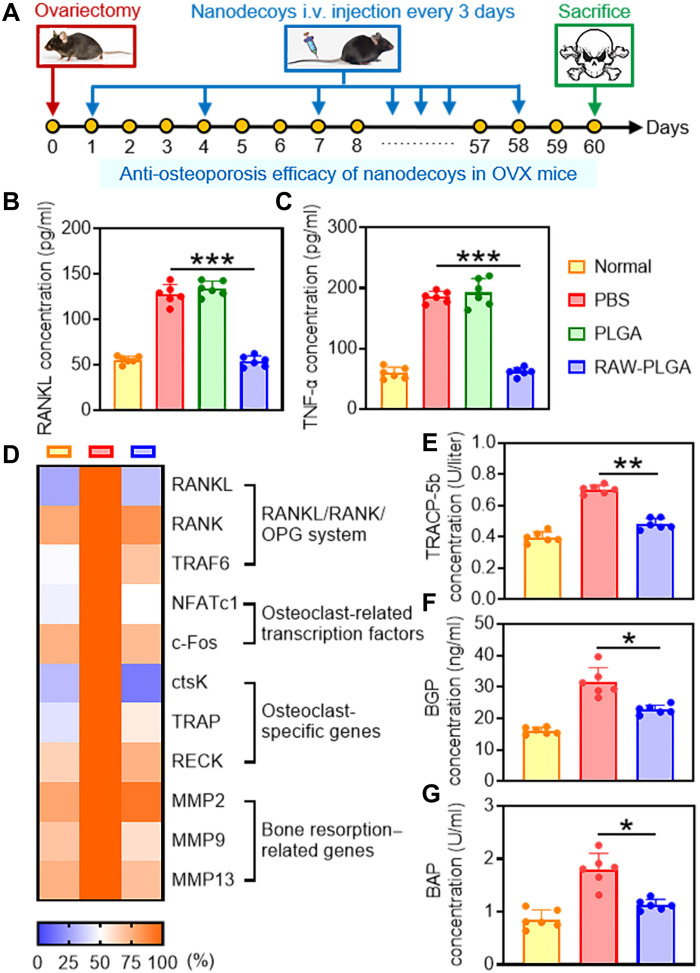
Imbalance between osteoblasts and osteoclasts accounts for the incidence and deterioration of postmenopausal osteoporosis. Abnormally elevated RANKL and TNF-α levels after menopause promote osteoclast formation and inhibit osteoblast differentiation, respectively. Here, nanodecoys capable of scavenging RANKL and TNF-α were developed from preosteoclast (RAW 264.7 cell) membrane–coated poly(lactic--glycolic acid) (PLGA) nanoparticles, which inhibited osteoporosis and maintained bone integrity. The nanodecoys effectively escaped from macrophage capture and enabled prolonged blood circulation after systemic administration. The abundant RANK and TNF-α receptor (TNF-αR) on the cell membranes effectively neutralized RANKL and TNF-α to prevent osteoclastogenesis and promote osteoblastogenesis, respectively, thus reversing the progression of osteoporosis in the ovariectomized (OVX) mouse model. These biomimetic nanodecoys provide an effective strategy for reconstructing the osteoclast/osteoblast balance and hold great potentials for the clinical management of postmenopausal osteoporosis.
成骨细胞与破骨细胞之间的失衡是绝经后骨质疏松症发病及病情恶化的原因。绝经后RANKL和TNF-α水平异常升高,分别促进破骨细胞形成并抑制成骨细胞分化。在此,从破骨前体细胞(RAW 264.7细胞)膜包被的聚乳酸-乙醇酸共聚物(PLGA)纳米颗粒开发出能够清除RANKL和TNF-α的纳米诱饵,其可抑制骨质疏松症并维持骨完整性。纳米诱饵有效逃避巨噬细胞捕获,并在全身给药后实现延长血液循环。细胞膜上丰富的RANK和TNF-α受体(TNF-αR)分别有效中和RANKL和TNF-α,以防止破骨细胞生成并促进成骨细胞生成,从而逆转去卵巢(OVX)小鼠模型中的骨质疏松症进展。这些仿生纳米诱饵为重建破骨细胞/成骨细胞平衡提供了一种有效策略,在绝经后骨质疏松症的临床治疗中具有巨大潜力。