Dafniet Bryan, Cerisier Natacha, Boezio Batiste, Clary Anaelle, Ducrot Pierre, Dorval Thierry, Gohier Arnaud, Brown David, Audouze Karine, Taboureau Olivier
Université de Paris, INSERM U1133, CNRS UMR8251, 75006, Paris, France.
Institut de Recherche Servier, 125 Chemin de Ronde, 78290, Croissy-sur-Seine, France.
J Cheminform. 2021 Nov 24;13(1):91. doi: 10.1186/s13321-021-00569-1.
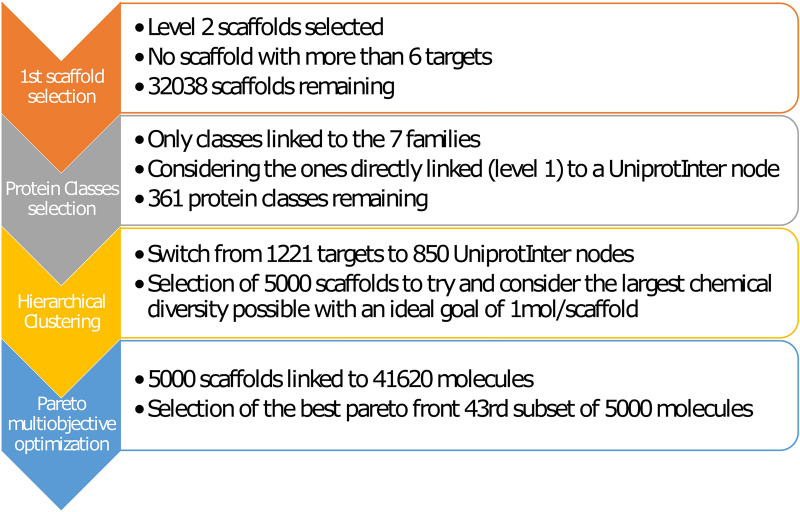
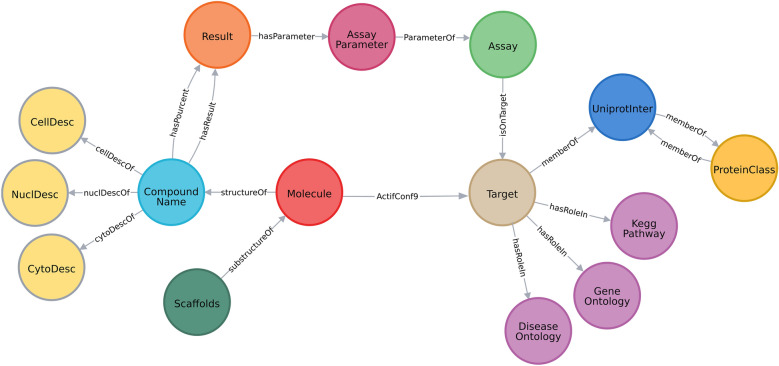
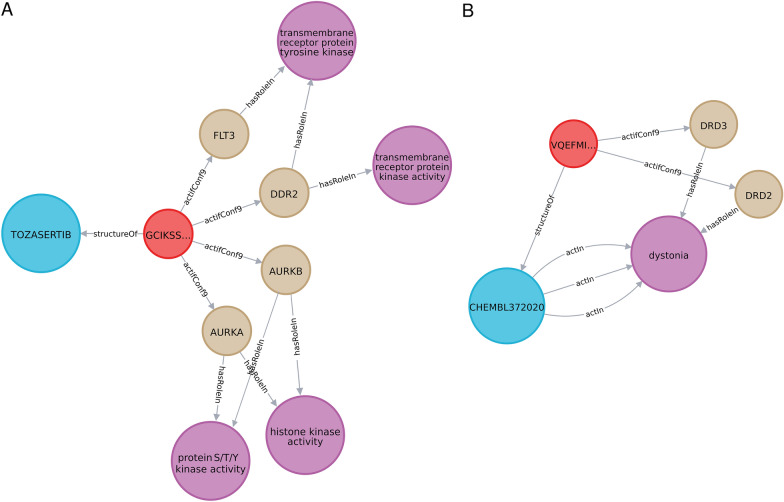
With the development of advanced technologies in cell-based phenotypic screening, phenotypic drug discovery (PDD) strategies have re-emerged as promising approaches in the identification and development of novel and safe drugs. However, phenotypic screening does not rely on knowledge of specific drug targets and needs to be combined with chemical biology approaches to identify therapeutic targets and mechanisms of actions induced by drugs and associated with an observable phenotype. In this study, we developed a system pharmacology network integrating drug-target-pathway-disease relationships as well as morphological profile from an existing high content imaging-based high-throughput phenotypic profiling assay known as "Cell Painting". Furthermore, from this network, a chemogenomic library of 5000 small molecules that represent a large and diverse panel of drug targets involved in diverse biological effects and diseases has been developed. Such a platform and a chemogenomic library could assist in the target identification and mechanism deconvolution of some phenotypic assays. The usefulness of the platform is illustrated through examples.
随着基于细胞的表型筛选先进技术的发展,表型药物发现(PDD)策略已重新成为识别和开发新型安全药物的有前景的方法。然而,表型筛选不依赖于特定药物靶点的知识,需要与化学生物学方法相结合,以识别药物诱导的、与可观察表型相关的治疗靶点和作用机制。在本研究中,我们开发了一个系统药理学网络,整合了药物-靶点-通路-疾病关系以及来自现有的基于高内涵成像的高通量表型分析方法(称为“细胞绘画”)的形态学特征。此外,从这个网络中,已经开发了一个包含5000个小分子的化学基因组文库,这些小分子代表了涉及多种生物学效应和疾病的大量不同的药物靶点。这样一个平台和化学基因组文库可以协助一些表型分析的靶点识别和机制解析。通过实例说明了该平台的实用性。