Chair for Health and Physical Activity, Department of Sport Science, Faculty of Humanities, Otto-von-Guericke University Magdeburg, Magdeburg, Germany.
Department of Internal Medicine, Division of Cardiology and Angiology, University Hospital Magdeburg, Magdeburg, Germany.
BMC Neurosci. 2021 Nov 25;22(1):71. doi: 10.1186/s12868-021-00675-8.
Accumulating evidence shows that physical exercise has a positive effect on the release of neurotrophic factors and myokines. However, evidence regarding the optimal type of physical exercise for these release is still lacking. The aim of this study was to assess the acute and chronic effects of open-skill exercise (OSE) compared to closed-skill exercise (CSE) on serum and plasma levels of brain derived neurotrophic factor (BDNF, BDNF), and serum levels of insulin like growth factor 1 (IGF-1), and interleukin 6 (IL-6) in healthy older adults.
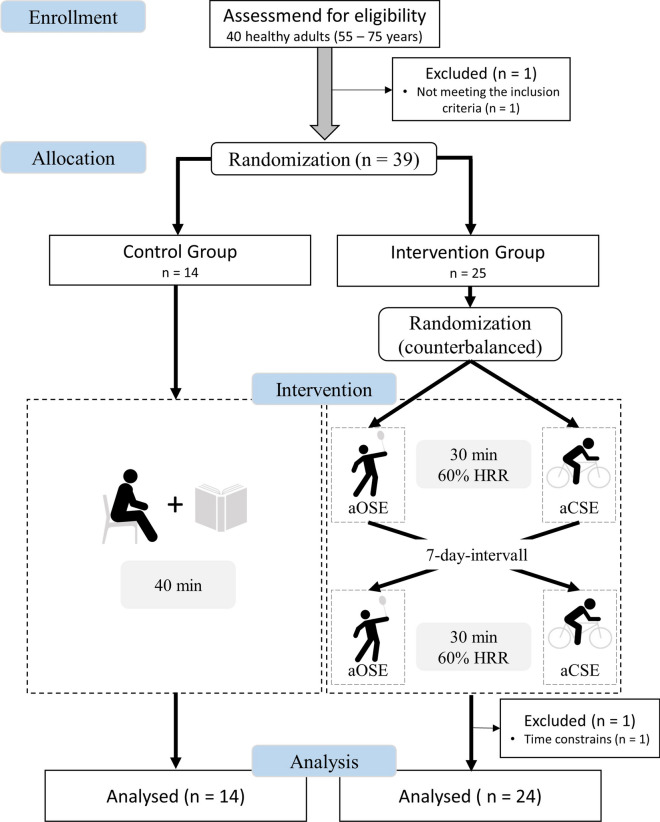
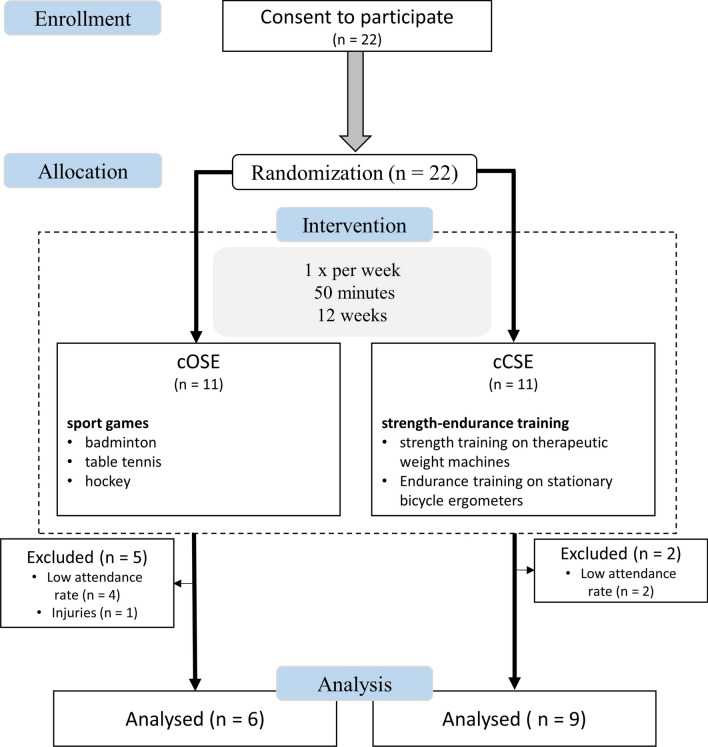
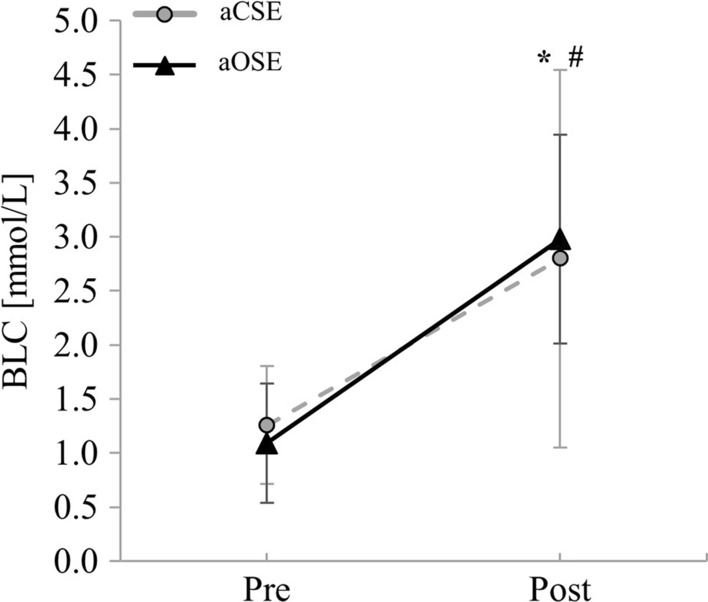
To investigate acute effects, thirty-eight participants were randomly assigned to either an intervention (badminton (aOSE) and bicycling (aCSE), n = 24, 65.83 ± 5.98 years) or control group (reading (CG), n = 14, 67.07 ± 2.37 years). Blood samples were taken immediately before and 5 min after each condition. During each condition, heart rate was monitored. The mean heart rate of aOSE and aCSE were equivalent (65 ± 5% of heart rate reserve). In a subsequent 12-week training-intervention, twenty-two participants were randomly assigned to either a sport-games (cOSE, n = 6, 64.50 ± 6.32) or a strength-endurance training (cCSE, n = 9, 64.89 ± 3.51) group to assess for chronic effects. Training intensity for both groups was adjusted to a subjective perceived exertion using the CR-10 scale (value 7). Blood samples were taken within one day after the training-intervention.
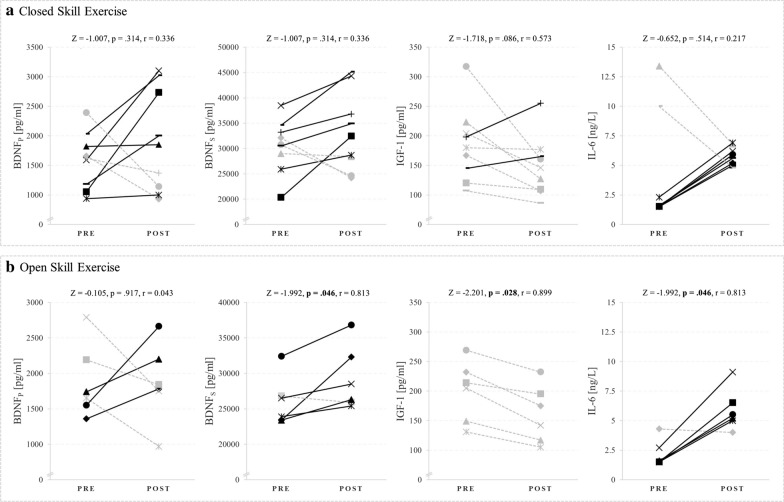
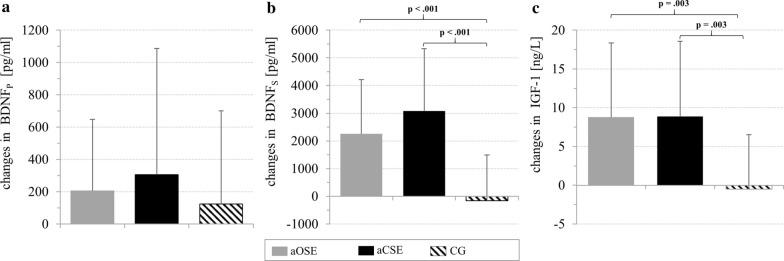
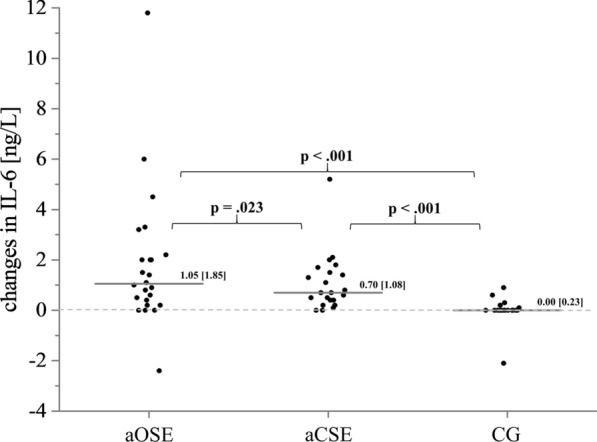
BDNF, BDNF, IGF-1, and IL-6 levels increased after a single exercise session of 30 min. After 12 weeks of training BDNF and IL-6 levels were elevated, whereas IGF-1 levels were reduced in both groups. However, only in the cOSE group these changes were significant. We could not find any significant differences between the exercise types.
Our results indicate that both exercise types are efficient to acutely increase BDNF, BDNF, IGF-1 and IL-6 serum levels in healthy older adults. Additionally, our results tend to support that OSE is more effective for improving basal BDNF levels after 12 weeks of training.
越来越多的证据表明,体育锻炼对神经营养因子和肌因子的释放有积极影响。然而,关于哪种体育锻炼类型最有利于这些释放的证据仍然缺乏。本研究的目的是评估开放式技能运动(OSE)与闭式技能运动(CSE)对健康老年人血清和血浆脑源性神经营养因子(BDNF,BDNF)、胰岛素样生长因子 1(IGF-1)和白细胞介素 6(IL-6)水平的急性和慢性影响。
为了研究急性效应,38 名参与者被随机分配到干预组(羽毛球(aOSE)和骑自行车(aCSE),n = 24,65.83 ± 5.98 岁)或对照组(阅读(CG),n = 14,67.07 ± 2.37 岁)。在每种情况下之前和之后 5 分钟采集血样。在每种情况下,监测心率。aOSE 和 aCSE 的平均心率相当(心率储备的 65 ± 5%)。在随后的 12 周训练干预中,22 名参与者被随机分配到运动游戏(cOSE,n = 6,64.50 ± 6.32)或力量耐力训练(cCSE,n = 9,64.89 ± 3.51)组,以评估慢性效应。两组的训练强度均根据 CR-10 量表(值 7)调整至主观感知的努力程度。在训练干预后的一天内采集血样。
30 分钟单次运动后,BDNF、BDNF、IGF-1 和 IL-6 水平升高。12 周训练后,BDNF 和 IL-6 水平升高,而两组 IGF-1 水平降低。然而,只有在 cOSE 组,这些变化才具有统计学意义。我们没有发现两种运动类型之间有任何显著差异。
我们的结果表明,两种运动类型都能有效地急性增加健康老年人的 BDNF、BDNF、IGF-1 和 IL-6 血清水平。此外,我们的结果倾向于支持 OSE 在 12 周训练后对提高基础 BDNF 水平更有效。