Herold Fabian, Törpel Alexander, Hamacher Dennis, Budde Henning, Gronwald Thomas
Department of Neurology, Medical Faculty, Otto von Guericke University, Leipziger Str. 44, 39120 Magdeburg, Germany.
Research Group Neuroprotection, German Center for Neurodegenerative Diseases (DZNE), Leipziger Str. 44, 39120 Magdeburg, Germany.
J Pers Med. 2020 Jun 27;10(3):55. doi: 10.3390/jpm10030055.
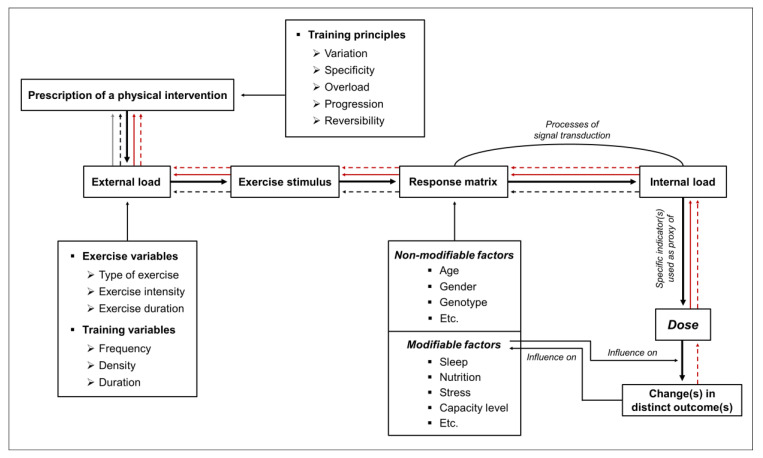
It is well recognized that regular physical exercise has positive effects on physical and mental health. To use the beneficial health effects of physical exercise, there are worldwide movements encouraging health care providers to include physical exercise in their care and treatments strategies. However, a crucial point in administering the "exercise polypill" is the dosing and, in turn, the prescription of the physical intervention (PI). In this perspective article, we discuss the advantages and disadvantages of different approaches to prescribe PI. In this context, we also highlight outstanding questions and potential areas of opportunity for further investigations.
人们普遍认识到,定期体育锻炼对身心健康有积极影响。为了利用体育锻炼对健康的有益影响,全球都在开展相关运动,鼓励医疗保健提供者将体育锻炼纳入其护理和治疗策略中。然而,实施“运动复方制剂”的一个关键点是剂量,进而涉及体育干预(PI)的处方。在这篇观点文章中,我们讨论了不同PI处方方法的优缺点。在此背景下,我们还强调了突出问题以及进一步研究的潜在机会领域。