LTI Laboratory, ENSA, Chouaib Doukkali University, El Jadida 1166, Morocco.
Analysis and Modeling of Systems and Decision Support Laboratory, ENSA of Berrechid, Hassan 1er University of Settat, Berrechid 218, Morocco.
Comput Math Methods Med. 2021 Nov 16;2021:9979560. doi: 10.1155/2021/9979560. eCollection 2021.
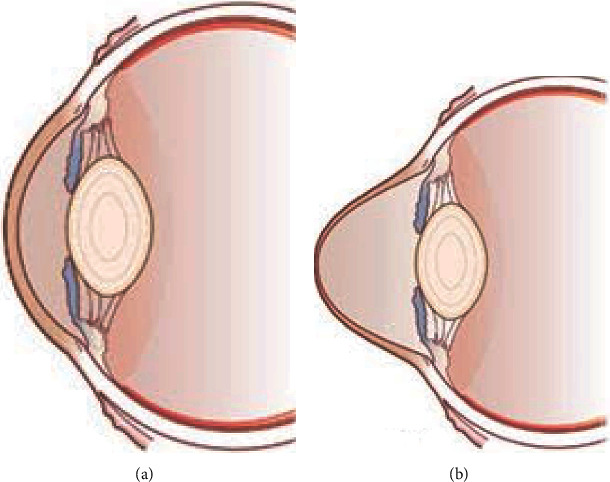
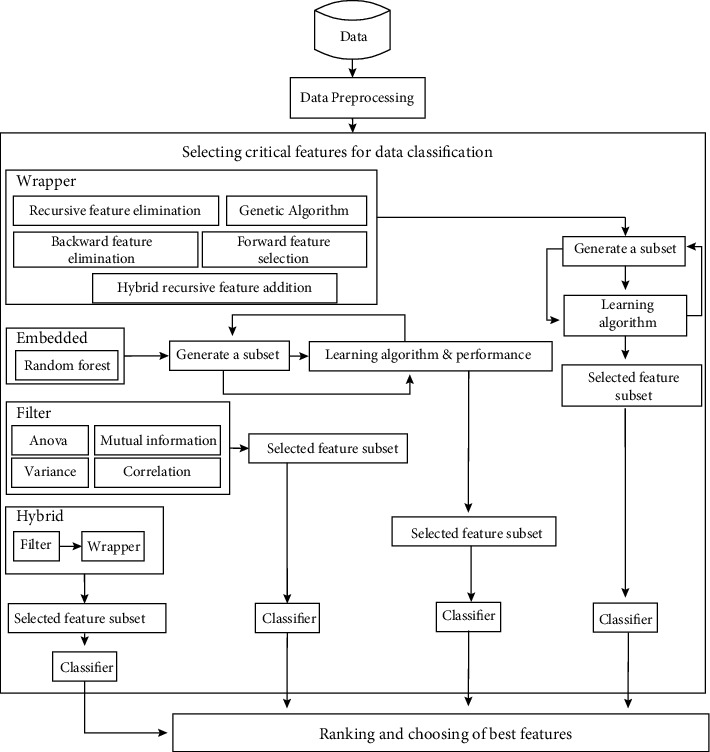
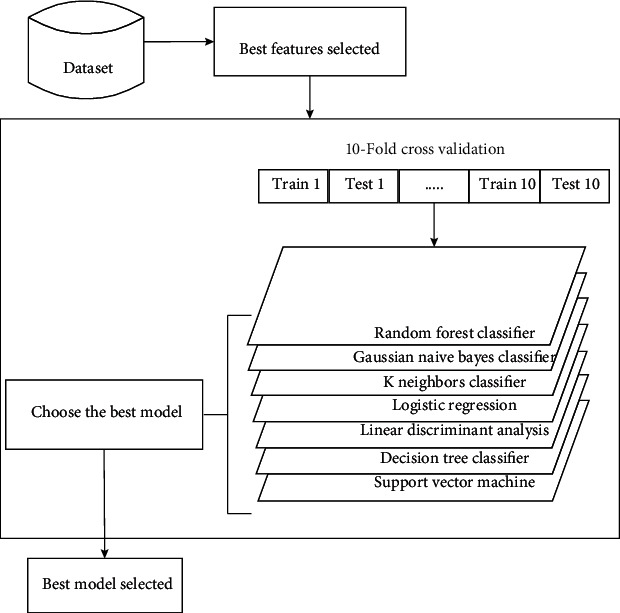
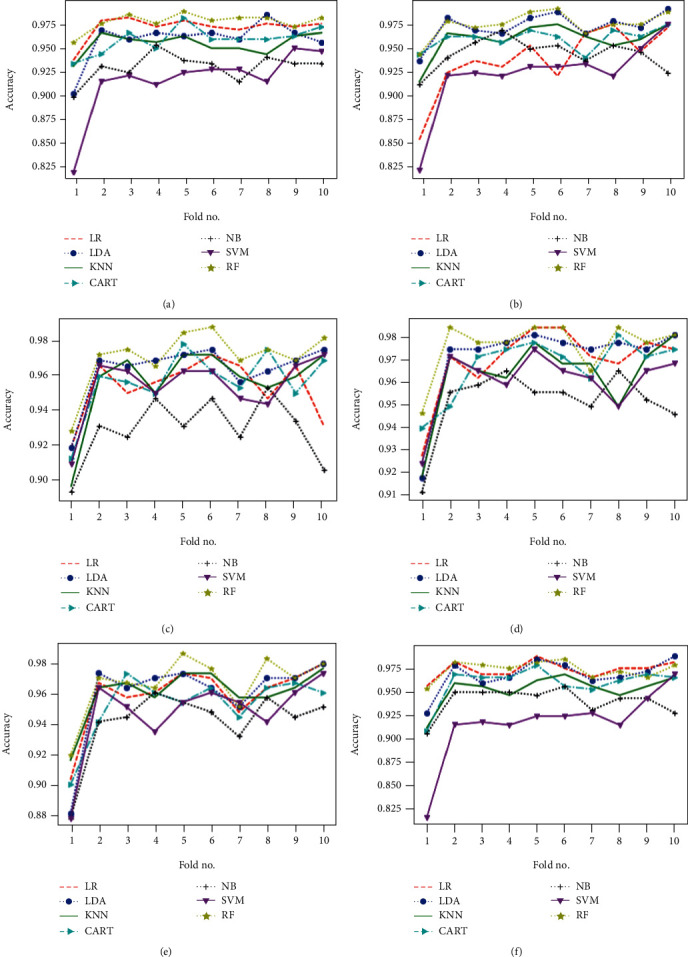
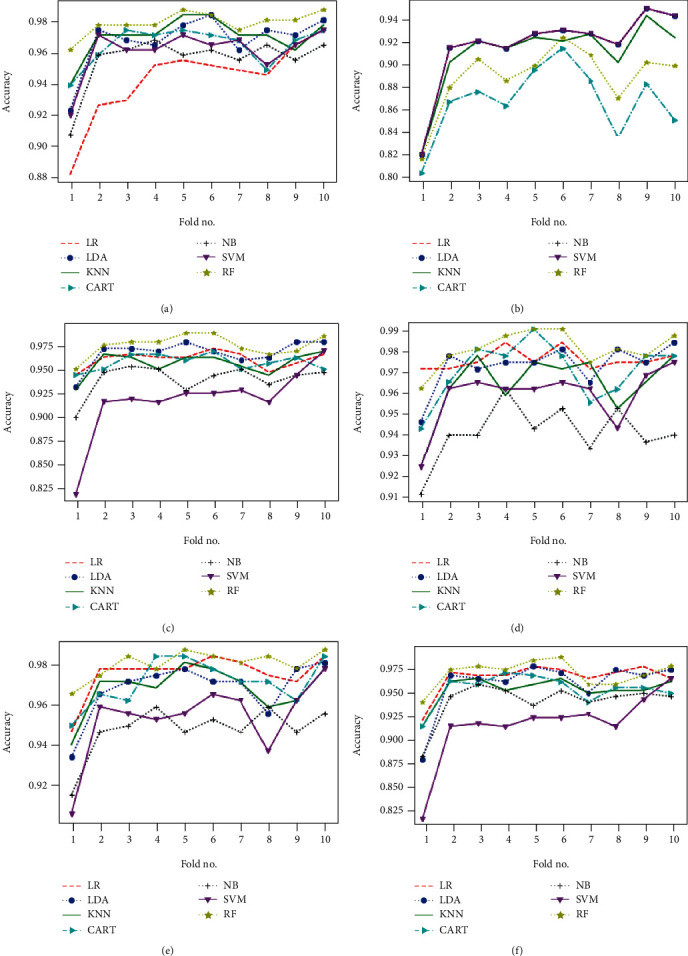
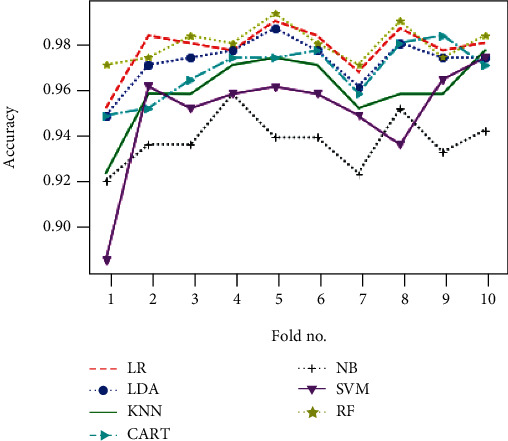
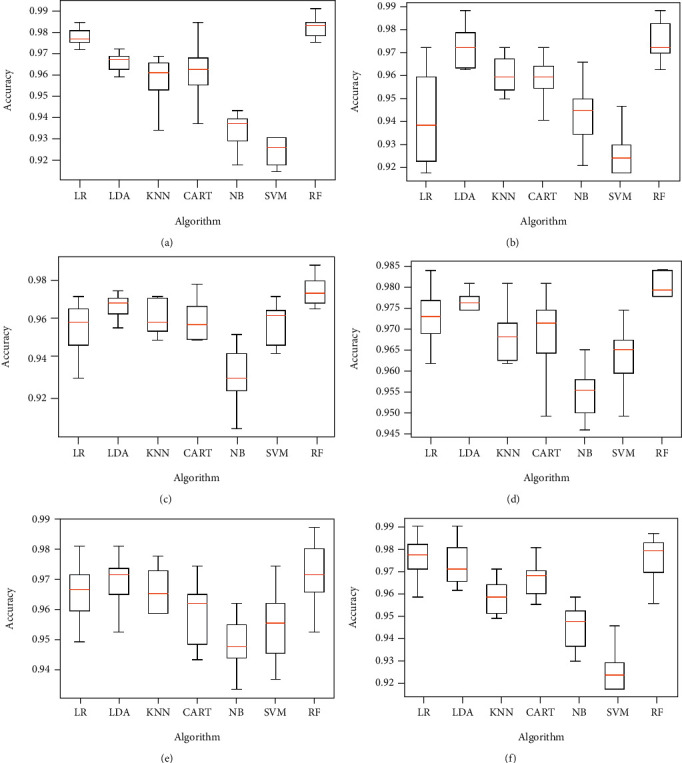
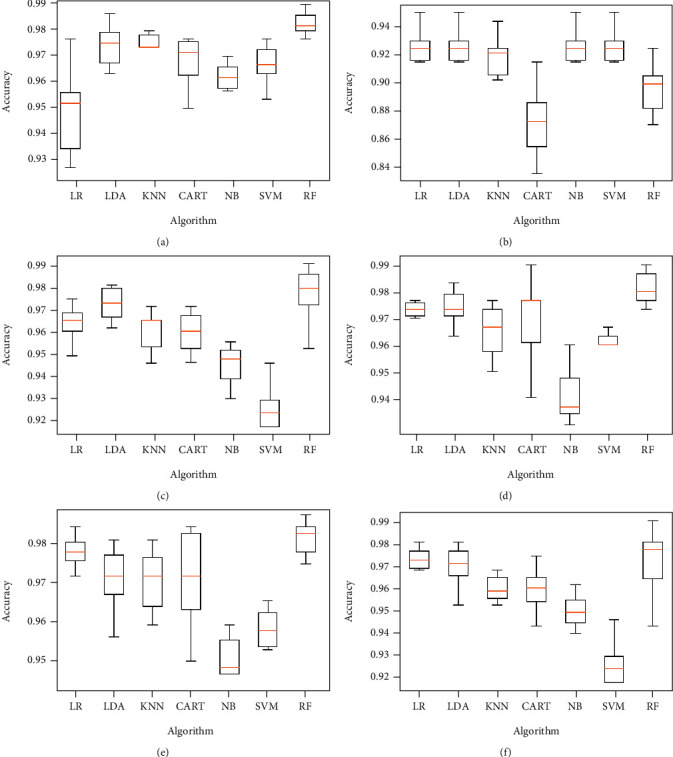
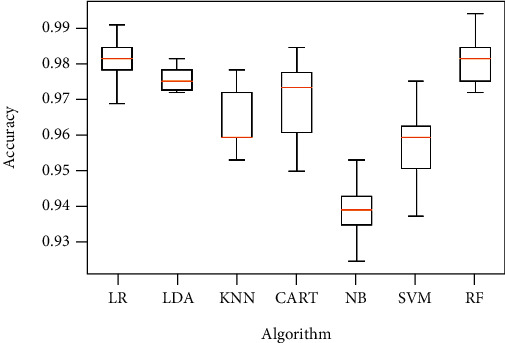
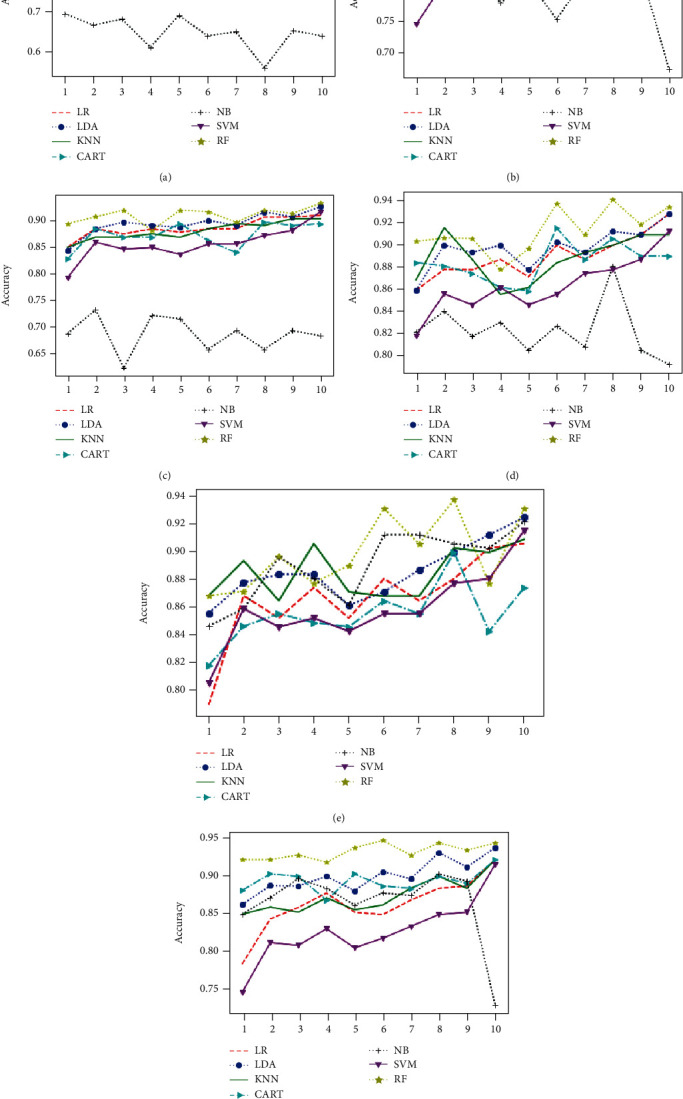
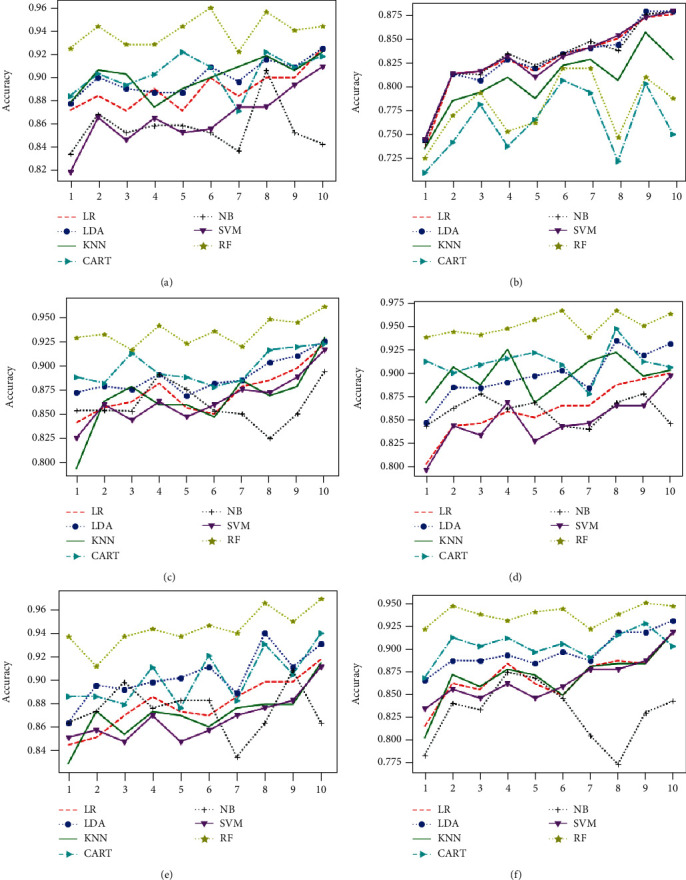
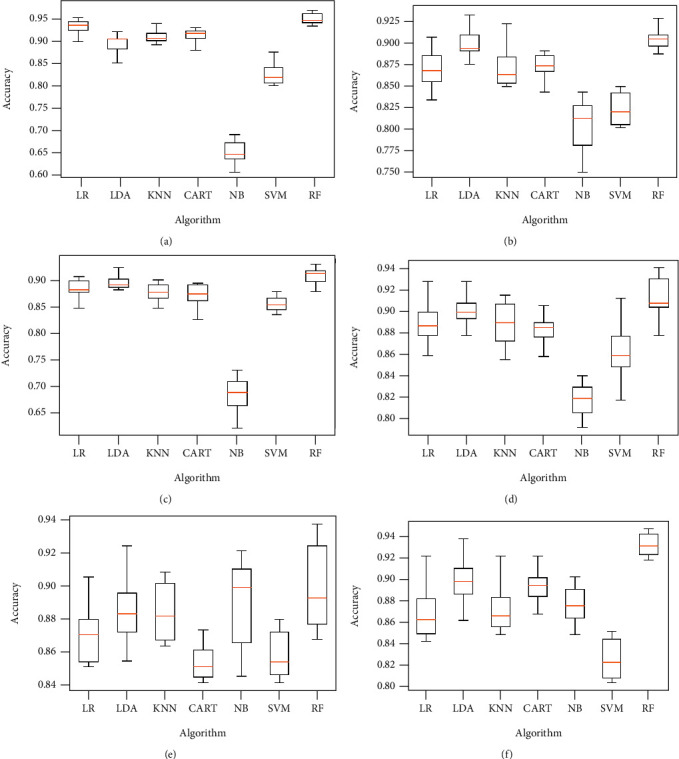
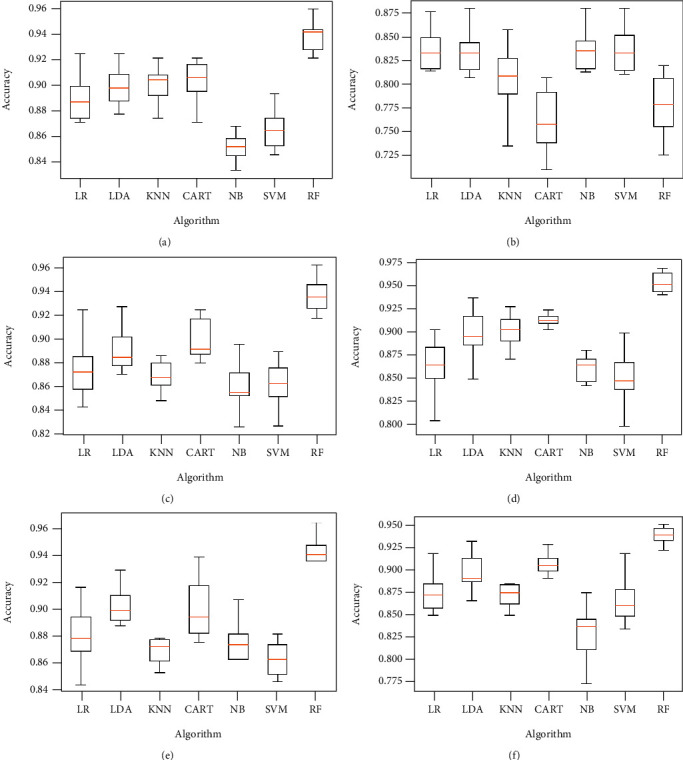
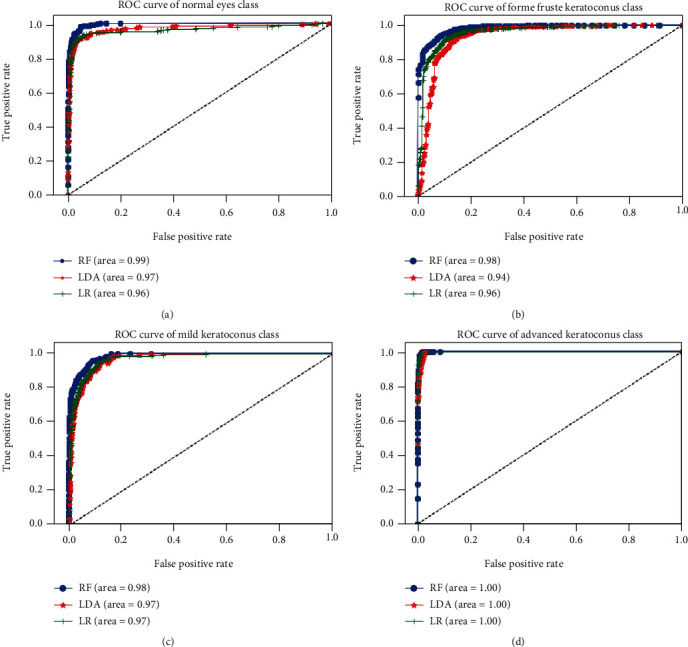
Keratoconus is a noninflammatory disease characterized by thinning and bulging of the cornea, generally appearing during adolescence and slowly progressing, causing vision impairment. However, the detection of keratoconus remains difficult in the early stages of the disease because the patient does not feel any pain. Therefore, the development of a method for detecting this disease based on machine and deep learning methods is necessary for early detection in order to provide the appropriate treatment as early as possible to patients. Thus, the objective of this work is to determine the most relevant parameters with respect to the different classifiers used for keratoconus classification based on the keratoconus dataset of Harvard Dataverse. A total of 446 parameters are analyzed out of 3162 observations by 11 different feature selection algorithms. Obtained results showed that sequential forward selection (SFS) method provided a subset of 10 most relevant variables, thus, generating the highest classification performance by the application of random forest (RF) classifier, with an accuracy of 98% and 95% considering 2 and 4 keratoconus classes, respectively. Found classification accuracy applying RF classifier on the selected variables using SFS method achieves the accuracy obtained using all features of the original dataset.
圆锥角膜是一种非炎症性疾病,其特征是角膜变薄和膨出,通常在青春期出现,并缓慢进展,导致视力损害。然而,由于患者没有任何疼痛感,因此在疾病的早期阶段很难检测到圆锥角膜。因此,有必要开发一种基于机器和深度学习方法的疾病检测方法,以便尽早发现,从而尽早为患者提供适当的治疗。因此,这项工作的目的是确定与基于哈佛数据档案库的圆锥角膜分类所用的不同分类器最相关的参数。通过 11 种不同的特征选择算法对 3162 个观察值中的 446 个参数进行了分析。结果表明,序列前向选择(SFS)方法提供了 10 个最相关变量的子集,从而通过随机森林(RF)分类器的应用产生了最高的分类性能,其准确性分别为 98%和 95%,考虑到 2 类和 4 类圆锥角膜。使用 SFS 方法对选定变量应用 RF 分类器的分类准确性达到了使用原始数据集所有特征获得的准确性。