School of Pharmaceutical Science, Guangzhou University of Chinese Medicine, 510006 Guangzhou, Guangdong, China.
Pharmacy Department, Guilin Municipal Hospital of Traditional Chinese Medicine, Guilin, Guangxi, China.
Biomed Res Int. 2021 Nov 16;2021:9262453. doi: 10.1155/2021/9262453. eCollection 2021.
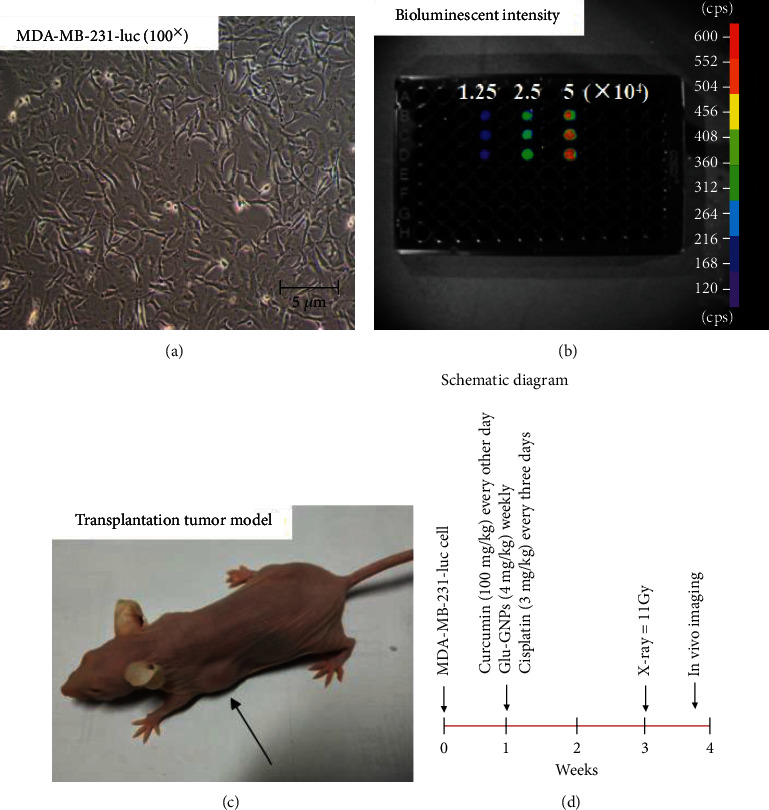
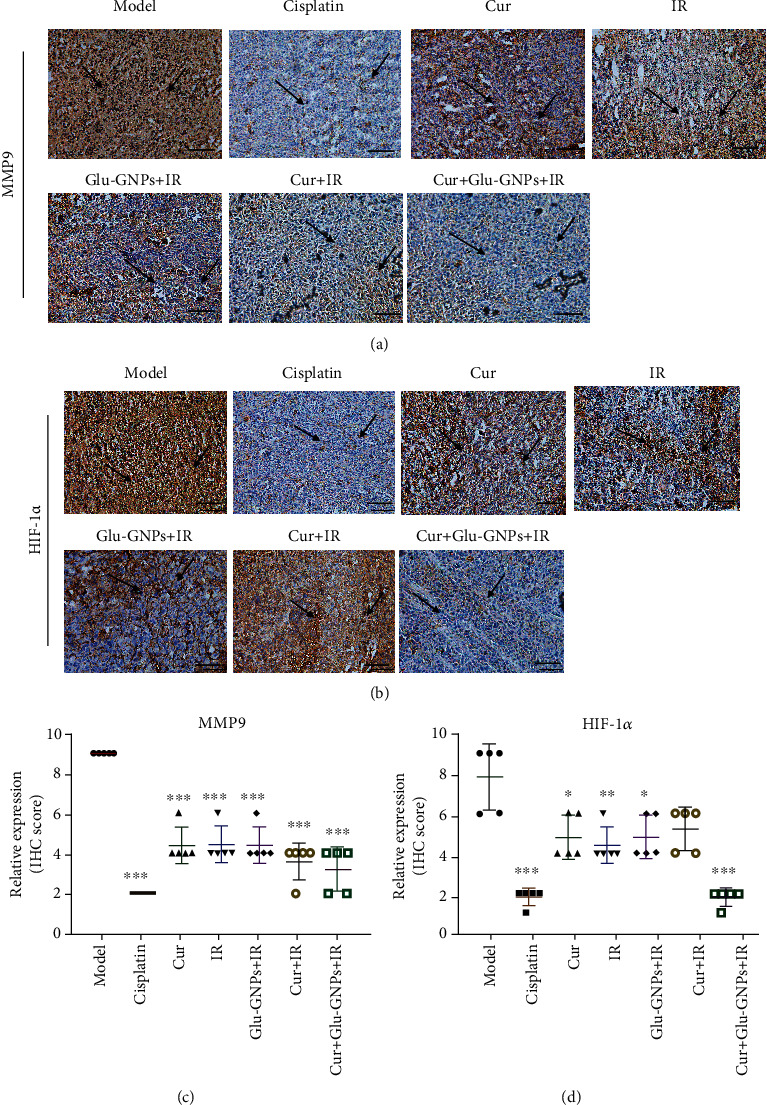
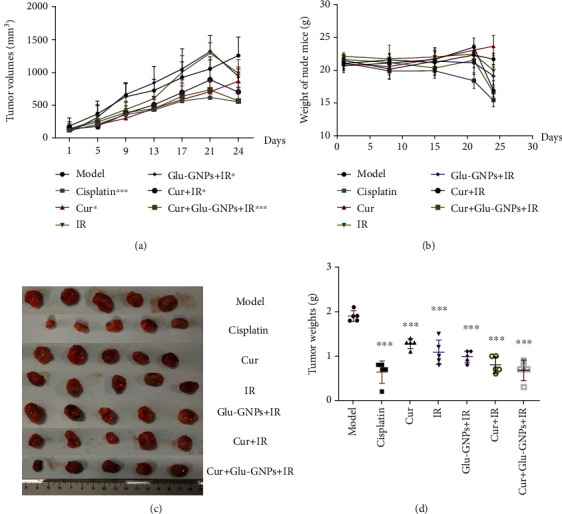
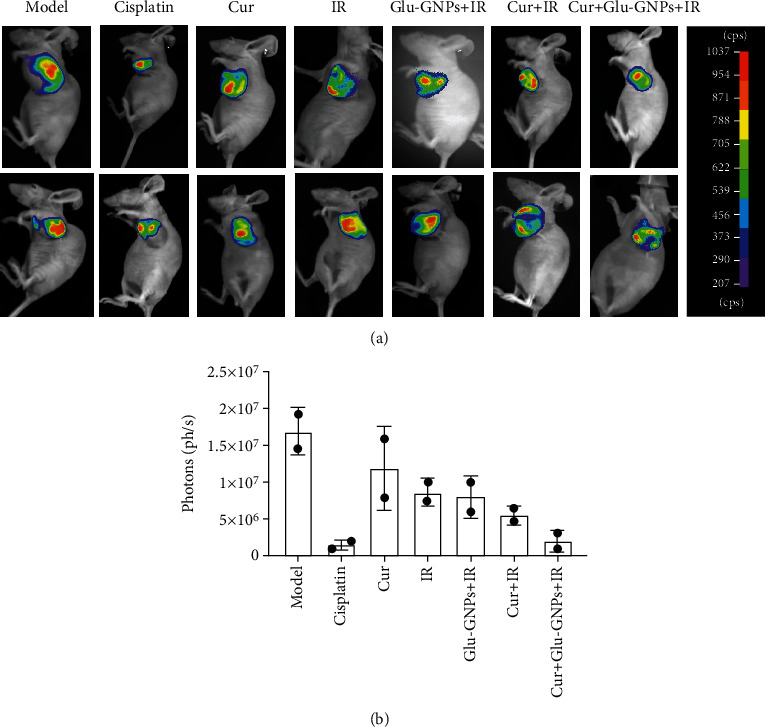
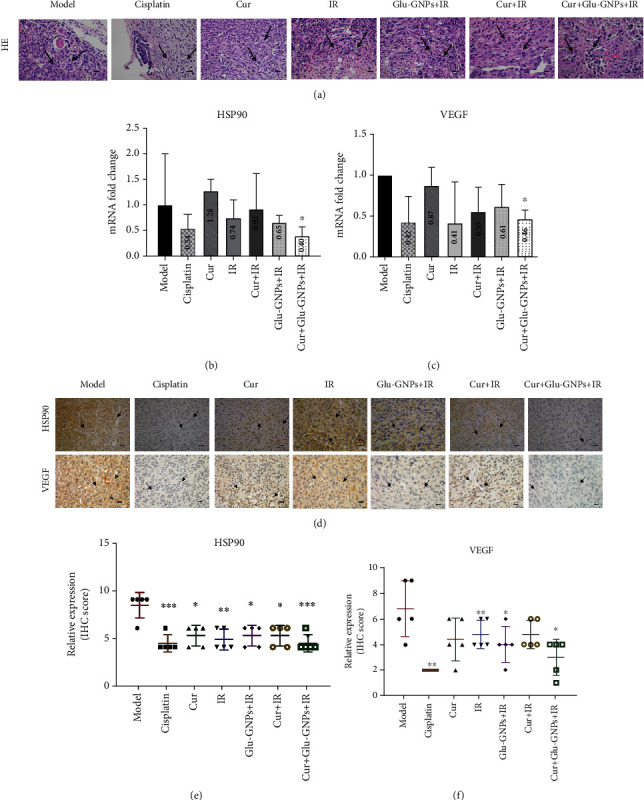
Curcumin is a type of plant polyphenol extracted from L. rhizome, which demonstrates antitumor activity in breast cancer cells . To investigate the combined effect and possible mechanism of curcumin and glucose-gold nanoparticles (Glu-GNPs), the radiosensitivity of breast carcinoma xenografts was assessed in nude mice. firefly were inoculated into the mammary fatty pads of nude mice to establish a transplantation tumor model of human breast cancer. The tumor-bearing mice were treated with different drugs (curcumin, Glu-GNPs, and cisplatin) for 3 weeks prior to radiotherapy. The body weights and tumor volumes of the mice were measured in regular intervals. Tumor bioluminescence intensity was determined in real-time using an bioluminescence imaging system to monitor tumor growth. Transplanted tumor tissue samples were taken for hematoxylin and eosin (HE) staining, and the expression of VEGF, HSP90, HIF-1, and MMP9 was evaluated via reverse transcription-quantitative PCR or immunohistochemistry. The results revealed that the breast tumor-bearing nude mouse model was successfully established, as evidenced by a stable expression of luciferase. Curcumin inhibited the growth of tumors without causing significant weight loss in mice. Furthermore, additive inhibition was demonstrated when curcumin was administered in combination with Glu-GNPs and irradiation. Tumor bioluminescence intensity was decreased in the model group following curcumin, Glu-GNPs, and irradiation treatment. HE staining demonstrated that transplanted tumors were malignant, with necrotic tissue exhibited centrally. It was concluded that curcumin administered in combination with Glu-GNPs and X-ray irradiation could reduce the protein expression of VEGF, HSP90, HIF-1, and MMP9 in tumor tissue when compared with the model group. Curcumin and Glu-GNPs administered with X-ray irradiation significantly inhibited tumor growth and induced radiosensitivity, which may be associated with the inhibition of angiogenesis in tumor tissue.
姜黄素是从 L. rhizome 中提取的植物多酚类物质,在乳腺癌细胞中具有抗肿瘤活性。为了研究姜黄素和葡萄糖金纳米粒子(Glu-GNPs)的联合作用及其可能的机制,在裸鼠中评估了乳腺癌异种移植瘤的放射敏感性。将萤火虫接种到裸鼠的乳腺脂肪垫中,建立人乳腺癌移植瘤模型。荷瘤小鼠在接受放射治疗前用不同药物(姜黄素、Glu-GNPs 和顺铂)治疗 3 周。定期测量小鼠的体重和肿瘤体积。使用生物发光成像系统实时测定肿瘤生物发光强度,以监测肿瘤生长。取移植瘤组织标本进行苏木精和伊红(HE)染色,通过逆转录定量 PCR 或免疫组织化学评估 VEGF、HSP90、HIF-1 和 MMP9 的表达。结果表明,成功建立了携带乳腺癌的裸鼠模型,荧光素酶表达稳定。姜黄素抑制肿瘤生长,而不会导致小鼠体重明显减轻。此外,当姜黄素与 Glu-GNPs 和照射联合使用时,表现出相加抑制作用。模型组中,经姜黄素、Glu-GNPs 和照射处理后,肿瘤生物发光强度降低。HE 染色表明,移植瘤为恶性,中央可见坏死组织。结论是,与模型组相比,姜黄素与 Glu-GNPs 和 X 射线照射联合给药可降低肿瘤组织中 VEGF、HSP90、HIF-1 和 MMP9 的蛋白表达。姜黄素和 Glu-GNPs 联合 X 射线照射可显著抑制肿瘤生长并诱导放射敏感性,这可能与抑制肿瘤组织中的血管生成有关。