The TCM Clinical Institute, Hubei University of Chinese Medicine, Hubei 430065, China.
The First Clinical Institute, Hubei University of Chinese Medicine, Hubei 430065, China.
Biomed Res Int. 2021 Nov 16;2021:9979511. doi: 10.1155/2021/9979511. eCollection 2021.
The subjects included 13 PI patients from the Hubei Provincial Hospital of TCM, Hubei University of TCM, and Wuhan Traditional Chinese Medicine Hospital, and the corresponding noninsomniac spouses of the patients were selected as controls. TWBXG was continuously administered for 4 weeks. The feces of PI patients and their noninsomniac spouses before and after treatment with TWBXG were collected. The intestinal flora composition of each group was detected by metagenomic sequencing, and the efficacy of TWBXG was evaluated by the PSQI scale.
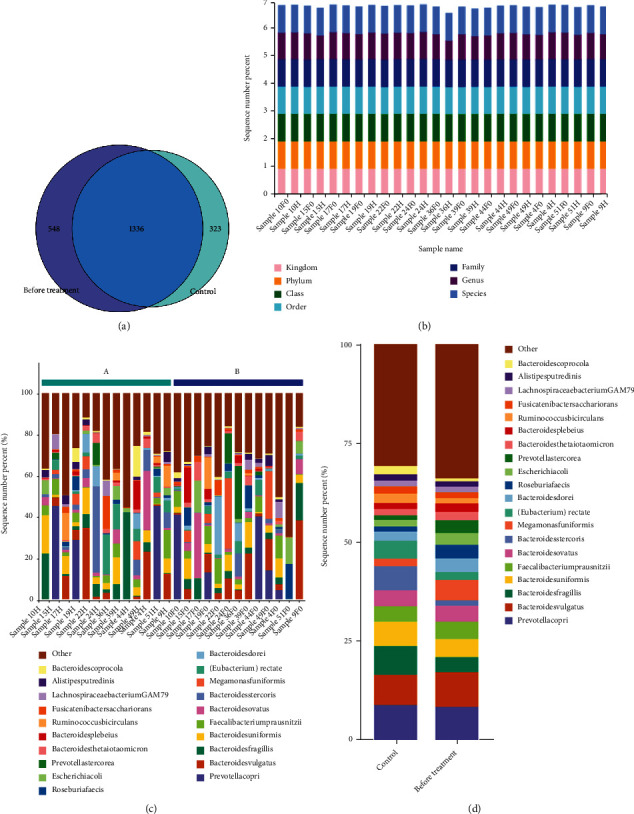
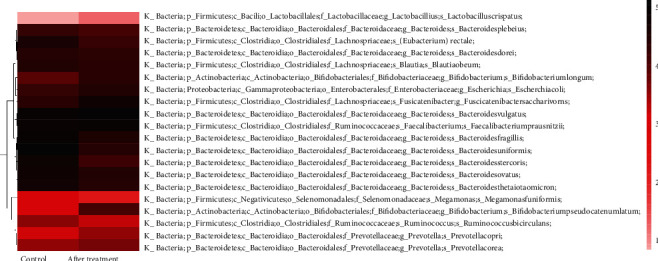
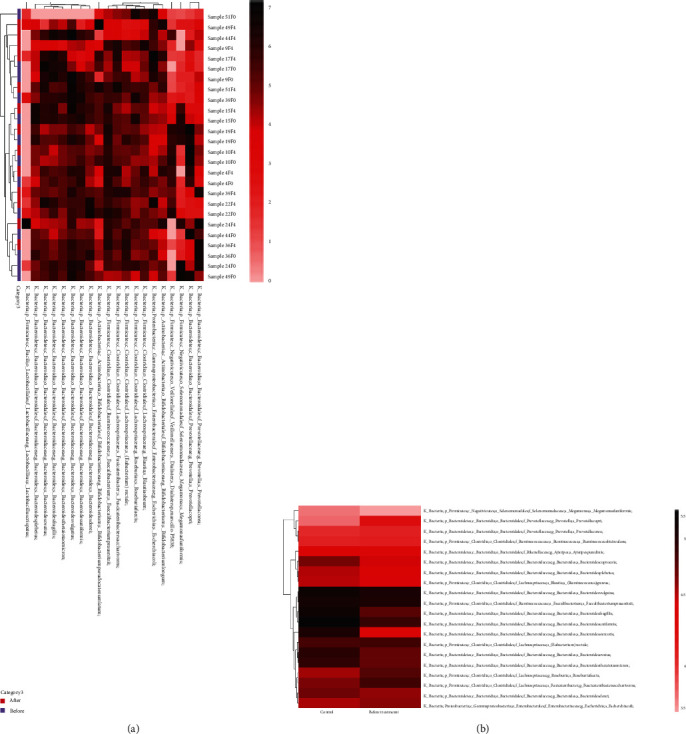
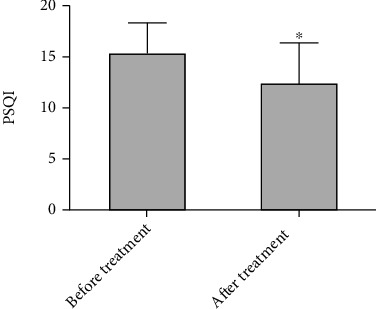
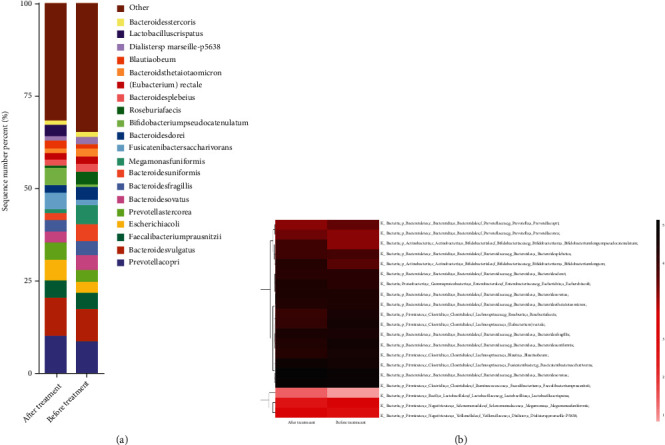
Compared with the control group, the model group showed an increase in the abundance of Roseburia faecis, Ruminococcus, Prevotella copri, Fusicatenibacter saccharivorans, and Blautia obeum, while those of Bacteroides, fecal Bacteroidetes, and Faecalibacterium prausnitzii were decreased. Compared with pretreatment, the PSQI score was significantly reduced ( < 0.05), the abundance of Bacteroides, fecal Bacteroidetes, and Faecalibacterium prausnitzii increased, and that of Roseburia faecis, Ruminococcus, Prevotella copri, Fusicatenibacter saccharivorans, and Blautia obeum decreased after treatment. However, there was still a certain gap in the abundance of related flora in the treatment group compared with the control.
PI is associated with disturbances in the intestinal flora and is mainly related to the disorders of Roseburia faecis, Ruminococcus, Prevotella copri, Fusicatenibacter saccharivorans, Blautia obeum, Bacteroides, fecal Bacteroidetes, and Faecalibacterium prausnitzii. TWBXG can effectively treat PI, and its effect may be achieved by regulating the disordered intestinal flora. The study was registered in the Chinese clinical trial registry and approved by the World Health Organization clinical trial registration platform (Effects of the modified Tianwang Buxin granule and modified Tianwang Buxin decoction pieces on insomnia: a randomized, controlled trial, ChiCTR-IPR-17011549).
纳入湖北省中医院、湖北中医药大学、武汉市中医医院 13 例 PI 患者,并选择其非失眠配偶作为对照。连续给予 TWBXG 治疗 4 周。采集 PI 患者及其非失眠配偶治疗前后的粪便,采用宏基因组测序检测各组肠道菌群组成,采用 PSQI 量表评价 TWBXG 的疗效。
与对照组比较,模型组 Roseburia faecis、Ruminococcus、Prevotella copri、Fusicatenibacter saccharivorans、Blautia obeum 丰度增加,Bacteroides、粪便拟杆菌和 Faecalibacterium prausnitzii 丰度降低;与治疗前比较,PSQI 评分明显降低(<0.05),Bacteroides、粪便拟杆菌和 Faecalibacterium prausnitzii 丰度增加,Roseburia faecis、Ruminococcus、Prevotella copri、Fusicatenibacter saccharivorans、Blautia obeum 丰度降低;但治疗组相关菌群丰度与对照组仍存在一定差距。
PI 与肠道菌群紊乱有关,主要与 Roseburia faecis、Ruminococcus、Prevotella copri、Fusicatenibacter saccharivorans、Blautia obeum、Bacteroides、粪便拟杆菌和 Faecalibacterium prausnitzii 紊乱有关。TWBXG 能有效治疗 PI,其作用可能是通过调节肠道菌群紊乱实现的。该研究在中国临床试验注册中心注册,并获得世界卫生组织临床试验注册平台(天王补心颗粒及天王补心丸加减方治疗失眠的随机、对照临床试验,ChiCTR-IPR-17011549)批准。