Choi Sung-Sook, Park Hye-Ryung, Lee Kyung-Ae
Department of Food and Nutrition, Duksung Women's University, Seoul 01370, Korea.
Graduate School of Biotechnology, College of Life Science, Kyung Hee University, Yongin 17104, Korea.
Antioxidants (Basel). 2021 Oct 27;10(11):1696. doi: 10.3390/antiox10111696.
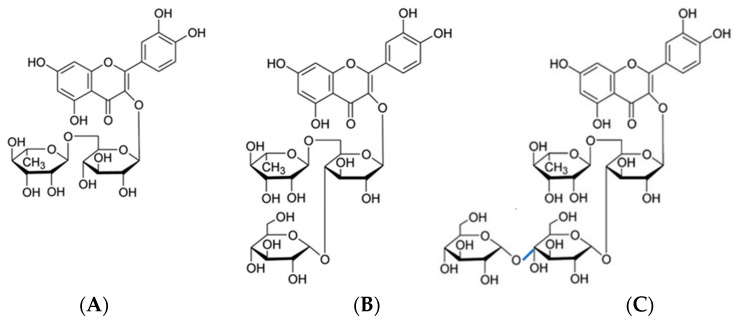
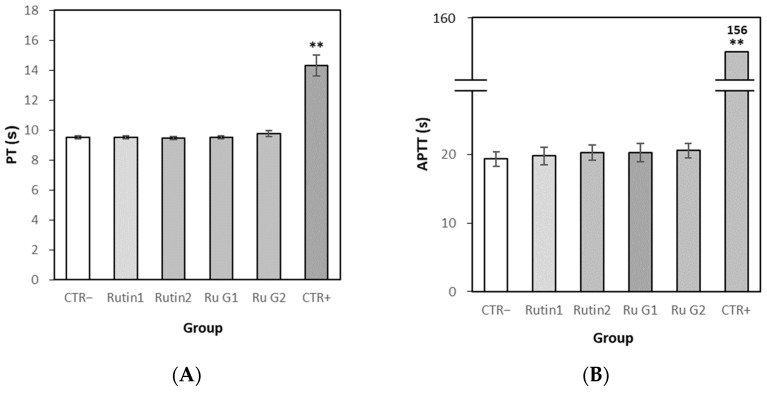
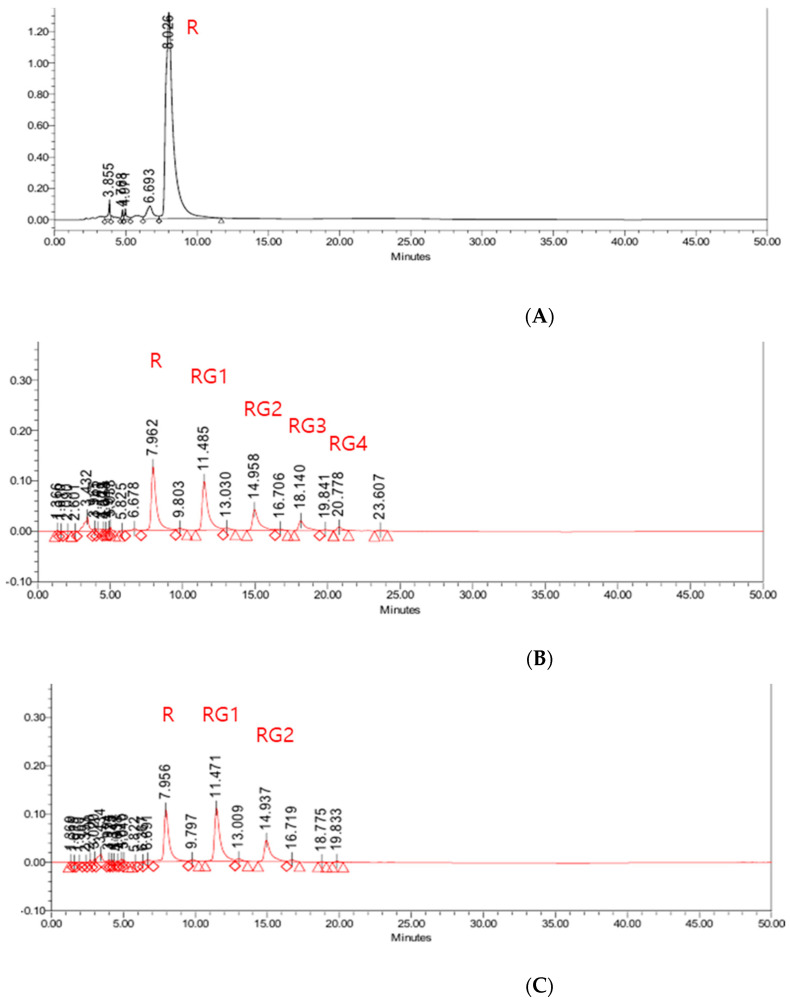
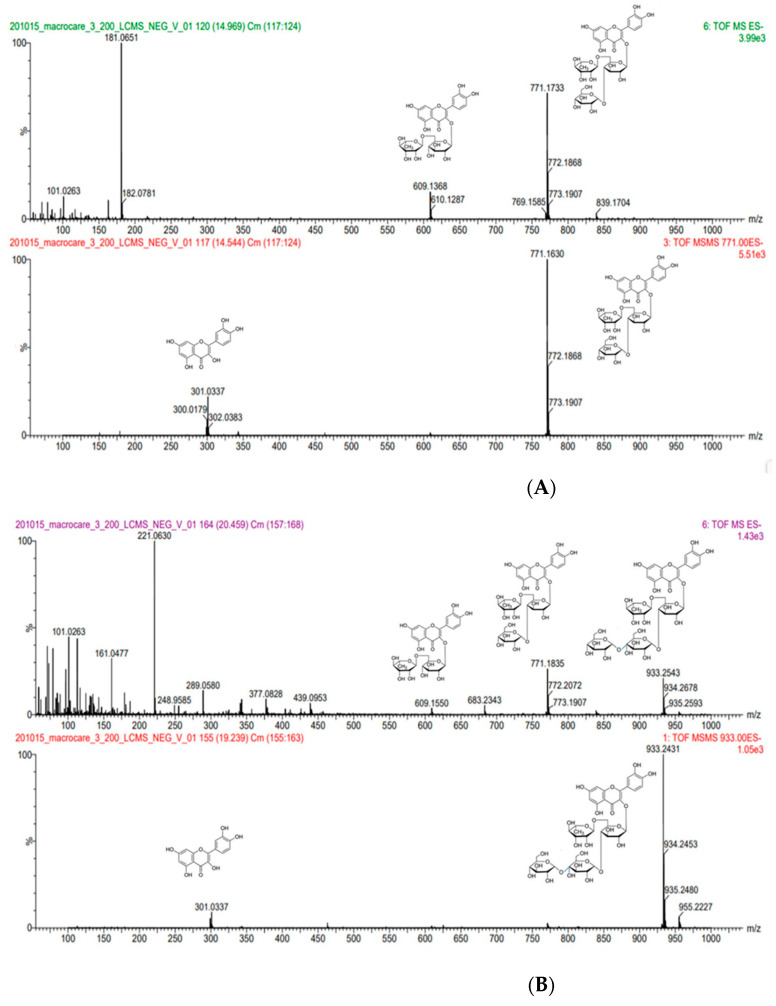
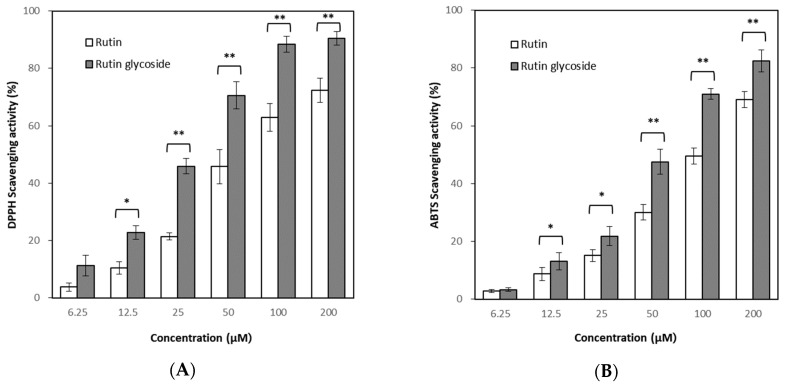
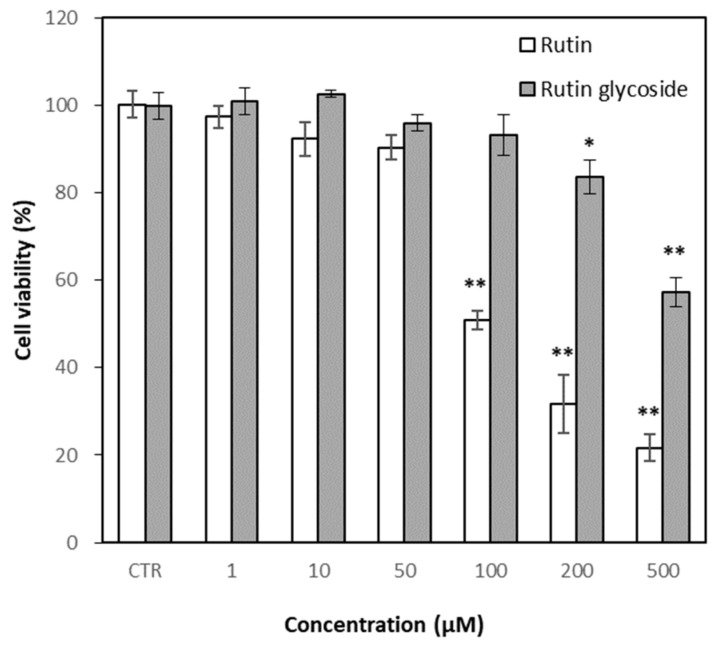
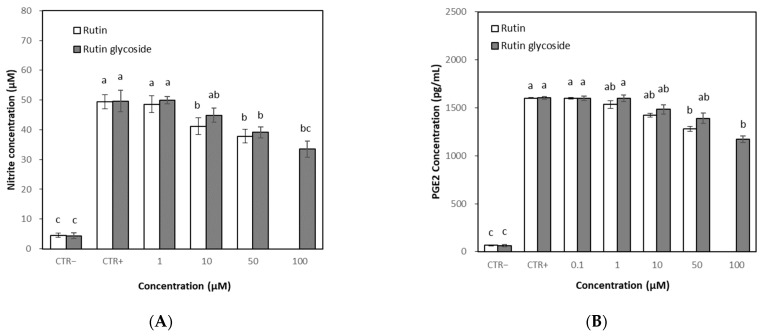
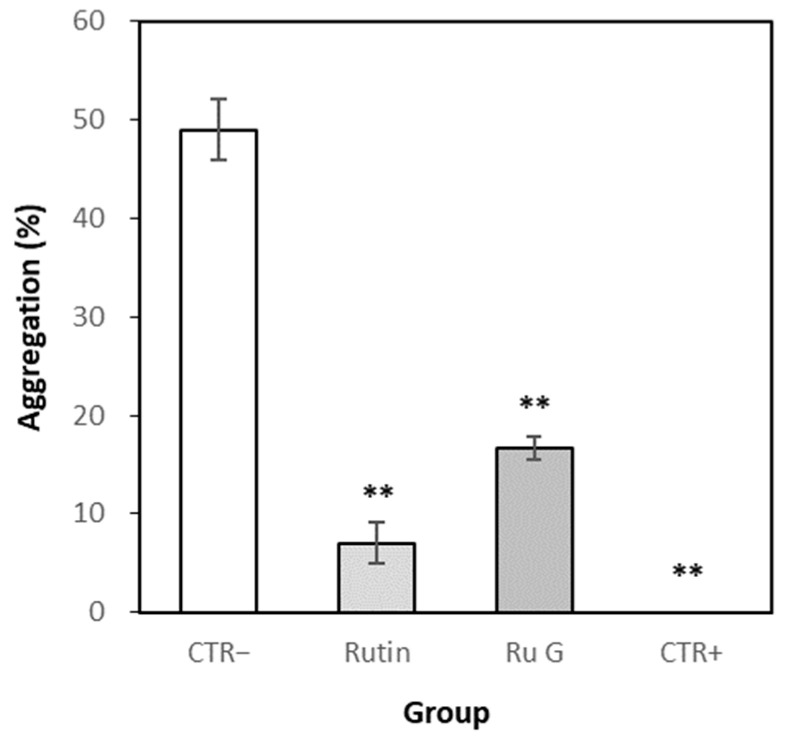
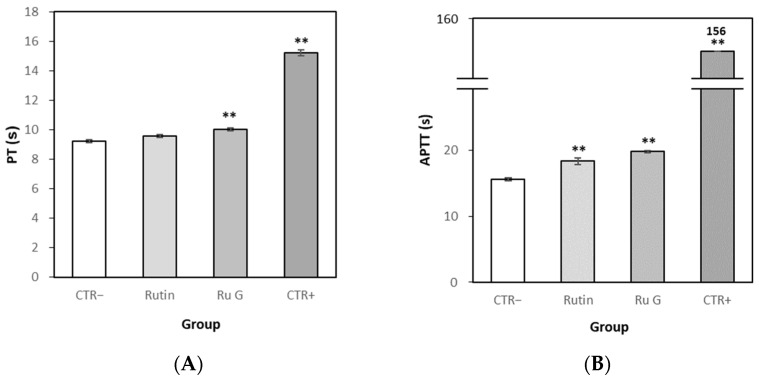
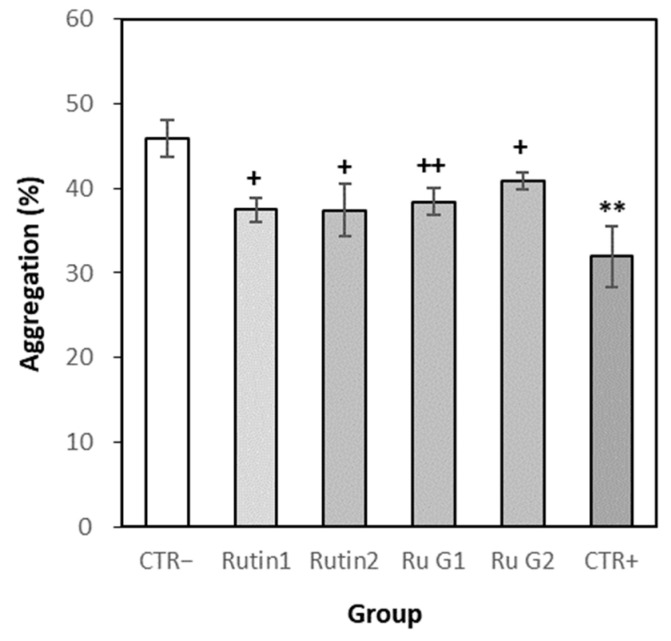
The effects of rutin and rutin glycoside with different solubility were compared on antioxidant activity and anti-inflammatory effects in vitro and the effects on platelet aggregation and blood coagulation in vitro and in vivo. Rutin glycoside (consisting of rutin mono-glucoside and rutin di-glucoside) was prepared via enzymatic transglycosylation from rutin. Rutin glycoside showed a higher effect than rutin on radical scavenging activity in antioxidant assays. Rutin showed a higher toxicity than rutin glycoside in murine macrophage RAW264.7 cells. They had similar effects on the levels of nitric oxide (NO), prostaglandin E (PGE) 2 and pro-inflammatory cytokines (such as tumor necrosis factor (TNF)-α, and interleukin (IL)-6) in the cells. Both rutin and rutin glycosides similarly reduced the rate of platelet aggregation compared to controls in vitro. They also similarly delayed prothrombin time (PT) and activated partial thromboplastin time (APTT) in an in vitro blood coagulation test. The effect of repeated administration of rutin and rutin glycoside was evaluated in vivo using SD rats. The platelet aggregation rate of rutin and the rutin glycoside administered group was significantly decreased compared to that of the control group. On the other hand, PT and APTT of rutin and rutin glycoside group were not significantly delayed in vivo blood coagulation test. In conclusion, rutin and rutin glycoside showed differences in antioxidant activities in vitro, while they were similar in the reduction of NO, PGE2, TNF-α and IL-6 in vitro. Rutin and rutin glycoside also showed similar platelet aggregation rates, and blood coagulation both in vitro and in vivo condition. Comparing in vitro and in vivo, rutin and rutin glycoside were effective on platelet aggregation both in vitro and in vivo, but only in vitro on blood coagulation.
比较了不同溶解度的芦丁和芦丁糖苷在体外的抗氧化活性和抗炎作用,以及在体外和体内对血小板聚集和血液凝固的影响。芦丁糖苷(由芦丁单糖苷和芦丁二糖苷组成)通过芦丁的酶促转糖基化制备。在抗氧化试验中,芦丁糖苷在清除自由基活性方面比芦丁表现出更高的效果。在小鼠巨噬细胞RAW264.7细胞中,芦丁比芦丁糖苷表现出更高的毒性。它们对细胞中一氧化氮(NO)、前列腺素E(PGE)2和促炎细胞因子(如肿瘤坏死因子(TNF)-α和白细胞介素(IL)-6)的水平具有相似的影响。与体外对照组相比,芦丁和芦丁糖苷均同样降低了血小板聚集率。在体外血液凝固试验中,它们也同样延长了凝血酶原时间(PT)和活化部分凝血活酶时间(APTT)。使用SD大鼠在体内评估了芦丁和芦丁糖苷重复给药的效果。与对照组相比,芦丁和芦丁糖苷给药组的血小板聚集率显著降低。另一方面,在体内血液凝固试验中,芦丁和芦丁糖苷组的PT和APTT没有显著延长。总之,芦丁和芦丁糖苷在体外抗氧化活性方面存在差异,而在体外降低NO、PGE2、TNF-α和IL-6方面相似。芦丁和芦丁糖苷在体外和体内条件下也表现出相似的血小板聚集率和血液凝固作用。比较体外和体内情况,芦丁和芦丁糖苷在体外和体内对血小板聚集均有效,但仅在体外对血液凝固有效。