Department of Dermatology, Yeouido St. Mary's Hospital, College of Medicine, The Catholic University of Korea, #10, 63-ro, Yeongdeungpo-gu, Seoul 07345, Korea.
Int J Mol Sci. 2021 Nov 19;22(22):12489. doi: 10.3390/ijms222212489.
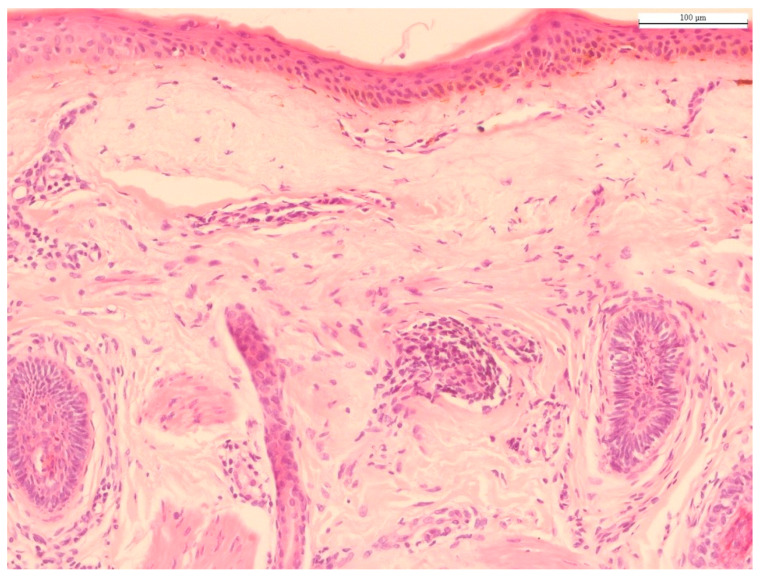
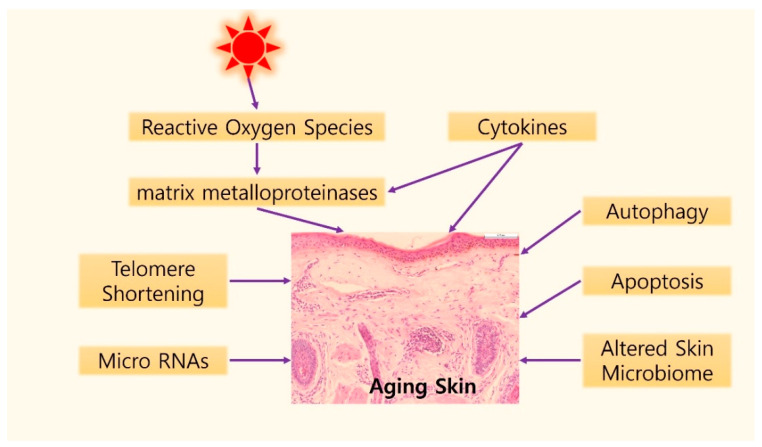
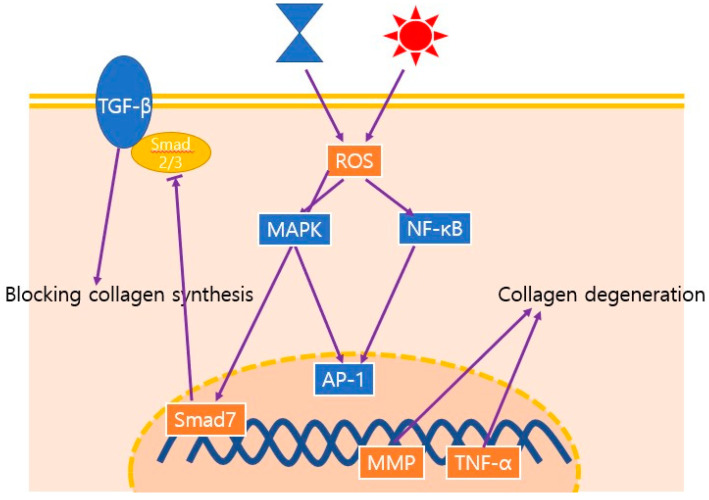
Skin aging is a complex process influenced by intrinsic and extrinsic factors. Together, these factors affect the structure and function of the epidermis and dermis. Histologically, aging skin typically shows epidermal atrophy due to decreased cell numbers. The dermis of aged skin shows decreased numbers of mast cells and fibroblasts. Fibroblast senescence contributes to skin aging by secreting a senescence-associated secretory phenotype, which decreases proliferation by impairing the release of essential growth factors and enhancing degradation of the extracellular matrix through activation of matrix metalloproteinases (MMPs). Several molecular mechanisms affect skin aging including telomere shortening, oxidative stress and MMP, cytokines, autophagic control, microRNAs, and the microbiome. Accumulating evidence on the molecular mechanisms of skin aging has provided clinicians with a wide range of therapeutic targets for treating aging skin.
皮肤衰老过程复杂,受内在和外在因素影响。这些因素共同作用于表皮和真皮的结构和功能。组织学上,衰老皮肤通常表现为由于细胞数量减少导致的表皮萎缩。老化皮肤的真皮中,肥大细胞和成纤维细胞数量减少。成纤维细胞衰老通过分泌衰老相关分泌表型导致皮肤衰老,通过损害必需生长因子的释放和通过激活基质金属蛋白酶 (MMPs) 增强细胞外基质的降解来抑制增殖。几种分子机制会影响皮肤衰老,包括端粒缩短、氧化应激和 MMP、细胞因子、自噬控制、microRNAs 和微生物组。关于皮肤衰老分子机制的积累证据为临床医生提供了广泛的治疗衰老皮肤的治疗靶点。