Wang Qiang, Li Changfeng, Zhang Jiaxing, Hu Xiaojun, Fan Yingfang, Ma Kuansheng, Sparrelid Ernesto, Brismar Torkel B
Division of Medical Imaging and Technology, Department of Clinical Science, Intervention and Technology (CLINTEC), Karolinska Institutet, 14186 Stockholm, Sweden.
Division of Radiology, Department of Clinical Science, Intervention and Technology (CLINTEC), Karolinska Institutet, Karolinska University Hospital, 14186 Stockholm, Sweden.
Cancers (Basel). 2021 Nov 22;13(22):5864. doi: 10.3390/cancers13225864.
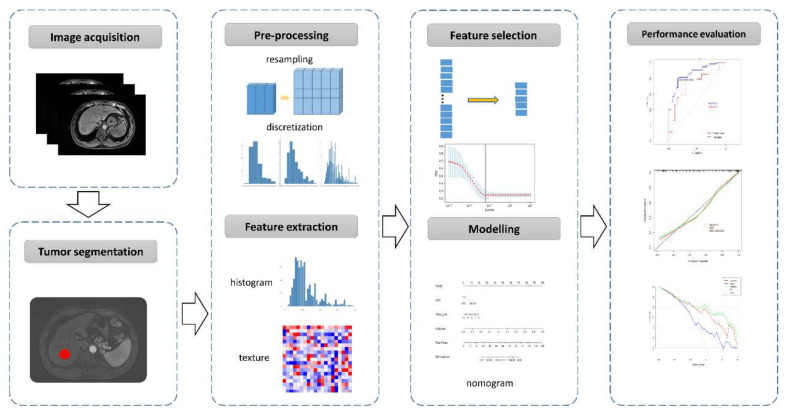
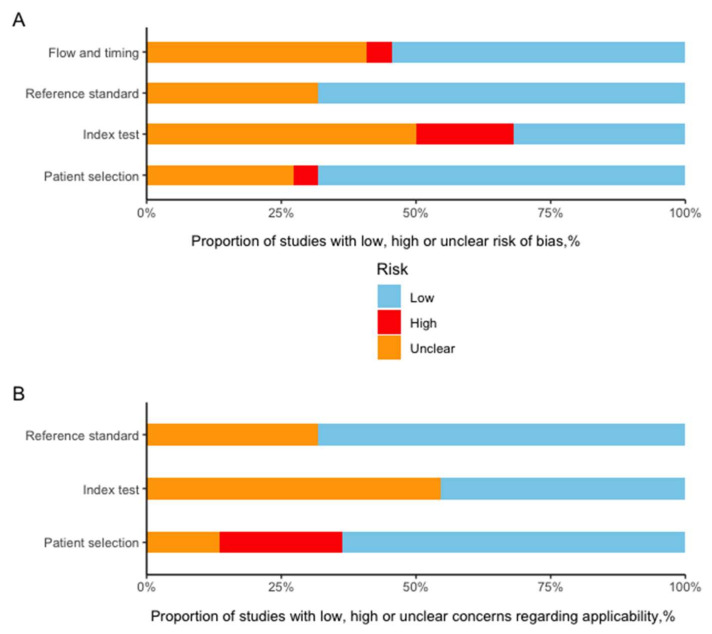
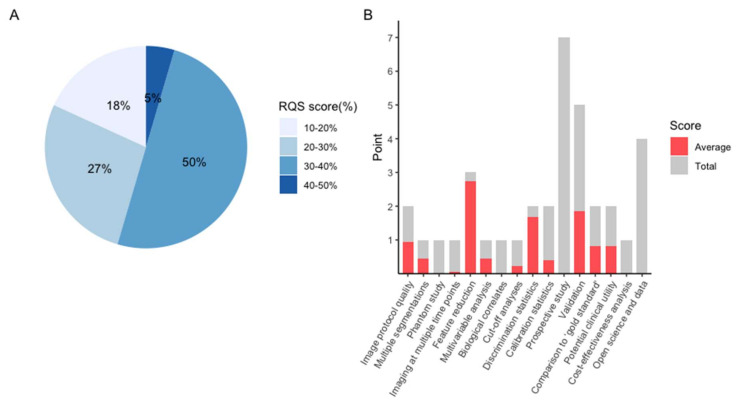
Preoperative prediction of microvascular invasion (MVI) is of importance in hepatocellular carcinoma (HCC) patient treatment management. Plenty of radiomics models for MVI prediction have been proposed. This study aimed to elucidate the role of radiomics models in the prediction of MVI and to evaluate their methodological quality. The methodological quality was assessed by the Radiomics Quality Score (RQS), and the risk of bias was evaluated by the Quality Assessment of Diagnostic Accuracy Studies (QUADAS-2). Twenty-two studies using CT, MRI, or PET/CT for MVI prediction were included. All were retrospective studies, and only two had an external validation cohort. The AUC values of the prediction models ranged from 0.69 to 0.94 in the test cohort. Substantial methodological heterogeneity existed, and the methodological quality was low, with an average RQS score of 10 (28% of the total). Most studies demonstrated a low or unclear risk of bias in the domains of QUADAS-2. In conclusion, a radiomics model could be an accurate and effective tool for MVI prediction in HCC patients, although the methodological quality has so far been insufficient. Future prospective studies with an external validation cohort in accordance with a standardized radiomics workflow are expected to supply a reliable model that translates into clinical utilization.
微血管侵犯(MVI)的术前预测在肝细胞癌(HCC)患者的治疗管理中具有重要意义。已经提出了大量用于MVI预测的放射组学模型。本研究旨在阐明放射组学模型在MVI预测中的作用,并评估其方法学质量。通过放射组学质量评分(RQS)评估方法学质量,通过诊断准确性研究的质量评估(QUADAS-2)评估偏倚风险。纳入了22项使用CT、MRI或PET/CT进行MVI预测的研究。所有研究均为回顾性研究,只有两项研究有外部验证队列。在测试队列中,预测模型的AUC值范围为0.69至0.94。存在显著的方法学异质性,且方法学质量较低,平均RQS评分为10分(占总分的28%)。大多数研究在QUADAS-2的各个领域中显示出低或不明确的偏倚风险。总之,放射组学模型可能是HCC患者MVI预测的一种准确有效的工具,尽管目前方法学质量还不够。预计未来按照标准化放射组学工作流程进行的具有外部验证队列的前瞻性研究将提供一个可转化为临床应用的可靠模型。