Limongi Tania, Susa Francesca, Dumontel Bianca, Racca Luisa, Perrone Donnorso Michela, Debellis Doriana, Cauda Valentina
Department of Applied Science and Technology, Politecnico di Torino, Corso Duca degli Abruzzi 24, 10129 Turin, Italy.
Department of Neuroscience, Rehabilitation, Ophthalmology, Genetics, Maternal and Child Health, University of Genova, 16132 Genova, Italy.
Membranes (Basel). 2021 Nov 18;11(11):886. doi: 10.3390/membranes11110886.
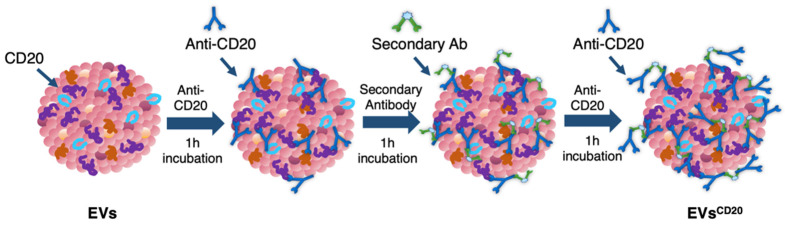
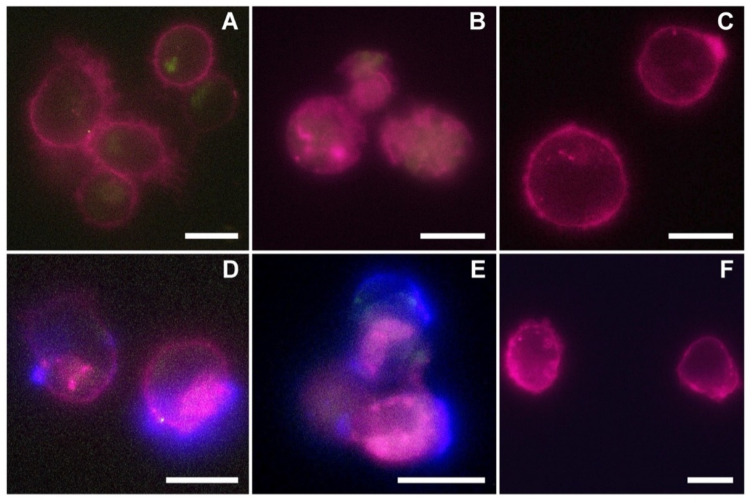
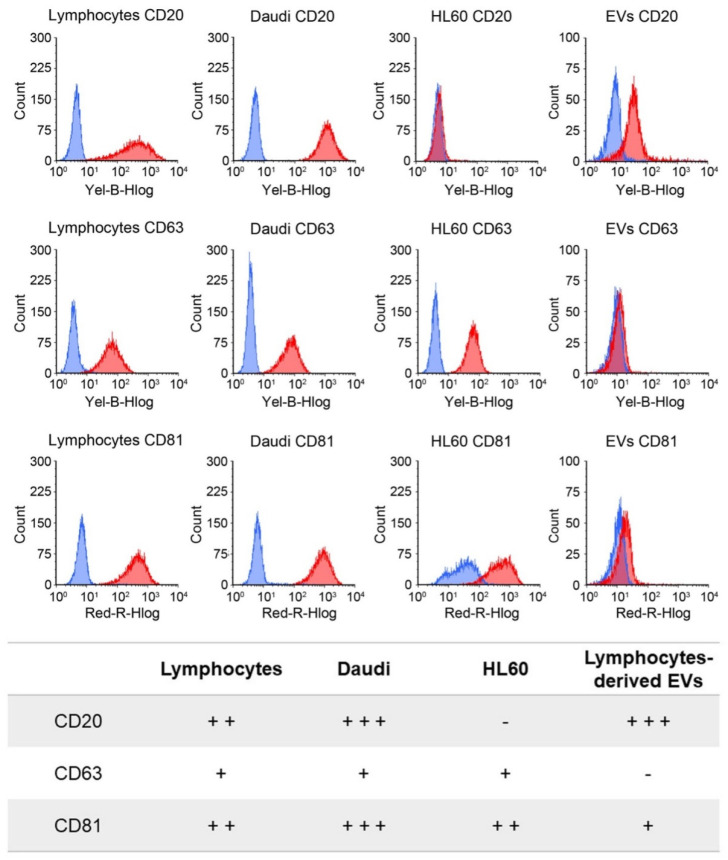
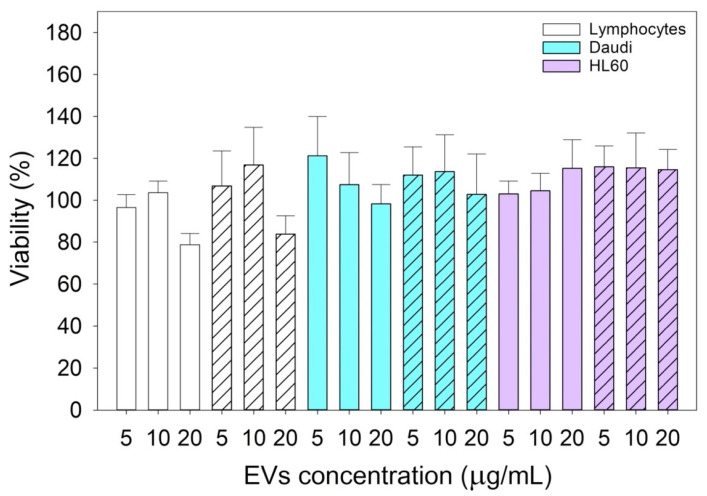
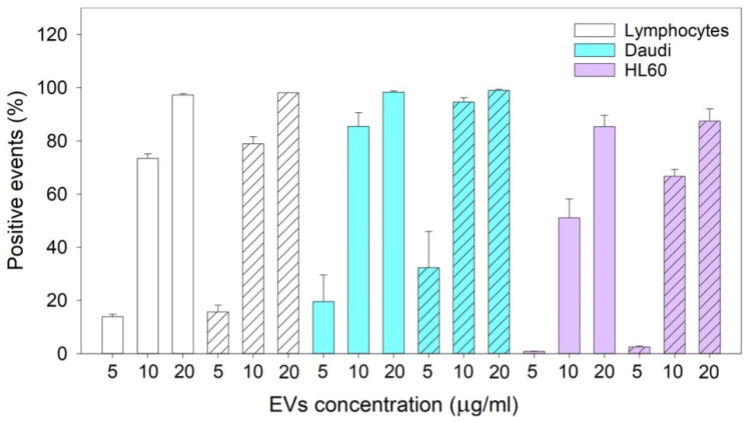
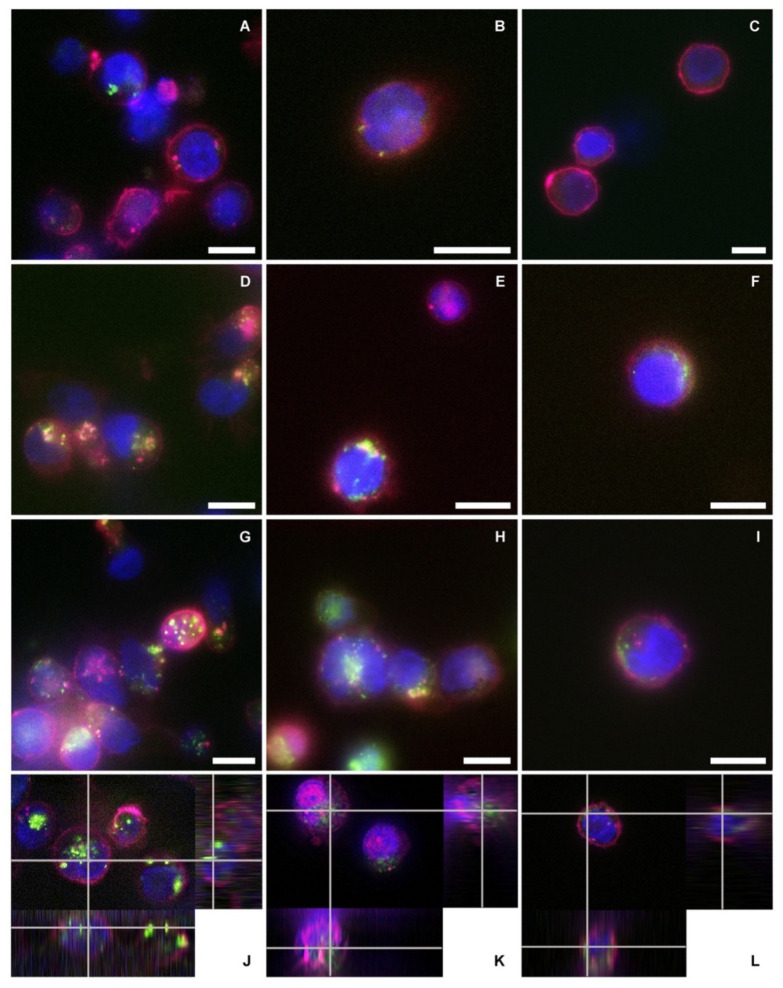
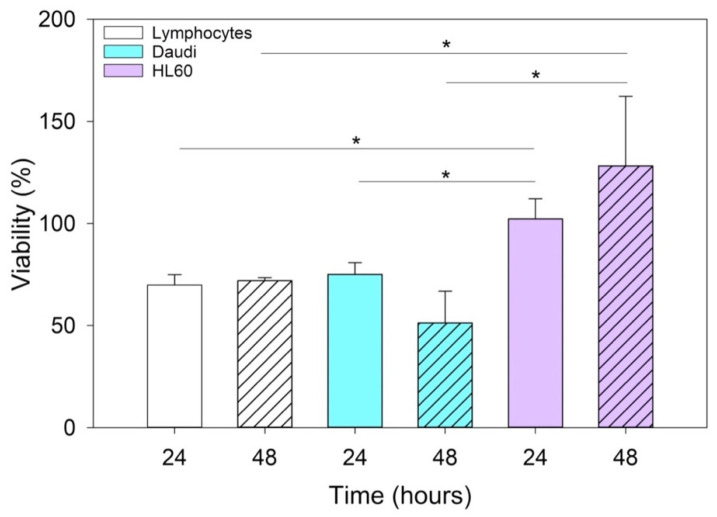
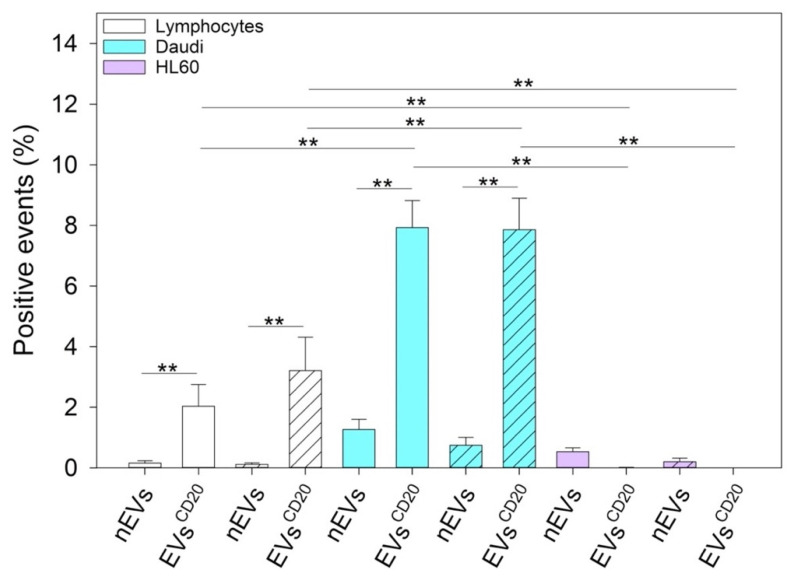
Cellular communications take place thanks to a well-connected network of chemical-physical signals, biomolecules, growth factors, and vesicular messengers that travel inside or between cells. A deep knowledge of the extracellular vesicle (EV) system allows for a better understanding of the whole series of phenomena responsible for cell proliferation and death. To this purpose, here, a thorough immuno-phenotypic characterization of B-cell EV membranes is presented. Furthermore, the cellular membrane of B lymphocytes, Burkitt lymphoma, and human myeloid leukemic cells were characterized through cytofluorimetry assays and fluorescent microscopy analysis. Through cytotoxicity and internalization tests, the tropism of B lymphocyte-derived EVs was investigated toward the parental cell line and two different cancer cell lines. In this study, an innate capability of passive targeting of the native EVs was distinguished from the active targeting capability of monoclonal antibody-engineered EVs, able to selectively drive the vesicles, enhancing their internalization into the target cancer cells. In particular, the specific targeting ability of anti-CD20 engineered EVs towards Daudi cells, highly expressing CD20 marker on their cell membrane, was proved, while almost no internalization events were observed in HL60 cells, since they did not express an appreciable amount of the CD20 marker on their plasma membranes.
细胞通讯的发生得益于一个由化学物理信号、生物分子、生长因子和囊泡信使构成的紧密连接网络,这些信号在细胞内或细胞间传递。深入了解细胞外囊泡(EV)系统有助于更好地理解导致细胞增殖和死亡的一系列现象。为此,本文对B细胞EV膜进行了全面的免疫表型特征分析。此外,通过细胞荧光分析和荧光显微镜分析对B淋巴细胞、伯基特淋巴瘤和人类髓系白血病细胞的细胞膜进行了特征分析。通过细胞毒性和内化试验,研究了B淋巴细胞衍生的EV对亲代细胞系和两种不同癌细胞系的嗜性。在本研究中,区分了天然EV的被动靶向固有能力与单克隆抗体工程化EV的主动靶向能力,后者能够选择性地驱动囊泡,增强其向靶癌细胞的内化。特别是,证明了抗CD20工程化EV对细胞膜上高表达CD20标志物的Daudi细胞具有特异性靶向能力,而在HL60细胞中几乎未观察到内化事件,因为它们在质膜上未表达可观数量的CD20标志物。