Mohan Anand, Girdhar Madhuri, Kumar Raj, Chaturvedi Harshil S, Vadhel Agrataben, Solanki Pratima R, Kumar Anil, Kumar Deepak, Mamidi Narsimha
School of Bioengineering and Biosciences, Lovely Professional University, Phagwara 144411, India.
Department of Pharmaceutical Sciences, University of Michigan, Ann Arbor, MI 48105, USA.
Pharmaceuticals (Basel). 2021 Nov 15;14(11):1163. doi: 10.3390/ph14111163.
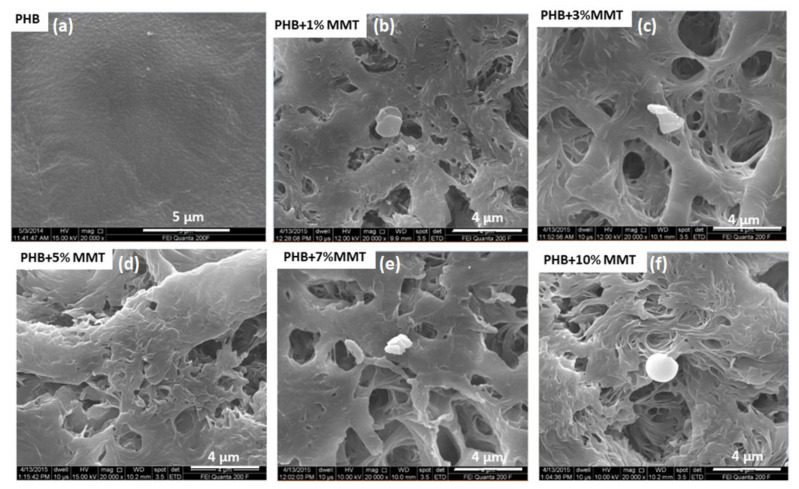
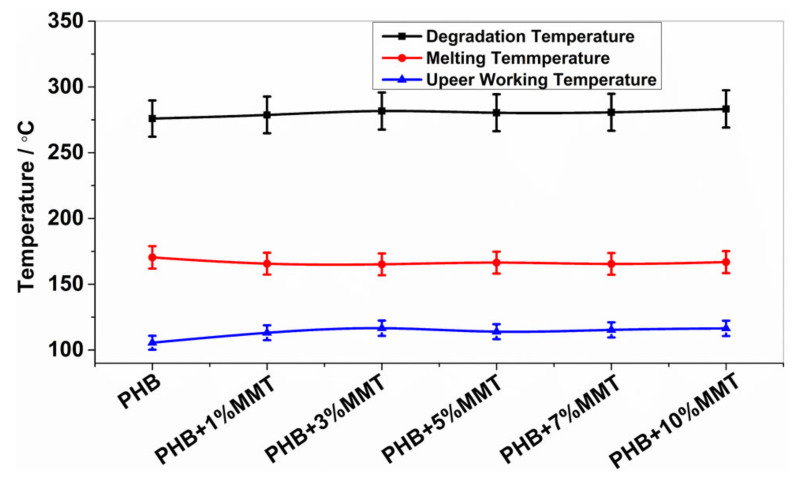
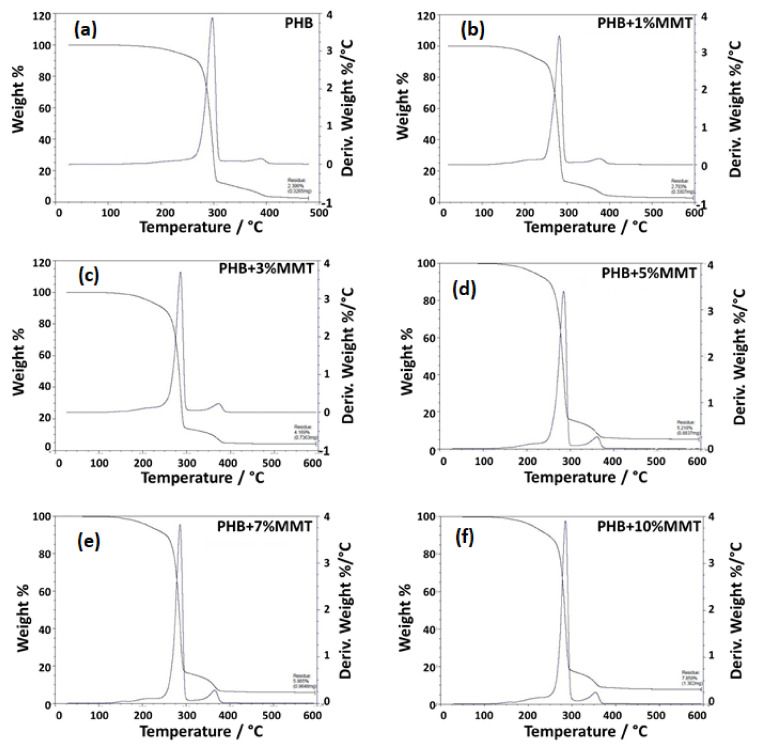
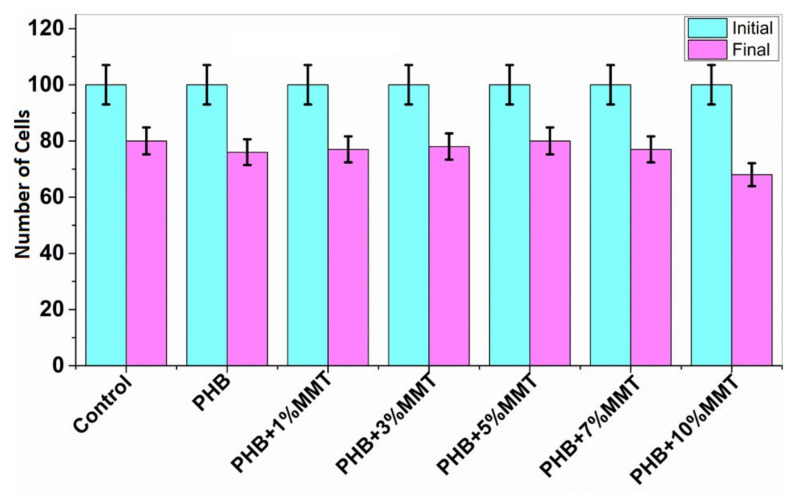
Bone-related diseases have been increasing worldwide, and several nanocomposites have been used to treat them. Among several nanocomposites, polyhydroxybutyrate (PHB)-based nanocomposites are widely used in drug delivery and tissue engineering due to their excellent biocompatibility and biodegradability. However, PHB use in bone tissue engineering is limited due to its inadequate physicochemical and mechanical properties. In the present work, we synthesized PHB-based nanocomposites using a nanoblend and nano-clay with modified montmorillonite (MMT) as a filler. MMT was modified using trimethyl stearyl ammonium (TMSA). Nanoblend and nano-clay were fabricated using the solvent-casting technique. Inspection of the composite structure revealed that the basal spacing of the polymeric matrix material was significantly altered depending on the loading percentage of organically modified montmorillonite (OMMT) nano-clay. The PHB/OMMT nanocomposite displayed enhanced thermal stability and upper working temperature upon heating as compared to the pristine polymer. The dispersed (OMMT) nano-clay assisted in the formation of pores on the surface of the polymer. The pore size was proportional to the weight percentage of OMMT. Further morphological analysis of these blends was carried out through FESEM. The obtained nanocomposites exhibited augmented properties over neat PHB and could have an abundance of applications in the industry and medicinal sectors. In particular, improved porosity, non-immunogenic nature, and strong biocompatibility suggest their effective application in bone tissue engineering. Thus, PHB/OMMT nanocomposites are a promising candidate for 3D organ printing, lab-on-a-chip scaffold engineering, and bone tissue engineering.
骨相关疾病在全球范围内呈上升趋势,已有多种纳米复合材料用于治疗此类疾病。在多种纳米复合材料中,基于聚羟基丁酸酯(PHB)的纳米复合材料因其优异的生物相容性和生物降解性而被广泛应用于药物递送和组织工程领域。然而,由于其理化性质和机械性能不足,PHB在骨组织工程中的应用受到限制。在本研究中,我们以纳米共混物和纳米粘土为原料,采用改性蒙脱土(MMT)作为填料合成了基于PHB的纳米复合材料。MMT用三甲基硬脂基氯化铵(TMSA)进行改性。通过溶剂浇铸技术制备纳米共混物和纳米粘土。对复合材料结构的检查表明,聚合物基体材料的基面间距根据有机改性蒙脱土(OMMT)纳米粘土的负载百分比而显著改变。与原始聚合物相比,PHB/OMMT纳米复合材料在加热时表现出更高的热稳定性和更高的工作温度。分散的(OMMT)纳米粘土有助于在聚合物表面形成孔隙。孔径与OMMT的重量百分比成正比。通过场发射扫描电子显微镜(FESEM)对这些共混物进行了进一步的形态分析。所获得的纳米复合材料比纯PHB具有更优异的性能,在工业和医药领域有大量应用。特别是,改善的孔隙率、非免疫原性和强大的生物相容性表明它们在骨组织工程中具有有效的应用前景。因此,PHB/OMMT纳米复合材料是3D器官打印、芯片实验室支架工程和骨组织工程的有前途的候选材料。