
生物传感器技术在细胞外囊泡检测和表征方面的进展。
Advances in Biosensors Technology for Detection and Characterization of Extracellular Vesicles.
机构信息
Micro and Nanoscale Systems Engineering, Louisiana Tech University, Ruston, LA 71272, USA.
Molecular Science and Nanotechnology, Louisiana Tech University, Ruston, LA 71272, USA.
出版信息
Sensors (Basel). 2021 Nov 17;21(22):7645. doi: 10.3390/s21227645.
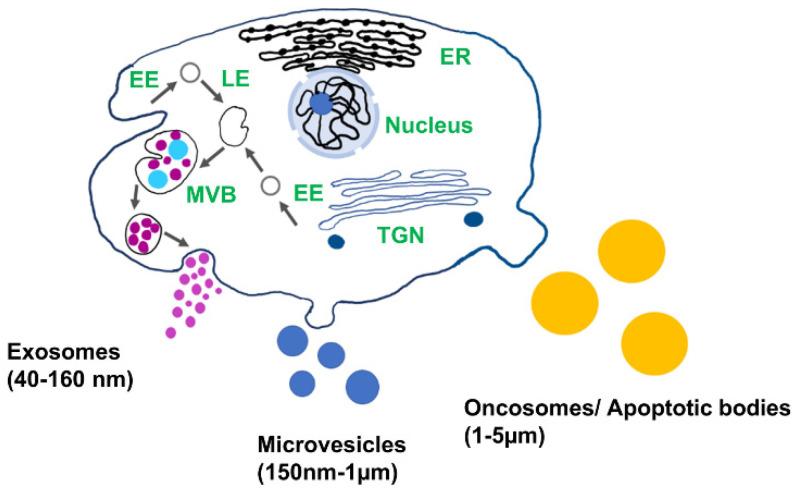
Exosomes are extracellular vehicles (EVs) that encapsulate genomic and proteomic material from the cell of origin that can be used as biomarkers for non-invasive disease diagnostics in point of care settings. The efficient and accurate detection, quantification, and molecular profiling of exosomes are crucial for the accurate identification of disease biomarkers. Conventional isolation methods, while well-established, provide the co-purification of proteins and other types of EVs. Exosome purification, characterization, and OMICS analysis are performed separately, which increases the complexity, duration, and cost of the process. Due to these constraints, the point-of-care and personalized analysis of exosomes are limited in clinical settings. Lab-on-a-chip biosensing has enabled the integration of isolation and characterization processes in a single platform. The presented review discusses recent advancements in biosensing technology for the separation and detection of exosomes. Fluorescent, colorimetric, electrochemical, magnetic, and surface plasmon resonance technologies have been developed for the quantification of exosomes in biological fluids. Size-exclusion filtration, immunoaffinity, electroactive, and acoustic-fluid-based technologies were successfully applied for the on-chip isolation of exosomes. The advancement of biosensing technology for the detection of exosomes provides better sensitivity and a reduced signal-to-noise ratio. The key challenge for the integration of clinical settings remains the lack of capabilities for on-chip genomic and proteomic analysis.
外泌体是细胞来源的基因组和蛋白质组物质的细胞外载体 (EVs),可作为即时护理环境中非侵入性疾病诊断的生物标志物。外泌体的高效和准确检测、定量和分子分析对于准确识别疾病生物标志物至关重要。传统的分离方法虽然已经成熟,但会同时纯化蛋白质和其他类型的 EVs。外泌体的纯化、表征和 OMICS 分析是分开进行的,这增加了过程的复杂性、持续时间和成本。由于这些限制,外泌体的即时护理和个性化分析在临床环境中受到限制。芯片上实验室生物传感技术实现了分离和表征过程的集成。本文综述了用于分离和检测外泌体的生物传感技术的最新进展。荧光、比色、电化学、磁和表面等离子体共振技术已被开发用于生物流体中外泌体的定量。尺寸排阻过滤、免疫亲和、电化和基于声流的技术已成功应用于外泌体的芯片分离。外泌体检测的生物传感技术的进步提供了更好的灵敏度和更低的信噪比。整合临床环境的关键挑战仍然是缺乏芯片上基因组和蛋白质组分析的能力。



 Zotero 插件