Xu Fuyi, Gao Jun, Orgil Buyan-Ochir, Bajpai Akhilesh Kumar, Gu Qingqing, Purevjav Enkhsaikhan, Davenport Athena S, Li Kui, Towbin Jeffrey A, Black Dennis D, Pierre Joseph F, Lu Lu
School of Pharmacy, Binzhou Medical University, Yantai 264003, China.
Department of Genetics, Genomics and Informatics, University of Tennessee Health Science Center, Memphis, TN 38163, USA.
J Pers Med. 2021 Nov 16;11(11):1212. doi: 10.3390/jpm11111212.
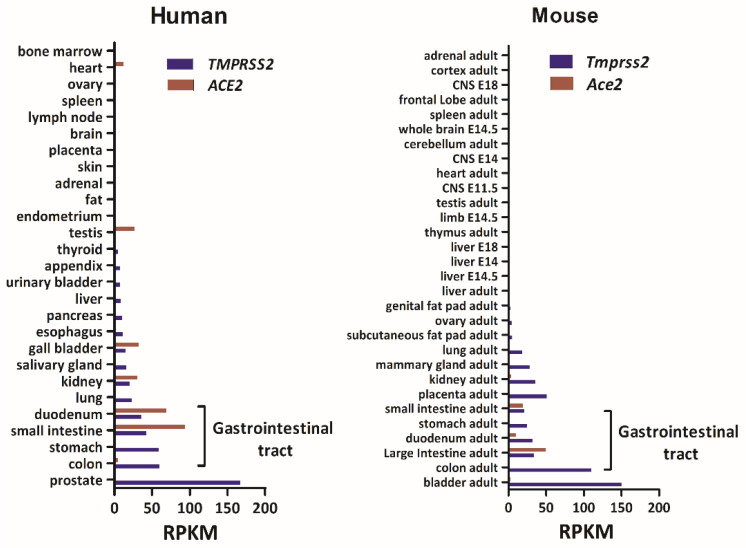
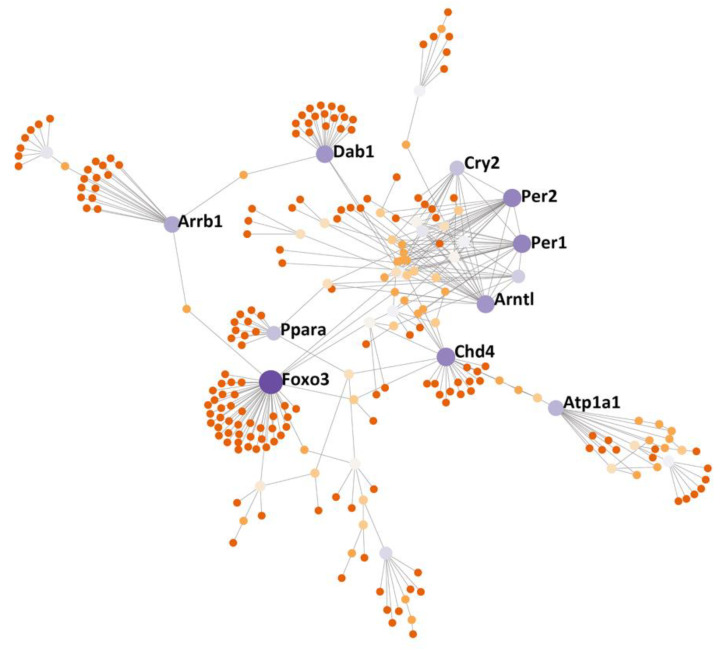
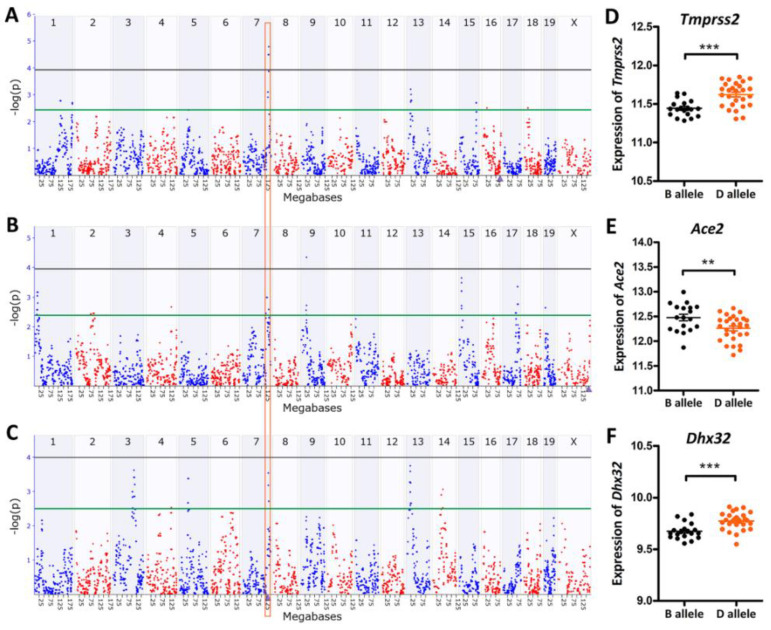
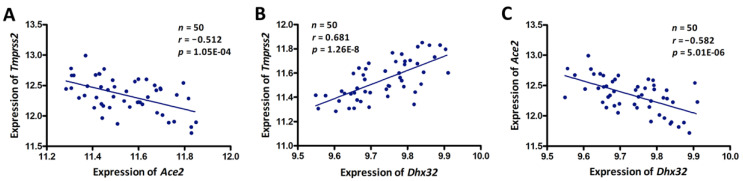
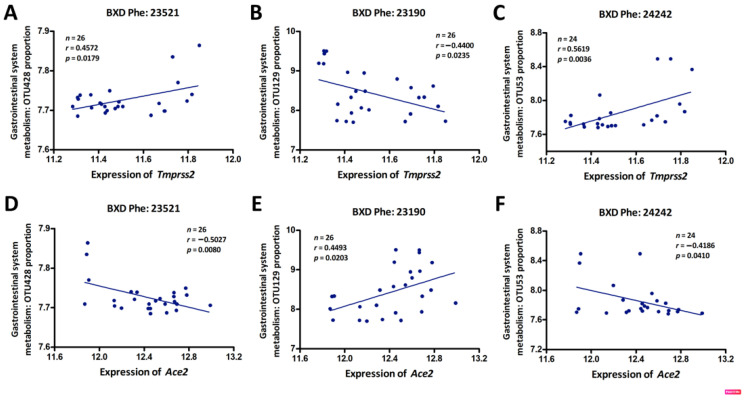
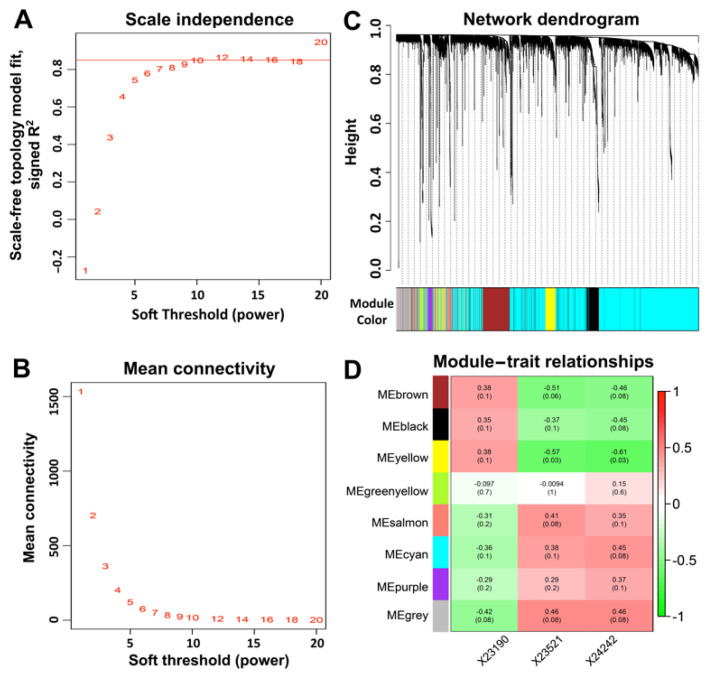
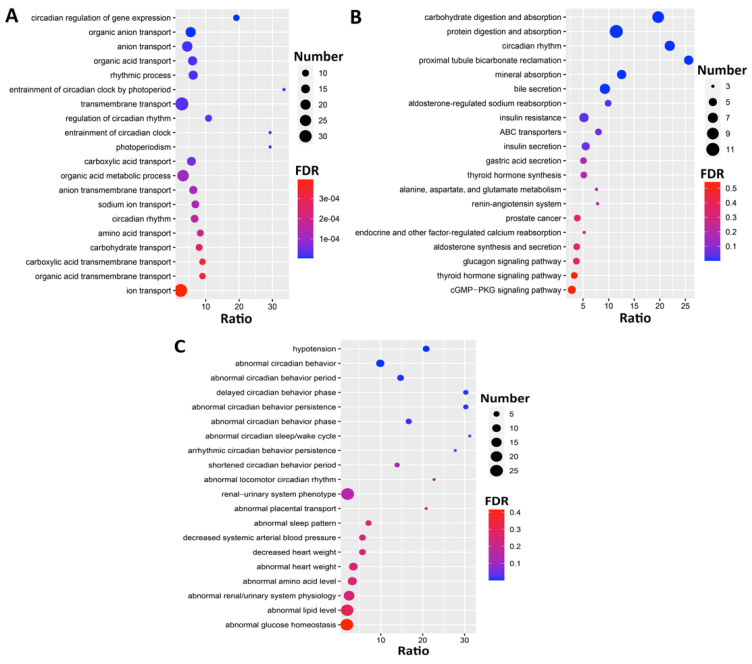
Studies showed that the gastrointestinal (GI) tract is one of the most important pathways for SARS-CoV-2 infection and coronavirus disease 2019 (COVID-19). As SARS-CoV-2 cellular entry depends on the ACE2 receptor and TMPRSS2 priming of the spike protein, it is important to understand the molecular mechanisms through which these two proteins and their cognate transcripts interact and influence the pathogenesis of COVID-19. In this study, we quantified the expression, associations, genetic modulators, and molecular pathways for and mRNA expressions in GI tissues using a systems genetics approach and the expanded family of highly diverse BXD mouse strains. The results showed that both and are highly expressed in GI tissues with significant covariation. We identified a significant expression quantitative trait locus on chromosome 7 that controls the expression of both and . was found to be the strongest candidate in this interval. Co-expression network analysis demonstrated that both and were located at the same module that is significantly associated with other GI-related traits. Protein-protein interaction analysis indicated that hub genes in this module are linked to circadian rhythms. Collectively, our data suggested that genes with circadian rhythms of expression may have an impact on COVID-19 disease, with implications related to the timing and treatment of COVID-19.
研究表明,胃肠道是严重急性呼吸综合征冠状病毒2(SARS-CoV-2)感染和2019冠状病毒病(COVID-19)最重要的途径之一。由于SARS-CoV-2进入细胞依赖于血管紧张素转换酶2(ACE2)受体和跨膜丝氨酸蛋白酶2(TMPRSS2)对刺突蛋白的启动作用,了解这两种蛋白及其同源转录本相互作用并影响COVID-19发病机制的分子机制非常重要。在本研究中,我们使用系统遗传学方法和高度多样化的BXD小鼠品系扩展家族,对胃肠道组织中ACE2和TMPRSS2 mRNA表达的表达、关联、遗传调节因子和分子途径进行了量化。结果表明,ACE2和TMPRSS2在胃肠道组织中均高表达,且存在显著的共变关系。我们在7号染色体上鉴定出一个显著的表达数量性状位点,该位点控制ACE2和TMPRSS2的表达。发现Tmem106b是该区间最强的候选基因。共表达网络分析表明,ACE2和TMPRSS2都位于与其他胃肠道相关性状显著相关的同一个模块中。蛋白质-蛋白质相互作用分析表明,该模块中的枢纽基因与昼夜节律有关。总体而言,我们的数据表明,具有昼夜节律表达的基因可能对COVID-19疾病有影响,这与COVID-19的发病时间和治疗有关。