Department of Neurosurgery, Center for Neuroregeneration, Houston Methodist Research Institute, Houston, Texas; Department of Neuroscience in Neurological Surgery, Weill Cornell Medical College, New York.
Transl Res. 2020 Dec;226:57-69. doi: 10.1016/j.trsl.2020.08.004. Epub 2020 Aug 20.
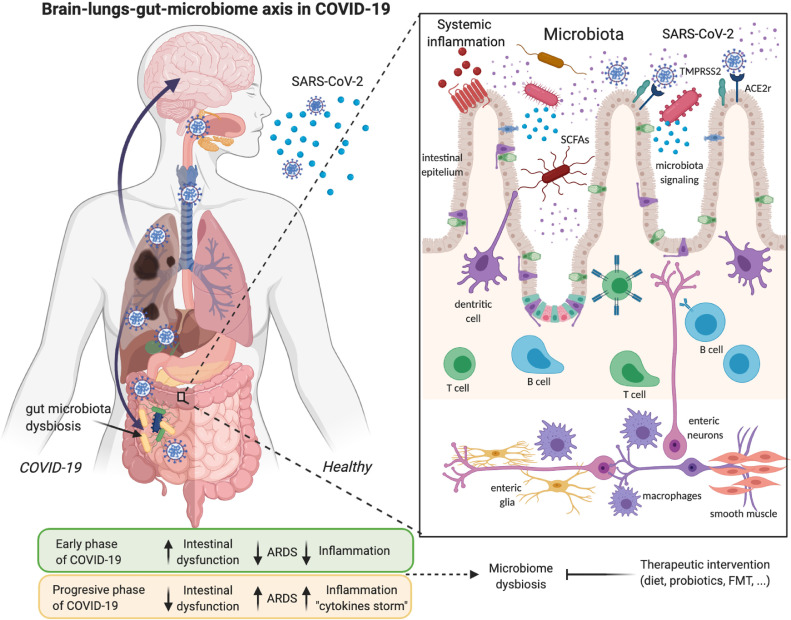
The severe acute respiratory syndrome coronavirus 2 (SARS-CoV-2) has caused the greatest worldwide pandemic since the 1918 flu. The consequences of the coronavirus disease 2019 (COVID-19) are devastating and represent the current major public health issue across the globe. At the onset, SARS-CoV-2 primarily attacks the respiratory system as it represents the main point of entry in the host, but it also can affect multiple organs. Although most of the patients do not present symptoms or are mildly symptomatic, some people infected with SARS-CoV-2 that experience more severe multiorgan dysfunction. The severity of COVID-19 is typically combined with a set of comorbidities such as hypertension, diabetes, obesity, and/or advanced age that seriously exacerbates the consequences of the infection. Also, SARS-CoV-2 can cause gastrointestinal symptoms, such as vomiting, diarrhea, or abdominal pain during the early phases of the disease. Intestinal dysfunction induces changes in intestinal microbes, and an increase in inflammatory cytokines. Thus, diagnosing gastrointestinal symptoms that precede respiratory problems during COVID-19 may be necessary for improved early detection and treatment. Uncovering the composition of the microbiota and its metabolic products in the context of COVID-19 can help determine novel biomarkers of the disease and help identify new therapeutic targets. Elucidating changes to the microbiome as reliable biomarkers in the context of COVID-19 represent an overlooked piece of the disease puzzle and requires further investigation.
严重急性呼吸综合征冠状病毒 2(SARS-CoV-2)引发了自 1918 年流感以来全球最大的大流行。2019 年冠状病毒病(COVID-19)的后果是毁灭性的,代表了当前全球主要的公共卫生问题。最初,SARS-CoV-2 主要攻击呼吸系统,因为它是宿主的主要进入点,但它也会影响多个器官。尽管大多数患者没有出现症状或症状较轻,但一些感染 SARS-CoV-2 的人会出现更严重的多器官功能障碍。COVID-19 的严重程度通常与一组合并症相关,如高血压、糖尿病、肥胖症和/或高龄,这些因素严重加剧了感染的后果。此外,SARS-CoV-2 可在疾病早期引起胃肠道症状,如呕吐、腹泻或腹痛。肠道功能障碍会导致肠道微生物群发生变化,并增加炎症细胞因子。因此,在 COVID-19 期间诊断先于呼吸道问题出现的胃肠道症状可能对于改善早期检测和治疗是必要的。在 COVID-19 背景下揭示微生物组的组成及其代谢产物可以帮助确定疾病的新型生物标志物,并有助于确定新的治疗靶点。阐明微生物组在 COVID-19 中的变化作为可靠的生物标志物是疾病拼图中被忽视的一部分,需要进一步研究。