Department of Pharmacy, Namur Research Institute for Life Sciences, University of Namur, 5000 Namur, Belgium.
Department of Laboratory Medicine, Clinique St-Luc Bouge, 5000 Namur, Belgium.
Viruses. 2021 Nov 22;13(11):2329. doi: 10.3390/v13112329.
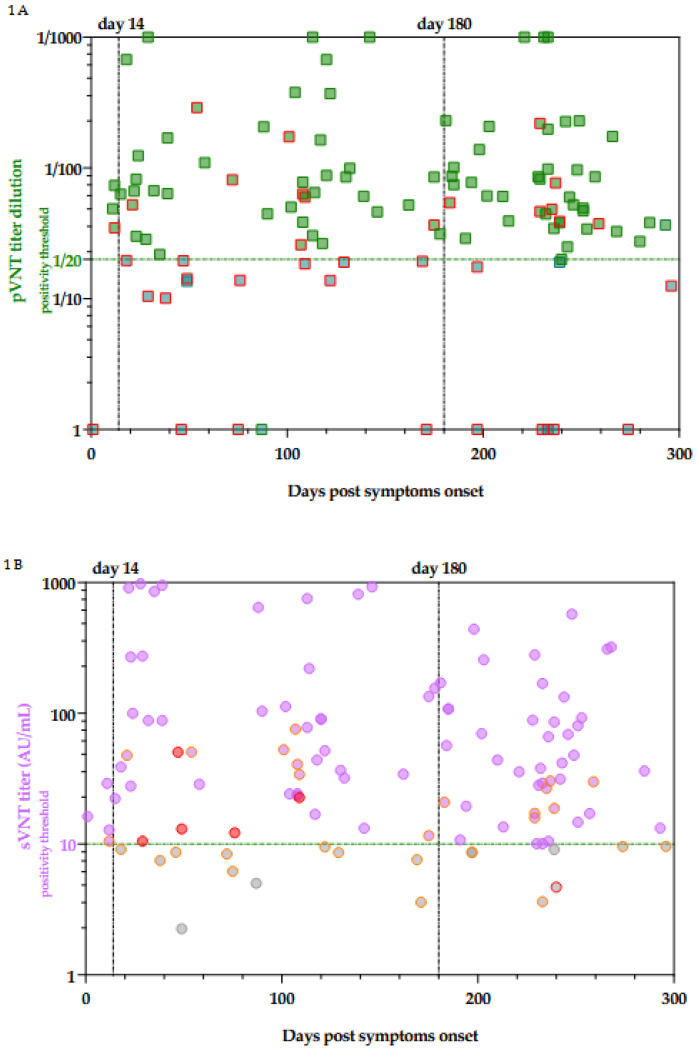
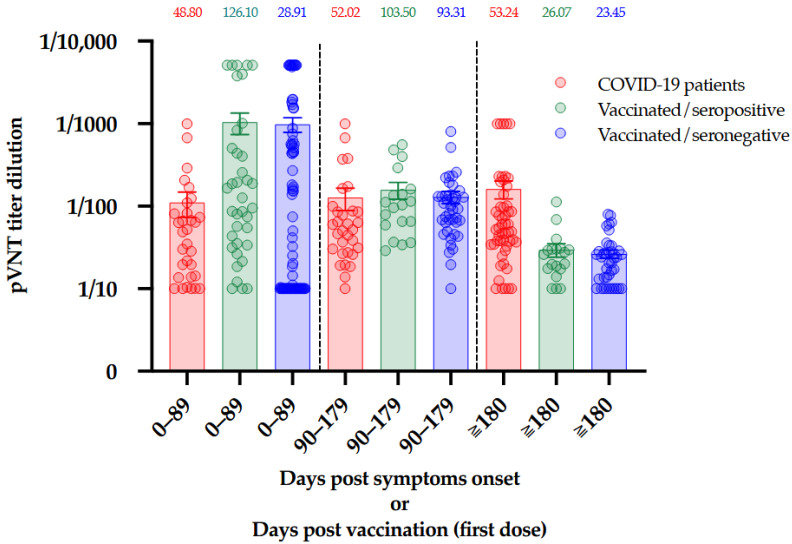
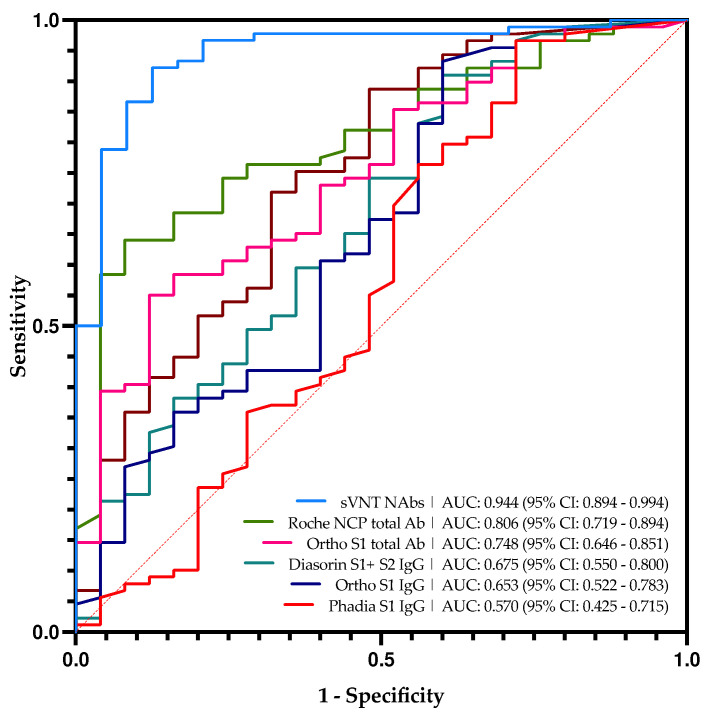
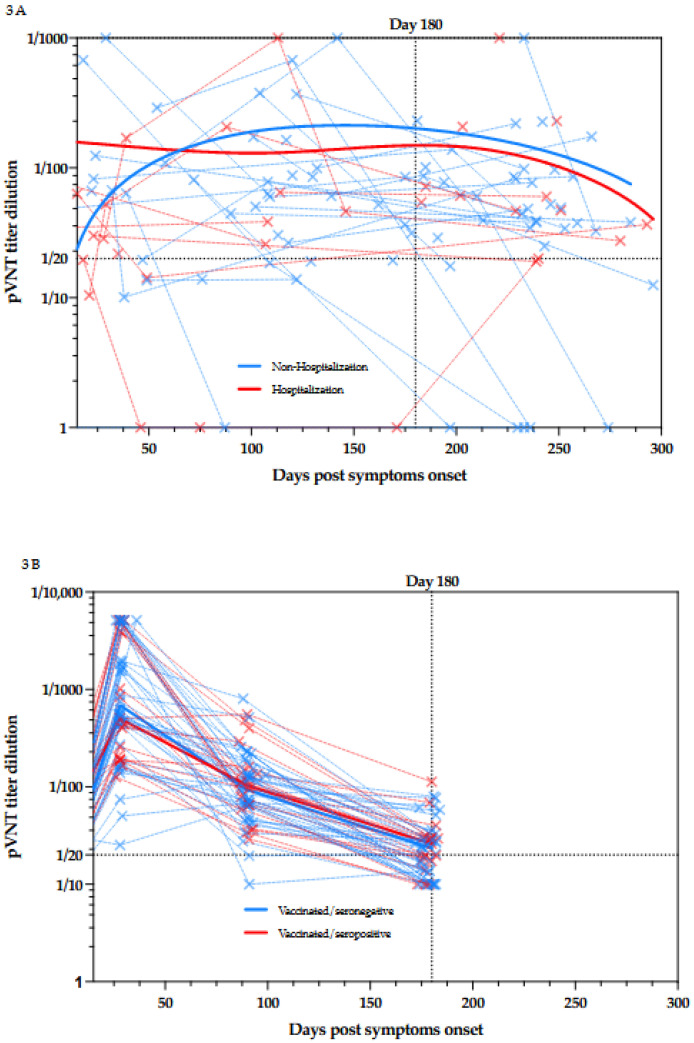
Neutralising antibodies (NAbs) represent the real source of protection against SARS-CoV-2 infections by preventing the virus from entering target cells. The gold standard in the detection of these antibodies is the plaque reduction neutralization test (PRNT). As these experiments must be done in a very secure environment, other techniques based on pseudoviruses: pseudovirus neutralization test (pVNT) or surrogate virus neutralization test (sVNT) have been developed. Binding assays, on the other hand, measure total antibodies or IgG, IgM, and IgA directed against one epitope of the SARS-CoV-2, independently of their neutralizing capacity. The aim of this study is to compare the performance of six commercial binding assays to the pVNT and sVNT. In this study, we used blood samples from a cohort of 62 RT-PCR confirmed COVID-19 patients. Based on the results of the neutralizing assays, adapted cut-offs for the binding assays were calculated. The use of these adapted cut-offs does not permit to improve the accuracy of the serological assays and we did not find an adapted cut-off able to improve the capacity of these tests to detect NAbs. For a part of the population, a longitudinal follow-up with at least two samples for the same patient was performed. From day 14 to day 291, more than 75% of the samples were positive for NAbs ( = 87/110, 79.1%). Interestingly, 6 months post symptoms onset, the majority of the samples ( = 44/52, 84.6%) were still positive for NAbs. This is in sharp contrast with the results we obtained 6 months post-vaccination in our cohort of healthcare workers who have received the two-dose regimens of BNT162b2. In this cohort of vaccinated subjects, 43% ( = 25/58) of the participants no longer exhibit NAbs activity 180 days after the administration of the first dose of BNT162b2.
中和抗体(NAbs)通过阻止病毒进入靶细胞,代表了针对 SARS-CoV-2 感染的真正保护来源。这些抗体的检测金标准是蚀斑减少中和试验(PRNT)。由于这些实验必须在非常安全的环境中进行,因此已经开发了其他基于假病毒的技术:假病毒中和试验(pVNT)或替代病毒中和试验(sVNT)。另一方面,结合测定法测量针对 SARS-CoV-2 一个表位的总抗体或 IgG、IgM 和 IgA,而不考虑其中和能力。本研究的目的是比较六种商业结合测定法与 pVNT 和 sVNT 的性能。在这项研究中,我们使用了来自 62 名经 RT-PCR 确认的 COVID-19 患者队列的血液样本。根据中和测定法的结果,计算了结合测定法的适应截止值。使用这些适应截止值并不能提高血清学检测的准确性,并且我们没有发现能够提高这些检测识别 NAbs 能力的适应截止值。对于一部分人群,对同一患者进行了至少两次样本的纵向随访。从第 14 天到第 291 天,超过 75%的样本(=87/110,79.1%)对 NAbs 呈阳性。有趣的是,在症状发作后 6 个月,大多数样本(=44/52,84.6%)仍然对 NAbs 呈阳性。这与我们在接受 BNT162b2 两剂方案的医护人员队列中 6 个月后接种疫苗时获得的结果形成鲜明对比。在这个接种疫苗的队列中,在 BNT162b2 第一剂给药后 180 天,43%(=25/58)的参与者不再表现出 NAbs 活性。