Cannazza Pietro, Rissanen Antti J, Guizelini Dieval, Losoi Pauli, Sarlin Essi, Romano Diego, Santala Ville, Mangayil Rahul
Department of Food, Environmental and Nutritional Sciences (DeFENS), University of Milan, Via Celoria 2, 20133 Milan, Italy.
Faculty of Engineering and Natural Sciences, Tampere University, 33720 Tampere, Finland.
Microorganisms. 2021 Oct 26;9(11):2230. doi: 10.3390/microorganisms9112230.
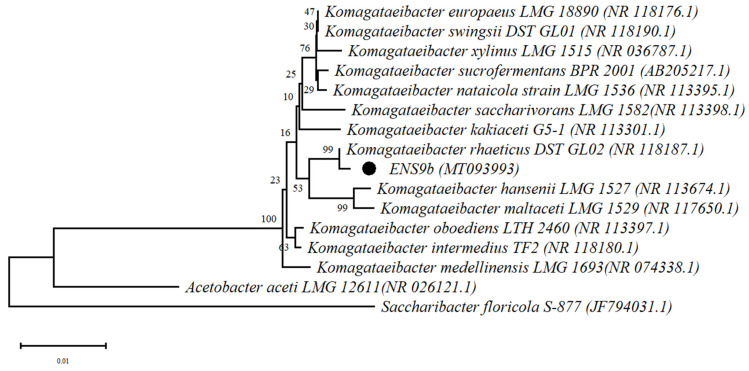
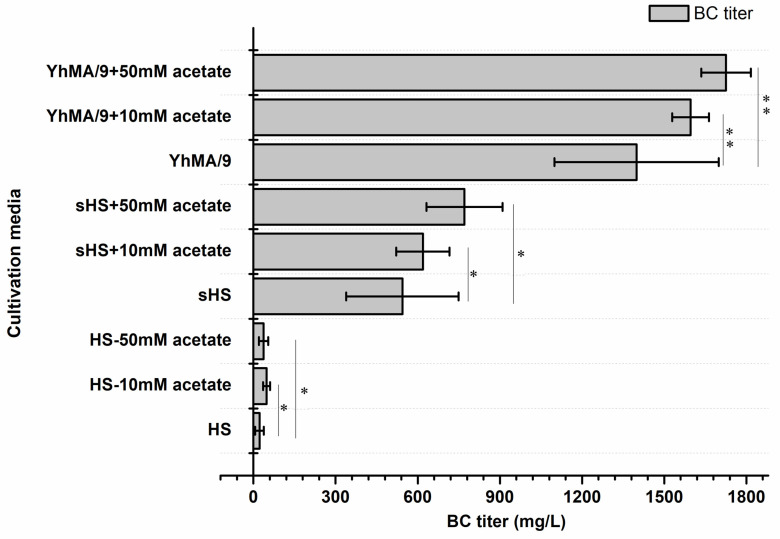
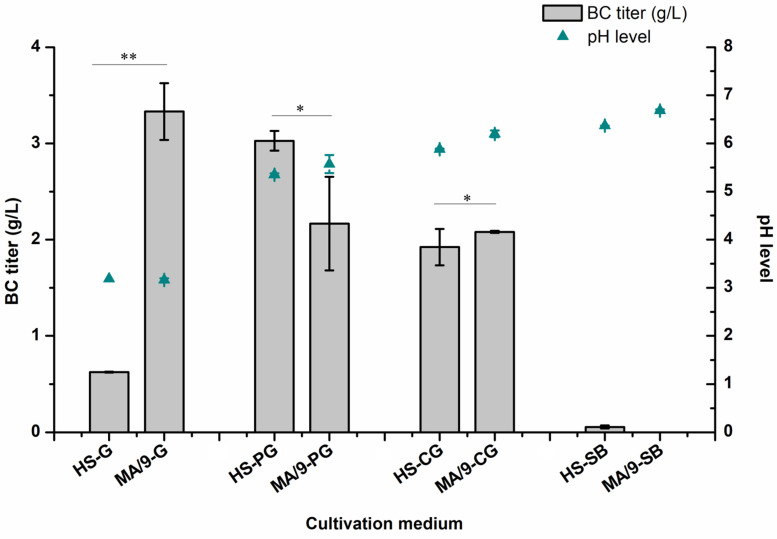
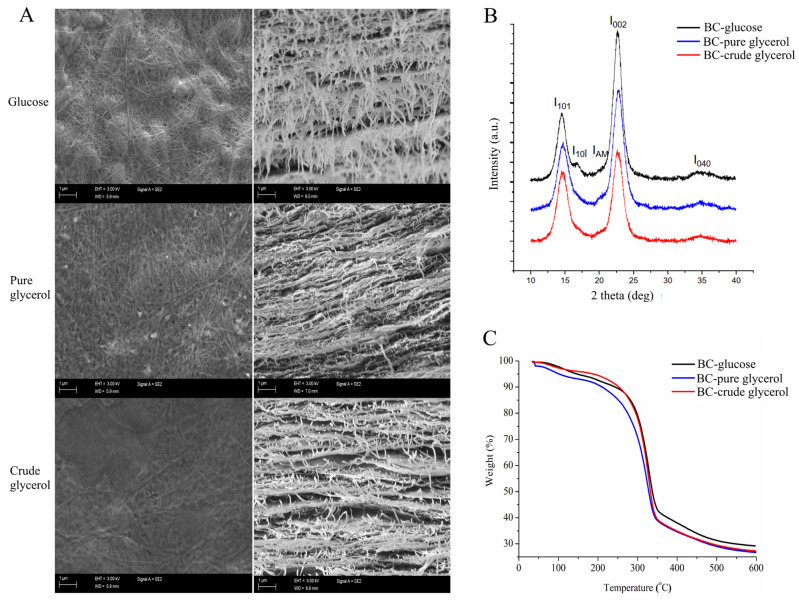
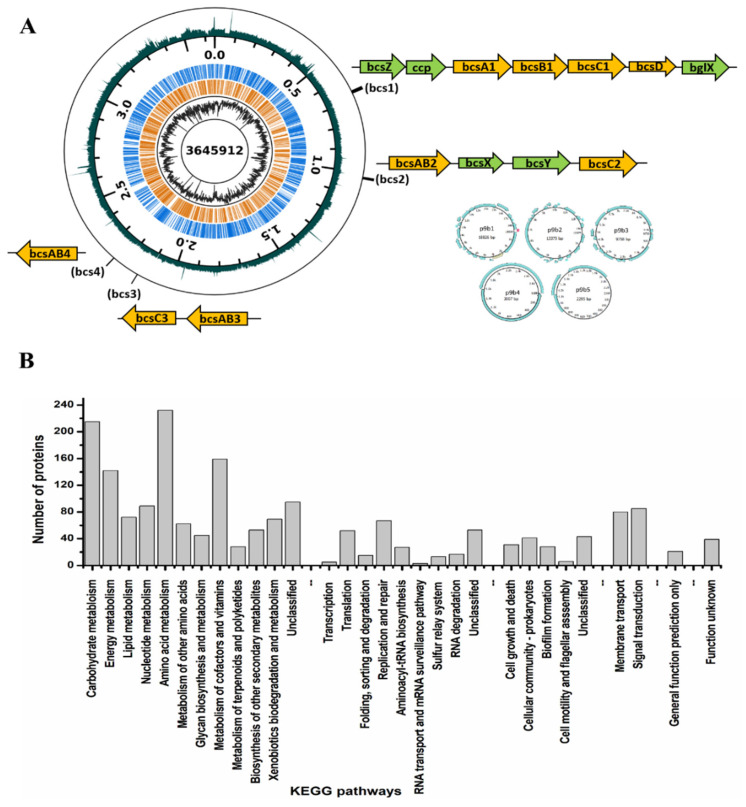
spp. has been used for the bioconversion of industrial wastes and lignocellulosic hydrolysates to bacterial cellulose (BC). Recently, studies have demonstrated the capacity of spp. in the biotransformation of inhibitors found in lignocellulosic hydrolysates, aromatic lignin-derived monomers (LDMs) and acetate. In general, detoxification and BC synthesis from lignocellulosic inhibitors requires a carbon flow from acetyl-coA towards tricarboxylic acid and gluconeogenesis, respectively. However, the related molecular aspects have not yet been identified in spp. In this study, we isolated a cellulose-producing bacterium capable of synthesizing BC in a minimal medium containing crude glycerol, a by-product from the biodiesel production process. The isolate, affiliated to genus, synthesized cellulose in a minimal medium containing glucose (3.3 ± 0.3 g/L), pure glycerol (2.2 ± 0.1 g/L) and crude glycerol (2.1 ± 0.1 g/L). Genome assembly and annotation identified four copies of bacterial cellulose synthase operon and genes for redirecting the carbon from the central metabolic pathway to gluconeogenesis. According to the genome annotations, a BC production route from acetyl-CoA, a central metabolic intermediate, was hypothesized and was validated using acetate. We identified that when ENS9b was grown in a minimal medium supplemented with acetate, BC production was not observed. However, in the presence of readily utilizable substrates, such as spent yeast hydrolysate, acetate supplementation improved BC synthesis.
某菌种已被用于将工业废料和木质纤维素水解产物生物转化为细菌纤维素(BC)。最近,研究表明该菌种具有生物转化木质纤维素水解产物中发现的抑制剂、芳香族木质素衍生单体(LDMs)和乙酸盐的能力。一般来说,从木质纤维素抑制剂中进行解毒和合成BC分别需要碳从乙酰辅酶A流向三羧酸和糖异生途径。然而,在该菌种中尚未确定相关的分子层面情况。在本研究中,我们分离出了一种能够在含有粗甘油(生物柴油生产过程中的副产物)的基本培养基中合成BC的产纤维素细菌。该分离菌株属于某属,在含有葡萄糖(3.3±0.3 g/L)、纯甘油(2.2±0.1 g/L)和粗甘油(2.1±0.1 g/L)的基本培养基中合成纤维素。基因组组装和注释确定了细菌纤维素合酶操纵子的四个拷贝以及用于将碳从中心代谢途径重定向到糖异生的基因。根据基因组注释,推测了一条从中心代谢中间体乙酰辅酶A开始的BC生产途径,并使用乙酸盐进行了验证。我们发现,当ENS9b在添加乙酸盐的基本培养基中生长时,未观察到BC的产生。然而,在存在易于利用的底物(如废酵母水解物)的情况下,添加乙酸盐可改善BC的合成。