• 文献检索
  • 文档翻译
  • 深度研究
  • 学术资讯
  • Suppr Zotero 插件Zotero 插件
  • 邀请有礼
  • 套餐&价格
  • 历史记录
应用&插件
Suppr Zotero 插件Zotero 插件浏览器插件Mac 客户端Windows 客户端微信小程序
定价
高级版会员购买积分包购买API积分包
服务
文献检索文档翻译深度研究API 文档MCP 服务
关于我们
关于 Suppr公司介绍联系我们用户协议隐私条款
关注我们

Suppr 超能文献

核心技术专利:CN118964589B侵权必究
粤ICP备2023148730 号-1Suppr @ 2026

文献检索

告别复杂PubMed语法,用中文像聊天一样搜索,搜遍4000万医学文献。AI智能推荐,让科研检索更轻松。

立即免费搜索

文件翻译

保留排版,准确专业,支持PDF/Word/PPT等文件格式,支持 12+语言互译。

免费翻译文档

深度研究

AI帮你快速写综述,25分钟生成高质量综述,智能提取关键信息,辅助科研写作。

立即免费体验

从石榴中分离出的PG2菌株作为新宿主高产纤维素。

High yield production of cellulose by a PG2 strain isolated from pomegranate as a new host.

作者信息

Thorat Meghana N, Dastager Syed G

机构信息

Academy of Scientific and Innovative Research (AcSIR) New Delhi India

NCIM Resource Center, CSIR-National Chemical Laboratory Pune-411008 India.

出版信息

RSC Adv. 2018 Aug 23;8(52):29797-29805. doi: 10.1039/c8ra05295f. eCollection 2018 Aug 20.

DOI:10.1039/c8ra05295f
PMID:35547325
原文链接:https://pmc.ncbi.nlm.nih.gov/articles/PMC9085265/
Abstract

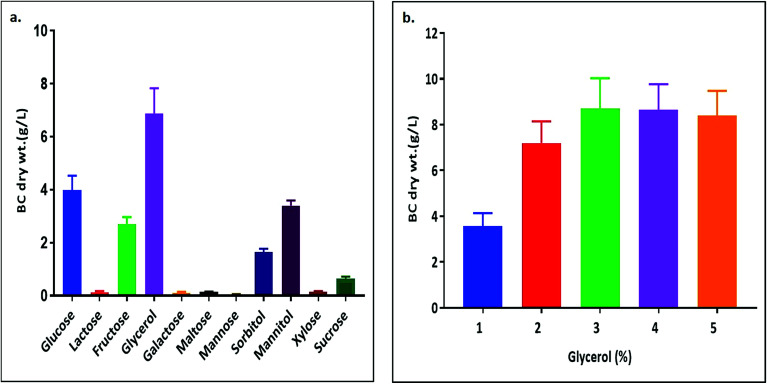
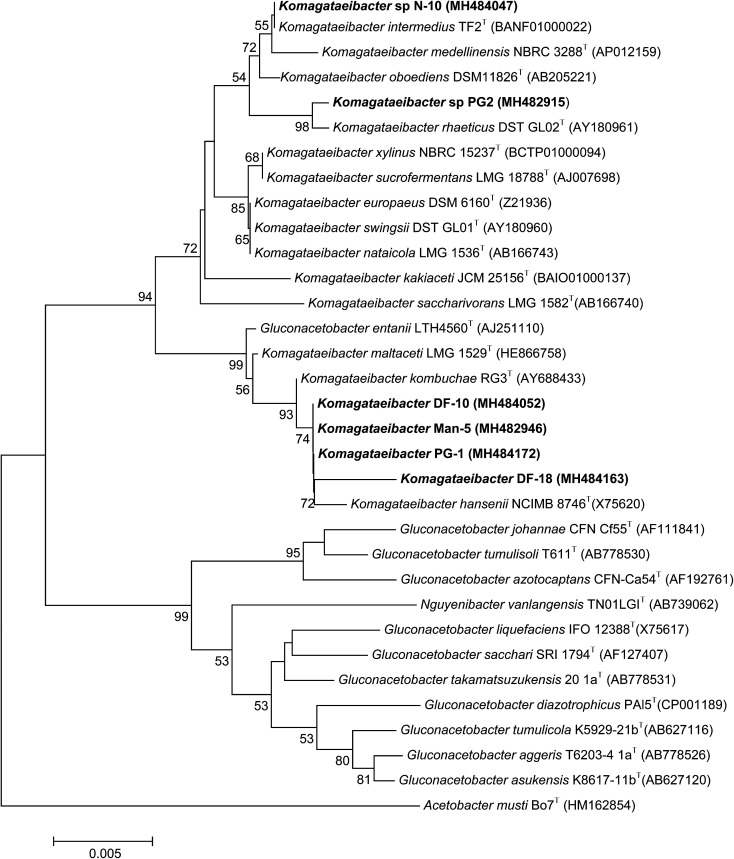
is a well-known organism that produces bacterial cellulose (BC). The present study was undertaken to find an alternative bacteria from a collection of 216 bacterial isolates, which were isolated from different rotten fruits and fermented beverages, to find a better producer of bacterial cellulose. We obtained a potent strain, which produced a high yield of BC from a rotten pomegranate sample, and was further identified as strain PG2 using 16S rRNA gene sequence analysis. To date, only two strains of are known to produce BC, and these were mainly isolated from a fermented beverage, kombucha. For the first time, we have isolated a BC producing strain PG2 from a rotten pomegranate sample. The new host environment and the substrate utilization pattern of strain PG2 reveal efficient bacterial cellulose production. Hestrin-Schramm (HS) liquid media containing glycerol as a carbon source resulted in the highest BC production (∼6.9 g L). A further increased yield of BC (∼8.7 g L) was obtained by using 3% (w/v) glycerol concentration, and this BC yield is the highest reported among any of the known strains reported. A detailed physico-chemical characterization of the BC membrane obtained from glycerol (Gly-BC) and glucose (Glc-BC) was performed. Interestingly, Gly-BC is found to be more compact and more crystalline in its nature compared to Glc-BC. The present study reveals the isolation of an efficient BC synthesizing strain using glycerol as a low-cost carbon source, confirming the economic feasibility of BC production. The structural characteristics of the BC membrane produced by glycerol were found to be more suitable for various applications.

摘要

是一种众所周知的能产生细菌纤维素(BC)的生物体。本研究旨在从216株细菌分离物中寻找替代细菌,这些分离物是从不同的腐烂水果和发酵饮料中分离得到的,以找到更好的细菌纤维素生产者。我们从一个腐烂的石榴样本中获得了一株高效菌株,该菌株能高产BC,并通过16S rRNA基因序列分析进一步鉴定为PG2菌株。迄今为止,已知只有两株能产生BC,且主要是从发酵饮料康普茶中分离得到的。我们首次从一个腐烂的石榴样本中分离出了一株产生BC的菌株PG2。PG2菌株的新宿主环境和底物利用模式显示出高效的细菌纤维素生产。以甘油作为碳源的赫斯廷 - 施拉姆(HS)液体培养基产生的BC产量最高(约6.9 g/L)。通过使用3%(w/v)的甘油浓度,BC产量进一步提高(约8.7 g/L),这是所有已知菌株中报道的最高BC产量。对从甘油(Gly - BC)和葡萄糖(Glc - BC)获得的BC膜进行了详细的物理化学表征。有趣的是,与Glc - BC相比,Gly - BC在性质上更致密且结晶度更高。本研究揭示了使用甘油作为低成本碳源分离出高效的BC合成菌株,证实了BC生产的经济可行性。发现由甘油产生的BC膜的结构特征更适合各种应用。
https://cdn.ncbi.nlm.nih.gov/pmc/blobs/a52e/9085265/c5c7bace593b/c8ra05295f-f9.jpg
https://cdn.ncbi.nlm.nih.gov/pmc/blobs/a52e/9085265/4f0b90e693cd/c8ra05295f-f1.jpg
https://cdn.ncbi.nlm.nih.gov/pmc/blobs/a52e/9085265/8d56e7e4490f/c8ra05295f-f2.jpg
https://cdn.ncbi.nlm.nih.gov/pmc/blobs/a52e/9085265/a498b73867c3/c8ra05295f-f3.jpg
https://cdn.ncbi.nlm.nih.gov/pmc/blobs/a52e/9085265/a09e908c547d/c8ra05295f-f4.jpg
https://cdn.ncbi.nlm.nih.gov/pmc/blobs/a52e/9085265/ac2392716f7b/c8ra05295f-f5.jpg
https://cdn.ncbi.nlm.nih.gov/pmc/blobs/a52e/9085265/3de85e8c1692/c8ra05295f-f6.jpg
https://cdn.ncbi.nlm.nih.gov/pmc/blobs/a52e/9085265/4137caf6d8d0/c8ra05295f-f7.jpg
https://cdn.ncbi.nlm.nih.gov/pmc/blobs/a52e/9085265/4d2d45296130/c8ra05295f-f8.jpg
https://cdn.ncbi.nlm.nih.gov/pmc/blobs/a52e/9085265/c5c7bace593b/c8ra05295f-f9.jpg
https://cdn.ncbi.nlm.nih.gov/pmc/blobs/a52e/9085265/4f0b90e693cd/c8ra05295f-f1.jpg
https://cdn.ncbi.nlm.nih.gov/pmc/blobs/a52e/9085265/8d56e7e4490f/c8ra05295f-f2.jpg
https://cdn.ncbi.nlm.nih.gov/pmc/blobs/a52e/9085265/a498b73867c3/c8ra05295f-f3.jpg
https://cdn.ncbi.nlm.nih.gov/pmc/blobs/a52e/9085265/a09e908c547d/c8ra05295f-f4.jpg
https://cdn.ncbi.nlm.nih.gov/pmc/blobs/a52e/9085265/ac2392716f7b/c8ra05295f-f5.jpg
https://cdn.ncbi.nlm.nih.gov/pmc/blobs/a52e/9085265/3de85e8c1692/c8ra05295f-f6.jpg
https://cdn.ncbi.nlm.nih.gov/pmc/blobs/a52e/9085265/4137caf6d8d0/c8ra05295f-f7.jpg
https://cdn.ncbi.nlm.nih.gov/pmc/blobs/a52e/9085265/4d2d45296130/c8ra05295f-f8.jpg
https://cdn.ncbi.nlm.nih.gov/pmc/blobs/a52e/9085265/c5c7bace593b/c8ra05295f-f9.jpg

相似文献

1
High yield production of cellulose by a PG2 strain isolated from pomegranate as a new host.从石榴中分离出的PG2菌株作为新宿主高产纤维素。
RSC Adv. 2018 Aug 23;8(52):29797-29805. doi: 10.1039/c8ra05295f. eCollection 2018 Aug 20.
2
Cellulose synthesis by Komagataeibacter rhaeticus strain P 1463 isolated from Kombucha.从康普茶中分离出的莱茵醋杆菌P 1463菌株的纤维素合成
Appl Microbiol Biotechnol. 2017 Feb;101(3):1003-1012. doi: 10.1007/s00253-016-7761-8. Epub 2016 Sep 27.
3
Komagataeibacter rhaeticus as an alternative bacteria for cellulose production.拉氏考克氏菌作为纤维素生产的替代细菌。
Carbohydr Polym. 2016 Nov 5;152:841-849. doi: 10.1016/j.carbpol.2016.06.049. Epub 2016 Jun 15.
4
Bacterial cellulose production by a strain of Komagataeibacter rhaeticus isolated from residual loquat.从剩余的枇杷中分离出的一株罗伊氏乳杆菌生产细菌纤维素。
Appl Microbiol Biotechnol. 2023 Mar;107(5-6):1551-1562. doi: 10.1007/s00253-023-12407-5. Epub 2023 Feb 1.
5
Novel bacterial cellulose membrane biosynthesized by a new and highly efficient producer Komagataeibacter rhaeticus TJPU03.新型细菌纤维素膜由高效生产者解淀粉类芽孢杆菌 TJPU03 生物合成。
Carbohydr Res. 2020 Jul;493:108030. doi: 10.1016/j.carres.2020.108030. Epub 2020 May 12.
6
Synthesis of bacterial cellulose by MSCL 1463 on whey.MSCL 1463在乳清上合成细菌纤维素。
3 Biotech. 2023 Mar;13(3):105. doi: 10.1007/s13205-023-03528-9. Epub 2023 Feb 28.
7
Set-Up of Bacterial Cellulose Production From the Genus and Its Use in a Gluten-Free Bakery Product as a Case Study.以细菌纤维素生产菌株的建立及其在无麸质烘焙产品中的应用为例进行研究。
Front Microbiol. 2019 Sep 6;10:1953. doi: 10.3389/fmicb.2019.01953. eCollection 2019.
8
Characterization of Isolate Reveals New Prospects in Waste Stream Valorization for Bacterial Cellulose Production.菌株特性揭示了废物流用于细菌纤维素生产的价值化新前景。
Microorganisms. 2021 Oct 26;9(11):2230. doi: 10.3390/microorganisms9112230.
9
Production of nano bacterial cellulose from beverage industrial waste of citrus peel and pomace using Komagataeibacter xylinus.利用木醋杆菌从柑橘皮和果渣的饮料工业废料中生产纳米细菌纤维素。
Carbohydr Polym. 2016 Oct 20;151:1068-1072. doi: 10.1016/j.carbpol.2016.06.062. Epub 2016 Jun 16.
10
Reproducibility of Bacterial Cellulose Nanofibers Over Sub-Cultured Generations for the Development of Novel Textiles.用于新型纺织品开发的细菌纤维素纳米纤维在传代培养中的可重复性
Front Bioeng Biotechnol. 2022 Apr 25;10:876822. doi: 10.3389/fbioe.2022.876822. eCollection 2022.

引用本文的文献

1
Transcriptional reprogramming of Novacetimonas hansenii SI1 during growth on glycerol.甘油生长过程中汉氏新醋杆菌SI1的转录重编程
Appl Microbiol Biotechnol. 2025 Sep 2;109(1):194. doi: 10.1007/s00253-025-13583-2.
2
Exploring the Acetobacteraceae family isolated from kombucha SCOBYs worldwide and comparing yield and characteristics of biocellulose under various fermentation conditions.探索全球康普茶 SCOBY 中分离出的醋杆菌科,并比较不同发酵条件下生物纤维素的产量和特性。
Sci Rep. 2024 Nov 4;14(1):26616. doi: 10.1038/s41598-024-77305-w.
3
Bacterial cellulose biosynthesis: Optimization strategy using iranian nabat industry waste.

本文引用的文献

1
Production of Bacterial Cellulose by Using Corn Steep Liquor As Nutrient Sources.以玉米浆为营养源生产细菌纤维素
Front Microbiol. 2017 Oct 17;8:2027. doi: 10.3389/fmicb.2017.02027. eCollection 2017.
2
Native Cellulose: Structure, Characterization and Thermal Properties.天然纤维素:结构、表征及热性能
Materials (Basel). 2014 Aug 25;7(9):6105-6119. doi: 10.3390/ma7096105.
3
Effect of Different Carbon Sources on Bacterial Nanocellulose Production and Structure Using the Low pH Resistant Strain Komagataeibacter Medellinensis.
细菌纤维素的生物合成:利用伊朗纳巴特工业废料的优化策略。
Heliyon. 2024 Aug 8;10(16):e35986. doi: 10.1016/j.heliyon.2024.e35986. eCollection 2024 Aug 30.
4
Green Synthesis of Cobalt-Doped CeFeO Nanocomposites Using Waste L. Stalks and Their Application in the Removal of Toxic Water Pollutants.利用废弃的L.秸秆绿色合成钴掺杂CeFeO纳米复合材料及其在去除有毒水体污染物中的应用。
Nanomaterials (Basel). 2024 Aug 12;14(16):1339. doi: 10.3390/nano14161339.
5
Advances in the Production of Sustainable Bacterial Nanocellulose from Banana Leaves.利用香蕉叶生产可持续细菌纳米纤维素的研究进展
Polymers (Basel). 2024 Apr 20;16(8):1157. doi: 10.3390/polym16081157.
6
Production of bacterial cellulose from glycerol: the current state and perspectives.利用甘油生产细菌纤维素:现状与展望
Bioresour Bioprocess. 2021 Nov 29;8(1):116. doi: 10.1186/s40643-021-00468-1.
7
Co-production of pigment and high value-added bacterial nanocellulose from biomass with improved efficiency of enzymatic saccharification and fermentation.利用生物质联产色素和高附加值细菌纳米纤维素,提高酶解糖化和发酵效率。
Front Bioeng Biotechnol. 2023 Nov 30;11:1307674. doi: 10.3389/fbioe.2023.1307674. eCollection 2023.
8
Enhanced production of bacterial cellulose employing banana peel as a cost-effective nutrient resource.利用香蕉皮作为具有成本效益的营养资源来提高细菌纤维素的产量。
Braz J Microbiol. 2023 Dec;54(4):2745-2753. doi: 10.1007/s42770-023-01151-7. Epub 2023 Oct 23.
9
Microbiological and Physico-Chemical Characteristics of Black Tea Kombucha Fermented with a New Zealand Starter Culture.用新西兰发酵剂发酵的红茶康普茶的微生物学和理化特性
Foods. 2023 Jun 8;12(12):2314. doi: 10.3390/foods12122314.
10
Improved production of bacterial cellulose by Komagataeibacter europaeus employing fruit extract as carbon source.利用水果提取物作为碳源,欧洲科马加塔氏菌提高细菌纤维素的产量。
J Food Sci Technol. 2023 Mar;60(3):1054-1064. doi: 10.1007/s13197-022-05451-y. Epub 2022 Jul 20.
不同碳源对使用耐低pH菌株麦德林科马加塔埃希氏菌生产细菌纳米纤维素及其结构的影响
Materials (Basel). 2017 Jun 11;10(6):639. doi: 10.3390/ma10060639.
4
Bacterial cellulose in biomedical applications: A review.细菌纤维素在生物医学应用中的研究综述
Int J Biol Macromol. 2017 Nov;104(Pt A):97-106. doi: 10.1016/j.ijbiomac.2017.05.171. Epub 2017 Jun 3.
5
Cellulose synthesis by Komagataeibacter rhaeticus strain P 1463 isolated from Kombucha.从康普茶中分离出的莱茵醋杆菌P 1463菌株的纤维素合成
Appl Microbiol Biotechnol. 2017 Feb;101(3):1003-1012. doi: 10.1007/s00253-016-7761-8. Epub 2016 Sep 27.
6
Komagataeibacter rhaeticus as an alternative bacteria for cellulose production.拉氏考克氏菌作为纤维素生产的替代细菌。
Carbohydr Polym. 2016 Nov 5;152:841-849. doi: 10.1016/j.carbpol.2016.06.049. Epub 2016 Jun 15.
7
Advances in biomedical and pharmaceutical applications of functional bacterial cellulose-based nanocomposites.功能细菌纤维素基纳米复合材料在生物医学和药物应用方面的进展。
Carbohydr Polym. 2016 Oct 5;150:330-52. doi: 10.1016/j.carbpol.2016.05.029. Epub 2016 May 14.
8
Bacterial cellulose as a material for wound treatment: Properties and modifications. A review.细菌纤维素作为伤口治疗材料:性能与改性。综述。
Biotechnol Adv. 2015 Dec;33(8):1547-71. doi: 10.1016/j.biotechadv.2015.07.009. Epub 2015 Aug 4.
9
Bacterial Cellulose Production from Industrial Waste and by-Product Streams.利用工业废料和副产品流生产细菌纤维素
Int J Mol Sci. 2015 Jul 1;16(7):14832-49. doi: 10.3390/ijms160714832.
10
Preparation and characterization of a bacterial cellulose/silk fibroin sponge scaffold for tissue regeneration.用于组织再生的细菌纤维素/丝素蛋白海绵支架的制备与表征。
Carbohydr Polym. 2015 Sep 5;128:41-51. doi: 10.1016/j.carbpol.2015.04.007. Epub 2015 Apr 17.