Langston Xavier, Whitener Keith E
Chemistry Division, US Naval Research Laboratory, 4555 Overlook Ave. SW, Washington, DC 20375, USA.
Nanomaterials (Basel). 2021 Oct 25;11(11):2837. doi: 10.3390/nano11112837.
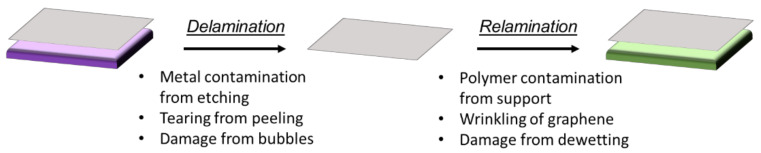
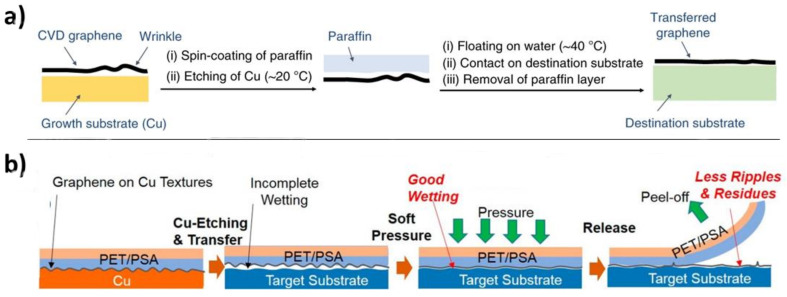
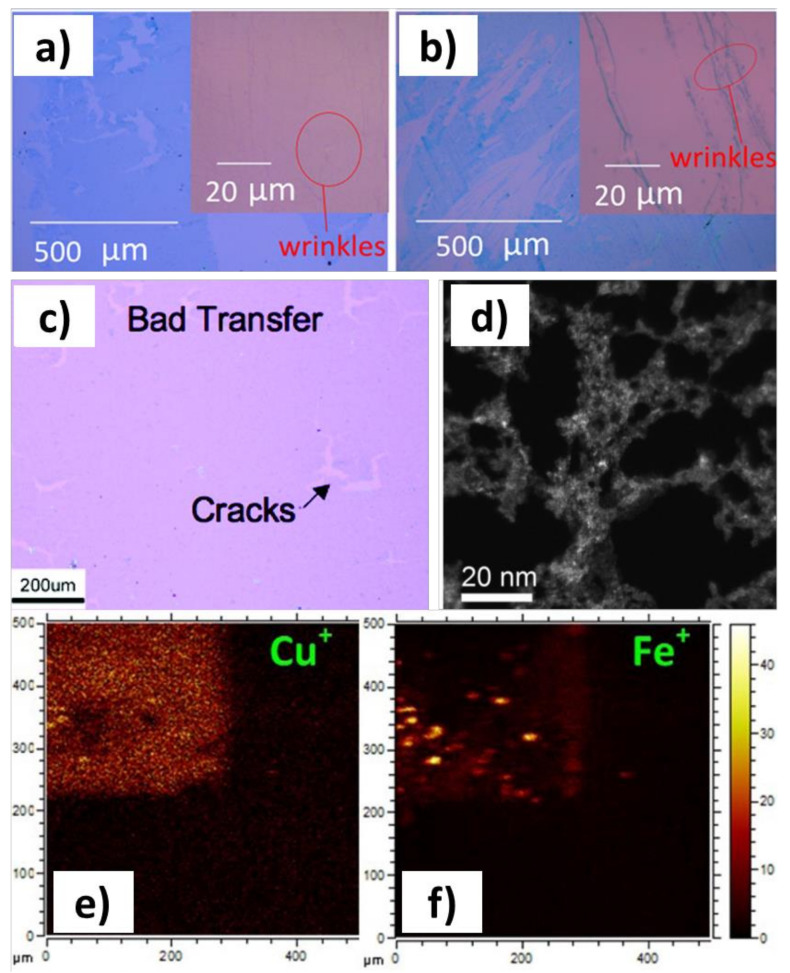
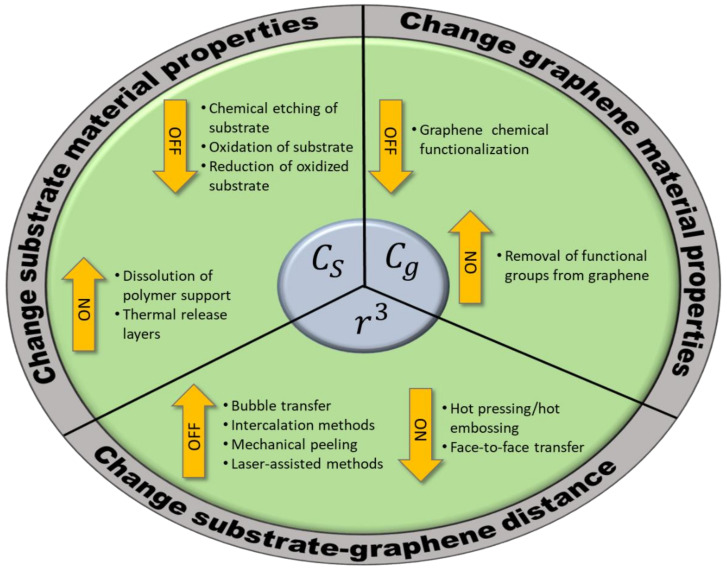
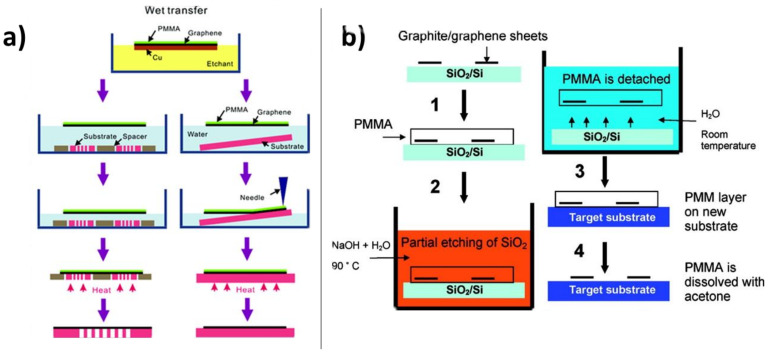
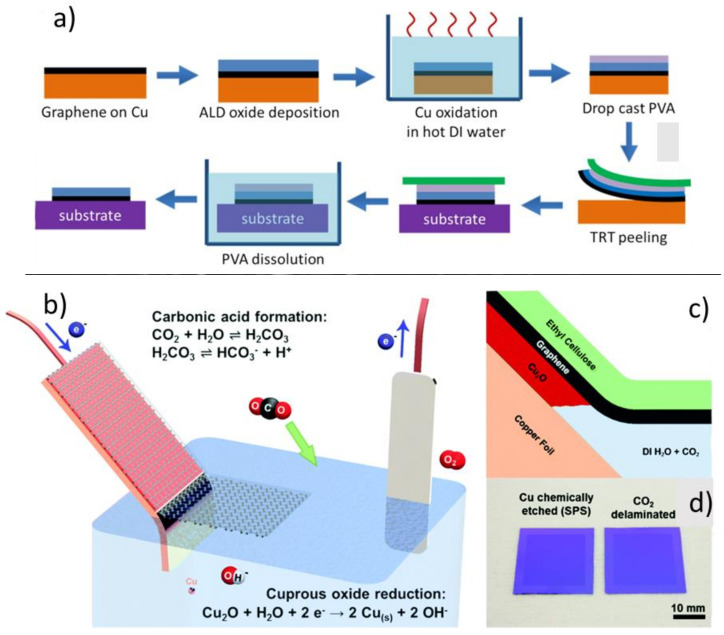
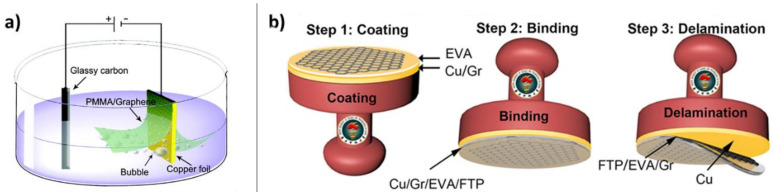
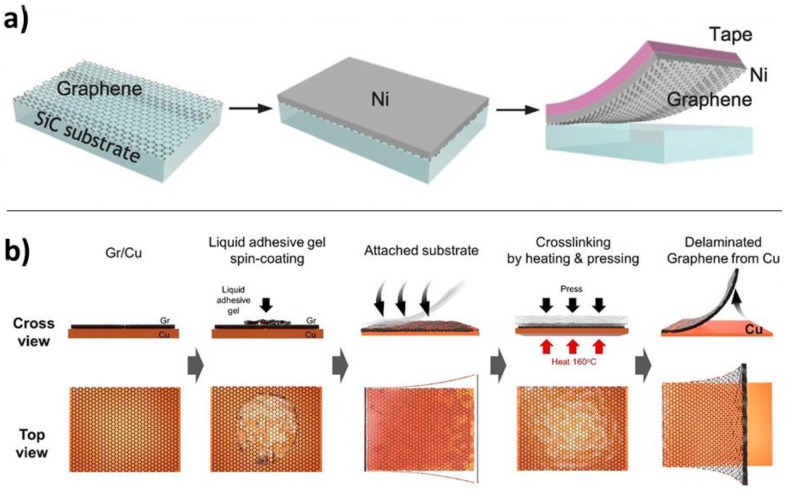
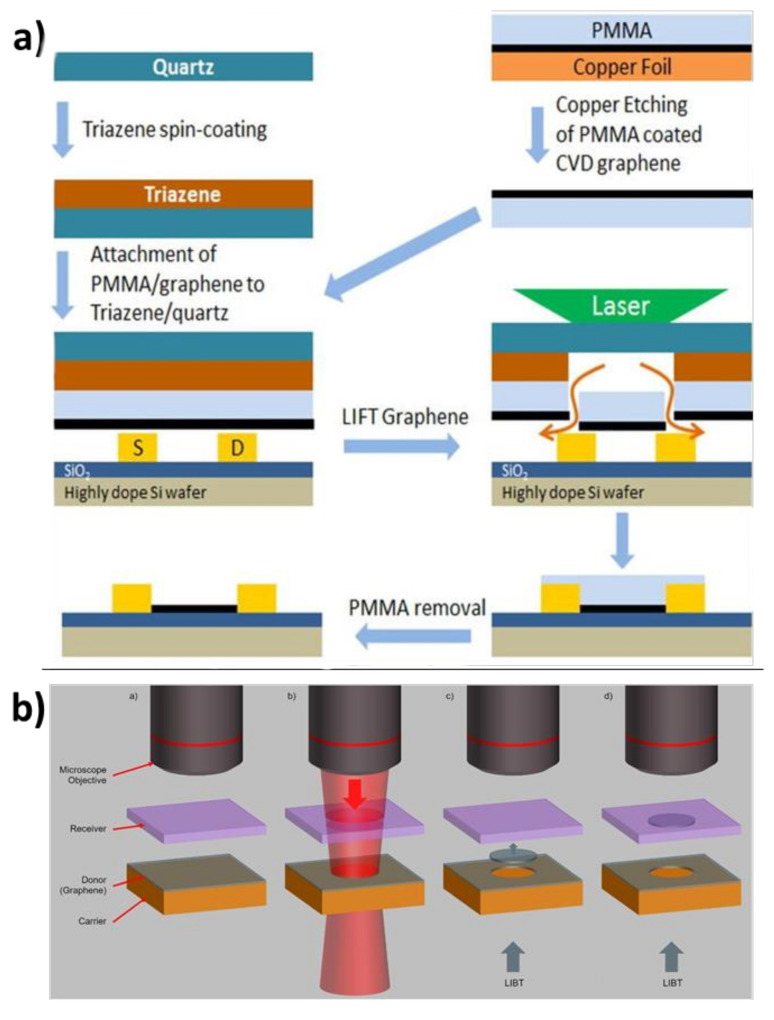
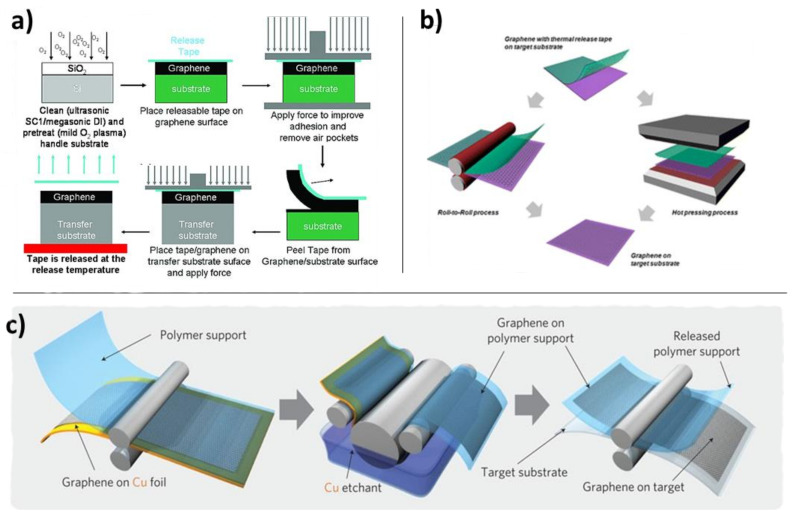
Graphene, synthesized either epitaxially on silicon carbide or via chemical vapor deposition (CVD) on a transition metal, is gathering an increasing amount of interest from industrial and commercial ventures due to its remarkable electronic, mechanical, and thermal properties, as well as the ease with which it can be incorporated into devices. To exploit these superlative properties, it is generally necessary to transfer graphene from its conductive growth substrate to a more appropriate target substrate. In this review, we analyze the literature describing graphene transfer methods developed over the last decade. We present a simple physical model of the adhesion of graphene to its substrate, and we use this model to organize the various graphene transfer techniques by how they tackle the problem of modulating the adhesion energy between graphene and its substrate. We consider the challenges inherent in both delamination of graphene from its original substrate as well as relamination of graphene onto its target substrate, and we show how our simple model can rationalize various transfer strategies to mitigate these challenges and overcome the introduction of impurities and defects into the graphene. Our analysis of graphene transfer strategies concludes with a suggestion of possible future directions for the field.
通过在碳化硅上外延生长或在过渡金属上通过化学气相沉积(CVD)合成的石墨烯,因其卓越的电子、机械和热性能,以及易于集成到器件中的特性,正受到越来越多工业和商业企业的关注。为了利用这些优异性能,通常需要将石墨烯从其导电生长衬底转移到更合适的目标衬底上。在本综述中,我们分析了过去十年中描述石墨烯转移方法的文献。我们提出了一个关于石墨烯与其衬底粘附的简单物理模型,并使用该模型根据各种石墨烯转移技术如何解决调节石墨烯与其衬底之间粘附能的问题来对它们进行分类。我们考虑了石墨烯从其原始衬底分层以及再沉积到其目标衬底过程中固有的挑战,并展示了我们的简单模型如何能够合理化各种转移策略,以减轻这些挑战并克服石墨烯中杂质和缺陷的引入。我们对石墨烯转移策略的分析最后提出了该领域未来可能的发展方向。