Guzmán Hilmar, Roldán Daniela, Sacco Adriano, Castellino Micaela, Fontana Marco, Russo Nunzio, Hernández Simelys
CREST Group, Department of Applied Science and Technology (DISAT), Politecnico di Torino, C.so Duca Degli Abruzzi, 24, 10129 Turin, Italy.
IIT-Istituto Italiano di Tecnologia, Via Livorno, 60, 10144 Turin, Italy.
Nanomaterials (Basel). 2021 Nov 13;11(11):3052. doi: 10.3390/nano11113052.
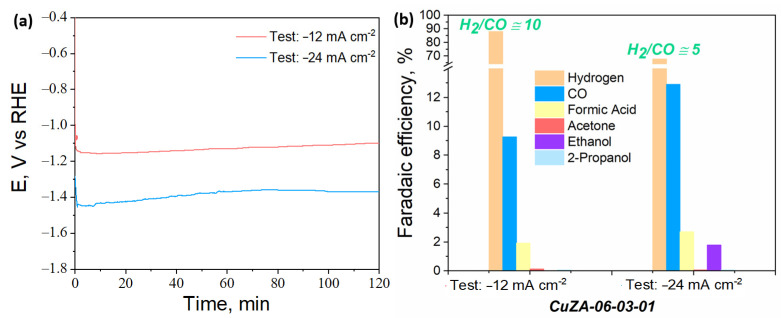
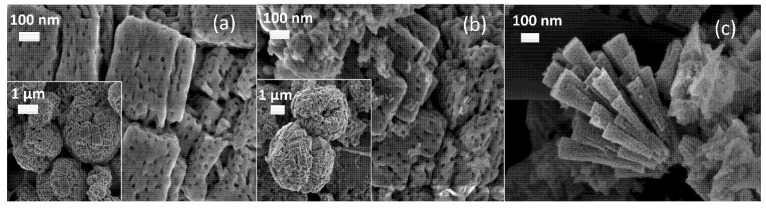
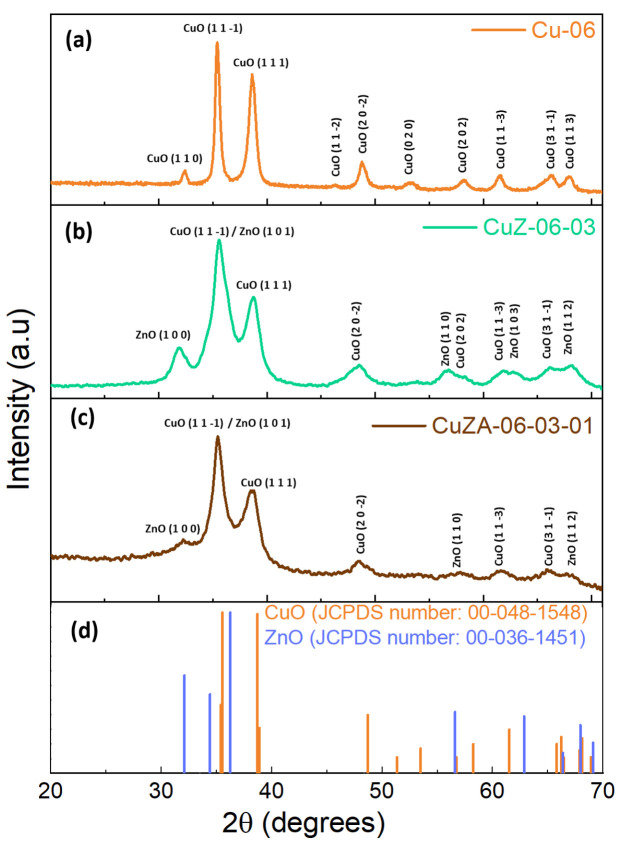
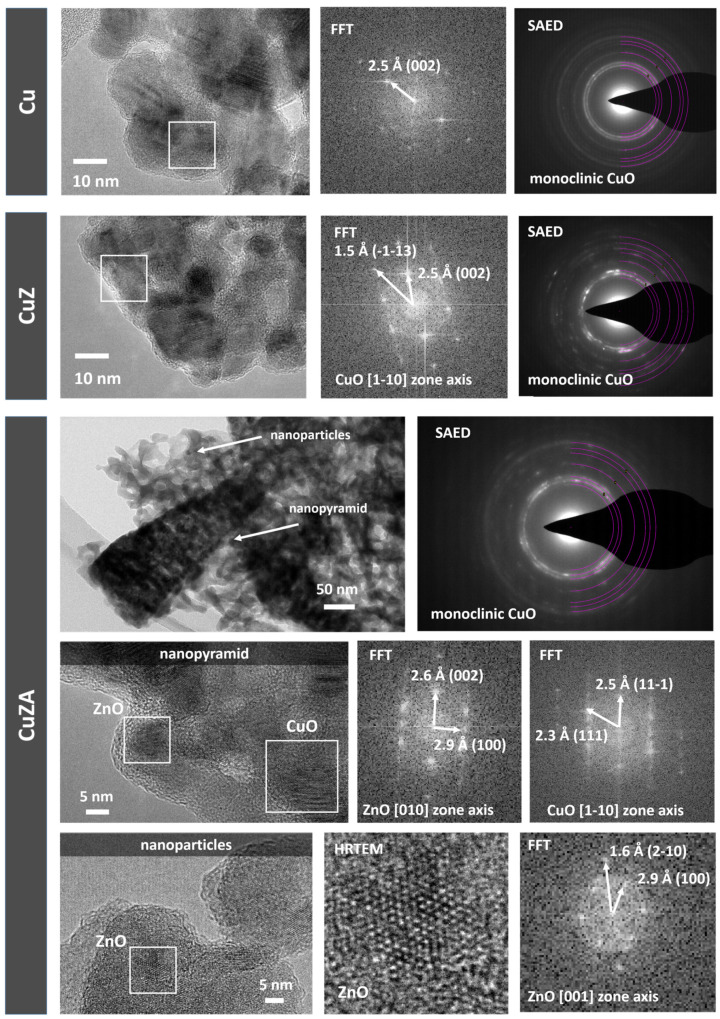
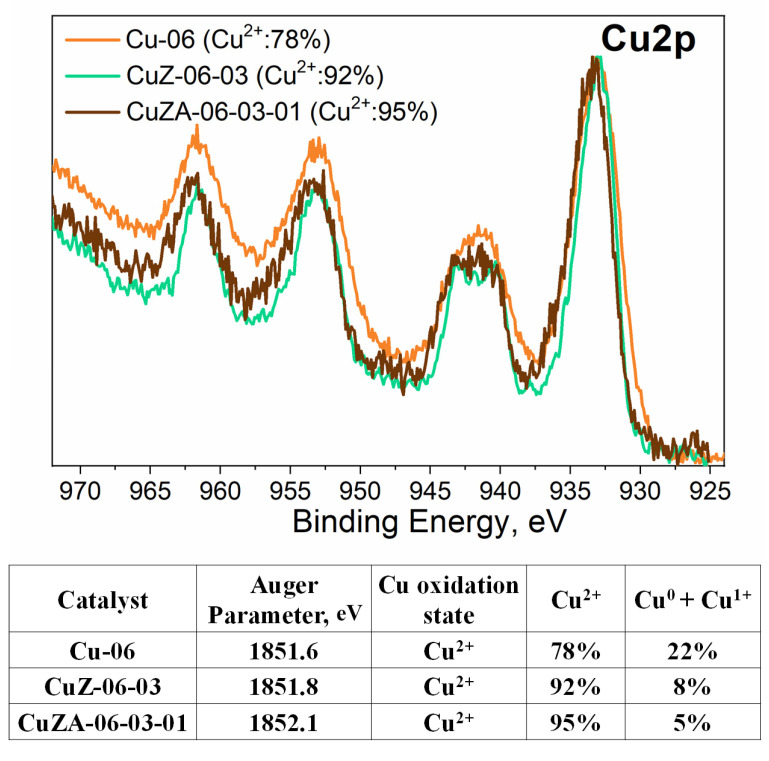
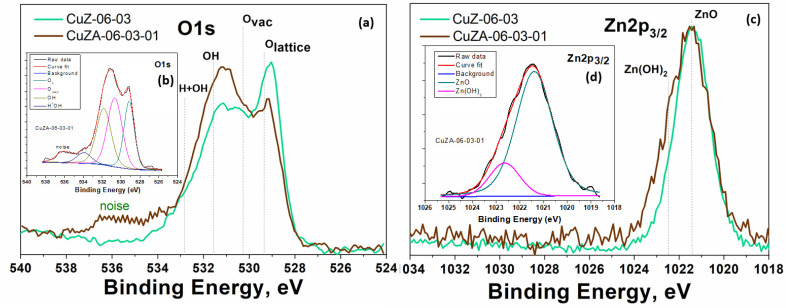
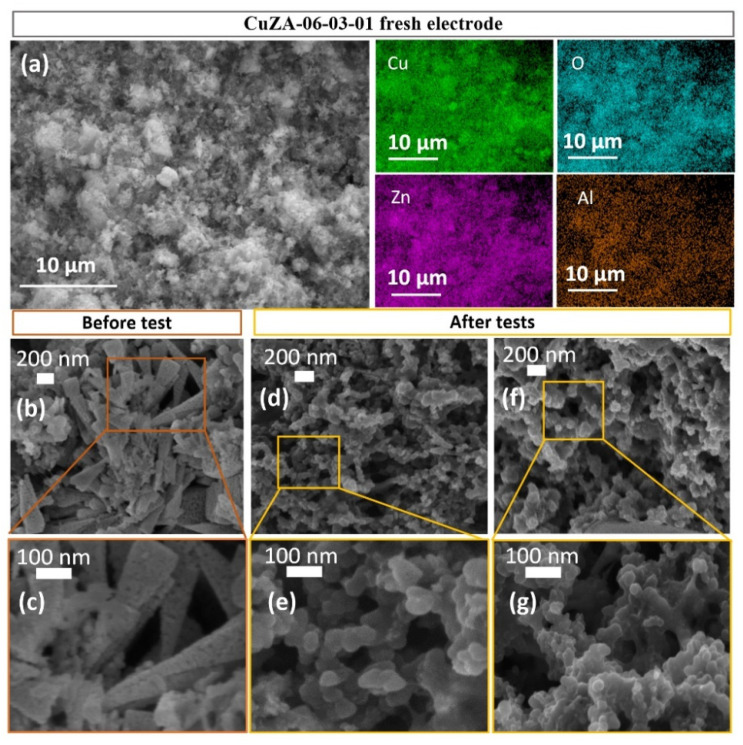
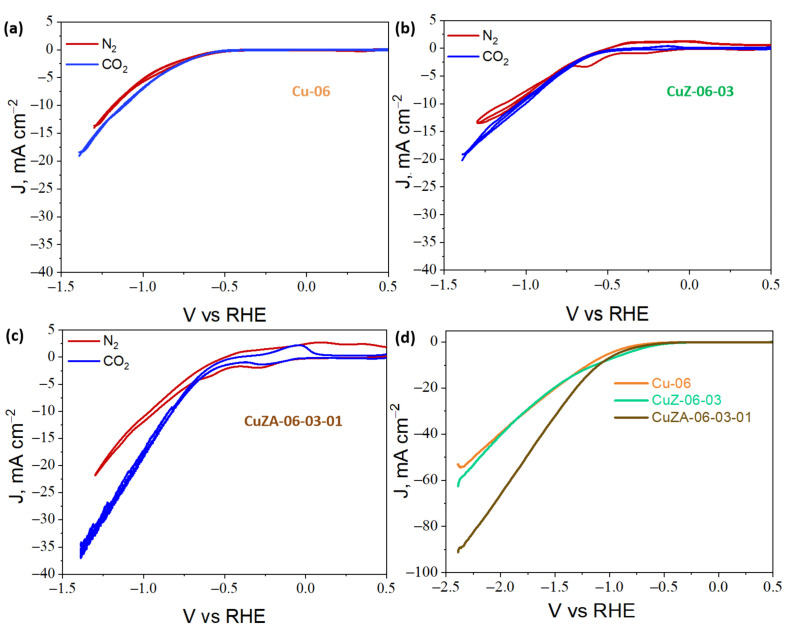
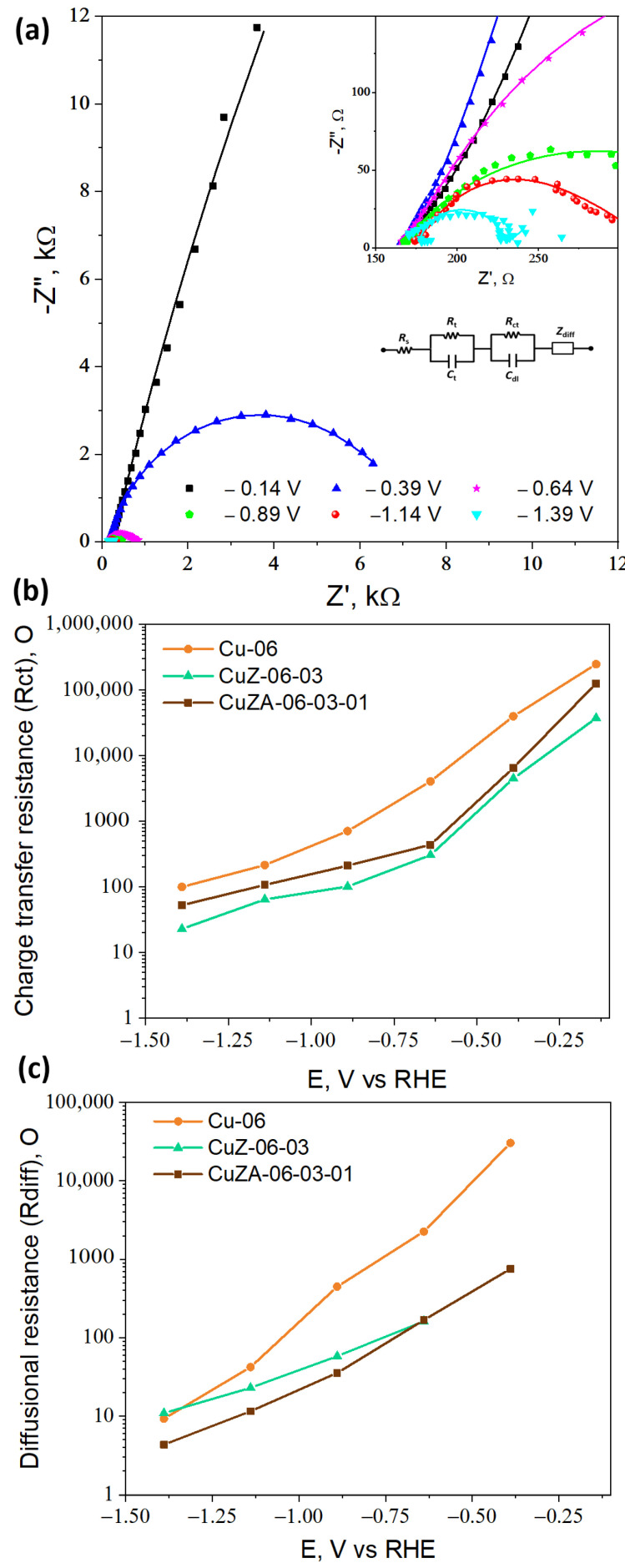
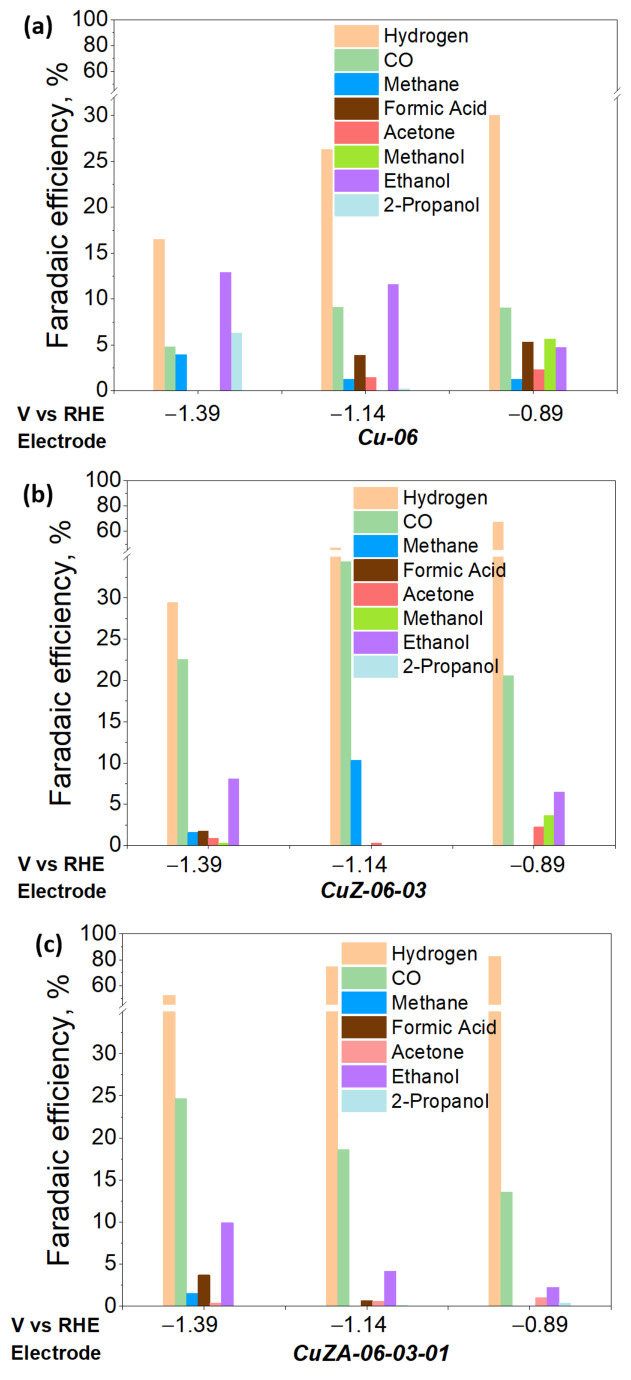
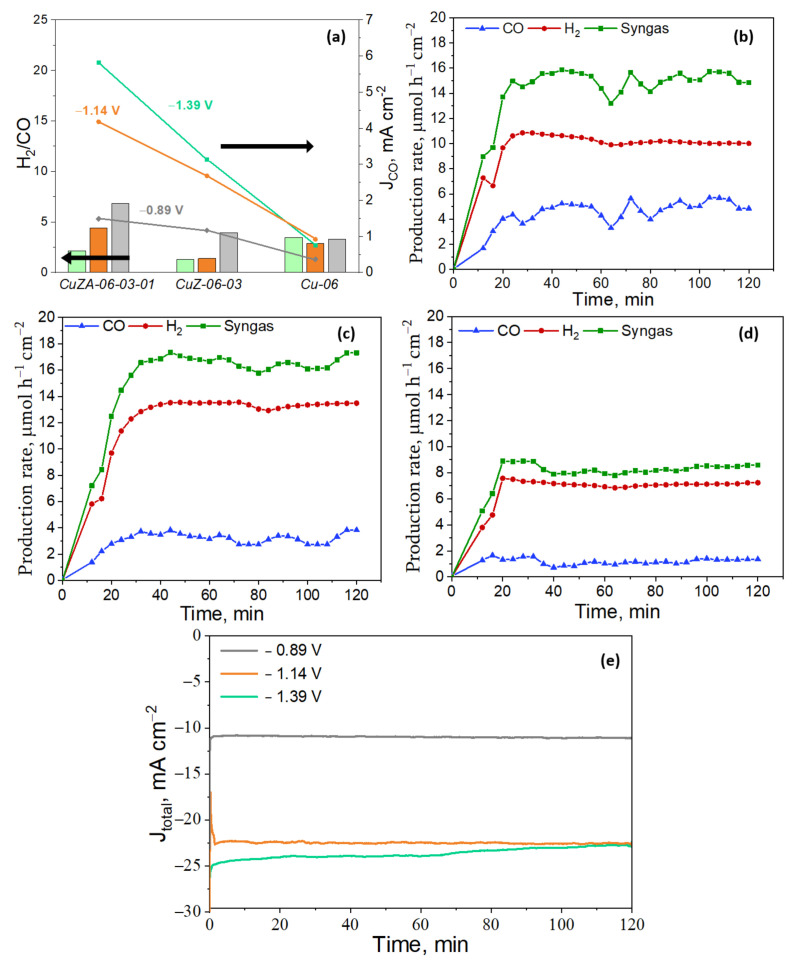
Inspired by the knowledge of the thermocatalytic CO reduction process, novel nanocrystalline CuZnAl-oxide based catalysts with pyramidal mesoporous structures are here proposed for the CO electrochemical reduction under ambient conditions. The XPS analyses revealed that the co-presence of ZnO and AlO into the Cu-based catalyst stabilize the CuO crystalline structure and introduce basic sites on the ternary as-synthesized catalyst. In contrast, the as-prepared CuZn- and Cu-based materials contain a higher amount of superficial Cu and Cu species. The CuZnAl-catalyst exhibited enhanced catalytic performance for the CO and H production, reaching a Faradaic efficiency (FE) towards syngas of almost 95% at -0.89 V vs. RHE and a remarkable current density of up to 90 mA cm for the CO reduction at -2.4 V vs. RHE. The physico-chemical characterizations confirmed that the pyramidal mesoporous structure of this material, which is constituted by a high pore volume and small CuO crystals, plays a fundamental role in its low diffusional mass-transfer resistance. The CO-productivity on the CuZnAl-catalyst increased at more negative applied potentials, leading to the production of syngas with a tunable H/CO ratio (from 2 to 7), depending on the applied potential. These results pave the way to substitute state-of-the-art noble metals (e.g., Ag, Au) with this abundant and cost-effective catalyst to produce syngas. Moreover, the post-reaction analyses demonstrated the stabilization of CuO species, avoiding its complete reduction to Cu under the CO electroreduction conditions.
受热催化CO还原过程知识的启发,本文提出了一种具有金字塔形介孔结构的新型纳米晶CuZnAl氧化物基催化剂,用于在环境条件下进行CO电化学还原。XPS分析表明,ZnO和AlO共存于Cu基催化剂中可稳定CuO晶体结构,并在三元合成催化剂上引入碱性位点。相比之下,所制备的CuZn和Cu基材料含有较高含量的表面Cu和Cu物种。CuZnAl催化剂对CO和H的生成表现出增强的催化性能,在相对于可逆氢电极(RHE)为-0.89 V时,合成气的法拉第效率(FE)接近95%,在相对于RHE为-2.4 V时,CO还原的电流密度高达90 mA cm²。物理化学表征证实,这种由高孔容和小CuO晶体构成的材料的金字塔形介孔结构在其低扩散传质阻力中起基本作用。CuZnAl催化剂上的CO生产率在更负的外加电位下增加,导致根据外加电位产生具有可调H/CO比(从2到7)的合成气。这些结果为用这种丰富且经济高效的催化剂替代现有贵金属(如Ag、Au)来生产合成气铺平了道路。此外,反应后分析表明CuO物种的稳定性,避免了其在CO电还原条件下完全还原为Cu。