Wierbowski Shayne D, Liang Siqi, Liu Yuan, Chen You, Gupta Shagun, Andre Nicole M, Lipkin Steven M, Whittaker Gary R, Yu Haiyuan
Department of Computational Biology, Cornell University, Ithaca, NY, USA.
Weill Institute for Cell and Molecular Biology, Cornell University, Ithaca, NY, USA.
Nat Methods. 2021 Dec;18(12):1477-1488. doi: 10.1038/s41592-021-01318-w. Epub 2021 Nov 29.
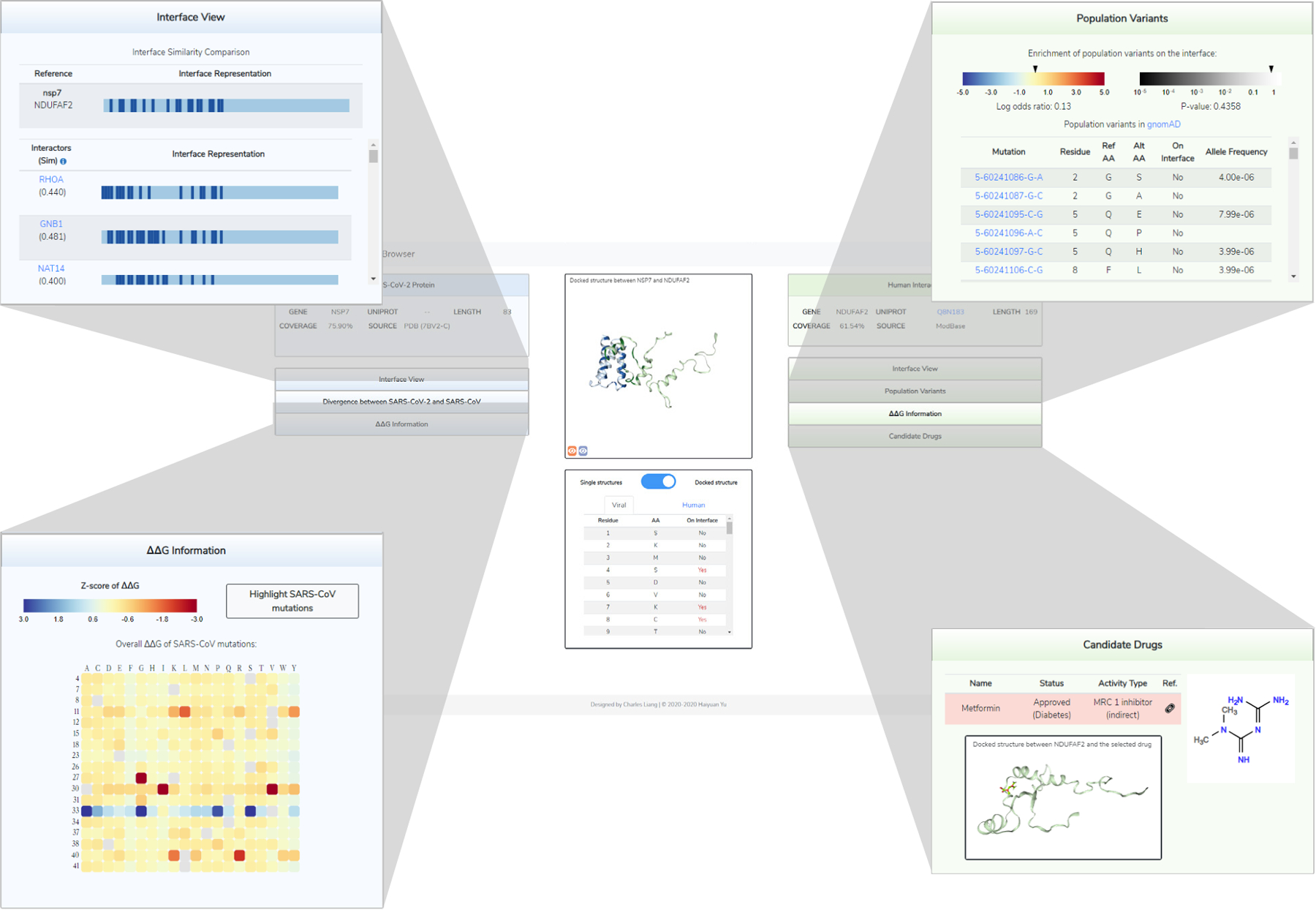
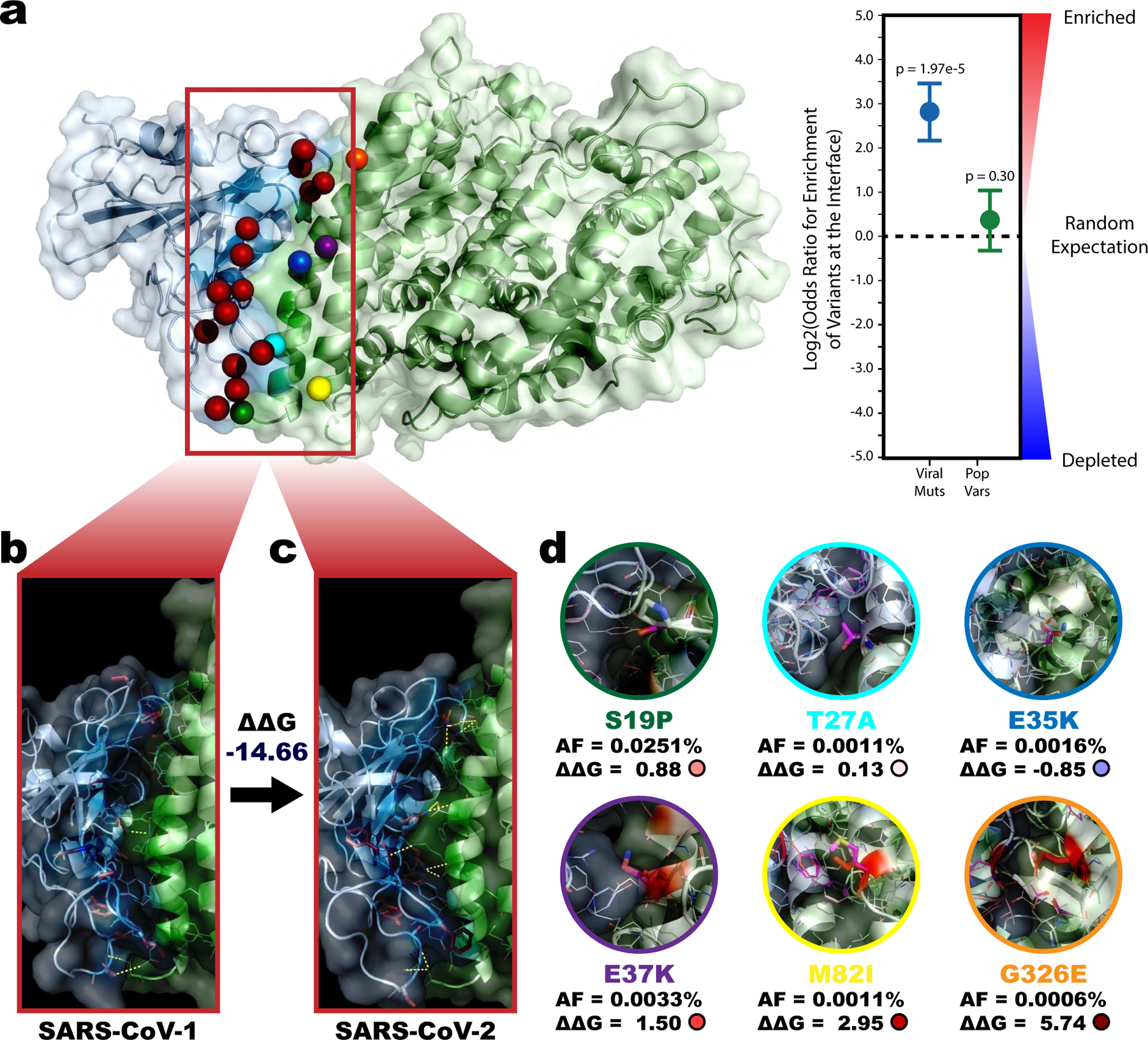
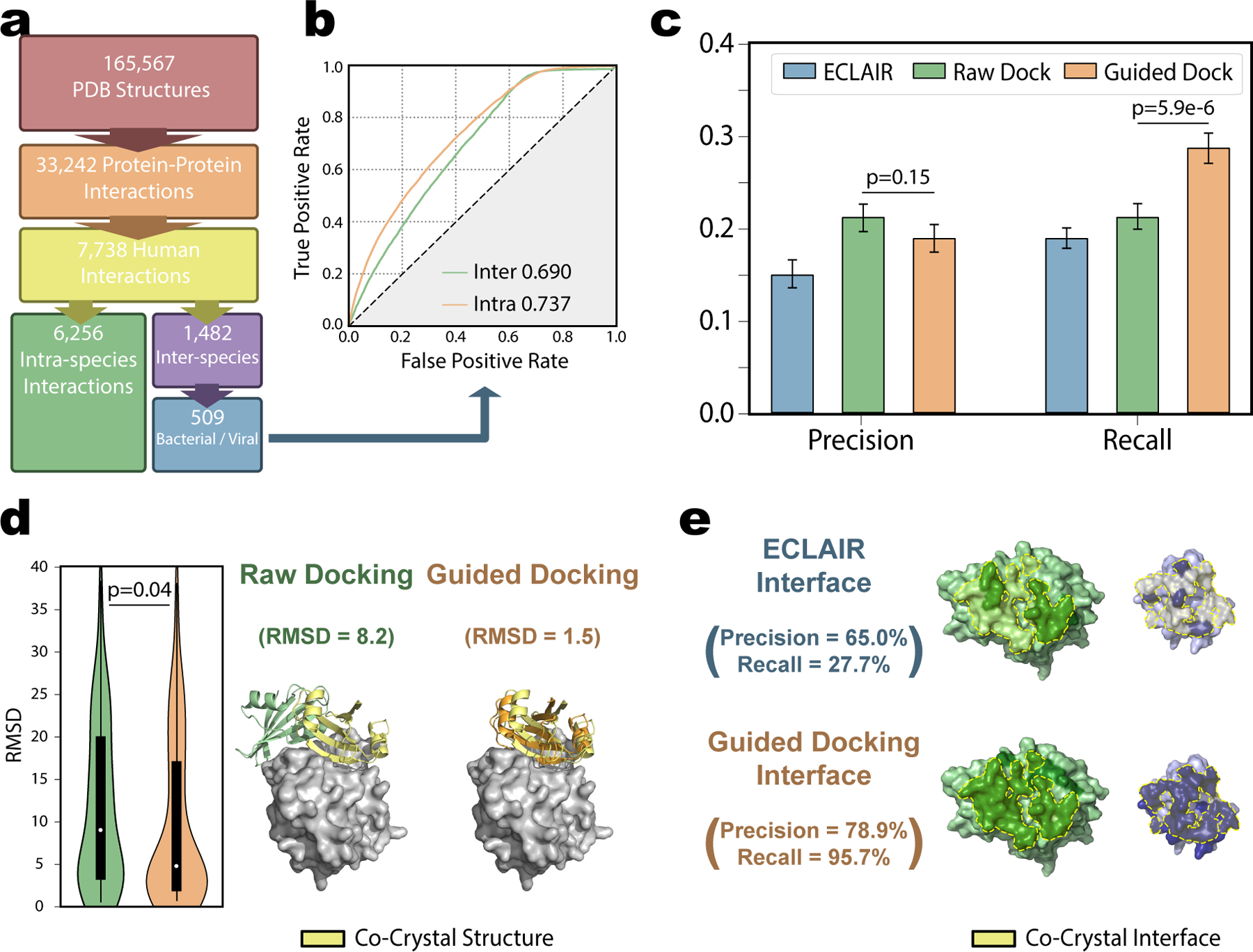
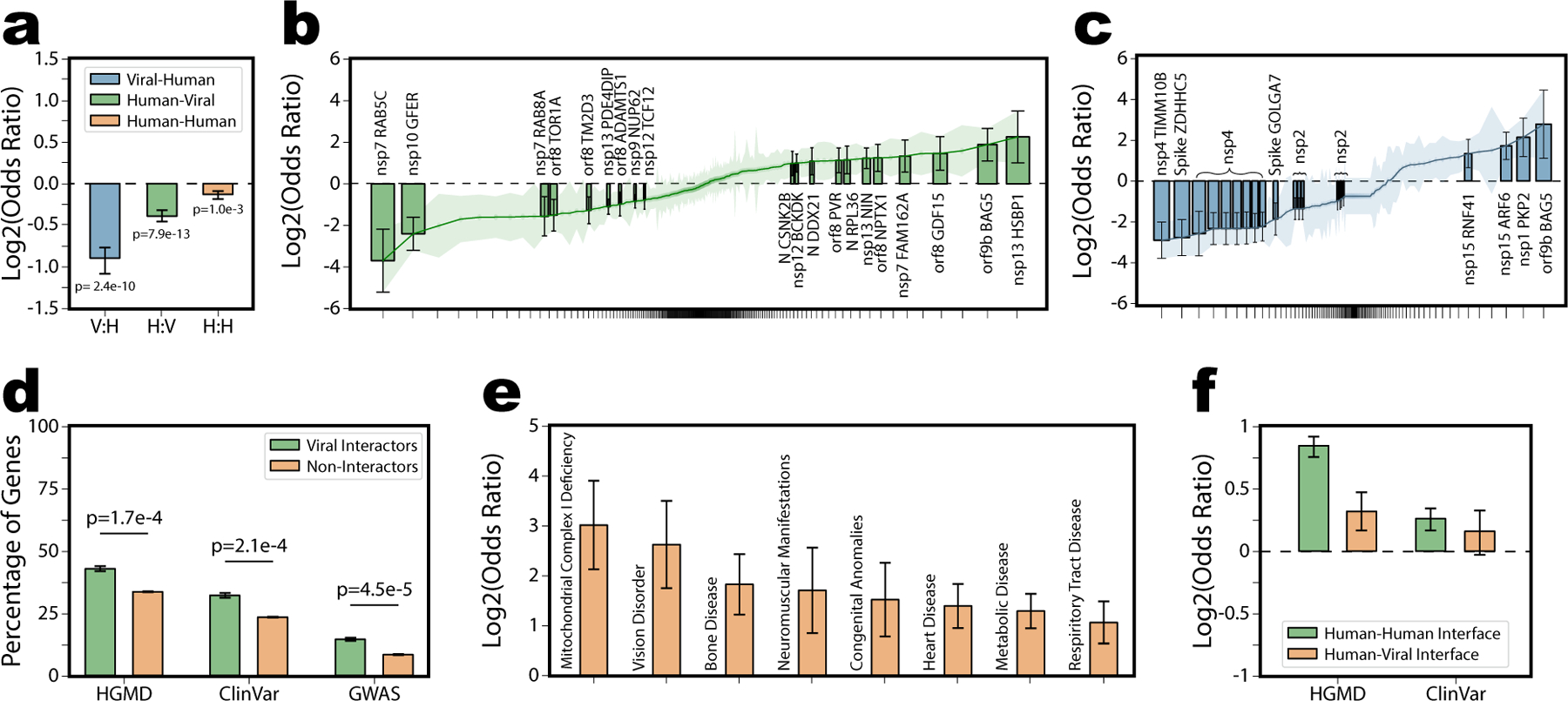
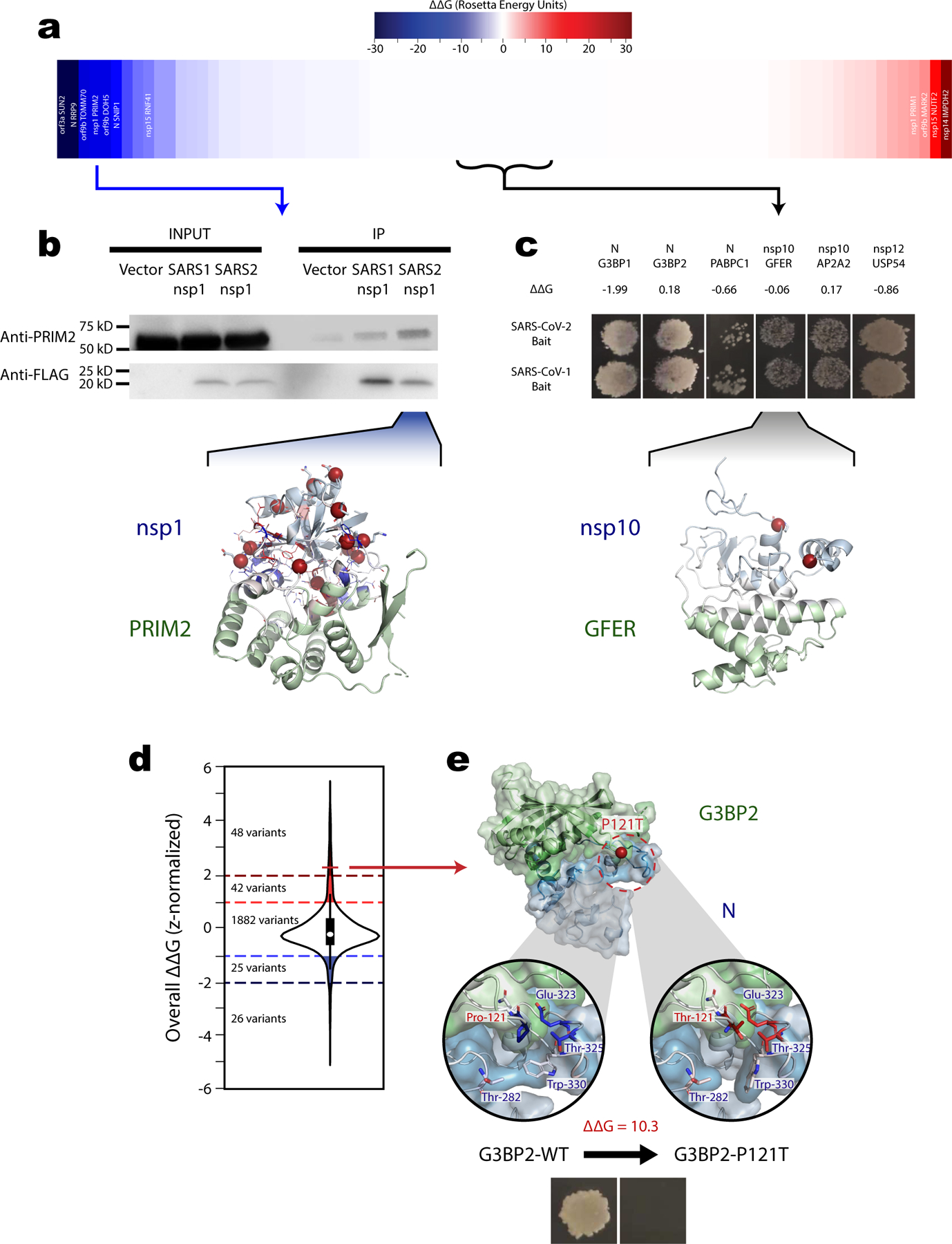
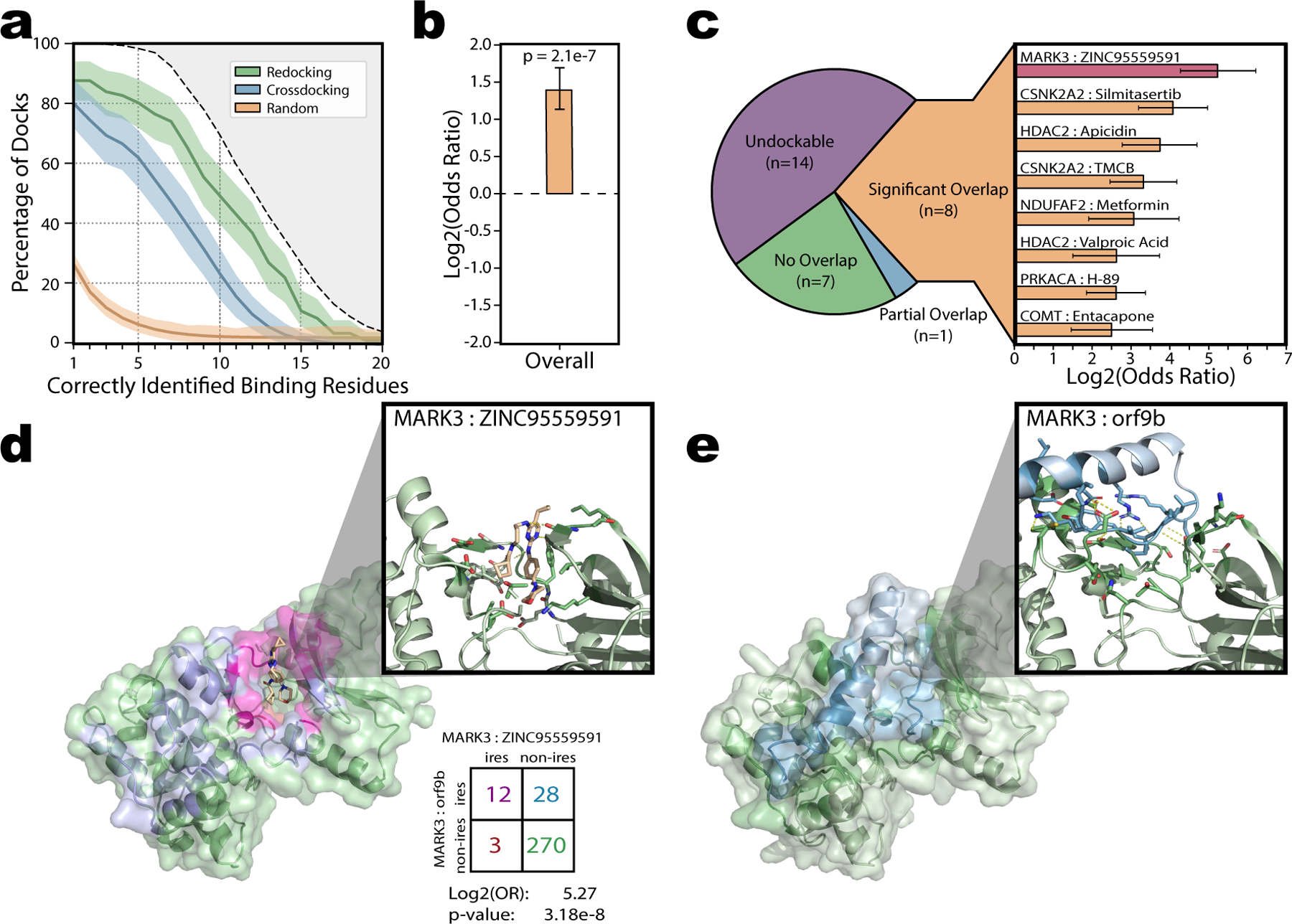
Emergence of new viral agents is driven by evolution of interactions between viral proteins and host targets. For instance, increased infectivity of SARS-CoV-2 compared to SARS-CoV-1 arose in part through rapid evolution along the interface between the spike protein and its human receptor ACE2, leading to increased binding affinity. To facilitate broader exploration of how pathogen-host interactions might impact transmission and virulence in the ongoing COVID-19 pandemic, we performed state-of-the-art interface prediction followed by molecular docking to construct a three-dimensional structural interactome between SARS-CoV-2 and human. We additionally carried out downstream meta-analyses to investigate enrichment of sequence divergence between SARS-CoV-1 and SARS-CoV-2 or human population variants along viral-human protein-interaction interfaces, predict changes in binding affinity by these mutations/variants and further prioritize drug repurposing candidates predicted to competitively bind human targets. We believe this resource ( http://3D-SARS2.yulab.org ) will aid in development and testing of informed hypotheses for SARS-CoV-2 etiology and treatments.
新病毒病原体的出现是由病毒蛋白与宿主靶点之间相互作用的进化驱动的。例如,与SARS-CoV-1相比,SARS-CoV-2传染性的增加部分是通过刺突蛋白与其人类受体ACE2之间界面的快速进化实现的,从而导致结合亲和力增加。为了更广泛地探索病原体与宿主的相互作用如何在当前的COVID-19大流行中影响传播和毒力,我们进行了最先进的界面预测,随后进行分子对接,以构建SARS-CoV-2与人类之间的三维结构相互作用组。我们还进行了下游荟萃分析,以研究SARS-CoV-1与SARS-CoV-2之间或人类群体变体沿病毒-人类蛋白质相互作用界面的序列差异富集情况,预测这些突变/变体导致的结合亲和力变化,并进一步对预测可竞争性结合人类靶点的药物重新利用候选物进行优先级排序。我们相信,这一资源(http://3D-SARS2.yulab.org)将有助于为SARS-CoV-2的病因和治疗开发和测试有依据的假设。