Department of Clinical Pharmacy and Translational Science, College of Pharmacy, University of Tennessee Health Science Center, Memphis, TN, United States.
College of Health Sciences, University of Memphis, Memphis, TN, United States.
Front Immunol. 2021 Nov 11;12:733921. doi: 10.3389/fimmu.2021.733921. eCollection 2021.
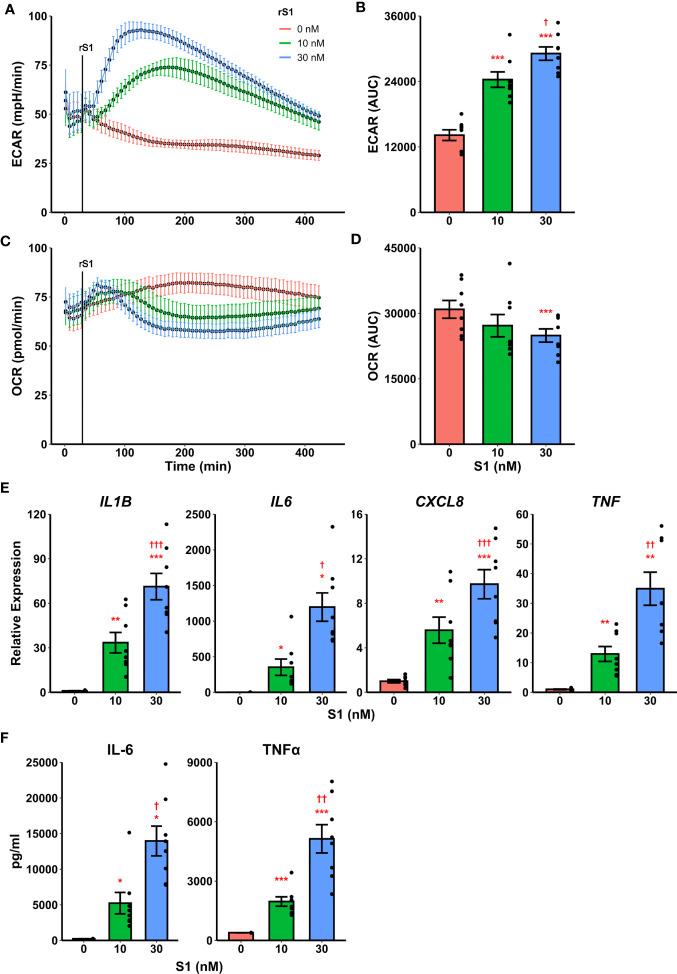
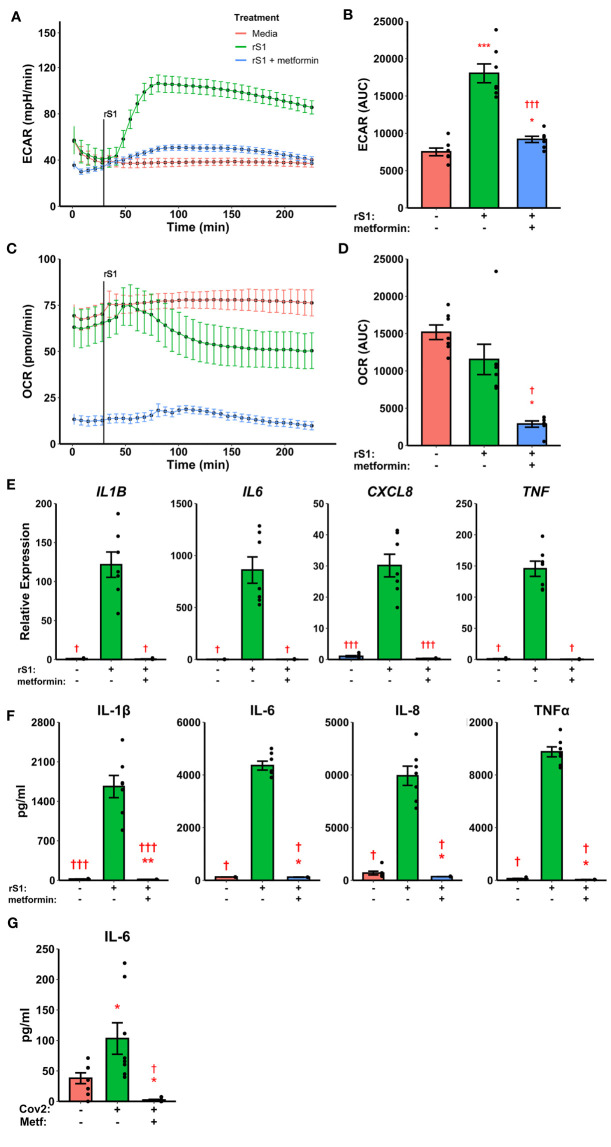
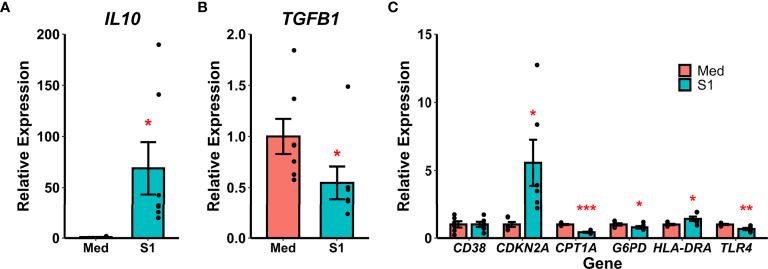
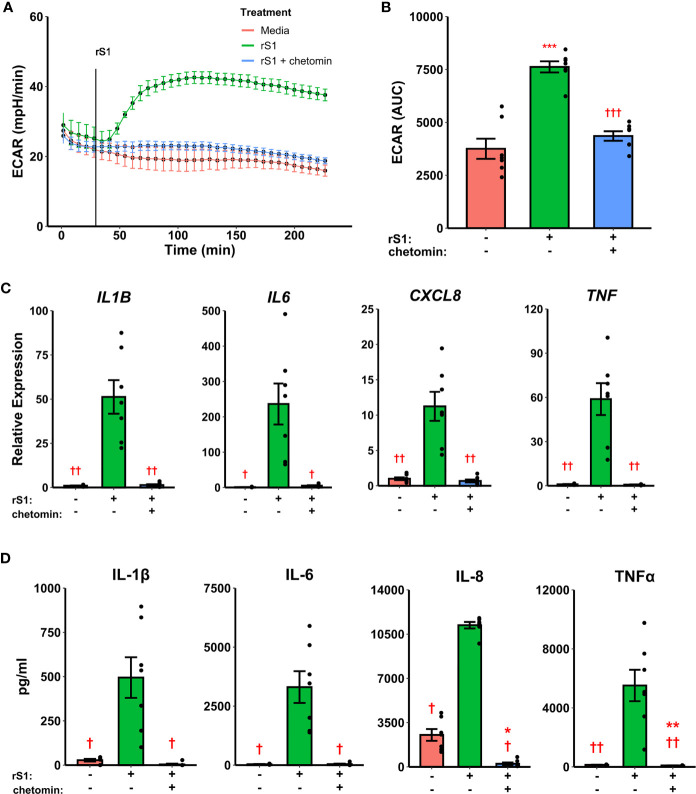
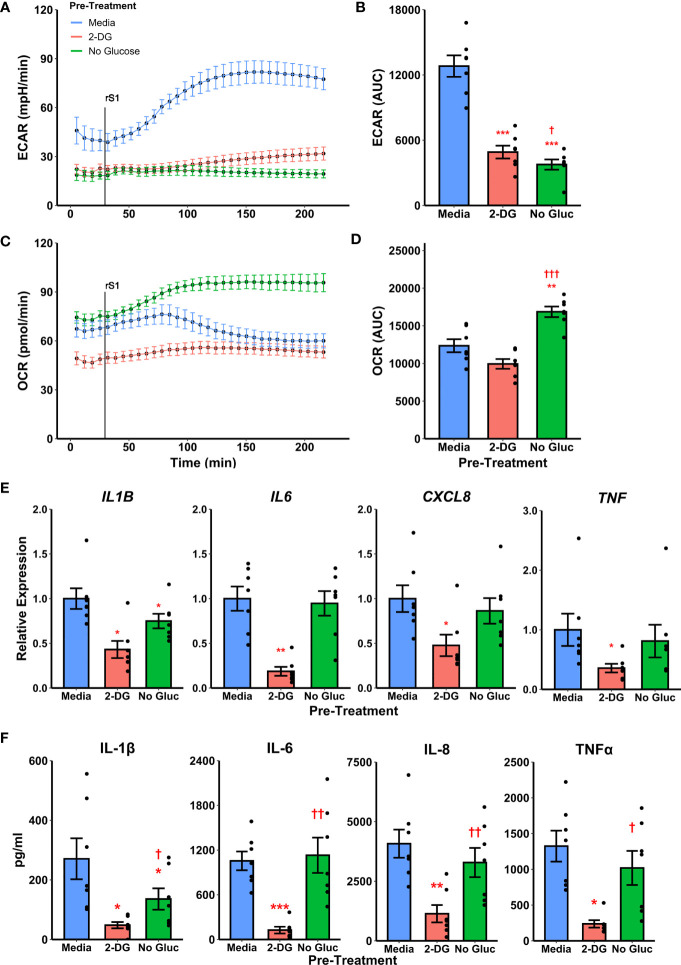
A hallmark of COVID-19 is a hyperinflammatory state associated with severity. Monocytes undergo metabolic reprogramming and produce inflammatory cytokines when stimulated with SARS-CoV-2. We hypothesized that binding by the viral spike protein mediates this effect, and that drugs which regulate immunometabolism could inhibit the inflammatory response. Monocytes stimulated with recombinant SARS-CoV-2 spike protein subunit 1 showed a dose-dependent increase in glycolytic metabolism associated with production of pro-inflammatory cytokines. This response was dependent on hypoxia-inducible factor-1α, as chetomin inhibited glycolysis and cytokine production. Inhibition of glycolytic metabolism by 2-deoxyglucose (2-DG) or glucose deprivation also inhibited the glycolytic response, and 2-DG strongly suppressed cytokine production. Glucose-deprived monocytes rescued cytokine production by upregulating oxidative phosphorylation, an effect which was not present in 2-DG-treated monocytes due to the known effect of 2-DG on suppressing mitochondrial metabolism. Finally, pre-treatment of monocytes with metformin strongly suppressed spike protein-mediated cytokine production and metabolic reprogramming. Likewise, metformin pre-treatment blocked cytokine induction by SARS-CoV-2 strain WA1/2020 in direct infection experiments. In summary, the SARS-CoV-2 spike protein induces a pro-inflammatory immunometabolic response in monocytes that can be suppressed by metformin, and metformin likewise suppresses inflammatory responses to live SARS-CoV-2. This has potential implications for the treatment of hyperinflammation during COVID-19.
新冠病毒的一个标志是与严重程度相关的过度炎症状态。当单核细胞受到 SARS-CoV-2 的刺激时,它们会经历代谢重编程并产生炎症细胞因子。我们假设,病毒刺突蛋白的结合介导了这种效应,而调节免疫代谢的药物可以抑制炎症反应。用重组 SARS-CoV-2 刺突蛋白亚单位 1 刺激单核细胞,会导致与促炎细胞因子产生相关的糖酵解代谢呈剂量依赖性增加。这种反应依赖于缺氧诱导因子-1α,因为 chetomin 抑制糖酵解和细胞因子产生。2-脱氧葡萄糖(2-DG)或葡萄糖剥夺抑制糖酵解代谢,也抑制糖酵解反应,并且 2-DG 强烈抑制细胞因子产生。葡萄糖剥夺的单核细胞通过上调氧化磷酸化来拯救细胞因子产生,由于 2-DG 对抑制线粒体代谢的已知作用,在 2-DG 处理的单核细胞中不存在这种效应。最后,二甲双胍预处理强烈抑制单核细胞中刺突蛋白介导的细胞因子产生和代谢重编程。同样,二甲双胍预处理在直接感染实验中阻断了 SARS-CoV-2 株 WA1/2020 诱导的细胞因子诱导。总之,SARS-CoV-2 刺突蛋白在单核细胞中诱导促炎免疫代谢反应,二甲双胍可以抑制这种反应,而二甲双胍同样抑制对活 SARS-CoV-2 的炎症反应。这对于治疗 COVID-19 期间的过度炎症具有潜在意义。