Xiong Jian, Chen Yinshuang, Wang Weipeng, Sun Jing
Institute of Medical Biotechnology, Suzhou Vocational Health College, Suzhou, Jiangsu 215009, P.R. China.
Center for Drug Metabolism and Pharmacokinetics, College of Pharmaceutical Sciences, Soochow University, Suzhou, Jiangsu 215123, P.R. China.
Oncol Lett. 2022 Jan;23(1):21. doi: 10.3892/ol.2021.13139. Epub 2021 Nov 16.
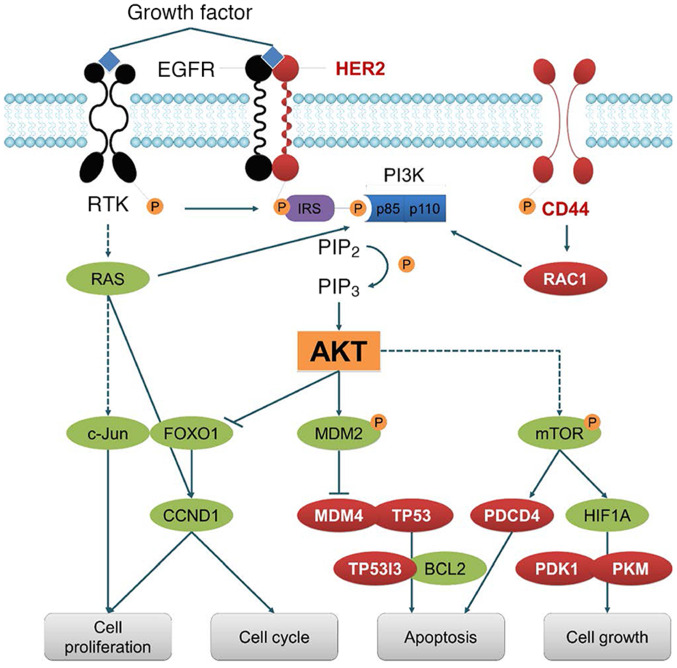
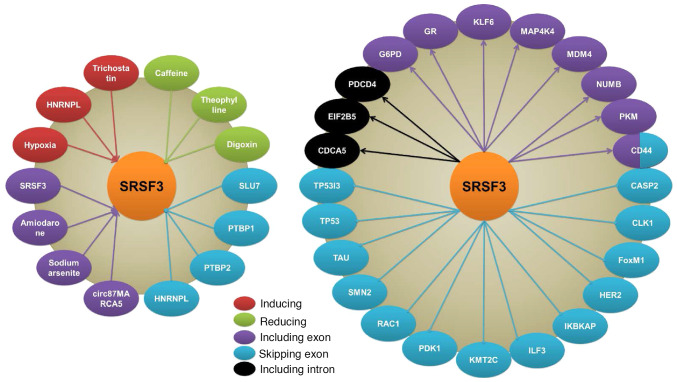
Serine/arginine-rich splicing factor 3 (SRSF3; also known as SRp20), an important member of the family of SRSFs, is abnormally expressed in tumors, resulting in aberrant splicing of hub genes, such as CD44, HER2, MDM4, Rac family small GTPase 1 and tumor protein p53. Under normal conditions, the splicing and expression of SRSF3 are strictly regulated. However, the splicing, expression and phosphorylation of SRSF3 are abnormal in tumors. SRSF3 plays important roles in the occurrence and development of tumors, including the promotion of tumorigenesis, cellular proliferation, the cell cycle and metastasis, as well as inhibition of cell senescence, apoptosis and autophagy. SRSF3-knockdown significantly inhibits the proliferation and metastatic characteristics of tumor cells. Therefore, SRSF3 may be suggested as a novel anti-tumor target. The other biological functions of SRSF3 and its regulatory mechanisms are also summarized in the current review.
富含丝氨酸/精氨酸的剪接因子3(SRSF3;也称为SRp20)是SRSF家族的重要成员,在肿瘤中异常表达,导致诸如CD44、HER2、MDM4、Rac家族小GTP酶1和肿瘤蛋白p53等核心基因的异常剪接。在正常情况下,SRSF3的剪接和表达受到严格调控。然而,SRSF3的剪接、表达和磷酸化在肿瘤中是异常的。SRSF3在肿瘤的发生和发展中发挥重要作用,包括促进肿瘤发生、细胞增殖、细胞周期和转移,以及抑制细胞衰老、凋亡和自噬。敲低SRSF3可显著抑制肿瘤细胞的增殖和转移特性。因此,SRSF3可能被认为是一种新型的抗肿瘤靶点。本综述还总结了SRSF3的其他生物学功能及其调控机制。