Shatoor Abdullah S, Al Humayed Suliman
Department of Medicine, Cardiology Section, College of Medicine, King Khalid University (KKU), Abha, Saudi Arabia.
Department of Internal Medicine, College of Medicine, King Khalid University (KKU), Abha, Saudi Arabia.
Saudi J Biol Sci. 2021 Dec;28(12):7012-7021. doi: 10.1016/j.sjbs.2021.07.079. Epub 2021 Jul 30.
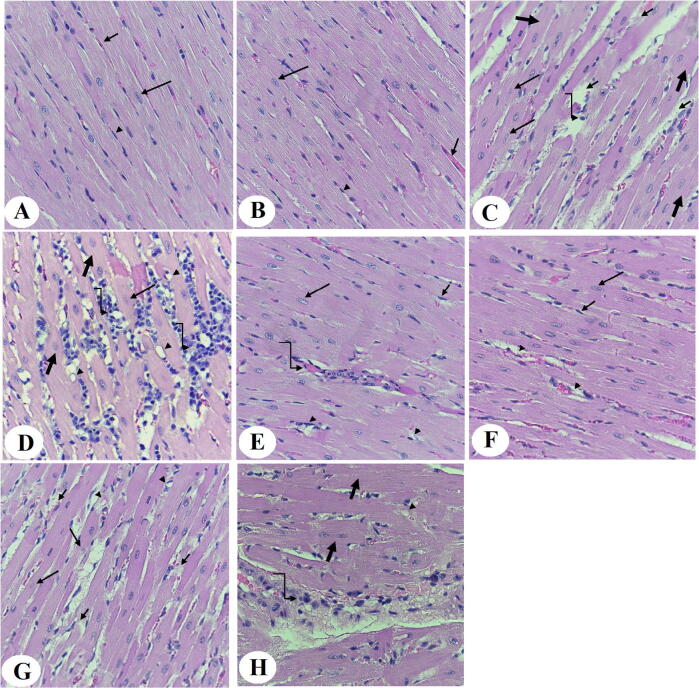
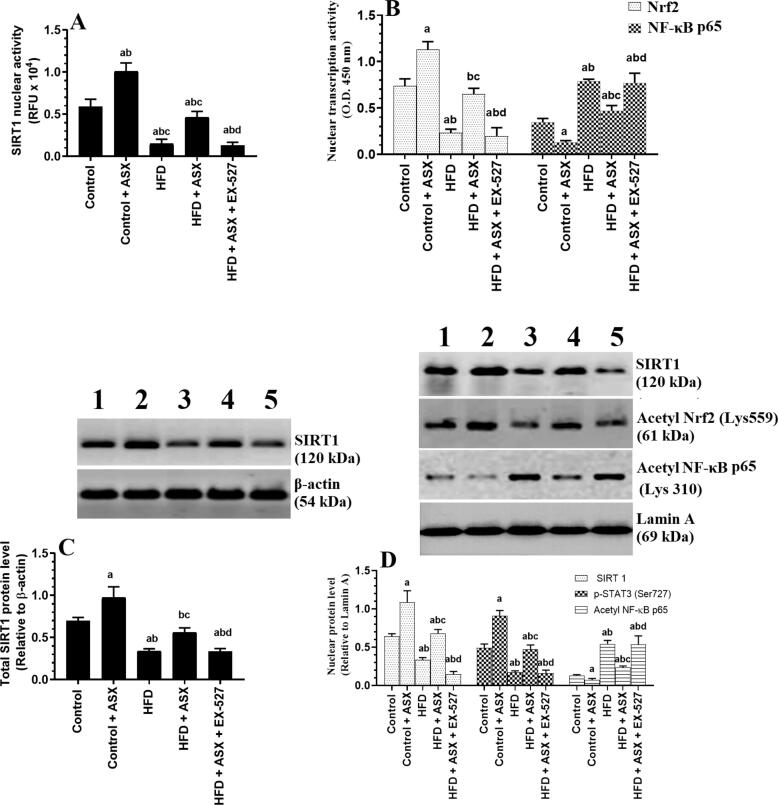
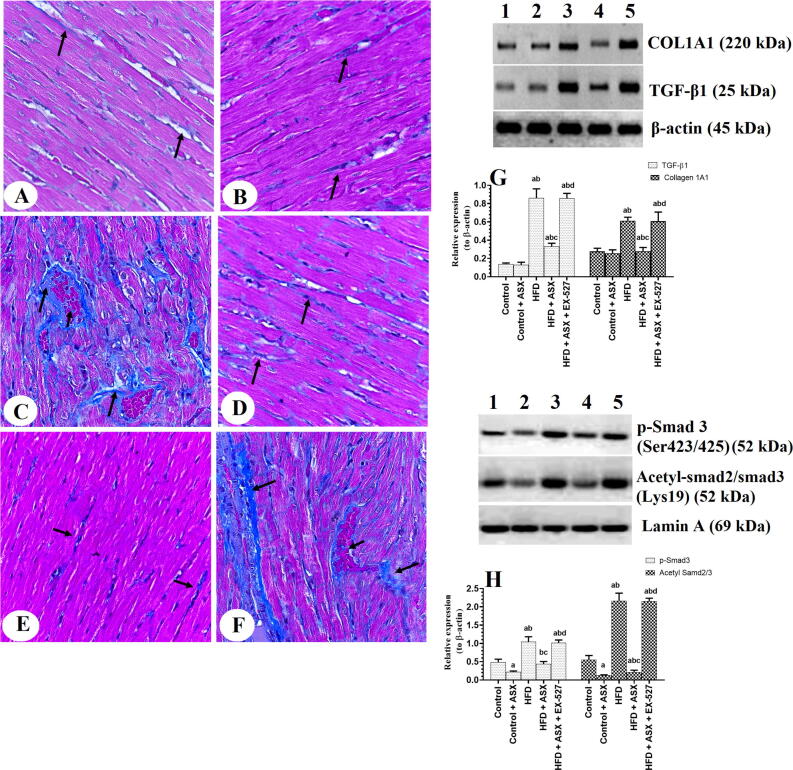
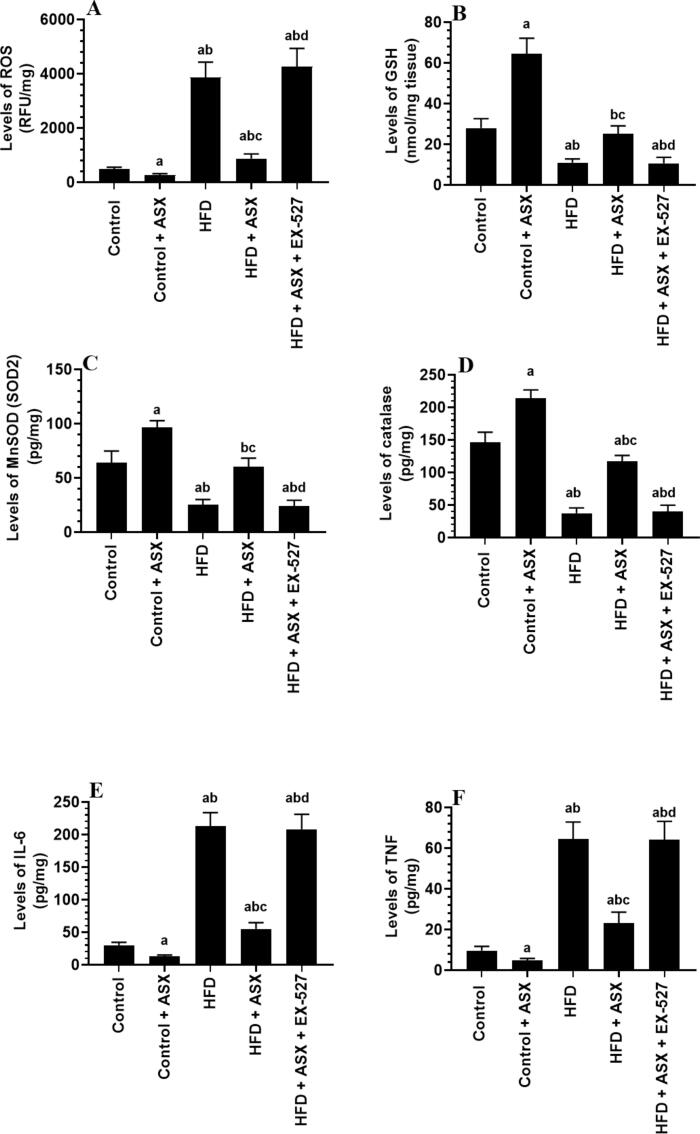
This study evaluated the protective effect of astaxanthin (ASX) against high-fat diet (HFD)-induced cardiac damage and fibrosis in rats and examined if the mechanism of protection involves modulating SIRT1. Rat were divided into 5 groups (n = 10/group) as: 1) control: fed normal diet (3.82 kcal/g), 2) control + ASX (200 mg/kg/orally), 3) HFD: fed HFD (4.7 kcal/g), 4) HFD + ASX (200 mg/kg/orally), and HFD + ASX + EX-527 (1 mg/kg/i.p) (a selective SIRT1 inhibitor). All treatments were conducted for 14 weeks. Administration of ASX reduced cardiomyocyte damage, inhibited inflammatory cell infiltration, preserved cardiac fibers structure, prevented collagen deposition and protein levels of TGF-β 1 in the left ventricles (LVs) of HFD-fed rats. In the LVs of both the control and HFD-fed rat, ASX significantly reduced levels of reactive oxygen species (ROS), tumor necrosis factor-α (TNF-α), interleukin-6 (IL-6), and p-smad2/3 (Lys19) but increased the levels of glutathione (GSH), catalase, and manganese superoxide dismutase (MnSOD). Concomitantly, it increased the nuclear activity of Nrf2 and reduced that of NF-κB p65. Furthermore, administration of ASX to both the control and HFD-fed rats increased total and nuclear levels of SIRT1, stimulated the nuclear activity of SIRT1, and reduced the acetylation of Nrf2, NF-κB p65, and Smad3. All these cardiac beneficial effects of ASX in the HFD-fed rats were abolished by co-administration of EX-527. In conclusion, ASX stimulates antioxidants and inhibits markers of inflammation under basal and HFD conditions. The mechanism of protection involves, at least, activation SIRT1 signaling.
本研究评估了虾青素(ASX)对高脂饮食(HFD)诱导的大鼠心脏损伤和纤维化的保护作用,并研究了其保护机制是否涉及调节沉默信息调节因子1(SIRT1)。将大鼠分为5组(每组n = 10):1)对照组:喂食正常饮食(3.82千卡/克);2)对照组+ASX(200毫克/千克/口服);3)HFD组:喂食HFD(4.7千卡/克);4)HFD+ASX(200毫克/千克/口服);以及HFD+ASX+EX-527(1毫克/千克/腹腔注射)(一种选择性SIRT1抑制剂)。所有处理均持续14周。给予ASX可减轻心肌细胞损伤,抑制炎性细胞浸润,保留心脏纤维结构,防止胶原沉积以及高脂饮食喂养大鼠左心室(LV)中转化生长因子-β1(TGF-β1)的蛋白水平升高。在对照组和高脂饮食喂养大鼠的左心室中,ASX均显著降低了活性氧(ROS)、肿瘤坏死因子-α(TNF-α)、白细胞介素-6(IL-6)和磷酸化Smad2/3(Lys19)的水平,但提高了谷胱甘肽(GSH)、过氧化氢酶和锰超氧化物歧化酶(MnSOD)的水平。同时,它增加了核因子E2相关因子2(Nrf2)的核活性并降低了核因子κB p65(NF-κB p65)的核活性。此外,对对照组和高脂饮食喂养大鼠给予ASX均增加了SIRT1的总量和核水平,刺激了SIRT1的核活性,并降低了Nrf2、NF-κB p65和Smad3的乙酰化水平。在高脂饮食喂养大鼠中,ASX的所有这些心脏有益作用在联合给予EX-527后均被消除。总之,ASX在基础和高脂饮食条件下均能刺激抗氧化剂并抑制炎症标志物。其保护机制至少涉及激活SIRT1信号通路。