School of Management, University of los Andes, Edificio SD, Cl. 21 #1-20, Bogotá, Colombia.
School of Medicine, University of los Andes, Carrera 1 No 18 A - 10, Bloque Q Piso 8, Bogotá, Colombia.
Health Policy Plan. 2022 Feb 8;37(2):232-242. doi: 10.1093/heapol/czab145.
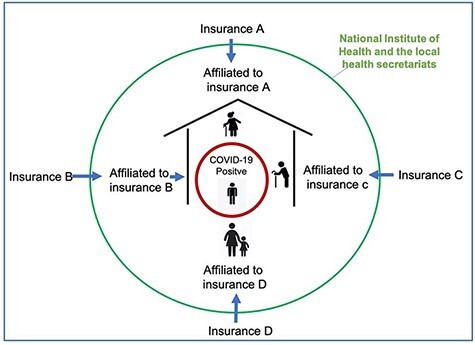
Introducing comprehensive surveillance is recommended as an urgent public health measure to control and mitigate the spread of coronavirus disease 2019 (COVID-19) worldwide. However, its implementation has proven challenging as it requires inter-organizational coordination among multiple healthcare stakeholders. The purpose of this study was to examine the role of soft and hard mechanisms in the implementation of inter-organizational coordination strategies for COVID-19 surveillance within Colombia, drawing on evidence from the cities of Bogotá, Cali and Cartagena. The study used a case study approach to understand the perspectives of local and national authorities, insurance companies and health providers in the implementation of inter-organizational coordination strategies for COVID-19 surveillance. Eighty-one semi-structured interviews were conducted between June and November 2020. The data were analysed by codes and categorized using New NVivo software. The study identified inter-organizational coordination strategies that were implemented to provide COVID-19 surveillance in the three cities. Both soft (e.g. trust and shared purpose) and hard mechanisms (e.g. formal agreements and regulations) acted as mediators for collaboration and helped to address existing structural barriers in the provision of health services. The findings suggest that soft and hard mechanisms contributed to promoting change among healthcare system stakeholders and improved inter-organizational coordination for disease surveillance. The findings contribute to evidence regarding practices to improve coordinated surveillance of disease, including the roles of new forms of financing and contracting between insurers and public and private health service providers, logistics regarding early diagnosis in infectious disease and the provision of health services at the community level regardless of insurance affiliation. Our research provides evidence to improve disease surveillance frameworks in fragmented health systems contributing to public health planning and health system improvement.
引入全面监测被建议作为一项紧急公共卫生措施,以控制和减轻全球 2019 年冠状病毒病(COVID-19)的传播。然而,由于需要多个医疗保健利益相关者之间的组织间协调,其实施证明具有挑战性。本研究的目的是检验软、硬机制在实施 COVID-19 监测的组织间协调策略方面的作用,该策略在哥伦比亚的波哥大、卡利和卡塔赫纳三个城市中汲取了证据。本研究采用案例研究方法,了解地方和国家当局、保险公司和卫生服务提供者在实施 COVID-19 监测的组织间协调策略方面的观点。2020 年 6 月至 11 月期间进行了 81 次半结构化访谈。使用 New NVivo 软件对数据进行了编码和分类分析。该研究确定了在这三个城市实施的 COVID-19 监测组织间协调策略。软机制(如信任和共同目标)和硬机制(如正式协议和法规)都充当了协作的中介,有助于解决提供卫生服务方面现有的结构性障碍。研究结果表明,软、硬机制有助于促进医疗保健系统利益相关者的变革,并改善疾病监测的组织间协调。研究结果为改善疾病协调监测的实践提供了证据,包括新形式的保险人和公共及私人卫生服务提供者之间的融资和合同、传染病早期诊断方面的后勤保障以及在社区层面提供卫生服务,无论其保险状况如何。我们的研究为改善碎片化卫生系统中的疾病监测框架提供了证据,有助于公共卫生规划和卫生系统改善。