First Center Clinical College, Tianjin Medical University, Tianjin, 300192, China.
Department of Hematology, Tianjin First Central Hospital, Tianjin, 300192, China.
J Transl Med. 2021 Dec 7;19(1):499. doi: 10.1186/s12967-021-03165-x.
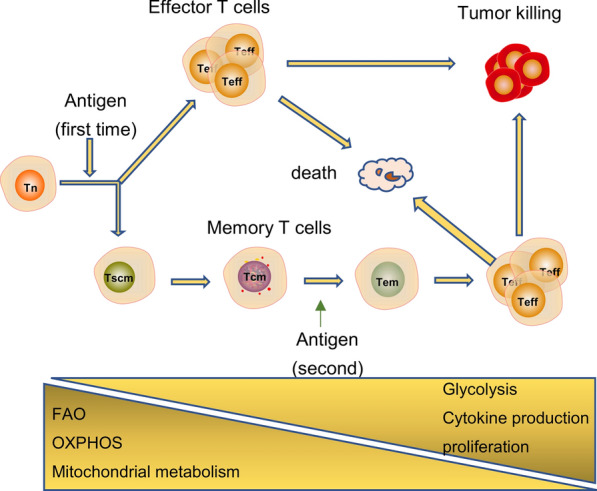
Chimeric antigen receptor T cell (CAR-T cell) therapy is a relatively new, effective, and rapidly evolving therapeutic for adoptive immunotherapies. Although it has achieved remarkable effect in hematological malignancies, there are some problems that remain to be resolved. For example, there are high recurrence rates and poor efficacy in solid tumors. In this review, we first briefly describe the metabolic re-editing of T cells and the changes in metabolism during the preparation of CAR-T cells. Furthermore, we summarize the latest developments and newest strategies to improve the metabolic adaptability and antitumor activity of CAR-T cells in vitro and in vivo.
嵌合抗原受体 T 细胞(CAR-T 细胞)疗法是一种相对较新的、有效的、快速发展的过继免疫疗法。虽然它在血液恶性肿瘤中已取得显著疗效,但仍存在一些待解决的问题。例如,在实体瘤中复发率高,疗效不佳。在本综述中,我们首先简要描述 T 细胞的代谢重编程和 CAR-T 细胞制备过程中的代谢变化。此外,我们总结了最新的进展和最新策略,以提高 CAR-T 细胞在体外和体内的代谢适应性和抗肿瘤活性。