Human Nutrition Program, The Ohio State University, Columbus, Ohio, USA.
National Dairy Council, Rosemont, Illinois, USA.
Nutr Rev. 2021 Dec 8;79(Suppl 2):16-35. doi: 10.1093/nutrit/nuab085.
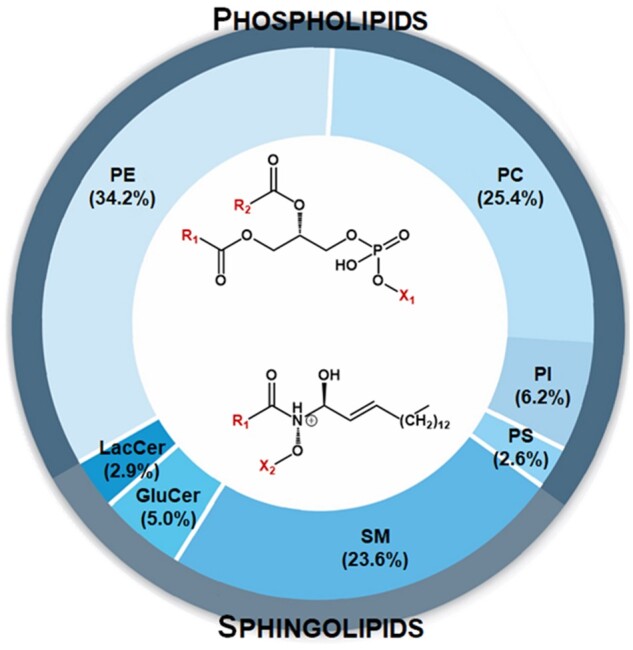
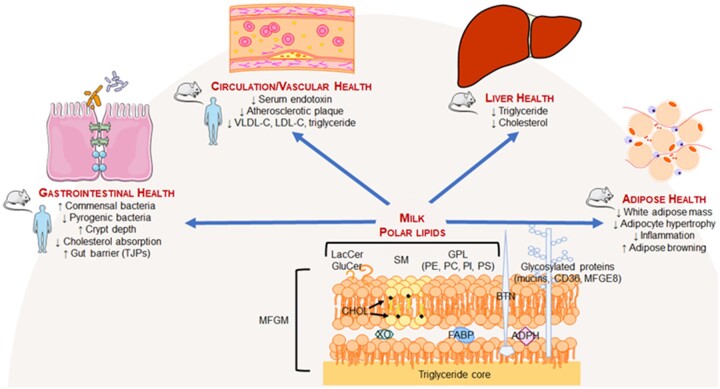
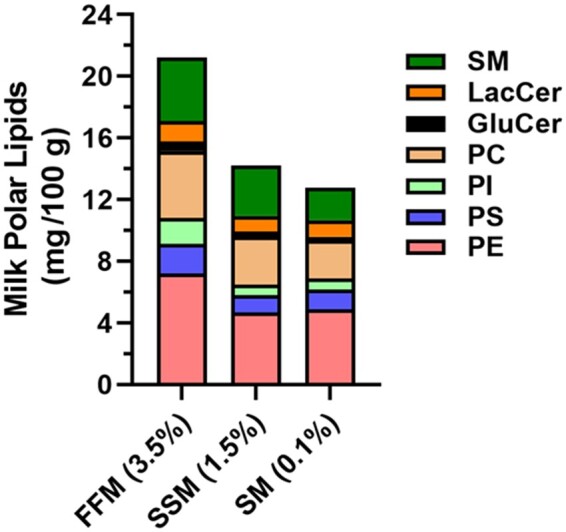
Low-quality dietary patterns impair cardiometabolic health by increasing the risk of obesity-related disorders. Cardiometabolic risk relative to dairy-food consumption continues to be a controversial topic, due to recommendations that endorse low-fat and nonfat dairy foods over full-fat varieties despite accumulated evidence that does not strongly support these recommendations. Controlled human studies and mechanistic preclinical investigations support that full-fat dairy foods decrease cardiometabolic risk by promoting gut health, reducing inflammation, and managing dyslipidemia. These gut- and systemic-level cardiometabolic benefits are attributed, at least in part, to milk polar lipids (MPLs) derived from the phospholipid- and sphingolipid-rich milk fat globule membrane that is of higher abundance in full-fat dairy milk. The controversy surrounding full-fat dairy food consumption is discussed in this review relative to cardiometabolic health and MPL bioactivities that alleviate dyslipidemia, shift gut microbiota composition, and reduce inflammation. This summary, therefore, is expected to advance the understanding of full-fat dairy foods through their MPLs and the need for translational research to establish evidence-based dietary recommendations.
低质量的饮食模式会增加肥胖相关疾病的风险,从而损害心血管代谢健康。由于建议低脂和无脂乳制品优于全脂乳制品,尽管有大量证据并不强烈支持这些建议,但与乳制品消费相关的心血管代谢风险仍然是一个有争议的话题。对照人体研究和机制性临床前研究表明,全脂乳制品通过促进肠道健康、减少炎症和控制血脂异常来降低心血管代谢风险。这些肠道和全身水平的心血管代谢益处至少部分归因于源自富含磷脂和鞘脂的乳脂肪球膜的牛奶极性脂质 (MPL),其在全脂牛奶中更为丰富。本文就全脂乳制品消费与心血管代谢健康以及缓解血脂异常、改变肠道微生物群组成和减少炎症的 MPL 生物活性展开讨论,以探讨这一争议。因此,本文有望通过 MPL 进一步了解全脂乳制品,并需要开展转化研究以制定基于证据的饮食建议。