Digestive Endoscope Room, Cangzhou Central Hospital, Cangzhou 061001, Hebei, China.
Department of Gastroenterology, Cangzhou Central Hospital, Cangzhou 061001, Hebei, China.
J Healthc Eng. 2021 Nov 29;2021:2773022. doi: 10.1155/2021/2773022. eCollection 2021.
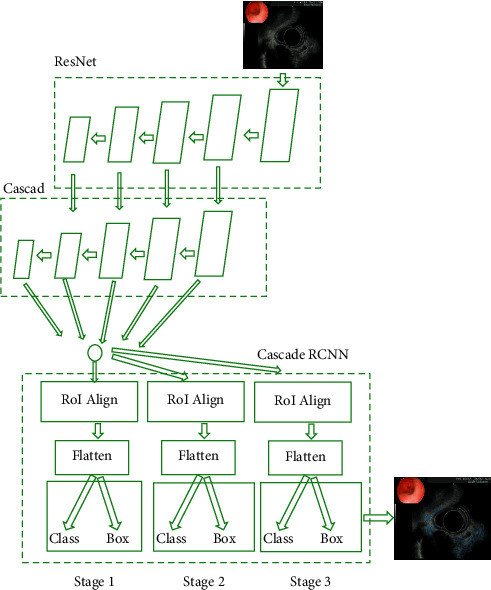
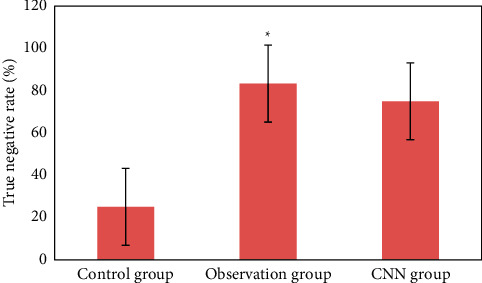
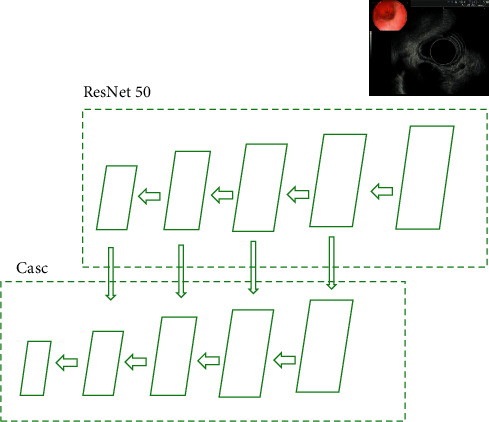
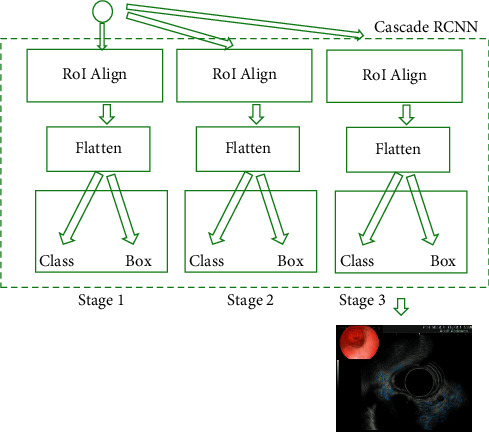
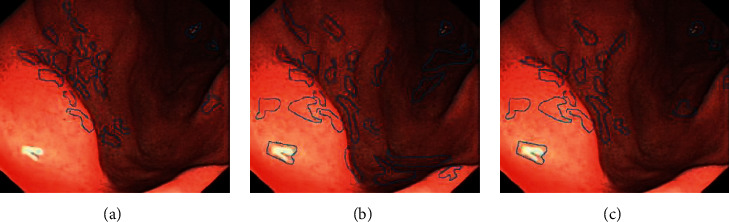
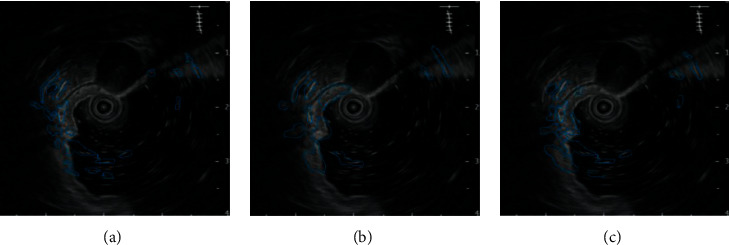
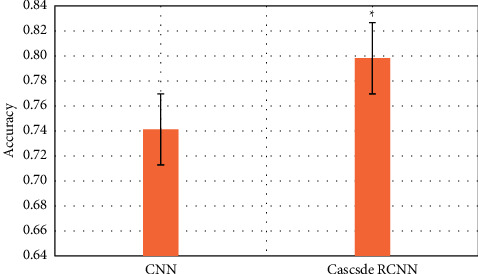
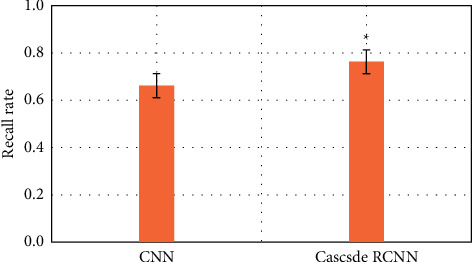
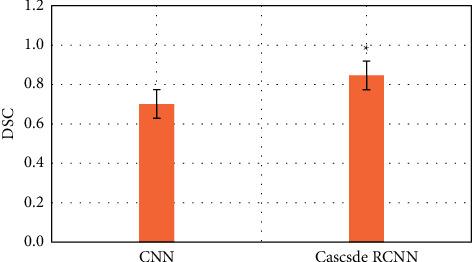
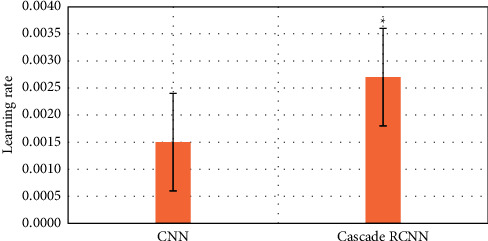
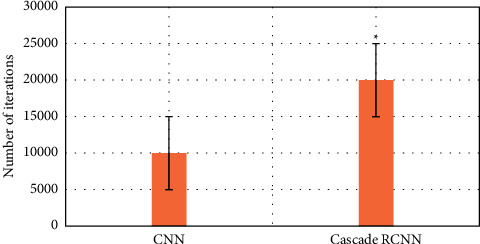
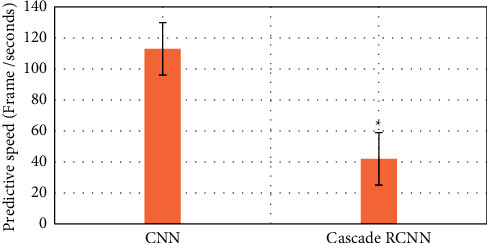
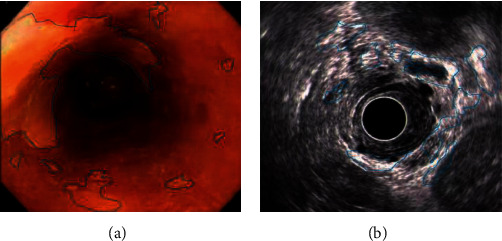
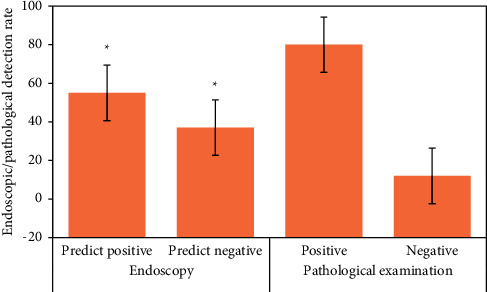
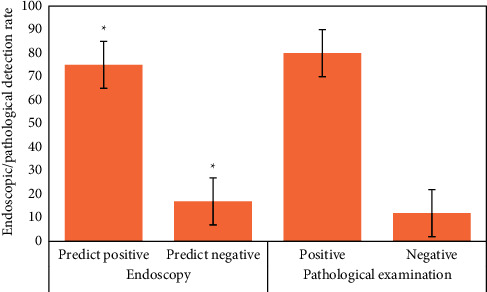
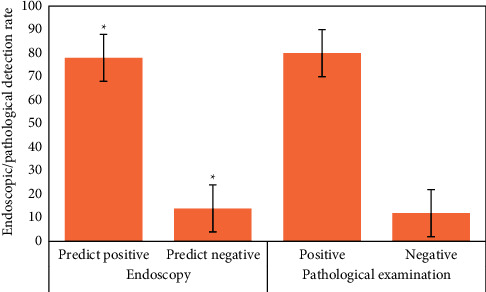
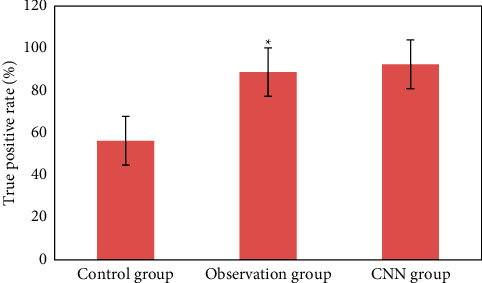
The aim of this study was to evaluate the diagnostic value of artificial intelligence algorithm combined with ultrasound endoscopy in early esophageal cancer and precancerous lesions by comparing the examination of conventional endoscopy and artificial intelligence algorithm combined with ultrasound endoscopy, and by comparing the real-time diagnosis of endoscopy and the ultrasonic image characteristics of artificial intelligence algorithm combined with endoscopic detection and pathological results. 120 cases were selected. According to the inclusion and exclusion criteria, 80 patients who met the criteria were selected and randomly divided into two groups: endoscopic examination combined with ultrasound imaging based on intelligent algorithm processing (cascade region-convolutional neural network (Cascade RCNN) model algorithm group) and simple use of endoscopy group (control group). This study shows that the ultrasonic image of artificial intelligence algorithm is effective, and the detection performance is better than that of endoscopic detection. The results are close to the gold standard of doctor recognition, and the detection time is greatly shortened, and the recognition time is shortened by 71 frames per second. Compared with the traditional convolutional neural network (CNN) algorithm, the accuracy and recall of image analysis and segmentation using feature pyramid network are increased. The detection rates of CNN model, Cascade RCNN model, and endoscopic detection alone in early esophageal cancer and precancerous lesions are 56.3% (45/80), 88.8% (71/80), and 44.1% (35/80), respectively. The detection rate of Cascade RCNN model and CNN model was higher than that of endoscopy alone, and the difference was statistically significant ( < 0.05). The sensitivity, specificity, positive predictive value, and negative predictive value of Cascade RCNN model were higher than those of CNN model, which was close to the gold standard for physician identification. This provided a reference basis for endoscopic ultrasound identification of early upper gastrointestinal cancer or other gastrointestinal cancers.
本研究旨在通过比较常规内镜检查和人工智能算法联合超声内镜检查、比较内镜实时诊断与人工智能算法联合内镜检测和病理结果的超声图像特征,评估人工智能算法联合超声内镜在早期食管癌及癌前病变中的诊断价值。选取 120 例患者,根据纳入和排除标准,选择符合标准的 80 例患者,并随机分为两组:基于智能算法处理的内镜联合超声成像检查(级联区域卷积神经网络(Cascade RCNN)模型算法组)和单纯使用内镜组(对照组)。本研究表明,人工智能算法的超声图像是有效的,检测性能优于内镜检测。结果接近医生识别的金标准,检测时间大大缩短,识别时间缩短了 71 帧/秒。与传统卷积神经网络(CNN)算法相比,使用特征金字塔网络的图像分析和分割的准确性和召回率都有所提高。CNN 模型、Cascade RCNN 模型和内镜单独检测早期食管癌及癌前病变的检出率分别为 56.3%(45/80)、88.8%(71/80)和 44.1%(35/80)。Cascade RCNN 模型和 CNN 模型的检出率均高于内镜单独检测,差异有统计学意义( < 0.05)。Cascade RCNN 模型的灵敏度、特异度、阳性预测值和阴性预测值均高于 CNN 模型,与医生识别的金标准接近。这为内镜超声对上消化道癌或其他胃肠道癌的早期诊断提供了参考依据。