Yamaguchi Takahisa, Fushida Sachio, Kinoshita Jun, Saito Hiroto, Shimada Mari, Terai Shiro, Moriyama Hideki, Okamoto Koichi, Nakamura Keishi, Ninomiya Itasu, Inaki Noriyuki
Department of Gastrointestinal Surgery, Kanazawa University Hospital, 13-1 Takara-machi, Kanazawa, Ishikawa, 920-8641, Japan.
Surg Case Rep. 2021 Dec 9;7(1):253. doi: 10.1186/s40792-021-01336-y.
The abscopal effect is a rare phenomenon in which local irradiation causes tumor regression outside the irradiated area. There have been no reports of abscopal effect in patients with gastrointestinal melanoma with metastasis. Here, we report a case of primary malignant melanoma of the esophagogastric junction with abscopal effect after long-term treatment with nivolumab.
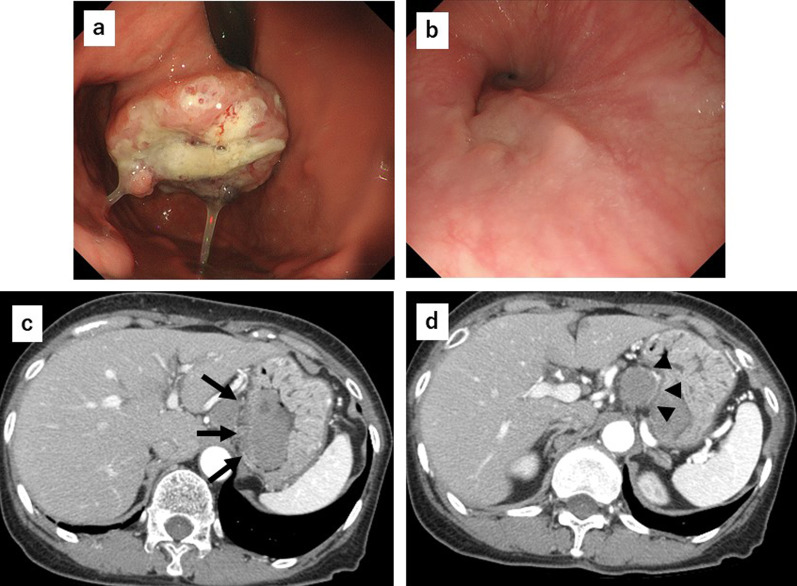
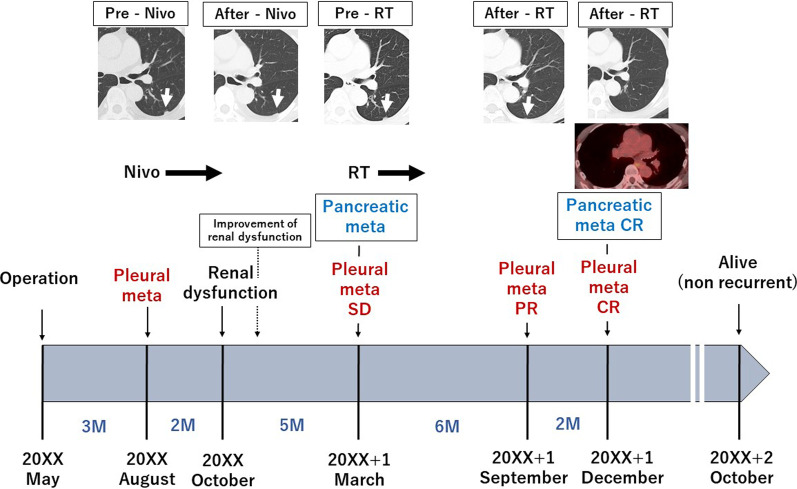
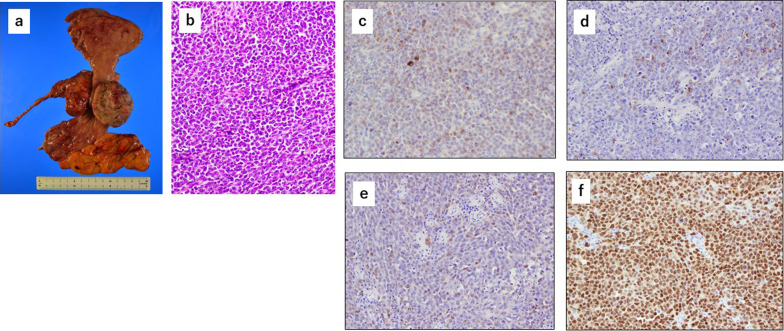
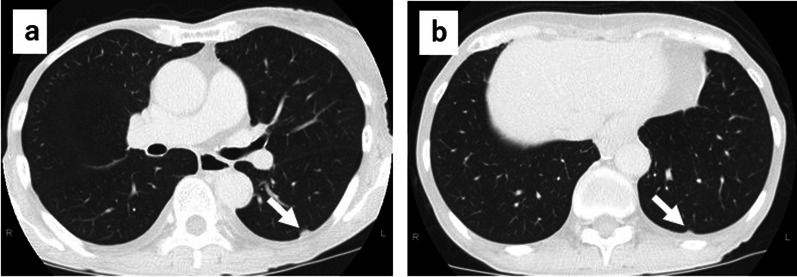
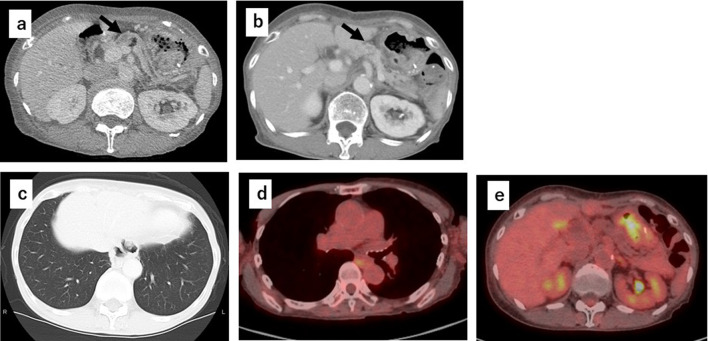
A 75-year-old woman was referred to our hospital with a gastroesophageal lesion. Upper gastrointestinal endoscopy revealed a raised lesion on the posterior wall of the greater curvature of the cardia and tenderness in the lower esophagus. Immunostaining of the tumor biopsy showed positive staining for Melan-A, human melanoma black-45 (HMB45), and S-100, indicating malignant melanoma of the esophagogastric junction. Contrast-enhanced computed tomography (CT) of the abdomen showed a mildly stained lesion protruding into the cardiac part of stomach and enlarged surrounding lymph nodes. The patient was diagnosed with malignant melanoma of the esophagogastric junction and proximal gastrectomy with lower esophagus resection was performed. Histological examination showed large, round tumor cells with nuclear atypia. Immunostaining was positive for Melan A, HMB45, S-100 protein, and SRY-box transcription factor 10, and the final diagnosis was malignant melanoma of the esophagogastric junction, with regional lymph node metastases. Three months after surgery, follow-up CT indicated left pleural metastasis; therefore, the patient was administered nivolumab, an immune checkpoint inhibitor (ICI). Following three courses of nivolumab, the patient exhibited grade 3 renal dysfunction (Common Terminology Criteria for Adverse Events version 5.0). After that, we have not administered nivolumab treatment. Five months after the development of renal dysfunction, a CT scan demonstrated an unstained nodule within the pancreatic, and the patient was diagnosed with pancreatic metastasis; intensity-modulated radiotherapy was performed. Six months later, CT revealed pancreatic nodule and pleural metastasis was shrunk; after an additional 2 months, pleural metastasis and effusion had disappeared. The patient is alive with no additional lesions.
We report a case of primary malignant melanoma of the esophagogastric junction with an abscopal effect following nivolumab treatment. The findings of this case report suggest that ICIs in combination with radiotherapy may be effective for treating metastatic or recurrent malignant melanoma of the gastrointestinal tract.
远隔效应是一种罕见现象,即局部照射导致照射区域外的肿瘤消退。尚无胃肠道黑色素瘤伴转移患者出现远隔效应的报道。在此,我们报告一例食管胃交界部原发性恶性黑色素瘤患者,在接受纳武单抗长期治疗后出现远隔效应。
一名75岁女性因胃食管病变转诊至我院。上消化道内镜检查发现贲门大弯后壁有一隆起病变,食管下段有压痛。肿瘤活检免疫染色显示Melan-A、人黑色素瘤黑色45(HMB45)和S-100呈阳性染色,提示食管胃交界部恶性黑色素瘤。腹部增强计算机断层扫描(CT)显示一个轻度染色的病变突入胃贲门部,周围淋巴结肿大。患者被诊断为食管胃交界部恶性黑色素瘤,并接受了近端胃切除术及食管下段切除术。组织学检查显示有核异型性的大圆形肿瘤细胞。免疫染色Melan A、HMB45、S-100蛋白和SRY盒转录因子10呈阳性,最终诊断为食管胃交界部恶性黑色素瘤,伴有区域淋巴结转移。术后3个月,随访CT显示左胸膜转移;因此,患者接受了免疫检查点抑制剂(ICI)纳武单抗治疗。在接受三个疗程的纳武单抗治疗后,患者出现3级肾功能不全(不良事件通用术语标准第5.0版)。此后,我们未再给予纳武单抗治疗。肾功能不全发生5个月后,CT扫描显示胰腺内有一个未染色的结节,患者被诊断为胰腺转移;进行了调强放疗。6个月后,CT显示胰腺结节及胸膜转移缩小;再过2个月,胸膜转移及胸腔积液消失。患者存活,无其他病变。
我们报告一例食管胃交界部原发性恶性黑色素瘤患者,在接受纳武单抗治疗后出现远隔效应。本病例报告结果提示,ICI联合放疗可能对治疗胃肠道转移性或复发性恶性黑色素瘤有效。