Nursing, Debre Berhan University, Debre Berhan, Ethiopia
Nursing, Debre Markos University, Debre Markos, Amhara, Ethiopia.
BMJ Open. 2021 Dec 9;11(12):e049806. doi: 10.1136/bmjopen-2021-049806.
Globally, type 2 diabetes has continued to increase, now accounting for over 90% of all diabetes cases. Though the magnitude of uncontrolled glycaemic levels in patients with type 2 diabetes is steadily rising, evidence showed that effectively controlled glycaemic levels can prevent complications and improve the quality of life of these patients. As little is known about the effect of educational interventions on this population, this systematic review and meta-analysis evaluated the effectiveness of educational interventions versus standard care on glycaemic control and disease knowledge among patients with type 2 diabetes.
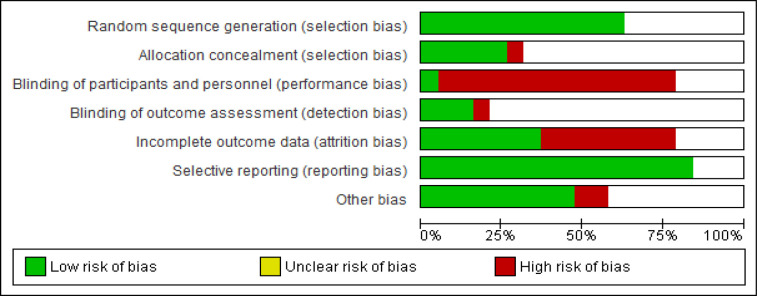
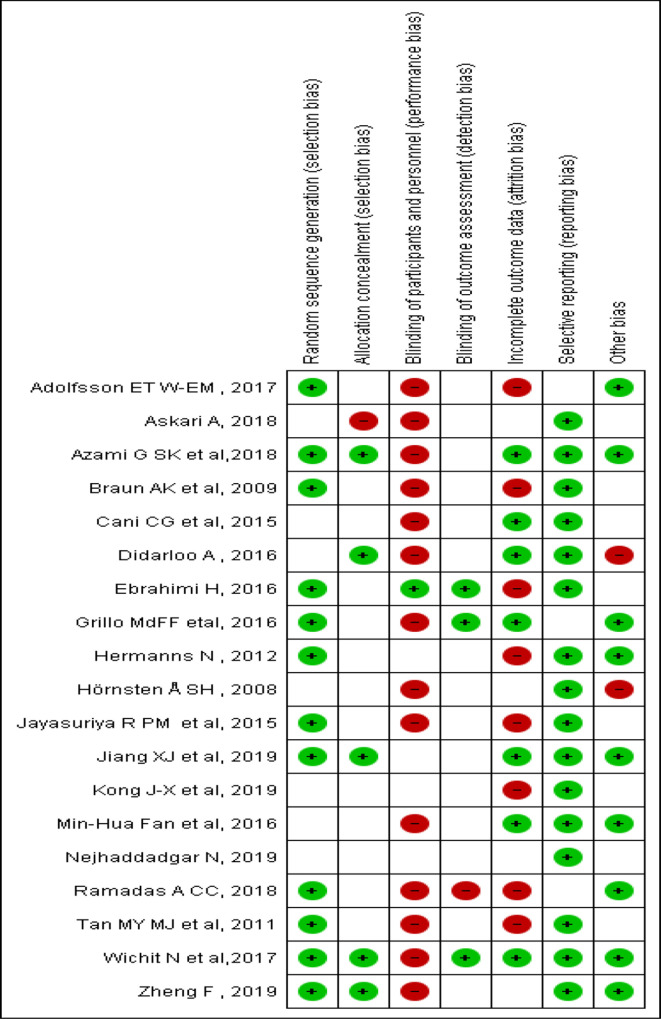
PubMed, Google Scholar, Cochrane Library, Scopus, African Journals Online and Wiley Online Library were searched. Two authors independently assessed within-trial risk of bias in each included study using revised Cochrane risk-of-bias tool for randomised trials. A random-effects model was employed to estimate combined effect sizes. Subgroup analyses were employed to investigate possible sources of heterogeneity between studies. The overall certainty of the evidence was evaluated using the Grading of Recommendations Assessment, Development and Evaluation approach.
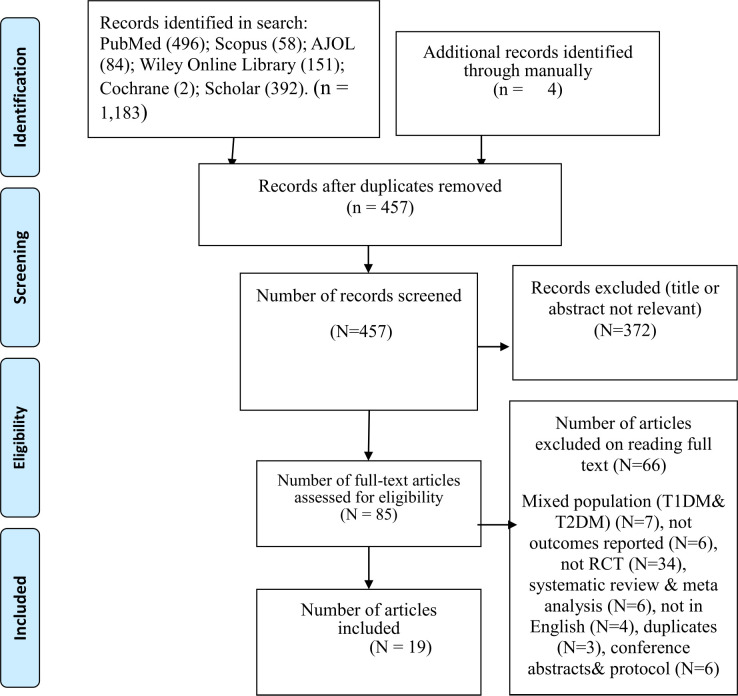
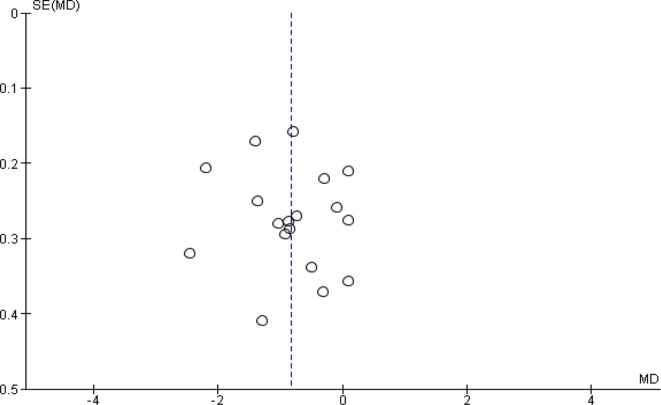
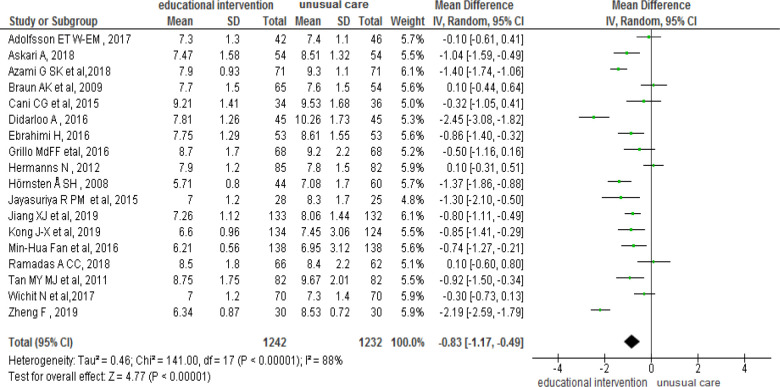
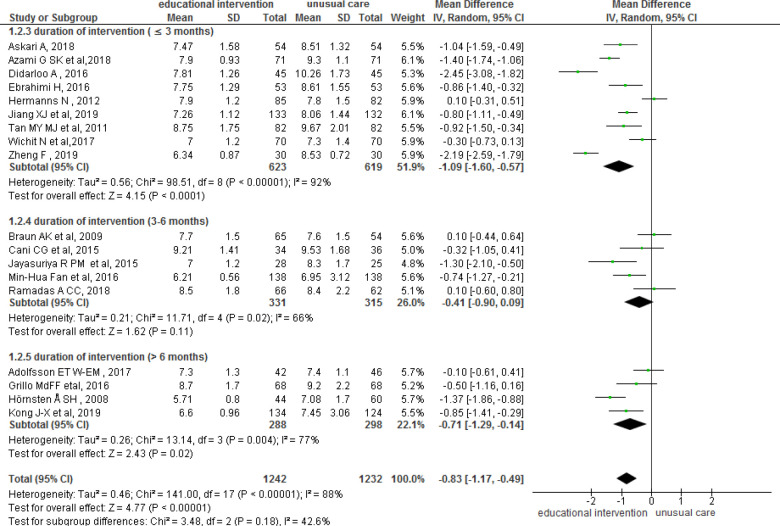
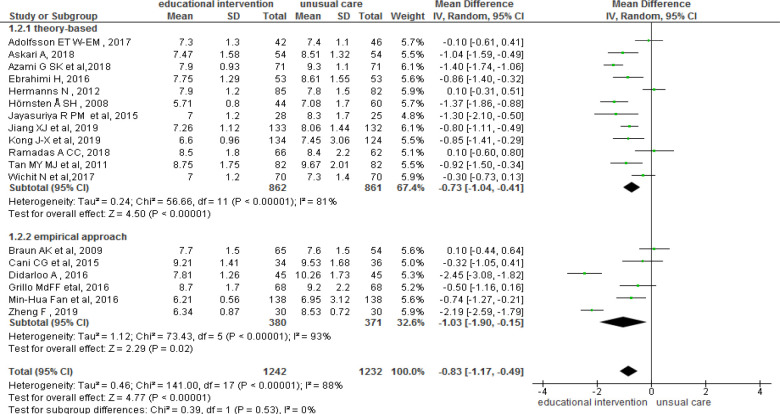
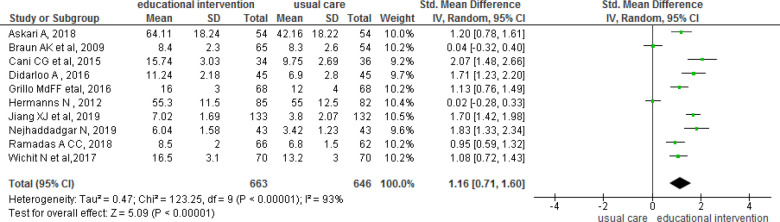
A total of 19 trials with 2708 study participants were included in the review. Primary outcomes (glycaemic control) were reported in 18 trials. The pooled estimated impact of educational intervention on glycaemic levels using the random-effects model was -0.83 (95% CI: -1.17 to -0.49, p<0.001). Subgroup analyses revealed greater A1c reductions in those studies with intervention duration of up to 3 months and with empirical intervention designs. Educational interventions led to significant increases in participants' knowledge of type 2 diabetes (standardised mean difference: 1.16; 95% CI: 0.71 to 1.60; I=93%).
In the current review overall, educational interventions can potentially lead to improved glycaemic control levels in patients with type 2 diabetes despite heterogeneity across the studies. Besides, the findings showed that educational interventions could increase disease knowledge among patients with type 2 diabetes.
CRD42020205838.
全球范围内,2 型糖尿病的发病率持续上升,目前已占所有糖尿病病例的 90%以上。尽管 2 型糖尿病患者血糖控制不佳的比例稳步上升,但有证据表明,有效控制血糖水平可以预防并发症并提高这些患者的生活质量。由于人们对教育干预对这一人群的影响知之甚少,因此本系统评价和荟萃分析评估了教育干预与 2 型糖尿病患者的标准护理相比在血糖控制和疾病知识方面的有效性。
检索了 PubMed、Google Scholar、Cochrane 图书馆、Scopus、African Journals Online 和 Wiley Online Library。两位作者使用修订后的 Cochrane 随机试验偏倚风险工具独立评估了每个纳入研究的试验内偏倚风险。采用随机效应模型估计合并效应大小。进行亚组分析以调查研究之间可能存在的异质性来源。使用推荐评估、制定和评估方法评估证据的总体确定性。
共有 19 项试验,涉及 2708 名研究参与者,纳入了本综述。18 项试验报告了主要结局(血糖控制)。使用随机效应模型估计,教育干预对血糖水平的总体影响为-0.83(95%CI:-1.17 至-0.49,p<0.001)。亚组分析显示,干预持续时间长达 3 个月且采用实证干预设计的研究中 A1c 降低幅度更大。教育干预可显著提高参与者对 2 型糖尿病的认识(标准化均数差:1.16;95%CI:0.71 至 1.60;I=93%)。
总体而言,在目前的综述中,尽管研究之间存在异质性,但教育干预可能会导致 2 型糖尿病患者的血糖控制水平得到改善。此外,研究结果表明,教育干预可以提高 2 型糖尿病患者的疾病知识水平。
PROSPERO 注册号:CRD42020205838。